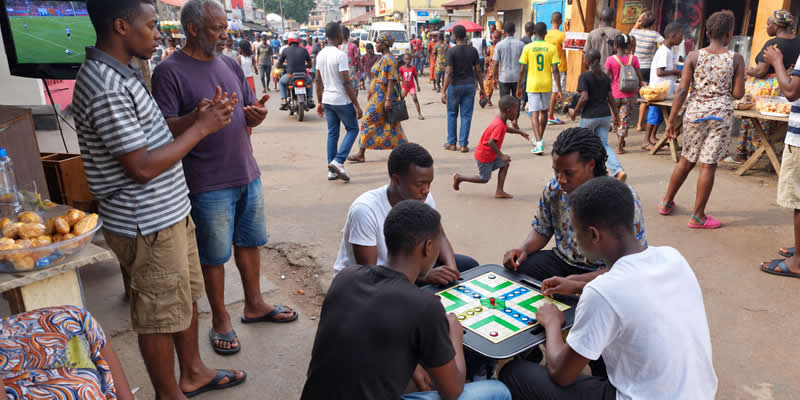
Dinner, drinks and conversation have long been reliable ingredients for a night out. But sometimes people want more than simply sitting around the same table. They want something to do together — preferably something that creates a little competition along the way.
Bowling, darts, pool, mini-golf, escape rooms, arcade games and interactive challenges are increasingly being grouped under the term “competitive socialising.” Despite the name, winning is rarely the most important part. The attraction comes from turning a social gathering into an experience in which everyone can participate.
It reflects a simple change in leisure habits: entertainment can be more enjoyable when people get to do something rather than only watch it.
Competition Can Take Many Forms
The idea is broader than a bowling lane or pool table. Friends can compete over a quiz, challenge each other on a console or discover who is surprisingly talented at darts. Gaming has also expanded far beyond dedicated venues, giving people different ways to play depending on whether they want a shared or individual experience.
South Africa provides an example of that variety. Its wider gaming landscape includes console and mobile games as well as specific online categories such as casino gaming. Within the latter, platforms can differ in their game selections, features and overall offering. The casinos listed on Casino.com South Africa are brought together within a comparison and review resource focused on the South African market, providing one example of how varied gaming choices have become.
Competitive socialising takes the desire to play in another direction by making the shared experience the main attraction. Rather than everyone choosing entertainment separately, the group participates in the same challenge, creating opportunities for conversation, rivalry and plenty of jokes.
Games Give People Something to Talk About
One of the biggest advantages of activity-based socialising is that conversation does not have to do all the work.
Imagine six people who do not know each other particularly well sitting around a table. Someone has to start a conversation and keep it moving. Put those same six people around a pool table and there is immediately something happening.
Whose turn is it? Did that shot count? Who is winning? Who has misunderstood the rules?
Even a simple game can remove some of the awkwardness that sometimes comes with meeting new people. The activity provides a common focus while still leaving plenty of space for conversation.
The University of Derby has examined competitive socialising as a leisure trend combining games, hospitality and social interaction, including the use of technology to update familiar activities.
Familiar Games Are Being Reinvented
What makes competitive socialising particularly interesting is that many of its most popular activities are not new.
People have been bowling for generations. Darts and pool have been fixtures of social venues for decades. Mini-golf is hardly a recent invention either.
The experience surrounding those games, however, is changing.
Digital scoring can remove the need to calculate points manually. Golf simulators can recreate the feeling of playing different courses indoors. Mini-golf venues can use elaborate themes, lighting and sound to turn a familiar activity into something more immersive.
Technology is not necessarily replacing traditional games. Instead, it can give people another reason to try them.
Being Bad at the Game Can Be Fun
Competitive socialising also benefits from something professional sport cannot: nobody needs to be particularly good.
In fact, being terrible can improve the evening.
A bowling ball disappearing into the gutter after someone confidently predicted a strike can be more memorable than a technically perfect throw. The friend who insists that winning does not matter may become the person demanding an immediate rematch.
These moments create stories that survive beyond the activity itself.
A normal dinner might produce a pleasant evening. Add a game and suddenly there is a winner, an unlucky loser, a controversial decision and something for the group chat the following morning.
The Activity Becomes the Destination
This also changes how people choose where to meet.
Instead of deciding on a restaurant first and wondering what to do afterwards, groups can choose an activity and build the rest of the evening around it. Food and drinks may still be part of the experience, but they no longer have to be the entire reason for going out.
That opens social occasions to different preferences. Some groups might choose an escape room that requires teamwork. Others may prefer bowling, darts or a relaxed game of pool.
The best option is not necessarily the most sophisticated one. It is simply the activity that gives everyone a reason to participate.
From Watching to Participating
Modern life offers almost unlimited passive entertainment. A film can be streamed within seconds, social feeds provide an endless supply of videos, and major sporting events can be watched from almost anywhere.
Competitive socialising offers something different.
Instead of watching somebody else attempt the challenge, people become part of it. The experience depends on what the group does, who succeeds and what unexpectedly goes wrong.
Perhaps that is why such a simple idea feels fresh. Competitive socialising does not require inventing an entirely new form of entertainment. Often, it simply takes familiar games and gives people a new reason to play them together.
Sometimes the difference between an ordinary evening and a memorable one is nothing more complicated than keeping score.