Éric Chelle’s new contract was supposedly agreed back in June, featuring richer terms and a wider role that also puts him in charge of the Under-23 side. The one problem? It was never actually signed, and by August it was still sitting unsigned while his camp pushed for something closer to $130,000 a month against a current wage nearer $75,000.
Then the whole federation fell apart around him. NFF president Ibrahim Gusau, the man who’d publicly promised back in February that Chelle wasn’t going anywhere, resigned at the end of August along with his general secretary and board. The Super Eagles missing the World Cup was one item on the charge sheet, the Super Falcons missing next year’s Women’s World Cup was another, the Golden Eaglets fell short of the Under-17 World Cup too, and the EFCC and ICPC are separately digging into what happened to a 12 billion naira intervention fund.
The election that was meant to sort out who runs Nigerian football next has now been suspended, with the federation talking about reforms alongside FIFA and CAF instead and no new date on the table.
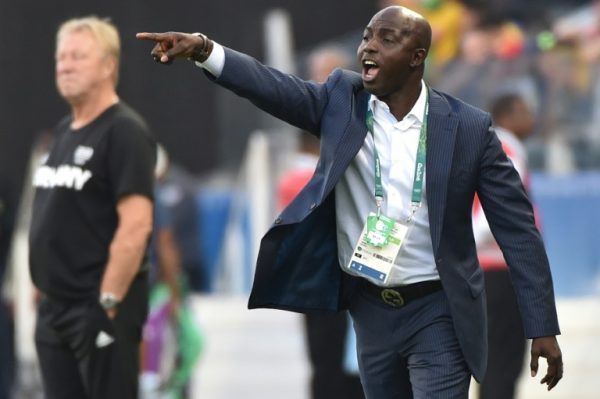
None of this has stopped Chelle from getting on with the actual coaching. He named separate squads for the September and October windows and has been dealing with injury knocks in the buildup to a qualifier against Madagascar. He’s still the one fronting press conferences about a Super Eagles side trying to put the World Cup miss behind it. Algeria briefly complicated things by circling him as a candidate after parting ways with Vladimir Petković, though that interest cooled once they appointed Ibrahim Hamdani instead – one less external pressure on Chelle, even if the internal one hasn’t gone anywhere.
The case for patience still rests on that AFCON run in Morocco, where Nigeria went out in the semi-final to the hosts and then beat their way to third place – proof, for anyone inclined to give Chelle the benefit of the doubt, that missing the World Cup wasn’t the full story of his time in charge.
The case against patience is simpler: two years into the job, the federation still hasn’t managed to put a signature on paper, and the squad reveal for these qualifiers already had pundits and supporters arguing over his selections before a ball’s been kicked.
For anyone watching from outside Nigeria, that kind of institutional mess doesn’t stay contained to boardrooms. Odds on the South African soccer betting site 10bet.co.za move around exactly this sort of uncertainty: a coach operating without a finished contract, and a federation still mid-collapse, with a qualifying campaign that can’t wait for either to get sorted. Markets tend to price instability quietly rather than dramatically, but a caretaker federation and an unsigned deal both count as the kind of noise that shows up sooner or later.
What happens on the pitch against Madagascar and Tanzania might end up mattering less to Chelle’s future than whatever comes out of Nigeria’s football reforms in the weeks ahead. A federation trying to convince FIFA and CAF it’s fixed its governance problems isn’t necessarily treating coaching contracts as the priority, and that’s the gap Chelle is coaching inside of right now.