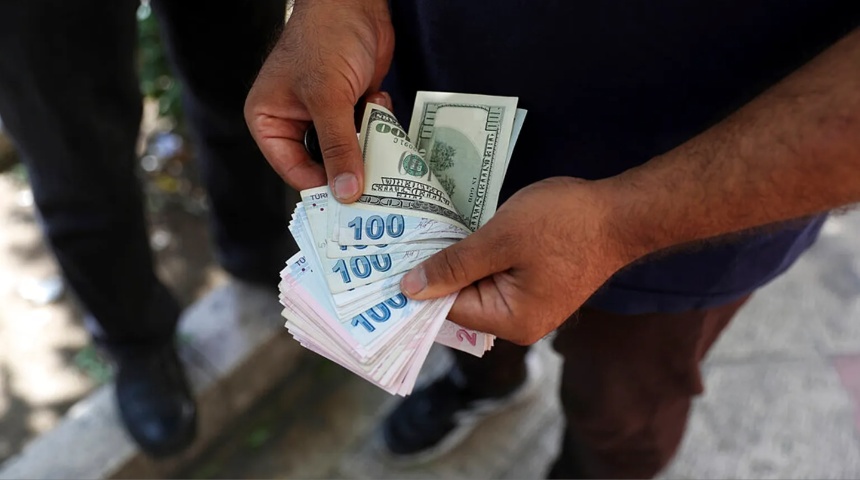
The Iran currency crisis deepened on Saturday, October 3, 2026, when the rial slid to a new all-time low even as the Central Bank of Iran began pumping dollars into the market. The dollar traded between 2.688 million and 2.695 million rials, depending on the tracking site, a level that would have sounded absurd to most Iranians a year ago.
State television said state banks began selling up to $2 billion to support the currency. Traders were not impressed. The rial sold at about 2.688 million to the dollar on Saturday, up from 2.632 million on Friday, according to the free-market tracker Bonbast. A second site, Alanchand, put the rate slightly higher.
What happened to the Iran currency on Saturday?
The central bank’s announcement was meant to calm nervous buyers. It did the opposite, or at least failed to do anything at all. In a single day, the dollar gained roughly 2% against the rial, and the intervention arrived at a moment when confidence in the economy is already badly shaken.
Mehdi Darabi, an aide to the central bank governor on foreign exchange, blamed the fall partly on false predictions by US officials that the economy was about to collapse. He insisted the drop was temporary. Many ordinary Iranians seem to disagree. Savers have been buying dollars, other hard currencies or gold to protect what they have, which only adds to the pressure on the rial.
| Detail | Latest figure |
|---|---|
| Open-market rate (Bonbast, Oct 3) | About 2,688,000 rials per US dollar |
| Open-market rate (Alanchand, Oct 3) | About 2,695,000 rials per US dollar |
| Previous day (Oct 2) | About 2,632,000 rials per dollar |
| Same rate in tomans | Roughly 268,800 tomans per dollar |
| Central bank intervention | Up to $2 billion through state banks |
| Inflation | Above 70% |
Iranians commonly quote prices in tomans, which equal 10 rials.
How fast has the rial fallen?
The speed of the decline is the real story. The dollar was around 950,000 rials in October 2025. By the same measure, the rial has lost roughly 65% of its value in twelve months. The slide accelerated after the war began.
The timeline below shows how the record has been broken again and again.
| Date | Rial per US dollar (open market) | What was happening |
|---|---|---|
| October 2025 | About 950,000 | Pre-war level |
| Feb 28, 2026 | About 1,749,500 | The day Trump confirmed major combat operations against Iran |
| Early May 2026 | About 1,900,000 | Previous record at the time |
| July 17, 2026 | About 1,918,000 | A new all-time low |
| Aug 24, 2026 | About 2,031,000 | First time above 2 million, as Washington readied fresh measures |
| Sept 5, 2026 | About 2,250,000 | Roughly 12.5% weaker than when it crossed 2 million in late August |
| Oct 3, 2026 | About 2,688,000 | New record despite central bank dollar sales |
From the 2.25 million mark in early September, the rial has lost another 19% or so in under a month, by my calculation from the figures above.
Why is the Iranian rial collapsing?
There is no single cause. Several pressures are hitting at once.
War and a naval blockade: The rial has been under pressure since the conflict began on February 28. Iran’s ports are blockaded, and the central bank chief said last month that the country was exporting no oil. Oil is the state’s main source of foreign currency. Without it, the supply of dollars dries up while demand keeps climbing.
Fresh US sanctions: In August, Treasury Secretary Scott Bessent promised “the single greatest financial offensive ever marshalled against an adversary.” Markets reacted accordingly.
Runaway inflation: The IMF expects inflation of nearly 69% in 2026, with the economy shrinking 6.1%. When prices rise that quickly, holding rials feels like holding something that melts.
Loss of confidence: Currency intervention works only if people believe the central bank can keep it up. Analysts quoted by one outlet said that injecting dollars gives short-term liquidity, but lasting stability depends on broader confidence and the supply of foreign currency. Right now both are scarce.
What does the Iran currency crisis mean for ordinary people?
For households, the numbers are not abstract. In July, the average minimum wage was worth only about $87 on the open market, and the rial has fallen a long way since. Rent and basic goods are getting harder to afford, with reports that life is becoming ever tougher for citizens who cannot pay for necessities or rent.
People with any savings are rushing into dollars, gold or other hard assets. That is a rational move for a family, but it drains the very currency the government is trying to defend. Some are also being drawn into riskier schemes. Iran’s gold union recently warned the public about rising “gold leasing” schemes as people hunt for returns.
The rial is weak against everything, not just the dollar. On August 24, the pound traded at about 2,769,500 rials and the euro at about 2,369,500.
Authorities have also planned a cosmetic fix. Iran is preparing to remove four zeros from the rial, with the change phased in from 2027. The move is meant to simplify everyday transactions. It does nothing about the underlying loss of value, as the same report points out.
Can $2 billion save the rial?
Probably not on its own. The size of the intervention is meaningful, but the market is reacting to a much larger problem: no oil income, tightening sanctions and little sign of a diplomatic breakthrough. Until one of those changes, dollar sales can slow a fall at best.
The key things to watch in the coming weeks:
| Factor | Why it matters |
|---|---|
| Size and pace of central bank dollar sales | Shows whether authorities can sustain support |
| Status of the naval blockade | Decides whether any oil revenue returns |
| New US sanctions announcements | Each round has coincided with fresh rial lows |
| Monthly inflation data | Fuels the rush to dollars and gold |
| Any diplomatic talks | The only likely trigger for a real rebound |