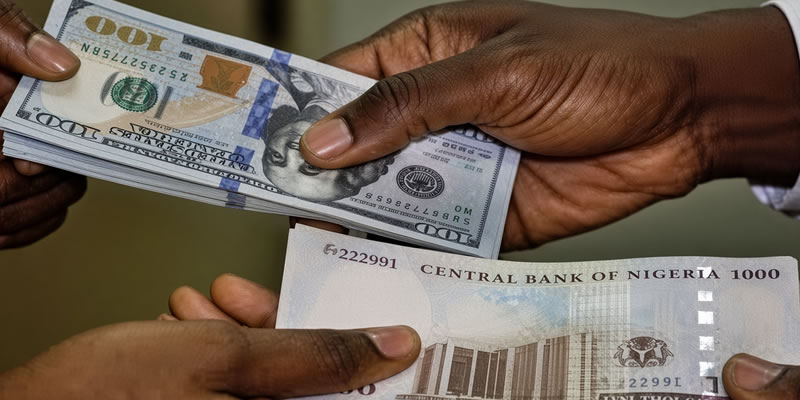
The dollar to naira rate today, Monday, October 5, 2026, is roughly ₦1,330 at the official window and between ₦1,365 and ₦1,390 on the parallel market. The naira has barely moved in weeks, and anyone who checked the rate on Friday will find almost the same numbers this morning.
These are the latest figures available as of Monday morning. They come from Friday’s closing data at the Nigerian Foreign Exchange Market (NFEM) and weekend quotes from Bureau de Change (BDC) operators. Monday’s own closing rate will be published by the Central Bank of Nigeria (CBN) later in the day.
Dollar to naira today: the quick numbers
| Market | Rate (₦ per $1) | Reference |
|---|---|---|
| Official (NFEM) | ₦1,330.10 | Friday, October 2 trading |
| Official NFEM close | ₦1,332.00 | Friday, October 2 |
| CBN reference rate | ₦1,329.16 | Latest CBN reference quoted in market reports |
| Parallel market (buying) | ₦1,365 to ₦1,375 | Weekend quotes |
| Parallel market (selling) | ₦1,375 to ₦1,390 | Weekend quotes |
Different outlets quote slightly different official figures, anywhere from about ₦1,328 to ₦1,332, depending on the time stamp. Tribune Online reported that the naira traded at ₦1,330.10 on October 2 and closed the day at ₦1,332.00. Vanguard and other papers put the NFEM rate at about ₦1,328.17 against a CBN reference rate of ₦1,329.16. The spread is a few kobo to a couple of naira, so none of it changes what a dollar costs you in practice.
On the street, Lagos traders were buying dollars at about ₦1,375 and selling at ₦1,390 on Friday. By Sunday evening, Aboki Forex was showing ₦1,365 to buy and ₦1,375 to sell. The parallel market closed Wednesday, September 30, at ₦1,384, so the past week has been a slow drift rather than a jump.
How much is the dollar in naira at both windows?
Since the gap between the two markets is about ₦60 per dollar, the amount you need depends heavily on where you buy. The table below uses ₦1,330 for the official window and ₦1,390 for the parallel selling rate.
| Dollars | Official (₦1,330) | Parallel selling (₦1,390) | Extra you pay on the street |
|---|---|---|---|
| $1 | ₦1,330 | ₦1,390 | ₦60 |
| $10 | ₦13,300 | ₦13,900 | ₦600 |
| $20 | ₦26,600 | ₦27,800 | ₦1,200 |
| $50 | ₦66,500 | ₦69,500 | ₦3,000 |
| $100 | ₦133,000 | ₦139,000 | ₦6,000 |
| $200 | ₦266,000 | ₦278,000 | ₦12,000 |
| $500 | ₦665,000 | ₦695,000 | ₦30,000 |
| $1,000 | ₦1,330,000 | ₦1,390,000 | ₦60,000 |
| $5,000 | ₦6,650,000 | ₦6,950,000 | ₦300,000 |
The street premium works out to about 4.5 per cent. On a $100 purchase that is small change. On a $5,000 school fee or supplier payment, it is ₦300,000.
What the naira did over the past few weeks
The official rate has stayed in a very tight band since early September. Here is how the weekly closes looked, using CBN data reported by Leadership and Nairametrics.
| Date | Official rate (₦ per $1) |
|---|---|
| Wednesday, September 2 | ₦1,326.69 |
| Monday, September 7 | ₦1,320.00 |
| Friday, September 11 | ₦1,326.52 |
| Friday, September 18 | ₦1,331.20 |
| Monday, September 21 | ₦1,329.80 |
| Wednesday, September 30 | ₦1,329.16 |
| Friday, October 2 | ₦1,330.10 |
Over the past month the naira has stayed inside a range of about ₦11. It lost ₦4.68 in the week to September 18, according to Leadership’s report on CBN figures, then gained back ₦1.40 on the Monday after. That is about as quiet as this market gets.
It has not always been like this. Allafrica reported that the naira gained 1.5 per cent in the official market during August, while the parallel market moved by just 0.06 per cent over the same period. That mismatch explains why the street rate looks stubborn: the official window improved, and the black market mostly did not follow.
Why the naira is holding steady
Several things are pulling in the same direction at the moment.
External reserves are the biggest one. Nigeria’s gross reserves stood at $54.86 billion on September 24, up from $45.57 billion on January 2, Nairametrics reported from CBN data. That is the highest level since December 2008, and it is about $3.8 billion above the $51.04 billion the CBN had projected for the end of 2026. A bigger cushion gives the central bank room to calm the market when demand spikes.
Remittances are helping as well. CBN Governor Olayemi Cardoso said inflows through international money transfer operators hit a record $947 million in July, close to the $1 billion monthly target the bank has been chasing. Those are dollars arriving through formal channels, which is exactly what the official window needs.
Then there is monetary policy. At its 307th meeting on September 22, the Monetary Policy Committee cut the benchmark rate to 23 per cent from 26.5 per cent, according to Arise News. Headline inflation had slowed to 15.39 per cent in August, per the National Bureau of Statistics. A rate cut can sometimes unsettle a currency, so the fact that the naira barely flinched since then says something about how comfortable the market currently feels.
The gap between the two markets
An official rate of ₦1,330 and a street rate of ₦1,390 is not a dramatic split by Nigerian standards. In early September the difference was wider. Allafrica put it at around ₦81 when Aboki Forex quoted ₦1,395, so the gap has narrowed a little since then.
Still, a ₦60 difference is not nothing. Street traders report steady demand for cash dollar transactions, and as long as individual buyers find it easier to get notes from a BDC operator than from a bank, some premium is likely to stay.
Pound and euro rates against the naira
Other currencies tell the same story. Market aggregators showed these figures on Sunday.
| Currency | CBN rate | Parallel market (approx.) |
|---|---|---|
| US dollar | ₦1,330.10 | ₦1,375 to ₦1,390 |
| British pound | ₦1,759.58 | ₦1,880 |
| Euro | ₦1,496.76 | ₦1,590 |
How the naira compares with a year ago
Anyone who remembers paying ₦1,600 for a dollar will notice how far things have come. The official rate has fallen steadily across two years.
| Period | Official rate | Parallel market |
|---|---|---|
| September 17, 2024 | ₦1,646 | ₦1,670 (selling) |
| August 15, 2025 | ₦1,534 | ₦1,540 |
| Mid-December 2025 | ₦1,464.50 | ₦1,495 |
| January 28, 2026 | ₦1,400.47 | ₦1,470 |
| August 3, 2026 | ₦1,368 | ₦1,425 (selling) |
| October 2, 2026 | ₦1,330 | ₦1,390 (selling) |
Compared with August last year, a dollar now costs about ₦204 less at the official window, a drop of roughly 13 per cent. Against September 2024 the fall is ₦316, or about 19 per cent. That does not mean prices at the market have dropped by the same margin, and many Nigerians would say they have not. But for importers and students abroad, and anyone else paying in dollars, the arithmetic has improved.
What could change the rate
Not everyone is calling the stability permanent. After the July meeting, Cardoso said the MPC had noted renewed hostilities in the Middle East and the risk that higher global energy prices could feed into Nigerian inflation. Energy price swings can also affect oil receipts and, by extension, dollar supply.
Politics may matter too. Nigeria’s general elections are due in 2027. Ahead of the September meeting, one analyst quoted by Leadership questioned who would want to ease policy four months before campaigns begin. The MPC went ahead and cut anyway, so the election calendar is now part of the backdrop for every rate decision.
The International Monetary Fund has also said it considers the naira undervalued. Asked about that in July, Cardoso said the CBN would keep supporting a transparent foreign exchange market rather than target a particular rate. In plain terms, the central bank is not promising to defend any number.
Tips if you need to buy dollars this week
- Check the official rate on the CBN website before you agree a price with anyone. If a trader’s quote is far from the figures above, ask why.
- Rates differ between Lagos, Abuja, Kano and Port Harcourt, and between buying and selling. Quote the sell rate when you are the one buying dollars.
- Deal with licensed BDC operators, or buy through your bank if your request qualifies. Street rates are tempting, but counterfeit notes and scams are a real risk with unknown sellers.
- Ask whether the rate includes any commission or transfer fee.
- If you are not in a rush, compare quotes on two or three consecutive days. With the naira this quiet, waiting a few days is unlikely to cost you much, though nobody can promise that.
Frequently asked questions
What is the dollar to naira rate today?
At the official window it is about ₦1,330 per dollar, based on Friday’s trading. On the parallel market it ranges from ₦1,365 to ₦1,390.
How much is $100 in naira today?
About ₦133,000 at the official rate and about ₦139,000 at the parallel selling rate of ₦1,390.
What is the black market dollar rate today?
Traders were quoting ₦1,365 to ₦1,375 on Sunday evening, after Friday’s quotes of ₦1,375 to ₦1,390.
Why is the naira stable?
Rising reserves and record remittance inflows have both helped, according to CBN data and market reports.
Is the naira likely to strengthen or weaken soon?
It could go either way. Global energy prices, the 2027 election calendar and the effect of the recent rate cut are the main things to watch.
Where does the official rate come from?
The CBN says the NFEM rate is the volume-weighted average of trades in the market that day.