Felabration 2026 brought together music, fashion, visual art and political discussions in Lagos, turning the annual celebration of Fela Anikulapo Kuti into a week of activities that reached beyond the stage. From the New Afrika Shrine to Freedom Park, the programme attracted established musicians, emerging performers, creative talents and political figures, with different events offering their own interpretation of the Afrobeat legend’s legacy.
The festival ran from October 12 to October 18, with the theme “Who Are You?” guiding a celebration that connected Fela’s music and personal style with contemporary Nigerian culture. Some of the most notable moments came through unexpected musical collaborations, a debate involving Lagos governorship candidates, competitions that rewarded artists and fashion designers, and performances that brought different generations of Nigerian entertainers together.
The Fela Debates Put Lagos Governorship Candidates Under the Spotlight
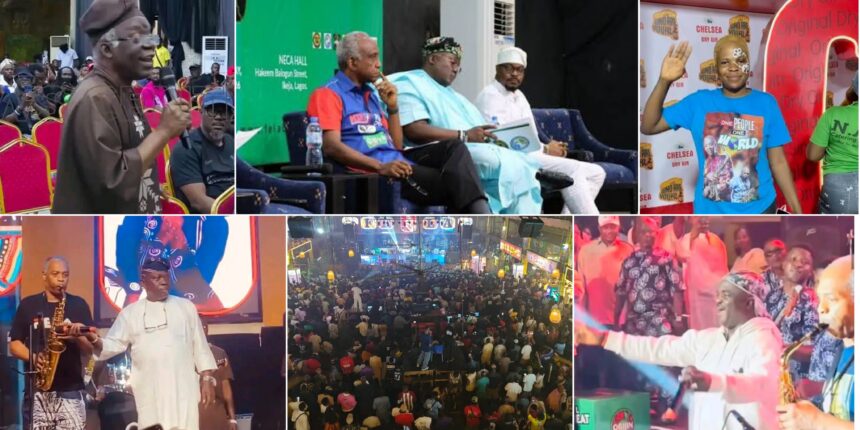
The Fela Debates held on Monday, October 12, 2026, at NECA House in Ikeja, Lagos, brought the 2027 governorship election into the wider conversation surrounding Felabration. The event examined how the next Lagos State administration might address housing, transport, education, healthcare, electricity, employment, environmental challenges and public accountability.
Three governorship candidates took part: Gbadebo Rhodes-Vivour of the African Democratic Congress (ADC), Funso Doherty of the Nigeria Democratic Congress (NDC), and Adedeji Doherty of the Peoples Democratic Party (PDP). The All Progressives Congress (APC) candidate, Deputy Governor Dr Kadri Obafemi Hamzat, was absent. The debate was streamed on the Felabration YouTube channel.
1. Why Felabration included a governorship debate
The debate’s theme, “Who Are You Ré?”, was inspired by Fela Anikulapo-Kuti’s 1971 song Who Are You. It connected the festival’s celebration of Fela’s music and political legacy with questions about leadership, civic responsibility and the choices facing Lagos voters ahead of the 2027 election.
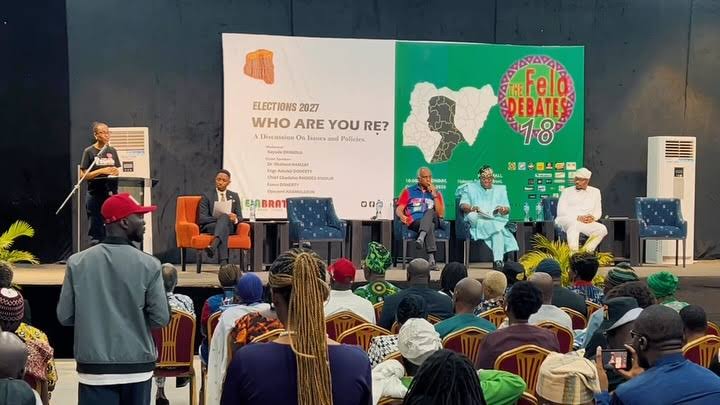
Rather than focusing only on political personalities, the discussion challenged candidates to explain what they would do about problems affecting residents and how their proposed policies would translate into measurable improvements.
The event was moderated by Kayode Okikiolu. Civic advocate Yemi Adamolekun delivered opening remarks, while human rights lawyer Femi Falana SAN and Yemisi Ransome-Kuti also contributed from the floor. Members of the audience raised questions about governance and public services.
2. APC candidate’s absence became a major talking point
Dr Kadri Obafemi Hamzat, the APC’s candidate and serving deputy governor of Lagos State, did not attend. The moderator acknowledged his absence before proceeding with the programme.
Rhodes-Vivour criticised the decision, arguing that candidates should appear before voters to explain their visions rather than rely on party strength or political selection. Adamolekun also questioned the decision, saying the debate offered an opportunity to make a case directly to the public.
Yemisi Ransome-Kuti said she wished Hamzat had attended because she had wanted to discuss a personal experience involving a road in her neighbourhood that was eventually repaired after she engaged with him.
The report linked Hamzat’s absence to the inaugural Seyi Tinubu Colloquium taking place that day.
3. Yemi Adamolekun challenged candidates to explain the consequences of their policies
Adamolekun framed governance around four areas: people, the environment, prosperity and consequences.
Her central argument was that public officials should not be judged solely by revenue figures, major construction projects or government announcements. They should also be assessed by whether ordinary people experience better living conditions and whether officials are held accountable when policies fail.
She raised several issues:
– Transportation: She questioned whether the Lagos Blue Line was serving as many passengers as originally anticipated and asked what had happened to the Bus Rapid Transit system’s dedicated lanes and buses.
Road maintenance: She criticised the pattern of waiting until roads deteriorate badly before repairs are undertaken.
Taxation: She asked how the state could coordinate legal taxes and levies while addressing unofficial collections that residents and businesses may face.
Young people: She questioned how vulnerable young people, including children living on the streets, could be supported to become productive members of society.
Flooding and wetlands: She raised concerns about development that affects wetlands and increases environmental vulnerability.
Public accountability: She challenged candidates to identify who would bear responsibility if their policies did not deliver the promised results.
Her contribution established a recurring theme throughout the debate: the quality of governance should be measured by its effects on people, not simply by the scale of government activity.
4. Gbadebo Rhodes-Vivour proposed 100,000 homes and faster rail expansion
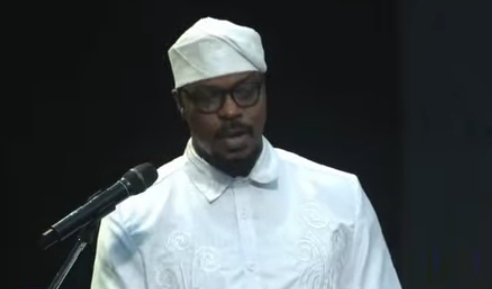
The ADC candidate presented a programme centred on education, practical skills, housing, transport, environmental protection and improved government transparency.
Education and vocational training
Rhodes-Vivour proposed ward-level skill acquisition centres where residents could receive free vocational training, meals and opportunities to earn while learning. He said training should be based on information gathered from local communities so that it reflects the skills and industries people actually need.
He also advocated an education system that gives greater attention to practical skills, critical thinking and African history.
Housing and transport
He promised to deliver 100,000 housing units within four years. His proposed approach included bulk purchasing of building materials, employing local workers and connecting housing developments with rail and water transport.
He also claimed all Lagos rail lines could be developed simultaneously within two and a half years, subject to securing rights of way and financing. These were campaign proposals, not completed projects, and the debate did not establish that the timetable was independently feasible.
Waste, flooding and demolitions
Rhodes-Vivour argued for recycling, upcycling and converting waste into energy instead of relying mainly on collecting and dumping refuse. He called for stronger wetland protection and criticised demolitions that leave residents displaced.
Transparency and public spending
He proposed opening Lagos State’s accounts within his first 10 days in office, benchmarking procurement against market prices and introducing feedback channels through which residents could report problems. He also advocated road contracts that require contractors to repair defective work.
On land issues, he proposed a process for investigating claims by Lagos indigenes whose ancestral land had been taken.
He further said he would cooperate with whoever won the election.
5. Funso Doherty promised 150,000 homes and free public education
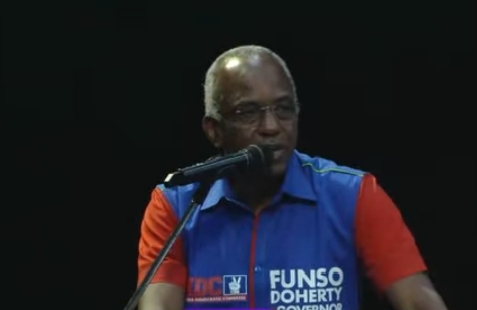
The NDC candidate made residents’ welfare the central measure of government performance. Drawing on Fela’s song Original Sufferhead, he argued that infrastructure and rising government revenue should not automatically be treated as proof that people’s lives have improved.
A 34 commitment manifesto
The Lagos Metropolitan report identified 34 commitments in the NDC manifesto. Among the proposals discussed were:
– Housing: 150,000 homes within four years, with approximately 30,000 targeted for the first year.
Education: Free education through secondary school, including textbooks and examination fees.
School feeding: A nutritious meal for every child in public school on school days.
School transport: Transport assistance for pupils who need it.
Technical education: Expanded technical and vocational training.
Healthcare and employment: Better access to essential services and support for economic opportunities.
The housing pledge was larger than Rhodes-Vivour’s 100,000-unit proposal, although the debate did not demonstrate that either target had secured all the funding, land and implementation arrangements required.
Measuring success through public welfare
Doherty questioned whether Lagos’s revenue had translated into better public education, accessible healthcare, affordable housing, reliable electricity and transportation.
He pointed to outcomes such as maternal and child health, public examination performance and living conditions in informal settlements as measures that could help residents assess government performance.
He also emphasised the importance of a professional civil service, arguing that even well-designed policies would fail if institutions were undermined by patronage or a lack of accountability.
6. Adedeji Doherty proposed cheaper medicines and an electricity-sector intervention
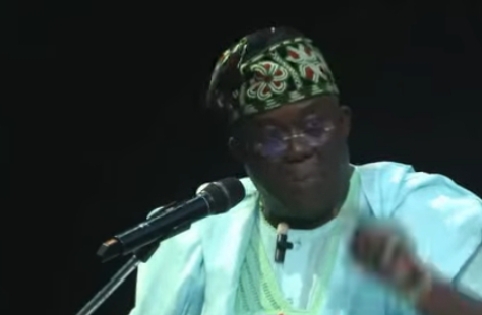
The PDP candidate argued that many of Lagos’s major problems had persisted across successive administrations. He presented his proposals as a way to make daily life more affordable and ensure public resources deliver tangible benefits.
A cheaper-medicines card
Doherty proposed partnering with major pharmaceutical manufacturers to establish dispensaries across Lagos. Under his plan, registered residents would receive identification cards allowing them to purchase medicines at reduced prices.
He suggested that the state could negotiate arrangements with pharmaceutical companies, including investments or equity participation, in exchange for more affordable access to medicines. The proposal was presented as a plan, not an existing statewide programme.
A proposed electricity-sector intervention
He called for a “state of emergency” on electricity distribution companies, arguing that high electricity costs increase the operating expenses of businesses and households.
His proposal involved bringing in consultants, considering state investment or equity arrangements, and requiring participating operators to reduce costs for consumers.
Creative industries, security and vocational alternatives
Doherty also proposed soft loans and public-private partnerships for creative businesses, including music studios. He suggested CCTV connected to solar streetlights in neighbourhoods and markets.
On informal transport collections and the activities associated with agberos, he proposed vocational training in skills such as computer and air-conditioner repairs. He also called for reform of the National Union of Road Transport Workers and a reduction in its involvement in political activities.
Evictions and vulnerable communities
He argued that government should provide alternative accommodation before demolishing homes or evacuating residents. He cited concerns about people who had allegedly received only one or two days’ notice before displacement.
He also said his proposed deputy governor would be a woman and an industrialist.
7. Femi Falana raised questions about agbero collections and public accountability
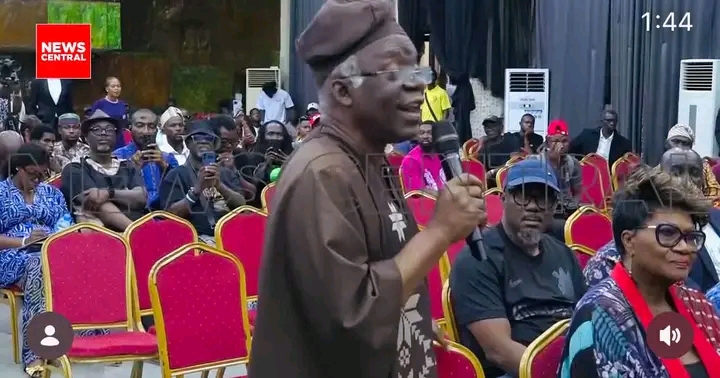
Human rights lawyer Femi Falana SAN addressed the gathering from the floor, stressing that Fela’s legacy included the responsibility to question those in power.
One of his major concerns was the money collected through the agbero system. He cited an estimated ₦120 billion annually and argued that anyone proposing reforms should first establish how much money was being collected, where it went and who benefited.
The report compared this estimate with a 2021 estimate of approximately ₦123.7 billion annually. That comparison offers historical context, but it does not establish the system’s current annual collections with certainty.
Falana also encouraged residents to use the Freedom of Information Act to seek information about public funds received by Lagos State and local governments.
On the Lagos-Calabar Coastal Highway, he questioned the reported funding and the road’s direction, asking what the ₦15 trillion figure being discussed represented. He urged citizens to keep questioning the government after the election rather than abandoning public scrutiny once voting ended.
His electoral recommendation was that opposition groups work together to protect votes, including through agents present at polling units.
8. The Blue Line became a test of infrastructure performance
The debate raised questions about the difference between building infrastructure and ensuring that it serves residents effectively.
Adamolekun questioned whether the Blue Line was carrying enough passengers relative to its anticipated capacity. Funso Doherty also discussed the line’s usage, while Rhodes-Vivour criticised the pace of Lagos rail development and promised a faster expansion timetable.
The Lagos Metropolitan fact-check compared the figures mentioned during the debate with a published figure of approximately five million passengers over the Blue Line’s first two years, through September 2025. Its calculation put the average at roughly 7,000 passengers per day over that period.
The report cautioned that the average was based on the historical total and might not reflect current daily ridership. It also noted that the line’s full planned capacity should not be confused with its actual passenger numbers.
The wider question was whether the state could make public transport more accessible, reduce travel times and improve the daily experience of commuters.
9) Audience members asked about Makoko, indigenes and the cost of living
The audience discussion broadened the debate beyond the candidates’ prepared speeches.
Access to opportunities for Lagos indigenes
An audience member who identified himself as Olusi Adeola questioned whether access to public healthcare, education and other opportunities depended on political connections or APC membership. He also raised concerns about ancestral land.
The question challenged candidates to explain how government services and opportunities could be distributed fairly.
Makoko and forced evictions
Kunu Poh, who said he worked with the Justice and Empowerment Initiative and the Nigerian Slum and Informal Settlement Federation, raised concerns about demolitions and displacement.
He referred to the earlier demolition of Otodo-Gbame and alleged that another round of forced evictions had affected communities around January 2026. He asked what the candidates would do to protect residents’ livelihoods, traditions and communities.
Those statements were raised during the debate.
Reducing the cost of living
Audience member Olanrewaju Akoyemi asked the ADC and NDC candidates which specific policies they would implement within 12 months to reduce the cost of living, what the policies would cost and how residents could hold them accountable if the targets were missed.
This question connected the candidates’ broad promises to the practical issues facing households and businesses.
Brain drain and women in politics
Other participants asked how Lagos could retain doctors and other professionals, encourage women to participate in politics and create opportunities for younger leaders.
A proposed Fela University
An artist and cultural researcher who identified himself as Afereka asked the candidates to consider supporting a proposed “Fela University.” The debate report said the candidates had not answered that question before the event ended.
Kelvin Matthew Wins the Felabration Art Competition
Visual art was another major part of Felabration 2026, with the festival recognising artists whose entries contributed to the celebration of Fela’s cultural influence. The art competition results were announced during the programme associated with The Fela Debates on October 12, giving visual artists a prominent place alongside musicians and other performers.
Kelvin Matthew emerged as the first place winner, receiving ₦1 million for his entry. Anita Nkem took second place and received ₦750,000, while Zachariah Ridwan finished third with a prize of ₦500,000.
The 3 winners shared a total prize pool of ₦2.25 million, making the competition one of the festival’s notable creative activities beyond its live concerts. Organisers also indicated that entries came from different parts of the world, reflecting the reach of a celebration built around a musician whose influence extends beyond Nigeria.
The competition offered artists an opportunity to interpret Fela’s legacy through visual expression, a fitting addition to a festival that has continued to bring music, performance, fashion and other creative disciplines together. By recognising the winners publicly, Felabration also gave attention to artists whose work may reach audiences through galleries, exhibitions and digital platforms rather than live music stages.
Emerging Musicians Open the Festival Week
Felabration’s programme began creating opportunities for performers from different backgrounds on Tuesday, October 13, when Tobi Majek and the Da Seed Band appeared alongside Scott Martins and the Electrified Band. Their performances included musical tributes to Fela, with dancers accompanying the latter band’s set.
The appearance of live bands and emerging musicians added variety to the festival’s opening days, allowing audiences to experience different approaches to Afrobeat and related Nigerian musical traditions. Established performers may attract much of the attention at a festival of this size, but the supporting programme also provides a stage for talents seeking to introduce their music to new listeners.
Thursday’s programme included Akin Ajayi, Ayorhskyfire, Femi G and Adeola Tenor, while the Kings and Queens Art Academy also featured in the activities. These appearances formed part of a wider programme that blended live music with other creative performances, helping the festival maintain its character as a gathering for established names and upcoming entertainers.
The participation of emerging artists also reflected the festival’s wider cultural purpose, which involves keeping Fela’s musical influence relevant to younger generations. Rather than limiting the celebration to songs associated with the late musician, the programme created room for performers to present their own styles while drawing inspiration from the traditions he helped popularise.
Red Themed Fashion Adds Colour to Wednesday’s Programme
Wednesday, October 14, brought another visual element to Felabration 2026 as attendees appeared at the New Afrika Shrine in red themed outfits. The day’s activities included live performances and tributes to Fela, while the clothing worn by festivalgoers contributed to the atmosphere surrounding the celebration.
Fashion has long been connected to Fela’s public image, from his distinctive trousers and beads to his colourful prints and stage outfits. His appearance became part of the identity he projected as a musician and political figure, making clothing an important feature of the cultural legacy celebrated during Felabration.
The red themed outfits added a shared visual element to the day’s programme without taking attention away from the music. Festivalgoers were able to express themselves through their clothing while participating in an event that encourages individuality, creativity and cultural expression.
The fashion activities also provided a link to the wider Dress Fela competition, which celebrated interpretations of the musician’s distinctive style. Together, these elements showed how Felabration has developed into a cultural gathering where clothing and personal expression sit alongside live performances and tributes.
Femi Kuti and Obesere Bring Afrobeat Together With Fuji
Thursday, October 15, was particularly significant because it marked what would have been Fela Anikulapo Kuti’s 88th birthday. Born on October 15, 1938, Fela remains a central figure in Nigerian music history, and the date gave the festival an opportunity to connect its performances directly to the life and influence of its namesake.
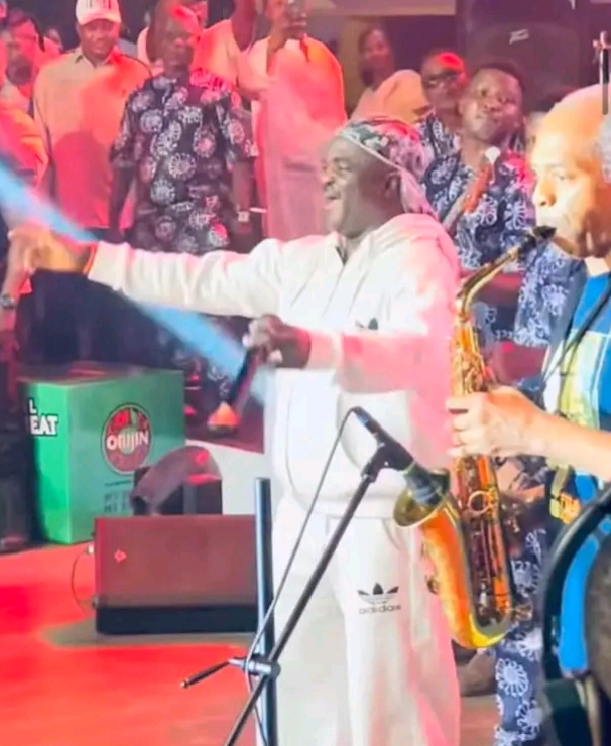
One of the most distinctive musical moments came when Fela’s eldest son, Femi Kuti, performed with Fuji musician Abass Obesere at the New Afrika Shrine. The collaboration brought Afrobeat and Fuji together on the same stage, connecting 2 Nigerian musical traditions through performers associated with different sounds and audiences.
The appearance stood out because it placed Fela’s musical heritage alongside another established genre of Nigerian popular music. Afrobeat is associated with extended instrumental arrangements, political commentary and a distinctive rhythmic approach, while Fuji developed through a different musical history rooted in Yoruba performance traditions. Their meeting offered audiences an opportunity to experience both styles within the same festival programme.
Mr Real and Lyte also performed that night, adding to the birthday celebrations at the Shrine. Activities continued into the early hours of Friday, October 16, extending the programme beyond the calendar date of Fela’s birthday.
The joint performance by Femi Kuti and Obesere was among the festival’s defining musical moments because it brought together artists whose careers represent different parts of Nigeria’s rich musical landscape. It also reinforced the festival’s wider aim of keeping Fela’s legacy connected to the country’s evolving creative scene.
Daddy Showkey, Ice Prince and Ruggedman Feature on Saturday
Saturday, October 17, brought a diverse lineup of Nigerian entertainers to the New Afrika Shrine as Felabration moved towards its final day. The reported performers included Daddy Showkey, Peruzzi, L.A.X, Barry Jhay, Hotkeed, Ruggedman, Ice Prince, Shoday, Ortodefemi and Tee Famous.
Daddy Showkey delivered his signature Galala sound, recalling a musical style that became closely associated with Nigerian street culture and dance music. His appearance added a veteran performer to a programme that also featured artists representing newer developments in Nigerian popular music.
Ice Prince and Ruggedman brought their established hip hop backgrounds to the event, while Peruzzi, L.A.X and Barry Jhay represented other parts of the contemporary music scene. The combination of performers gave the Saturday programme a varied sound, moving between different styles rather than concentrating on a single genre.
The event formed part of the festival’s closing weekend, when audiences had opportunities to see performers whose careers span different periods of Nigerian entertainment. The mixture of established acts and younger names also reflected the continuing relationship between earlier musical movements and the artists shaping the industry today.
Performances continued into the early hours of Sunday, October 18, bringing the Saturday concert into the final day of the festival. The programme helped sustain the festival atmosphere at the Shrine as Felabration approached the end of its 7 day celebration.
Dress Fela Competition Recognises Fashion Creativity
The Dress Fela fashion show took place on Saturday, October 10, before the main festival week began. The event celebrated Fela’s influence on contemporary African fashion, encouraging participants to develop creative interpretations of his recognisable appearance through clothing and styling.
OLA GOD FASHION was identified as the winner of the Dress Fela competition, with a reported prize of ₦1 million. The result placed fashion among the festival’s recognised creative disciplines, alongside visual art and live music.
Fela’s style remains closely associated with his public identity, from bold prints and beads to distinctive trousers and stage clothing. These elements have continued to influence musicians, designers and fashion enthusiasts, making his appearance an enduring source of inspiration decades after his death.
The Dress Fela competition gave participants a platform to reinterpret that style for contemporary audiences. Rather than treating fashion as a secondary part of the festival, the event recognised the role clothing can play in preserving and adapting cultural influences.
Its position before the main week also meant that Felabration’s activities extended beyond the October 12 to October 18 concert programme. The competition helped establish the wider celebration as a series of cultural events leading into the final week, with creative participants contributing to the festival before the major concerts began.
Sean Tizzle and Femi Kuti Feature in the Closing Concert
Sunday, October 18, marked the conclusion of Felabration 2026, bringing the week’s performances and cultural activities to an end. The closing concert at the New Afrika Shrine featured Sean Tizzle, Femi Kuti, L.A.X, Barry Jhay, Kacy, Ay Flowz and Kcer, according to the reported programme.
Femi Kuti’s appearance maintained the connection between the festival and the Kuti family, whose music has remained central to Felabration since its establishment. His participation also followed the October 15 birthday concert, where his collaboration with Obesere had brought Afrobeat and Fuji together.
Sean Tizzle and the other performers represented the broader Nigerian music scene, adding contemporary sounds to a celebration built around Fela’s legacy. Their appearances helped bring together different generations of musicians during the final concert, with the programme extending beyond tributes to the original Afrobeat pioneer.
The closing event brought the main festival week to a finish after several days of performances, discussions and creative competitions. While the concerts provided much of the public excitement, the political debate, art competition and fashion events had also contributed to the programme’s broader cultural character.
Freedom Park Hosts Underground System 5
Felabration 2026 also extended to Freedom Park on Lagos Island, where Underground System 5 ran from October 12 to October 18. The separate programme provided another location for music and creative performances during the same week, offering audiences an alternative setting from the New Afrika Shrine.
Underground System 5 advertised themed musical nights covering Highlife, Jazz, Juju and Fuji, Reggae and Afrobeat. The programme also included a Gen Z Zone in the amphitheatre, designed for rave sessions, open mic performances, poetry, spoken word and activities involving emerging creatives.
Its advertised lineup included Dede Mabiaku, Gloria Ibru, Afowoslide, Sikiru Lemon, Serrano, Wura Samba, Saxoqueen and J Stanley, among others. The variety of performers and activities gave the Freedom Park programme a distinct identity within the wider week of Felabration events.
The distinction between the venues is important because Underground System 5 was a separate programme from the concerts at the New Afrika Shrine. Although both contributed to the week’s cultural activities, their advertised lineups and locations were different.
The Freedom Park programme also demonstrated how Felabration’s wider celebrations could reach audiences through multiple venues and creative formats. Music remained central, but the inclusion of spoken word, poetry and open mic sessions created room for other forms of expression throughout the week.
The Meaning Behind the Theme “Who Are You?”
The theme for Felabration 2026 was “Who Are You?”, a phrase associated with Fela’s 1971 song of the same name. The choice connected the festival’s programme to questions of identity, individuality and social conventions, ideas that have remained closely associated with Fela’s music and public persona.
The theme appeared through different parts of the celebration, from musicians interpreting his influence to artists presenting visual work and fashion designers drawing inspiration from his distinctive style. The Fela Debates added a public affairs dimension by bringing questions about governance, public services and political accountability into the festival programme.
These activities reflected the different ways Fela’s legacy continues to influence Nigerian culture. His music remains a major part of the story, but his political commentary, public image and approach to self expression have also shaped how later generations engage with his work.
The participation of emerging musicians was another part of that continuing relationship. Young performers had opportunities to share the stage with more established names, while audiences encountered different musical styles within a programme built around Afrobeat and its wider cultural connections.
Felabration 2026 therefore brought several strands of Nigerian creative life into one celebration, with music, fashion, visual art and public discussion contributing to the week’s activities. The theme offered a common point of reference for these events, even as each programme developed its own character.
Key Facts About Felabration 2026
Felabration 2026 ran from October 12 to October 18, with the New Afrika Shrine in Ikeja serving as the main venue. The festival’s theme was “Who Are You?”, and the programme included concerts, the Fela Debates, visual art competitions, fashion activities and events at Freedom Park.
Among the notable musical moments was the joint performance by Femi Kuti and Obesere on October 15, the date that would have marked Fela’s 88th birthday. Daddy Showkey, Ice Prince and Ruggedman were among the performers reported for Saturday, October 17, while Sean Tizzle and Femi Kuti featured in the closing concert on October 18.
The art competition recognised Kelvin Matthew with ₦1 million for first place, Anita Nkem with ₦750,000 for second place and Zachariah Ridwan with ₦500,000 for third place. The Dress Fela competition separately recognised OLA GOD FASHION as its winner, with a reported prize of ₦1 million.
The Fela Debates brought 3 Lagos governorship candidates together to discuss issues including housing, transport, education, healthcare and political accountability. Meanwhile, Underground System 5 at Freedom Park ran alongside the main festival week, with its own programme of music and creative activities.