And if INEC continues to show an unsettling willingness to desecrate and thwart whatever is left of the fragile structures that underpin our socio-political and democratic order, then maybe we should quit the pretense and stop deluding ourselves that what we are currently practising is democracy.
The year 2027 is a most momentous and foreboding one for people and the country. Nigerians’ indifference and, some will say, opposition to Mr President’s re-election. Intra- and inter-party squabbles. The unscrupulous and shady gale of defections. The devil-may-care aura of desperados in the political space and the citizenry’s misgivings about the Independent National Electoral Commission’s capacity to conduct credible elections all add up to raise fears and anxieties.
INEC’s rectitude or integrity, despite all of these unfolding events, remains key. The electoral body arguably does not measure up in the estimation of the electorate, more so in the build-up to the general elections, and no one can blame Nigerians for their distrust of INEC after the conduct of the 2023 elections and subsequent polls. In recent days, INEC has been at the centre of intense public scrutiny after it brazenly violated a key provision of the Electoral Act that mandated it to upload the nation’s voter register for everyone to scrutinise.
The penchant of Nigeria’s electoral umpire for grandiosity is puzzling, if not irritating. It has a way of making the seemingly easy task of conducting free, fair and credible elections a complex and complicated exercise. It relishes fixating on a needless and cumbersome routine while struggling to grasp the basic and most important aspects of its duties. And all these are by design. They are not part of any deliberate and conscious action to sanitise a seemingly convoluted and corrupt system and ensure that the system serves the people, but a calculated plot to upend any sense of order, structure and organisation that serves to only undermine and subvert the will of the people.
It is no longer news that INEC has failed to publish the preliminary voters’ register on its website by the 90-day deadline before the 2027 general election, despite a constitutional and legal requirement for the register to be made available online for public scrutiny
Section 19(1) of the Electoral Act 2026 mandates INEC to make copies of the voters’ register available for public scrutiny on its website as well as at every registration area for seven days before 90 days to the general election.
“Subject to the provisions of section 9 (6) of this Act, the commission shall, not later than 90 days to a general election, appoint a period of seven days during which a copy of the voters’ register for each Local Government, Area Council or ward shall be displayed or published for public scrutiny at every registration area and on its official website or any website established by the commission for that purpose,” the section reads
Since the 2027 general elections are slated for 16 January 2027, with the presidential and National Assembly elections, the deadline for INEC to appoint the seven days for displaying the voters’ register was 18 October. The governorship and state Houses of Assembly elections are scheduled for 6 February 2027, according to INEC’s timetable.
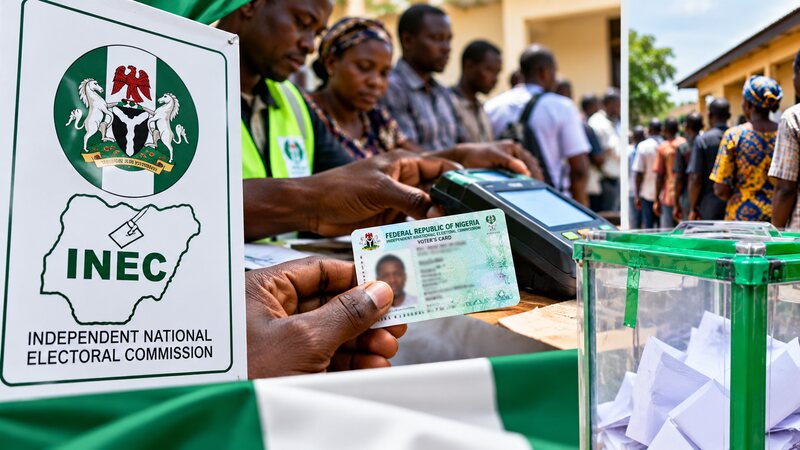
INEC carried out a nationwide display of voter registers at Registration Areas (RAs) across the country between 9 and 15 October, to allow voters to check their details and identify ERRORS. However, the commission did not publish them on its website or any other website, as mandated by the Electoral Act.
As of yesterday, October 22, the online portal for the preliminary register still displayed a message stating, “There are currently no preliminary registers to display. Please check back later”.
No INEC official has been able to give a cogent and convincing answer to why the body has refused to publish the voter register for everyone to see. For a body that is perennially enmeshed in a crisis of credibility, this latest deliberate breach of the law guiding the electoral process does not help its sullied reputation, and it only feeds into the narrative of Nigerians who believe INEC has been compromised and cannot be trusted to conduct free, fair and credible elections.
The preliminary voters’ register lets citizens check and ascertain whether their personal details have been correctly entered before the register is finalised. The process is designed to help spot mistakes before they affect a voter’s ability to participate in an election.
Under Section 19, INEC is required to accept and consider objections and complaints concerning omitted or included names and necessary corrections within 14 days following the display or publication of the register in accordance with the section. The section also allows objections to the inclusion of unqualified persons, including deceased persons, and claims by registered voters whose names have been omitted.
However, with INEC’s refusal to publish the voter register, it will be extremely difficult for many Nigerians to find out the status of their registration, and if potential voters cannot ascertain whether they are in the clear and will be able to vote next year, then the purpose of the voter register display has not only been defeated, but a key component of the electoral process is being intentionally sabotaged to achieve a certain nefarious predetermined electoral outcome.
Nigerians are not unmindful or oblivious to the troubling antics and shenanigans of the INEC, but what many are having a hard time comprehending is why a body that is tasked with protecting the sanctity of our electoral process and democracy is working assiduously to become the major instrument of its destruction. And if INEC continues to show an unsettling willingness to desecrate and thwart whatever is left of the fragile structures that underpins our socio-political and democratic order, then maybe we should quit the pretense and stop deluding ourselves that what we are currently practising is democracy.
One can only hope the commission will retrace its steps and do the needful for the sake of, but that will be tantamount to expecting a camel to pass through the eye of a needle.