


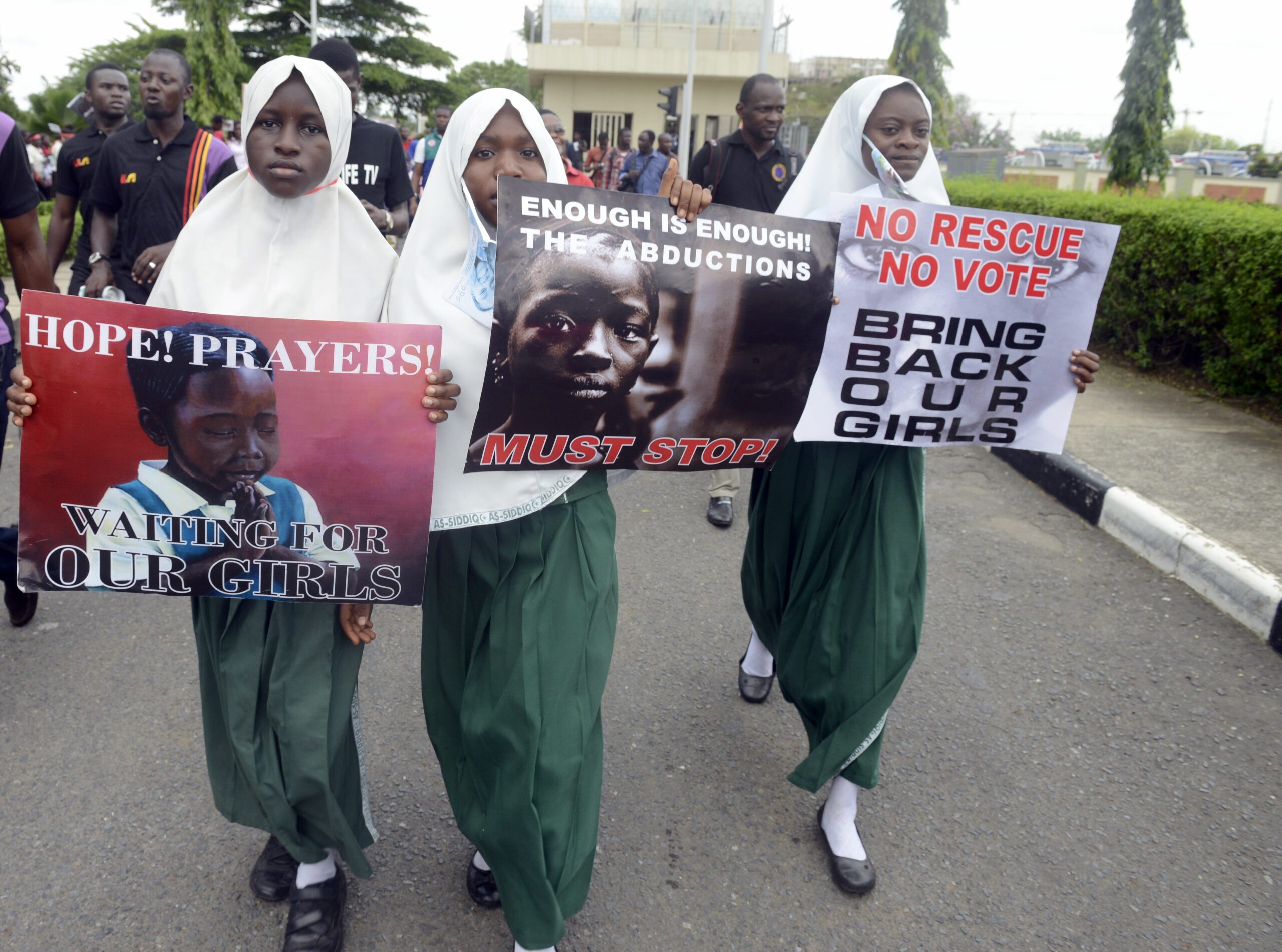

- Armed groups exploit weak school security and remote locations to carry out mass abductions across northern Nigeria.
- Ransom payments, though often denied officially, have fueled the growth of student kidnappings as a lucrative criminal enterprise.
In recent years, Nigeria has experienced a disturbing increase in the abduction of students from educational institutions.
What began as sporadic incidents has escalated into a persistent security challenge, affecting hundreds of students, disrupting academic calendars, and raising significant concerns about the safety of educational environments.
The phenomenon has transformed schools—traditionally regarded as safe spaces—into vulnerable targets for armed groups, creating fear and instability in various regions of the country.
The trend of student abductions in Nigeria gained international attention in April 2014, when 276 schoolgirls were kidnapped from the Government Girls Secondary School in Chibok, Borno State, by the insurgent group Boko Haram.
Although abductions had occurred prior to this event, the scale and symbolism of the Chibok incident underscored the strategic shift by militant groups toward targeting schools as a means of furthering ideological, financial, or political objectives.
Following the Chibok abductions, several other mass kidnappings occurred, particularly in northern Nigeria.
These include the abduction of 110 girls from Dapchi in 2018, over 300 boys from a school in Kankara in 2020, and multiple similar events in Zamfara, Kaduna, and Niger States.
The targets have often been boarding schools in rural or semi-urban areas with limited security infrastructure.
DRIVERS BEHIND THE ABDUCTIONS
Multiple factors contribute to the increase in student abductions in Nigeria. These include:
-
Weak Security Architecture: Many schools, particularly in remote or conflict-prone regions, lack sufficient security measures. Limited personnel, poor response times, and inadequate surveillance systems make them easy targets.
-
Geographical Vulnerabilities: Several educational institutions are situated in isolated locations, far from major population centers or military installations. These areas often have difficult terrain, which facilitates undetected movements by armed groups.
-
Ransom Economics: The profitability of kidnappings has emerged as a powerful incentive. While government officials often deny paying ransoms, there have been widespread reports of payments—either by families, communities, or intermediaries—to secure the release of abducted students.
-
Ideological Motives: Extremist groups like Boko Haram and the Islamic State West Africa Province (ISWAP) oppose Western education, which they perceive as a corrupting influence. Attacks on schools serve both to instill fear and to undermine state authority.
IMPACT ON EDUCATION
The rise in school abductions has had a profound impact on the Nigerian educational system:
-
School Closures: In high-risk regions, numerous schools have been shut down indefinitely. In 2021 alone, over 1,500 schools were closed due to security concerns, disrupting the education of thousands of children.
-
Decreased Enrollment: Fear of abduction has led many parents to withdraw their children from school, especially girls, thereby widening the already significant education gap in parts of the country.
-
Psychological Trauma: Survivors of abductions often suffer long-term emotional and psychological effects. The trauma also extends to families, teachers, and communities, creating an atmosphere of perpetual anxiety.
GOVERNMENT AND INTERNATIONAL RESPONSES
The Nigerian government has implemented several initiatives to address the issue. These include the Safe Schools Initiative, launched in 2014, which aims to improve security infrastructure and promote community involvement in school safety.
State and federal authorities have also deployed security forces to guard vulnerable institutions and conduct rescue operations.
Additionally, international organizations such as UNICEF and Save the Children have provided support through advocacy, funding, and the provision of psychosocial services to affected children.
Despite these efforts, progress remains uneven, largely due to governance challenges, corruption, and the scale of insecurity across the country.
LEGAL AND POLICY FRAMEWORKS
Nigeria has ratified international instruments that affirm the right to education and the protection of children, including the United Nations Convention on the Rights of the Child.
Domestically, the Child Rights Act and other legal provisions prohibit child exploitation and abduction.
However, enforcement remains weak, and prosecutions of perpetrators are rare, which undermines deterrence.
The surge in student abductions in Nigeria highlights a critical intersection of security, education, and human rights.
While measures have been taken at various levels to mitigate the threat, the persistence of these attacks underscores the need for a more robust, coordinated, and sustained approach.
Ensuring the safety of schools is not only a security imperative but a foundational step toward safeguarding the future of education and development in Nigeria.
Discussion about this post