


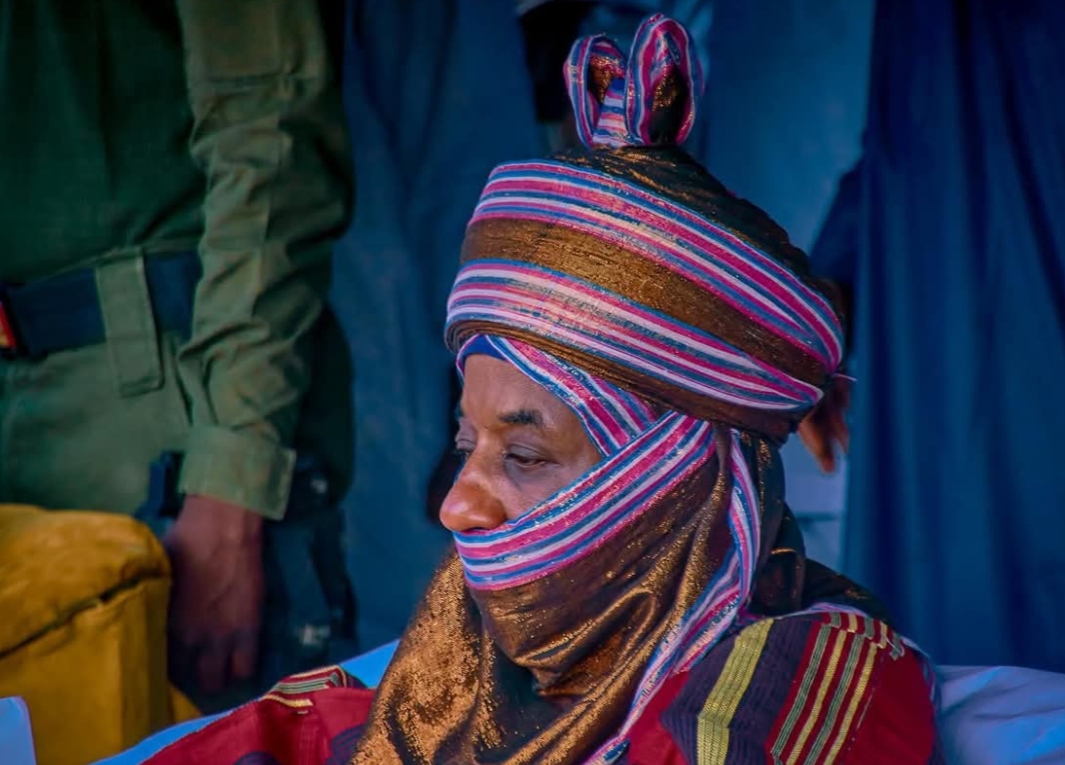

- Sanusi said public tolerance of corruption has created a culture where dishonesty thrives without accountability or moral resistance.
- He stated that upbringing plays a role in how leaders manage public trust and make decisions in office.
The emir of Kano, Muhammadu Sanusi, has decried what he described as a complete breakdown of Nigeria’s moral and ethical foundations.
Sanusi, a former governor of the Central Bank of Nigeria, made the remarks on Wednesday during an interview on Politics Today, a Channels Television programme.
He argued that Nigerian society no longer questions how wealth is acquired, but instead rewards individuals with questionable sources of income.
“The entire value system of the country has been eroded. We have been ruled by people who have no values, no name behind them, and no desire to leave a name after them,” he said.
“These are people who define themselves by how many houses they own, how many private jets they have, how much money they have in the bank.”
He added that many of those in public office are widely perceived as looters of the commonwealth, yet continue to enjoy recognition and positions of influence.
“It is not important to them that people look at them, and they only see thieves, they see criminals, they see people who have taken the commonwealth,” he said.
Sanusi warned that a system where material success is idolised — regardless of the means — would only keep producing the same brand of leadership.
“A society in which material wealth, no matter how you get it, is respected, is glorified, where people who are known to have stolen money get rewarded with ministerial, senatorial appointments — that society will continue to reproduce itself,” he said.
He stressed that the widespread tolerance of corruption had created an environment where dishonesty thrives without consequence.
Sanusi further stated that poor upbringing among those in power is evident in their handling of public responsibilities and disregard for integrity.
“We don’t have a sense of disgust for people who hold public office and amass wealth,” he said.
“We reward them with appointments, with more public offices, and more opportunities to amass wealth — and this is what Nigeria has become.”
He criticised the motive behind many political ambitions, saying public service has become a platform for personal enrichment.
“Many people go into government to make money, but you don’t go into government to make money,” he added.
Sanusi lamented that very few leaders today are driven by the urge to build a legacy, noting that most are more focused on luxury and self-interest.
He recalled the leadership of the late General Murtala Muhammed, saying Nigeria must rediscover such moral clarity and national discipline.
According to him, the responsibility for changing societal values should not rest solely on those in power.
“I think we need an entire regeneration of values,” he said.
“It is not about one person. The president or the governors, or the ministers cannot on their own change this country.”
Sanusi also accused political leaders of crippling the civil service, which he described as critical to ensuring institutional stability and accountability.
He urged the government to prioritise rebuilding the bureaucracy, saying civil servants should be empowered to act independently of political manipulation.
Discussion about this post