


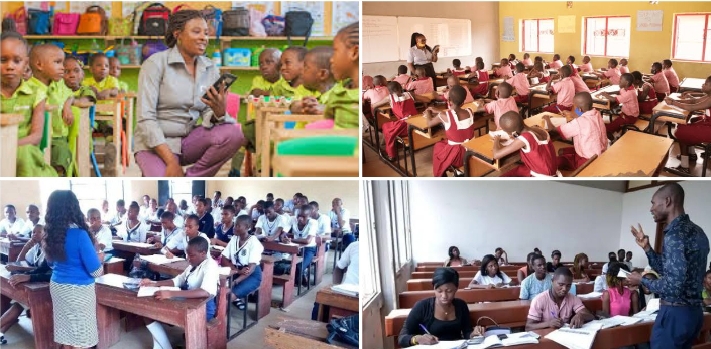

For more than three decades, one set of numbers has quietly dictated the destiny of millions of Nigerian children: 6-3-3-4. Six years of Nursery and primary education, three years of junior secondary, three years of senior secondary, and four years of tertiary education.
It was more than just an academic ladder—it became a national rhythm, a framework every household, teacher, and policymaker recognized.

But in February 2025, that familiar structure came under review when the Federal Government introduced a bold proposal: a shift to 12-4. This new model suggests twelve uninterrupted years of basic education followed by a four-year tertiary stretch, streamlining the system into two blocks instead of four.
The proposal stirred immediate debates across classrooms, staff rooms, and policy circles. Would it simplify learning and strengthen quality? Or would it erase decades of investments made under the 6-3-3-4 framework? To understand what is at stake, one must step back into Nigeria’s educational history, revisit the promises and pitfalls of past reforms, and place the current debate in the broader global context.
This article delves into the roots of the 6-3-3-4 model, its outcomes over the years, and why the shift to 12-4 is more than a technical restructuring—it is a reflection of Nigeria’s ongoing struggle to align education with national development, equity, and global competitiveness.
The Origins of 6-3-3-4
The 6-3-3-4 system was officially introduced in 1982, though it became fully operational by 1989. The vision was simple but ambitious: to prepare Nigerian students for the future by making education more functional, diversified, and skill-oriented.
Under colonial rule, Nigeria’s system was modeled after Britain’s. It placed emphasis on rote learning and academic elitism while neglecting vocational and technical pathways. By the late 1970s, Nigeria’s leaders—fueled by oil revenues and a sense of post-independence nation-building—sought to overhaul this colonial inheritance. The National Policy on Education (1977) laid the foundation, emphasizing self-reliance, national consciousness, and manpower development.
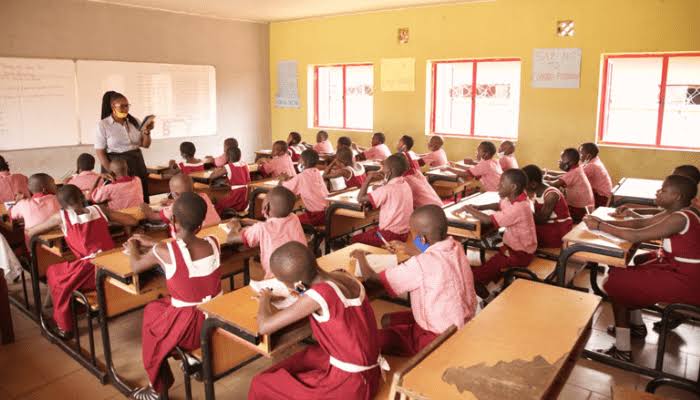
The 6-3-3-4 model was meant to reflect these ideals. At the primary level (6 years), emphasis was on literacy, numeracy, and life skills. The junior secondary stage (3 years) was designed as a sorting point, exposing learners to basic science, technology, and vocational subjects.
The senior secondary stage (3 years) would then offer academic specialization or vocational depth, preparing learners for either the workforce or higher education. Finally, the tertiary stage (4 years) anchored professional preparation.
In theory, this was Nigeria’s boldest attempt at linking education to real-life employability and reducing overdependence on white-collar jobs.
The Promises and Realities of 6-3-3-4
The early years of 6-3-3-4 carried optimism. Textbooks were rewritten, vocational subjects like woodwork, metalwork, home economics, and agricultural science were introduced, and new examination bodies like the National Examinations Council (NECO) later emerged to complement WAEC.
But soon, cracks began to show. The vocational component suffered because many schools lacked workshops, equipment, and trained teachers. Instead of producing well-rounded graduates with practical skills, the system remained largely academic and exam-driven. By the 1990s, parents and students saw junior and senior secondary education not as branching points but as hurdles toward university admission.
The dream of skill acquisition gave way to an obsession with certificates. Students often memorized facts to pass standardized exams rather than build competencies. Teacher quality also became uneven due to underfunding, while overcrowded classrooms and inadequate infrastructure further eroded effectiveness.
Despite these shortcomings, 6-3-3-4 became deeply entrenched. Generations of Nigerians—politicians, professionals, artisans, and even entertainers—emerged from its framework. It was not perfect, but it was familiar, and in a country where consistency in policy is rare, that consistency itself carried weight.
Why 12-4 Was Proposed
By the 2020s, global benchmarks in education were shifting toward uninterrupted basic education. UNESCO and other international bodies emphasized at least 12 years of continuous schooling as a foundation for citizenship and workforce readiness.
Nigeria’s 6-3-3-4 system, though functional, was seen as fragmented. Each transition point—primary to junior secondary, junior to senior, and senior to tertiary—became bottlenecks plagued with exams, dropouts, and administrative hurdles. For example, millions of children never made it past the transition from primary to junior secondary due to poverty, early marriage, or lack of access to schools.
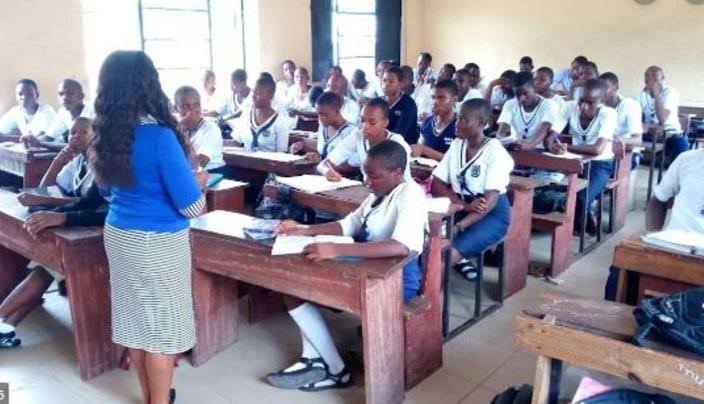
The proposed 12-4 model thus seeks to provide a seamless twelve-year basic education, ensuring that every Nigerian child has the opportunity to complete schooling up to the end of senior secondary without interruptions. The four years of tertiary education remain unchanged but are envisioned to be more aligned with research, innovation, and industry needs.
Proponents argue that 12-4 would reduce exam pressures, simplify policy implementation, and guarantee that the average Nigerian student graduates with a stronger, uninterrupted foundation before facing the rigors of university or the workforce.
Comparing the Two Systems
When placed side by side, the 6-3-3-4 and 12-4 models highlight a philosophical difference in how Nigeria sees education.
6-3-3-4 was designed to diversify learners early, giving them vocational options after junior secondary.
12-4 emphasizes continuity, seeking to keep all learners on the same track for twelve years before specialization.
Critics of 12-4 worry that it may delay vocational exposure, which could disadvantage students who are not academically inclined. For instance, those who might thrive as artisans or technicians would have to endure twelve full years of general education before pursuing specialized training.
On the other hand, defenders of the reform insist that Nigeria’s economy has changed. In a 21st-century digital world, even artisans require literacy, numeracy, and problem-solving skills that twelve years of general education could provide. The demand for a knowledge-based economy, they argue, outweighs the limitations of early vocational sorting.
Globally, many countries—including the United States (12-4), South Korea (12-4), and Germany (though with dual pathways)—already operate models closer to 12-4. Nigeria’s shift, therefore, may be more about global alignment than internal reinvention.
The Challenges Ahead
Despite its promise, the 12-4 proposal faces significant hurdles.
1. Infrastructure Gap: Nigeria’s schools are already overstretched. According to UNICEF, over 20 million Nigerian children are out of school. Introducing 12 years of compulsory education without expanding classrooms, recruiting teachers, and providing learning materials could worsen overcrowding.
2. Teacher Quality: The Nigerian Union of Teachers (NUT) has consistently warned that reforms without investments in teacher training are cosmetic. The success of 12-4 depends on empowering teachers with modern pedagogical tools, digital literacy, and subject expertise.
3. Financing: Education budgets in Nigeria have historically hovered around 6–8% of national expenditure—far below UNESCO’s recommended 15–20%. Without major funding reforms, 12-4 could be another ambitious policy stranded on paper.
4. Equity Issues: Rural areas already lag behind in secondary school access. Ensuring that a girl in Zamfara or a boy in Cross River can truly enjoy twelve years of education requires tackling cultural, economic, and geographic barriers.
Lessons from History
Nigeria has a long history of adopting policies that are well-intentioned but poorly implemented. The Universal Primary Education (UPE) scheme of the 1970s, for instance, was ambitious but collapsed due to funding and planning challenges. Similarly, the Universal Basic Education (UBE) launched in 1999 struggled with infrastructural deficits and governance issues.
The lesson is clear: policies do not transform societies—implementation does. If Nigeria repeats the same cycle with 12-4, the reform could join the list of abandoned or diluted initiatives.
What makes 12-4 different, however, is that it is not entirely new. It builds on the global trend of guaranteeing twelve years of continuous schooling, a benchmark Nigeria has long aspired to meet. If carefully rolled out, it could mark a turning point rather than a false start.
The Future of Nigerian Education
At its core, the 12-4 proposal forces Nigeria to ask a deeper question: what is the purpose of education? Is it merely about passing exams and earning certificates, or about equipping citizens with the resilience, creativity, and skills to thrive in a rapidly changing world?
If Nigeria embraces 12-4, it must also embrace reforms in curriculum, assessment, and teacher development. Digital literacy, climate education, entrepreneurship, and critical thinking must become central. Otherwise, the country risks creating twelve-year graduates who are no more prepared than their predecessors.
The story of Nigeria’s education system has always been about balancing tradition with innovation, access with quality, and vision with reality. From 6-3-3-4 to 12-4, the numbers may change, but the real measure will remain the same: how many Nigerian children leave school truly empowered to build lives of dignity, productivity, and global relevance.
FINAL THOUGHTS
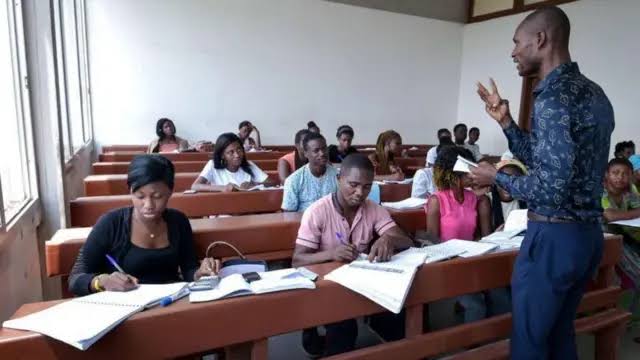
The transition from 6-3-3-4 to 12-4 is more than a technical reform. It symbolizes Nigeria’s effort to reposition education as a driver of development in a globalized century.
The old system was not without merit—it shaped entire generations—but it struggled under the weight of neglect, underfunding, and misplaced priorities. The new system promises continuity, equity, and alignment with international best practices.
Yet, the outcome will depend not on the elegance of policy documents but on classrooms, teachers, and children across Nigeria. History warns us of failures; the present offers us an opportunity. The question remains: will Nigeria seize it?.
Discussion about this post