


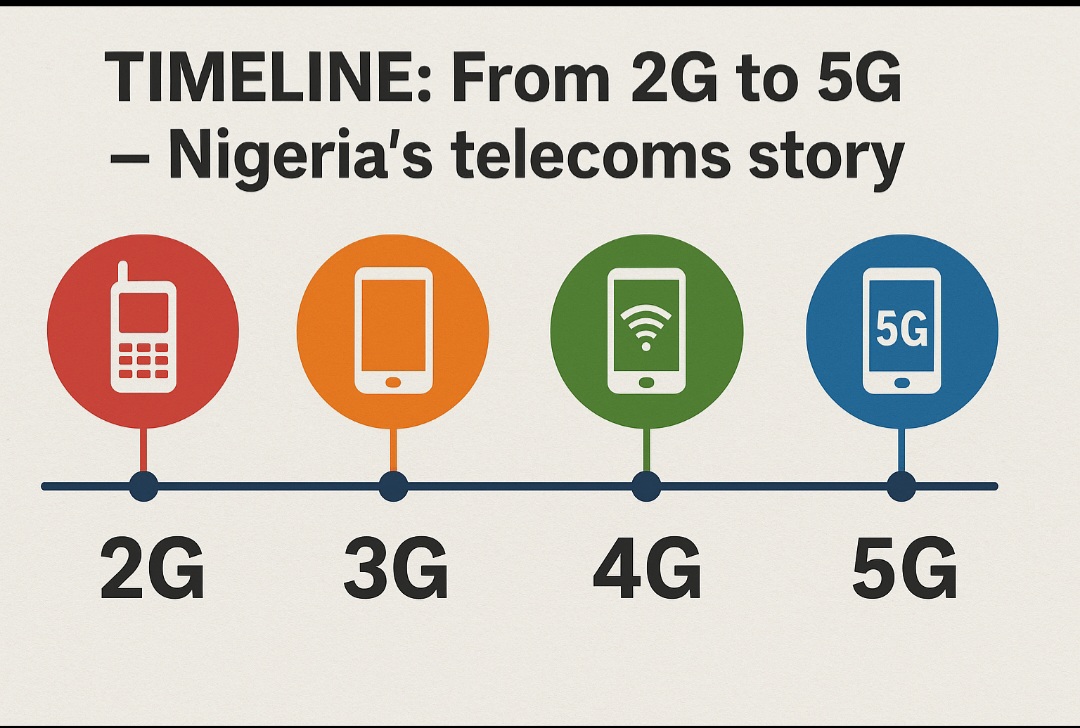

When the first mobile phone networks arrived in Nigeria in 2001, few imagined the pace at which the country’s communication system would change.
Before that year, landlines dominated homes and offices, but they were scarce, unreliable, and out of reach for most citizens.
The granting of licences to private telecoms operators marked a turning point in the sector.
The Nigerian Communications Commission (NCC) issued the first GSM licences in 2001, opening the market to players such as MTN, Econet, and later Globacom.
The arrival of these companies quickly transformed how Nigerians communicated.
By the early 2000s, 2G networks made voice calls and short messaging services possible for millions who had never owned a phone.
The queues at phone centres and SIM registration points were visible signs of a new era.
As demand grew, operators expanded services, and tariffs began to reduce, making calls cheaper than before.
In 2007, the introduction of 3G technology gave Nigerians a taste of faster internet access.
It opened the door to mobile browsing, emails, and the first wave of social media engagement.
Students, professionals, and entrepreneurs found new opportunities in the expanding digital space.
The minister of communications at the time described it as “a bridge that links Nigeria to the digital world.”
As internet penetration spread, banks, schools, and businesses began to integrate mobile services into their operations.
By 2010, Nigeria had become one of the fastest-growing telecoms markets in Africa.
The emergence of 4G networks further boosted internet speed and connectivity.
Streaming, video calls, e-learning, and online shopping became easier to access.
Telecoms firms invested billions of naira into infrastructure to meet rising demand.
According to NCC data, active mobile subscriptions climbed from less than one million in 2001 to over 200 million in 2022.
Jobs, taxes, and corporate social responsibility projects also followed the expansion of the sector.
Despite progress, challenges remained.
Rural areas faced weak signals, while poor electricity supply and vandalism of infrastructure slowed development.
Consumers also complained about dropped calls, high data costs, and inconsistent service quality.
In 2019, Nigeria began trials of 5G technology to test its suitability for the local environment.
Two years later, the federal government approved its deployment.
By 2022, major telecoms operators had rolled out 5G services in select cities.
The executive vice chairman of the NCC, Umar Danbatta, said it was “a milestone that places Nigeria on the global map of advanced digital economies.”
With 5G, users can now experience higher internet speed, lower latency, and broader possibilities in health, education, and business.
Experts say the technology could support innovations such as artificial intelligence, driverless cars, and smart cities.
Small businesses also see potential in e-commerce growth and fintech expansion.
Still, questions remain about affordability, coverage, and the capacity of local industries to maximise the opportunities.
Some civil groups have also raised concerns about health and security issues, though global studies have not confirmed such fears.
The federal government insists that its focus is on digital inclusion, infrastructure sharing, and protecting consumer rights.
Looking back, the journey from 2G to 5G reflects both progress and challenges in Nigeria’s telecoms sector.
From scarce landlines to smartphones in almost every hand, the story shows how technology continues to reshape the daily lives of millions.
As the country looks toward the future, the success of the telecoms industry will depend on how well it balances innovation with accessibility.
Discussion about this post