


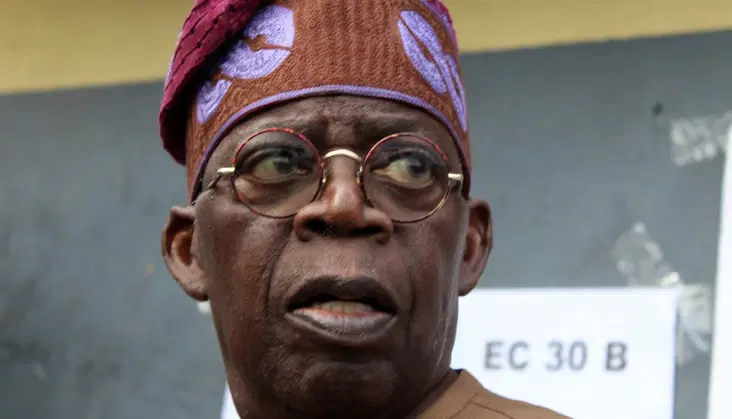

This week, the World Bank disclosed that one hundred and thirty-nine million Nigerians are now living in poverty. The Country Director for Nigeria, Mathew Verghis, made the disclosure on Wednesday in Abuja during the launch of the latest Nigeria Development Update (NDU) report titled “From Policy to People: Bringing the Reform Gains Home,”
This figure, as astounding and unsettling as it may sound, does not come as a surprise to many who have expressed strong concerns about the policies of the President Bola Tinubu-led government since it came to power over two years ago.
On May 29 2023, President Bola Tinubu, during his swearing-in announced the removal of subsidy on petrol and the exchange rate. The two subsidy schemes have long been considered a drain on the nation’s lean resources, and their removal, some experts say, will free up funds to be spent on other critical areas of the economy and, in turn, usher in a new era of economic prosperity. But that is not to be. What happened instead is galloping inflation and an unprecedented cost-of-living crisis.
In the months that followed the removal of subsidy on petrol and devaluation of naira, prices of basic goods and staple household commodities skyrocketed by more than 200% or even higher in some cases. Since the removal of the subsidy on petrol was done haphazardly and without prior arrangement and measures to cushion its impact, Nigerians were left in a lurch to find a way to survive the harsh and precarious reality. The government claimed the removal of the two subsidies without any plan to cushion its debilitating effect on the people was a necessary evil and the people must endure the momentary suffering and hardship for future prosperity.
Inflation is not just an economic index or a yardstick to measure government performance. It is a phenomenon that shapes the trajectory and direction of the lives of people. It determines the social status of a people. It can elevate and hasten the success of an individual or a group of people and can brutally kill the dream and dash the hope of a better and prosperous life. Low single-digit inflation affords people the opportunity to grow, live a decent, comfortable life filled with the trappings of modernity. Low inflation means a buoyant middle class and a critical mass of upwardly mobile youths which then translates to a thriving economy.
High double or even triple-digit inflation is a recipe for economic downturn and social upheaval. It impedes growth and stifles aspiration. High crippling inflation means a cost-of-living crisis. The middle class is wiped out pushing the majority of the people, who were hitherto middle class, into poverty. High inflation kills dreams and ambition. It sabotages growth. It breeds indignity. It fuels self-hate and sows doubt. It’s an albatross to financial freedom and prosperity and ultimately tanks and destroys the economy. And this has been the reality of Nigerians in the last two years.
This conspicuous and unmistakable bleak economic reality, occasioned by citizens’ deeply unsavoury and damaging changes in fortune, no doubt influenced the World Bank announcement. Despite supporting these crippling neoliberal macroeconomic policies and giving legitimacy to them, the World Bank is well aware that these policies have left Nigerians in a far worse place than they were before the current government came to power and before these policies were implemented.
What we’ve heard in recent times is that the policies are already yielding positive results even though Nigerians are not experiencing any noticeable improvements in their lives. While the policies have led to an increase in revenue in naira terms, largely due to the devaluation of the currency, and stabilisation of the foreign exchange, these gains have not trickled down or had any positive impact on the lives of an average Nigerian. If anything, things are becoming harder for many and politicians have continued to live extravagantly and flamboyantly, refusing to heed their own admonition of austerity, frugality and sacrifices for the good of the nation.
Expectedly, the presidency has rejected the World Bank’s estimation of 139 million Nigerians living in poverty, saying the report is “unrealistic” and does not reflect the economic realities of the nation and the people. According to President Bola Tinubu’s spokesperson, Sunday Dare, the 139 million figure was obtained from the global poverty line of $2.15 per person per day set in 2017 using Purchasing Power Parity, adding that it was being mistaken for an actual headcount of poor Nigerians.
Anyone with a passing knowledge of an economy works easily through the sophistry and disingenuousness of the spokesperson. His attempt to dismiss the World Bank figure of Nigerians living in poverty as a statistical anomaly and lacking in context falls flat in the face of simple logic. Whether the World Bank used the 2017 global poverty line of $2.15 per person a day or another yardstick is somewhat immaterial here. The question should be, are there more people living in poverty today in Nigeria than before his principal came to power? Everyone who has lived in Nigeria before and after Tinubu came to power knows what the true answer to this question is
Furthermore, Dare said Tinubu has introduced “Conditional Cash Transfers” which was expanded to reach up to 15 million households nationwide, with verified digital enrolment through the National Social Register. Over N297 billion has been disbursed since 2023 to poor and vulnerable families. Renewed Hope Ward Development Programme: A major new initiative targeting all 8,809 electoral wards, delivering micro-infrastructure, livelihoods, and social services directly at the community level to cushion poverty.
Dare’s assertion on cash transfer as a tool of poverty alleviation and to refute the World Bank’s report on the scale of poverty in Nigeria is incongruous to the position of the Federal government on the scheme. Recently, a legal action was instituted against the Nigerian government, asking it to disclose the identity of those who had benefited from its cash transfer. The government said it cannot divulge the names of the beneficiaries, citing privacy reasons. If the government claimed it had disbursed ₦419 billion to poor Nigerians but failed to disclose the identity of those who received it, how then do we gauge the impact of the transfer on the citizens? Even more worrisome is the fact that many Nigerians can point to anyone they know or someone who knows people who have benefited from the cash transfer scheme. The scheme has been dogged by opaqueness and secrecy, giving room to the insinuation of large-scale corruption, mismanagement and malfeasance.
No matter what the government’s dyed-in-the-wool spin doctors and spokespersons want us to believe about the state of the nation, Nigerians are well aware of their situation, where they were three years ago and where they are today. They don’t need the report of the World Bank to amplify their dire condition and gloomy situation or validate their suffering. In the last two years, runaway inflation has eroded the purchasing power of Nigerians, decimated their disposable income and rendered their savings useless. This has plunged many into poverty, with many previously well-to-do citizens now living from hand to mouth, and many lower-middle-class citizens now grappling with abject poverty. This is the reality. The opinion and position of the government that contradicts the report of the World Bank, which corroborates this reality, does not change the fact of the matter, nor does it portray the government in a good light.
Discussion about this post