


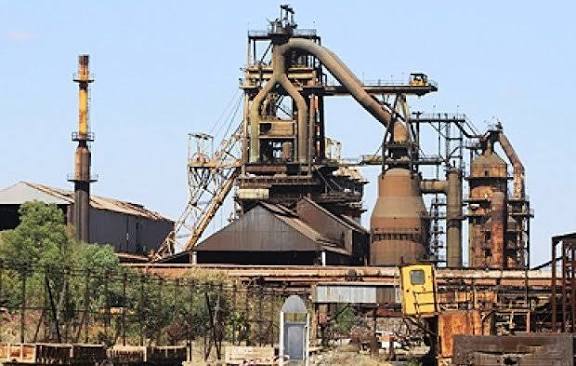

At dawn, when the mist rises from the Niger and drifts through the sleepy edges of Kogi State, Ajaokuta looks like a mirage of metal. Its towers catch the sun, dull bronze and blistered by years of harmattan dust. A light breeze pushes the emptiness through rusted pipes, carrying a sound like breath—thin, mechanical, and tired. Locals say the plant still sighs at night, as though the furnaces dream of the fire that once promised to awaken them.
From afar, the Ajaokuta Steel Complex appears majestic, almost futuristic—a city of steel domes, conveyors, and silent cranes. Yet up close, it is a monument to inertia, a living museum of the country’s abandoned ambitions.
The gates still bear the Nigerian coat of arms, and a fading board reads “Ajaokuta Steel Company Limited: The Bedrock of Nigeria’s Industrialization.” But there is no hum of engines, no clang of metal, no sweat of workers. Only dust, debt, and memories.
This is where Nigeria’s industrial dream was meant to breathe its first full breath. Today, it wheezes through rusted lungs.
The Dream of Iron and Independence (1970s–1980s)
Ajaokuta began as a dream too large for the era that conceived it. In the early 1970s, oil had just begun to swell Nigeria’s treasury, and the nation stood at the edge of a new identity—young, ambitious, and eager to prove it could manufacture its own destiny. Steel, the skeleton of modern civilization, was to be the symbol of that transformation.
The government envisioned an industrial revolution powered not by imports but by indigenous production. Every rail line, car engine, and bridge would draw life from Nigerian iron. The logic was simple and intoxicating: no nation becomes great without steel.
In 1979, after years of negotiation, Nigeria signed a landmark agreement with the Soviet Union to build a massive integrated steel plant on the banks of the Niger River. The Soviets brought engineers, blueprints, and the ideology of heavy industry. Nigeria provided resources, optimism, and land—24,000 hectares of it. It was to be one of Africa’s largest steel complexes, built to produce 1.3 million tonnes of liquid steel per year.
The site chosen—Ajaokuta—was more than geography. It was symbolic. At the confluence of Nigeria’s two great rivers, the Niger and Benue, the town stood as a metaphorical meeting point between old and new, between raw potential and refined ambition. When construction began in 1980 under President Shehu Shagari, there was music in the air. Workers sang as Soviet engineers moved in with their cranes and blueprints. It felt like the birth of a modern nation.
But even as concrete foundations were poured, cracks began to form—in governance, in planning, and in trust.
When the Fire Went Cold (1990s Military Years)
The 1980s and 1990s were decades of coups, austerity, and confusion. Nigeria’s political landscape fractured like untempered steel. The Soviet experts left when the Soviet Union itself began to crumble. Without them, construction slowed, supply chains broke, and equipment rusted before it was ever used.
Under successive military regimes, Ajaokuta became a bargaining chip. Each new government promised revival, but the factory became more political than industrial. Funds disappeared through opaque procurement channels; contracts were re-awarded, modified, or abandoned. Engineers on site often worked without pay. By the early 1990s, most of the 10,000-plus workers who once filled the complex had vanished, leaving behind hollow workshops and unfinished mills.
The people of Ajaokuta watched as life drained out of the plant. The quarters built for workers fell into disrepair. Markets that once thrived on factory wages grew quiet. A sense of betrayal set in—a realization that the national dream had turned into a regional curse.
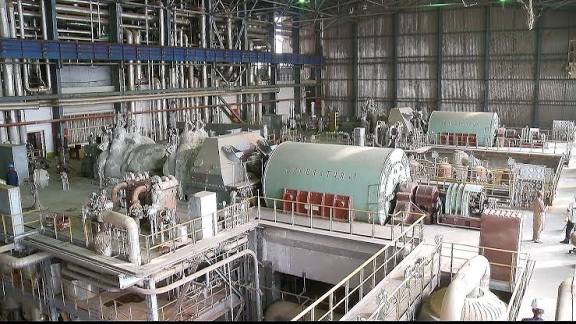
For some, Ajaokuta was still a promise; for others, it had become a ghost. A project that once symbolized independence now represented dependence—on imported goods, on borrowed funds, on foreign expertise that had long sailed away. The fire had gone cold, and no one seemed to know how to relight it.
The World Moved, Nigeria Slept (2000–2007)
As the new millennium arrived, global economies surged forward on the back of steel. China, India, and Brazil expanded their industrial bases with ruthless precision. In contrast, Nigeria’s plant remained frozen in its incomplete state—a $7 billion skeleton.
President Olusegun Obasanjo’s administration, eager to unburden government from decades of inefficiency, began privatizing state-owned enterprises. Ajaokuta was leased to Global Infrastructure Holdings Limited (GIHL), an Indian company tasked with completing and operating the complex. The concession was sold as a new dawn. But within years, the deal became mired in controversy.
Investigations revealed accusations of asset stripping, mismanagement, and contractual breaches. By 2008, the federal government terminated the concession, leading to years of litigation that would paralyze the plant even further. While lawyers argued in foreign courts, the furnaces gathered dust.
In the same period, nations that once looked up to Nigeria as a continental industrial hope surged ahead. South Africa’s steel industry grew; Egypt modernized its manufacturing base. Nigeria’s economy, meanwhile, leaned heavily on crude oil—a resource as volatile as the politics that governed it. The irony was cruel: a country rich in iron ore imported nails and rail tracks.
The world moved; Nigeria slept. And Ajaokuta became its most haunting dream deferred.
Debt, Dust, and the Ghost of Concessions (2008–2015)
By the late 2000s, Ajaokuta was trapped in a web of debts and disputes. Legal wrangling between the Nigerian government and GIHL stalled all efforts at resuscitation. Billions of naira were lost to maintenance of idle facilities—security, salaries for a few remaining staff, and preservation of machinery that had long exceeded its shelf life.
Inside the town, a peculiar economy emerged. Locals began to depend on the remnants of the plant’s infrastructure for survival. Former workers turned into informal tour guides, showing journalists and curious travelers the ruins of what once promised to be Africa’s industrial capital. Others scavenged for scrap metal, while children played among derelict locomotives.
The government occasionally sent committees to “assess the situation.” Each visit brought fresh hope and temporary repairs, but the system itself remained broken. The human cost deepened. Engineers who had once believed in national progress watched their skills waste away. Young graduates avoided metallurgical studies altogether—what was the point of training for a dead dream?
Debt accumulated. The plant’s financial records read like an autopsy report: hundreds of millions spent annually to keep machines from collapsing, yet no income generated. Ajaokuta had become a paradox—a factory that produced only waiting.
The Tin Years: Hope Deferred (2016–2020)
When President Muhammadu Buhari came to power in 2015, one of his administration’s early promises was to revive Ajaokuta. To many Nigerians, especially those from Kogi State, this pledge sounded like the long-awaited resurrection. Committees were formed, reports commissioned, and diplomatic discussions reopened with Russia—the successor to the original Soviet builders.
In 2019, the government announced an agreement with the Russian firm Tyazhpromexport to complete the plant, with financing to come from the Russian Export Centre. For a brief moment, optimism returned. Workers cleared out some of the weeds and dust; media crews filmed the gates again. But then the pandemic struck.
Global supply chains collapsed, travel restrictions tightened, and funding priorities shifted. The proposed rehabilitation never took off. Ajaokuta, once again, became a file on a minister’s desk—a line item on a budget that no one truly believed in.
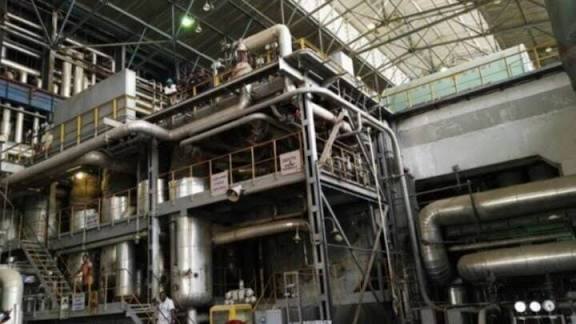
By 2020, the national conversation had changed. Young Nigerians, facing unemployment and inflation, began to see Ajaokuta not as a dream but as an old wound. It symbolized the generational failure to turn potential into progress. Each new promise from Abuja felt like an echo—loud but empty.
Ajaokuta in the Age of Renewable Dreams (2021–2025)
As the world embraced clean energy, automation, and digital economies, Ajaokuta stood frozen in a fossil-age dream. Its furnaces were designed for an industrial model now decades out of date. Yet Nigeria still owed debts tied to its construction.
The irony deepened. While other countries transitioned to electric vehicles and lightweight alloys, Nigeria clung to a 1970s steel blueprint. International observers began to question the project’s relevance. Could Ajaokuta still fit into a world moving beyond heavy carbon industries?
Still, policymakers argued that steel remained essential for national development—especially for rail lines, infrastructure, and defense. The Itakpe-Ajaokuta-Warri rail corridor was completed, reviving faint hope that one day it would feed materials from the mines to the silent furnaces. But production never resumed.
Environmentalists, meanwhile, pointed out that the complex’s neglect had created its own ecological hazards: leaking oils, rusted pipes, and contaminated runoff into surrounding farmlands. The dream that once promised prosperity now whispered danger. Ajaokuta was becoming both an economic and environmental liability.
Yet through the dust, the locals kept faith. They believed that even a dead giant could breathe again.
Beneath the Ashes: The People Who Refuse to Leave
Not everyone gave up. Inside the silent plant, a few hundred staff still clock in daily—security guards, engineers, maintenance workers. They sweep the empty floors, lubricate idle machines, and ensure thieves do not strip the skeleton bare. To them, Ajaokuta is not just a job; it is heritage.
One of them, a grey-haired technician who started work in the 1980s, still walks the corridors each morning, touching the cold steel with reverence. He calls the furnaces “sleeping lions.” He has seen governments come and go, promises made and forgotten, yet he stays. “If we leave,” he says quietly, “the dream will die completely.”
Around him, a new generation grows up in the shadow of rust. Children of former workers attend schools built decades ago for engineers’ families. They play football in fields that were once assembly yards. Every evening, when the sun sets behind the factory’s massive cooling towers, the air glows orange—the same hue the furnaces once burned. It feels like a memory trying to live again.
Ajaokuta breathes because people still believe. The machines are silent, but faith hums softly between the steel beams. It is not progress that sustains it now—it is stubborn hope.
Leaving With This: The Nation’s Iron Lung
Ajaokuta was supposed to be the heart of Nigeria’s industrial age. Instead, it became its lungs—wheezing, dusty, yet stubbornly alive. Each administration pumps in just enough air to keep it from dying, but never enough to make it thrive. It breathes in debt and exhales delay.
The plant’s survival is a mirror of Nigeria itself: immense potential trapped in perpetual transition, waiting for leaders who can match ambition with action. Ajaokuta is more than a factory; it is a fable about vision and neglect, about how dreams can outlive those who dared to build them.
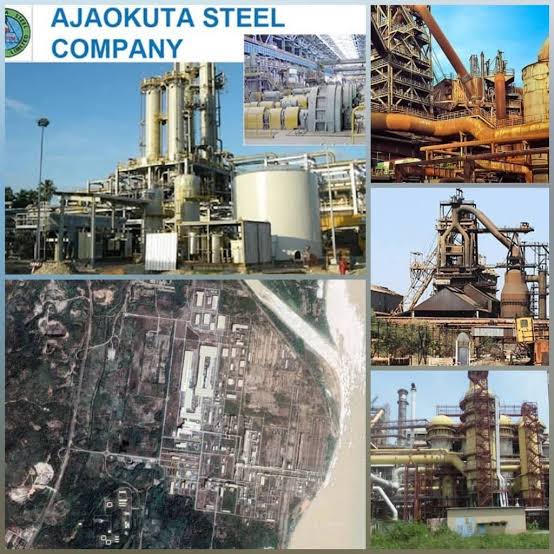
As dusk falls over the silent furnaces, the air thickens with dust. The wind whistles through broken pipes like a song from another time. Somewhere deep inside the complex, a loose sheet of steel clangs softly—echoing the sound of what could have been.
The world has moved on, yet Ajaokuta remains, half-asleep and half-awake, breathing just enough to remind the nation of what it once dreamed. The question is no longer whether it will rise again, but whether Nigeria still remembers how to light a fire.
Discussion about this post