

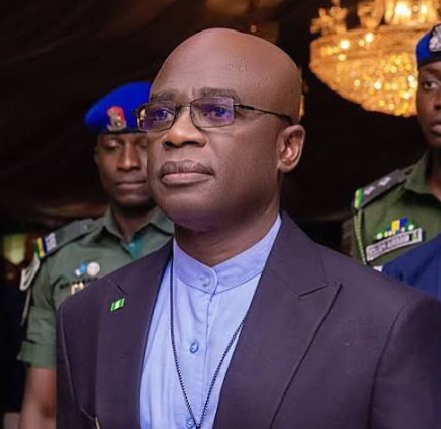
The air in Benue’s towns and villages is thick with tension, like heat that won’t lift even at night. Dust hangs over the roads where kids used to play, over churches where prayers echo, and over the markets now half-empty, with wary eyes checking every passerby. Governor Hyacinth Alia stepped up at the NHRC forum in Abuja, calm as Sunday morning mass, breaking down stats and legal definitions.
He talked about security, history, and the clash between herders and farmers, painting a picture of violence that’s “real but not genocide.” Out on social media though, the streets were loud and restless. Terry G, born and bred in Benue, didn’t hold back. He snapped: “Reverend, for that matter, why una too dey lie? … What kind of governor is that one now? Una go just dey cap rubbish.”
That single line hit harder than any statistic because it came from someone who walks the same streets, smells the same smoke, sees the same grief.
This isn’t just a musician throwing words. Terry G’s call-out is a mirror held to leadership, a reminder that moral authority comes with a price, and that communities under fire will not be silenced by polite language or law books.
This story isn’t just about politics or social media—it’s about human fear, frustration, and the demand for truth when reality gets too heavy to ignore.
Denial and the Weight of Legal Words
Governor Alia, once a Catholic priest, speaks like someone trained to weigh morality against reason. At the forum, he carefully separated what’s real from what counts as genocide. Violence? Yes. Systematic, intentional extermination? Not by the UN’s legal definition. He pointed to clashes between herders and farmers, historic disputes, and patterns that, while deadly, are not organized campaigns against a single religious group. To him, words matter because labels like “genocide” trigger global eyes, diplomatic pressure, and sometimes sanctions.
Still, the streets see it differently. Families bury loved ones, communities flee, and everyday survival feels nothing like an abstract legal debate. To locals, the technicalities feel cold. Alia frames it morally too, leaning on faith and God’s guidance. But Terry G is watching, unimpressed. Denial, even wrapped in holiness, can feel like ignoring pain. The gap between law and lived experience grows wider with every carefully phrased statement, and Terry G is ready to call it out.
Terry G Steps In: The Streets Speak
Gabriel Oche Amanyi doesn’t just post on social media. He carries the heartbeat of Benue in his words. “No amount of denial can hide that reality,” he declares, and it’s more than a clapback—it’s a witness, a public insistence that suffering must be seen. Social media amplifies this energy, turning a private outrage into a national conversation. The tone is raw, the language unpredictable, and it lands because Terry G knows the streets.
When he calls Alia “Reverend,” he’s not being polite; he’s hitting moral authority where it counts. The critique isn’t a question of legality—it’s a demand for acknowledgment, for empathy, for action that matches the scale of loss. Terry G’s style mirrors how communities actually process fear and grief: urgent, messy, unpolished. He forces a confrontation between the sanitized language of politics and the jagged reality of daily life in a state under siege.
Politics, Power, and the Danger of Words
What gets called a crisis shapes how it’s handled. Alia’s caution about “genocide” is understandable: misuse of the word can stir tensions, fuel politics, and even escalate violence. But downplaying it also risks something worse—ignoring victims. Political actors in Benue have long warned that decades of attacks and mass displacement demand more than careful phrasing.
Terry G’s outburst exposes this tension. It’s a reminder that politics isn’t just numbers, laws, or meetings with diplomats. Politics is also people bleeding, hiding, crying, struggling to survive. When he says the governor is “capping rubbish,” he’s speaking street truth: words matter, reality matters, and leadership must respond to both.
Christian Persecution: The Bigger Lens
Globally, the genocide debate isn’t just chatter; it matters to aid groups, NGOs, and foreign governments watching Nigeria. Alia’s tight legal framing may prevent international overreaction. Yet Terry G’s angle cuts closer to home. Even if the UN wouldn’t call it genocide, the Christian community in Benue feels under siege, and recognition—even without the label—can spark help, shine light, and keep people alive.
This tension between legality and human experience is central to Nigeria’s security challenges. Who defines a crisis? Who decides which lives count in statistics? Terry G is making it clear: the street has a voice, and it refuses to be muted by legal semantics.
Moral Authority Meets Street Reality
Alia’s dual life as priest and governor adds complexity. Faith demands compassion; politics demands calculation. The collision between these identities plays out in public, and Terry G leans into that collision. He doesn’t just challenge Alia politically—he challenges him ethically. The question isn’t “does this meet UN criteria?” The question is: do you see the blood in the fields, the fear in homes, the families ripped apart?
Terry G’s language is jagged, imperfect, sometimes slang-heavy. That’s the point. Leadership cannot hide behind polished speeches when communities are bleeding. Street language carries authenticity, urgency, and pressure that no press release can replicate. It forces recognition, forces accountability, and forces dialogue in the most human terms possible.
The Stakes: Benue on the Line
Violence in Benue continues while leaders debate definitions. Every label, every denial, every post has consequences. Security forces, aid agencies, and international observers all watch closely. Mislabeling—or under-labeling—can leave victims unseen and unprotected. Terry G’s voice injects urgency, reminding everyone that words translate into life or death.
Recognition isn’t symbolic; it’s practical. Calling out denial, insisting on visibility, and demanding moral clarity can push resources, attention, and protection to places that need it most. Terry G makes this clear: when the governor dodges acknowledgment, the people feel it in their homes, their fields, and their prayers.
Closing Thoughts: Reality, Recognition, and Responsibility
At the end, this is bigger than Terry G versus Governor Alia. It’s about leadership, moral authority, and accountability in a place where violence is real and the law alone can’t capture suffering. Labels matter, sure—but the human heart matters more. Terry G’s challenge is simple yet profound: see the people, hear their pain, and respond with reality in mind.
Denial may protect reputations or preserve technical correctness, but it cannot erase fear, loss, or community memory. Leadership that ignores lived reality risks more than criticism; it risks moral failure. Terry G’s street-level insistence bridges the gap between law and life, forcing a reckoning in public view.




Discussion about this post