

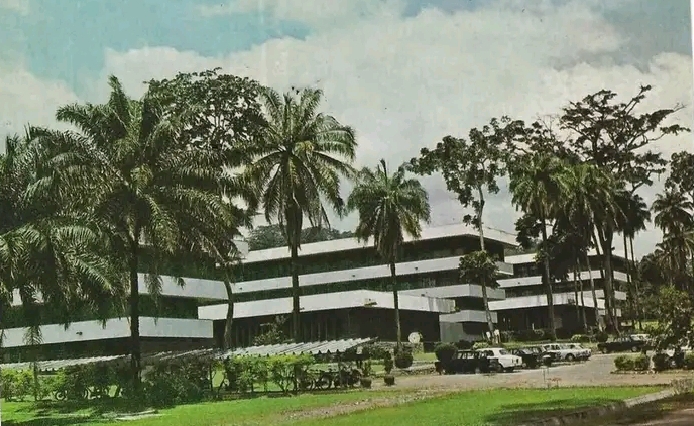
The mid-1970s at Ile-Ife was a period charged with quiet grandeur. Students walked winding paths shaded by ancient trees while the distant hum of lectures mingled with the laughter of campus life. Somewhere in that dynamic, one building stood as a sentinel of intellect, culture, and ambition—the Humanities Building of the University of Ife, now Obafemi Awolowo University.
Photographs from the era capture more than architecture; they freeze a moment when Nigeria, newly independent and brimming with possibilities, sought to define itself through education. The building’s clean modernist lines, open courtyards, and shaded corridors spoke of a vision where African heritage and Western design could coexist harmoniously. Here, minds were shaped, debates sparked, and the culture of Great Ife flourished.
For students and faculty alike, the Humanities Building was a stage where ideas came alive. Debates on philosophy, literature, and politics echoed through its halls, often spilling into the campus quadrangles. It was not merely a structure but a living organism, pulsing with the intellectual energy of a generation eager to define Nigeria’s future.
Even decades later, alumni recall the building with reverence. Its spaces became markers of identity, where friendships, mentorships, and lifelong memories were forged. The Humanities Building was more than brick and mortar; it was a statement of belief in learning, culture, and the transformative power of education.
The Land and Legacy of Ile-Ife
The University of Ife’s campus sits on land gifted by Oba Sir Adesoji Aderemi, the Ooni of Ife. His gesture extended beyond generosity; it was a covenant linking the spiritual and cultural heart of Yoruba land with the aspirations of modern scholarship. This was a site where history, myth, and progress converged, making it a fitting cradle for Nigeria’s intellectual endeavors.

The sacredness of Ile-Ife, considered the cradle of Yoruba civilization, imbued the campus with symbolism. Every lecture hall, pathway, and courtyard carried echoes of the past while pointing toward the future. Students were conscious that their steps traced a lineage of kings, thinkers, and visionaries, blending cultural pride with modern ambition.
By the 1970s, the campus had become an emblem of national pride. The Humanities Building, positioned at the core of academic life, reflected both ambition and identity. Scholars who walked its corridors carried the weight of expectation but also the inspiration of a site steeped in heritage. Every brick and corridor became part of a narrative linking education to nation-building.
Even the surrounding environment reinforced this legacy. Trees planted decades earlier offered shade and continuity, while the natural topography of Ile-Ife guided the architecture, creating harmony between human design and landscape. This careful integration became a hallmark of OAU, setting it apart as Africa’s most beautiful campus.
The Humanities Building as a Hub of Intellectual Energy
By the mid-1970s, the Humanities Building had earned a reputation as the intellectual heartbeat of the university. Departments such as English, History, Philosophy, and Religious Studies converged within its walls, nurturing scholars, writers, and thinkers who would leave an indelible mark on Nigeria and beyond.
Lecture halls buzzed with rigorous debate, while offices and libraries became sanctuaries of reflection. Professors challenged students not only to absorb knowledge but to interrogate ideas, fostering a climate where curiosity was as valued as scholarship. The building’s layout—with open corridors and communal spaces—encouraged dialogue, making it a crucible for critical thinking and creative exchange.
Student life intertwined seamlessly with academic rigor. Discussions spilled from classrooms into common areas and courtyards, creating a continuous flow of ideas. Clubs, literary societies, and informal gatherings transformed the building into a living laboratory of culture, philosophy, and activism. The Humanities Building was both a stage and a participant in the university’s intellectual drama.
Its symbolic importance extended beyond academics. The building represented a commitment to blending tradition and modernity, embodying a vision of education rooted in African identity yet open to global perspectives. Every debate, lecture, and paper carried the imprint of this philosophy, reinforcing the university’s ethos of “For Learning and Culture.”
The Spirit of Great Ife and Student Life in the 1970s
Campus life at OAU was a living, breathing testament to the ideals of Great Ife. Students traversed shaded paths between lecture halls, their footsteps echoing ambition and curiosity. The Humanities Building was at the heart of this vibrant ecosystem, a hub where academic rigor met cultural expression.
Students carried their identity as scholars with pride, engaging not just with textbooks but with ideas that challenged authority, explored philosophy, and celebrated Yoruba heritage. Debates over literature or history were accompanied by discussions of Nigeria’s political future, reflecting a generation that viewed education as inseparable from civic responsibility.
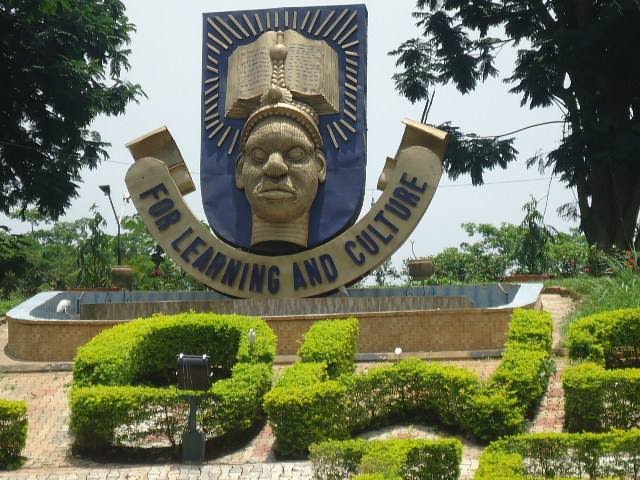
Festivals, cultural displays, and musical performances often animated the courtyards of the Humanities Building. These moments transformed bricks and mortar into spaces of communal celebration, blending rigorous thought with joy. Yoruba proverbs, chants, and rhythms intertwined seamlessly with academic life, reminding students that culture was both subject and teacher.
The ethos of the university, encapsulated in its chant of Great Ife, reinforced these values. Students internalized a message that transcended the classroom: learning was not merely an individual pursuit, but a collective journey of resilience, creativity, and social consciousness. Every corridor and lecture hall became part of a larger narrative connecting education, culture, and identity.
Architectural Excellence and Modernist Vision
The Humanities Building reflected a careful marriage of modernist design and cultural sensitivity. Clean lines, open courtyards, and shaded walkways created spaces that encouraged interaction and reflection. The architecture embraced the local climate, with ventilation, natural light, and greenery integrated into every angle, making the building both functional and symbolic.
Israeli architect Arieh Sharon, working in collaboration with Nigerian designers, envisioned a campus that harmonized with Ile-Ife’s rolling terrain. The Humanities Building became a physical manifestation of this philosophy, where modernist minimalism coexisted with African spatial sensibilities. Classrooms, corridors, and communal areas flowed organically, facilitating dialogue, learning, and contemplation.
The building’s materials and proportions conveyed permanence and aspiration. Concrete met wood, while open spaces allowed students and faculty to experience the rhythms of campus life. Its design communicated a message: education in Nigeria was entering a new era, one that could honor heritage while embracing innovation.
Beyond utility, the Humanities Building inspired awe. Students often remarked on the quiet dignity of its halls, the balance between private reflection and shared intellectual engagement. Visitors saw more than a structure—they witnessed a statement of cultural pride and national ambition, a cornerstone of what would become Africa’s most celebrated campus.
Alumni Memories and Cultural Impact
For generations of OAU alumni, the Humanities Building represents formative years, friendships, and the birth of lifelong intellectual passions. Halls of residence like Awolowo, Angola, Moremi, and Fajuyi were more than accommodations; they were extensions of the university’s academic and cultural heartbeat, with the Humanities Building at the center of this dynamic.
Alumni recall walking through its corridors, debating philosophy, composing essays, or preparing speeches for student forums. Each corner held a memory of collaboration, inspiration, or discovery. These recollections reflect how the building was not simply an academic space, but a cultural incubator shaping leaders, writers, and scholars.
Events held in and around the Humanities Building reinforced the unity of intellect and culture. Musical performances, poetry readings, and public debates animated the university, creating a space where learning was inseparable from cultural pride. The building became a symbol of OAU’s dual mission: fostering scholarship while celebrating the richness of African heritage.
This cultural resonance continues decades later. Alumni networks around the world share stories of the Humanities Building, using it as a touchstone of identity and achievement. The building’s legacy is measured not only in academic output but in the shared pride, resilience, and vision it instilled in its community.
The Humanities Building in Contemporary Reflection
Today, the Humanities Building remains a physical and symbolic landmark. Its modernist lines and open courtyards endure as testaments to the vision of OAU’s founders and the students who animated it in the 1970s. While technology and pedagogy have evolved, the essence of its design—a celebration of culture, dialogue, and learning—remains intact.
New generations of students continue to experience the building’s unique rhythm. Lecture halls filled with laptops replace chalkboards, but the spirit of intellectual curiosity and cultural engagement echoes across decades. Its presence serves as a reminder that architecture can shape thought, that space can inspire creativity and discourse.
Scholars examining African educational architecture cite the Humanities Building as a benchmark for integrating climate-conscious design, cultural sensitivity, and functionality. Its significance transcends OAU, becoming part of broader conversations about post-independence African modernism and the role of education in nation-building.
Ultimately, the Humanities Building is more than an academic facility. It is a living chronicle of Nigeria’s journey through post-independence optimism, cultural pride, and intellectual ambition. Each wall, corridor, and courtyard carries stories of resilience, dialogue, and discovery, ensuring that Great Ife continues to thrive in memory, identity, and inspiration.
The Enduring Echo of OAU’s Humanities Building in the 1970s
The Humanities Building remains a silent witness to the dreams and ambitions that once filled its spaces. Its presence is not measured merely by its physical form but by the intangible legacy it created—a legacy of curiosity, courage, and cultural pride that still pulses through OAU today.
Decades after its construction, the building continues to inspire reflection on what it means to blend tradition with modernity. It stands as proof that architecture can do more than house classrooms; it can shape the character of a campus, influence generations of thinkers, and anchor a nation’s intellectual identity in a way that transcends time.
Each stone, corridor, and shaded walkway is a reminder of possibilities realized and challenges met. The Humanities Building embodies the conviction that learning is inseparable from culture, that scholarship thrives best when it acknowledges its roots, and that progress is most enduring when it honors heritage.
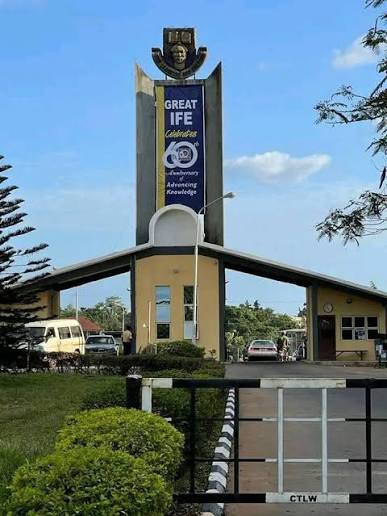
To look upon it is to see a mirror of a nation’s aspirations in the 1970s—a Nigeria confident in its voice, proud of its heritage, and unafraid to envision a future forged through knowledge and creativity. The building’s essence lingers like a quiet hymn, inviting each new generation to step forward, carry the torch, and continue the dialogue between past and future.
The Humanities Building of OAU is more than a monument; it is a timeless dialogue between culture, intellect, and ambition—a 1970s glimpse whose echoes will never fade.