

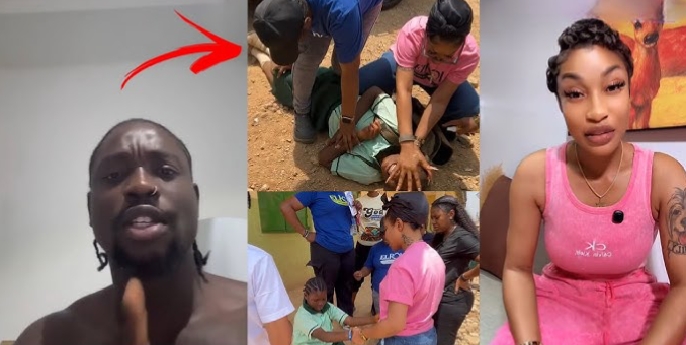
In March 7 2026, a video involving Nollywood actress and public figure Tonto Dikeh began circulating widely across Nigerian social media platforms, igniting a national conversation about religion, children, and public responsibility. The video showed the actress conducting what she described as a deliverance session during an evangelism visit to a school, an act she presented as a spiritual intervention after sensing what she called a spirit of death around the environment.
While religious prayer and deliverance are familiar elements of Christian evangelism in Nigeria, the involvement of a child and the fact that the session was recorded and shared online quickly stirred intense debate. Critics questioned whether such acts should occur publicly, particularly when minors are involved, while supporters insisted that prayer and spiritual intervention remain deeply rooted in the faith practices of many Nigerians.
The situation escalated when social commentator and activist Martins Vincent Otse, popularly known online as VeryDarkMan, released a strong reaction criticizing the incident. His response added another layer to the controversy because he claimed the school where the event occurred was located within his community and that he had personally contributed to its renovation.
What followed was not merely a disagreement between two public figures. It became a larger cultural discussion touching on religion, child protection, poverty, social media influence, and the power celebrities hold when their actions reach millions online.
The Evangelism Visit That Sparked the Controversy
The sequence of events began when Tonto Dikeh reportedly visited a school as part of an evangelism outreach program. Evangelism activities involving celebrities are not uncommon in Nigeria, where public figures frequently participate in charity visits, school outreach, and religious programs. According to accounts shared by the actress, the purpose of the visit was to spread the Christian message, pray with students, and encourage them spiritually.
During the visit, she documented parts of the experience through video recordings that were later shared online. Initially the footage appeared to show a typical outreach moment involving prayer and interaction with students. However the situation reportedly shifted as the team prepared to leave the school premises.
According to Tonto Dikeh’s explanation, she suddenly sensed what she described as a spiritual disturbance around the environment. She later explained that she perceived a presence she referred to as a spirit of death within the surroundings. In response to that perception she decided to gather individuals nearby for prayer before departing from the school.
What followed became the most widely discussed part of the video. A student was brought forward and prayer began, gradually transforming into what appeared to be a deliverance session. The child stood at the center of the prayer circle while adults around prayed intensely. The moment was captured on camera and eventually uploaded to social media platforms.
Within hours of being posted, the clip began spreading across multiple networks including Facebook, Instagram, TikTok, and X, drawing the attention of viewers far beyond the immediate religious community that might normally witness such an event.
The Viral Spread of the Video
The speed at which the footage circulated reflected the powerful influence of celebrity driven content online. Tonto Dikeh has millions of followers across social media platforms and her posts regularly attract significant engagement. Once the video appeared online it did not remain confined to her direct followers.
Bloggers, entertainment platforms, and commentary channels quickly reposted the clip, each adding their own interpretations of what viewers were seeing. The framing of the story varied widely depending on the perspective of the page sharing it. Some described the event as an example of faith driven intervention while others labeled it controversial from the moment it appeared.
Within a short period of time the clip became one of the most discussed videos across Nigerian social media. Comments flooded in from viewers offering praise, concern, criticism, and confusion. Many people focused specifically on the presence of a child at the center of a public deliverance session while others emphasized the religious intentions behind the act.
The viral spread transformed what may have been a localized evangelism moment into a nationwide discussion about faith practices and the responsibilities that come with public influence.
The Core Concerns Raised by Critics
As the video continued to circulate, several key concerns emerged among critics. These concerns did not come from a single group but from a combination of educators, activists, parents, and social commentators who believed the situation raised broader questions about child welfare and public accountability.
One of the central issues involved the use of minors in public deliverance sessions. Critics argued that children should not be labeled publicly as having spiritual problems or being associated with supernatural forces. In Nigerian history there have been documented cases where accusations of possession or witchcraft directed at children have resulted in stigma and psychological harm. Because of that history many viewers believed the situation required careful handling.
Another concern focused on the role of social media in the event. Observers questioned whether the deliverance should have been recorded and shared online at all. Spiritual counseling and prayer are often private matters within religious communities. Turning such moments into viral content raised questions about whether the line between ministry and online engagement had been blurred.
A third concern related to the psychological impact on the child involved. Some critics feared that public exposure to such narratives could affect a young person’s self perception and how peers might treat them afterward. Even if the intentions behind the prayer were positive, the long term consequences of being associated with a deliverance video circulating across the internet remained uncertain.
The Intervention by VeryDarkMan
The controversy intensified dramatically when Martins Vincent Otse, known widely across Nigerian social media as VeryDarkMan, posted a response addressing the video directly. Known for his outspoken activism and criticism of public figures, VeryDarkMan has built a large following by challenging what he views as exploitation, corruption, or hypocrisy.
In his reaction video he spoke passionately about the situation, focusing on what he described as the vulnerability of the children involved. According to him the school featured in the video is located within his community and he claimed that he had personally contributed to renovating the institution in the past.
This connection to the location added a personal dimension to his response. Rather than viewing the incident as a distant online controversy, he framed it as something that happened within a space he considered part of his responsibility.
During his message he issued a warning directed at Tonto Dikeh, urging her not to return to the school to conduct similar activities. He emphasized that children in the area needed education and empowerment rather than narratives suggesting supernatural problems.
His Arguments About Children and Education
VeryDarkMan’s criticism centered around a broader argument about how children from disadvantaged communities are sometimes portrayed in public narratives. He argued that labeling children as spiritually afflicted can reinforce negative beliefs about poverty and misfortune.
According to his perspective, children in such environments should be encouraged to focus on education, skill development, and practical opportunities rather than being drawn into religious demonstrations that could shape how others perceive them. He expressed concern that the viral nature of social media meant the video could follow the child involved long after the event itself had passed.
Another part of his argument focused on the relationship between faith and action. He stated that prayer is meaningful but should be accompanied by tangible efforts that improve the lives of children. His position suggested that spiritual activities alone are not enough if they are not paired with investments in education and community development.
This message resonated strongly with many viewers who already supported his advocacy style, though it also generated criticism from those who believed he was unfairly attacking a religious act.
Support for Tonto Dikeh
While criticism dominated many discussions online, a significant number of people defended Tonto Dikeh’s actions. Supporters argued that prayer and deliverance are fundamental practices within many Christian communities across Nigeria and that such moments should not automatically be viewed as exploitation.
They pointed out that evangelism often includes spontaneous prayer sessions when ministers believe someone needs spiritual intervention. From this perspective, the actress was acting in accordance with her faith and attempting to help someone she believed required spiritual support.
Some supporters also suggested that critics were misunderstanding the cultural and religious context of deliverance. Within many churches believers see such prayers as acts of compassion rather than condemnation. For them the viral video represented a moment of spiritual concern rather than a deliberate attempt to embarrass or harm the child.
Others emphasized that public figures often record outreach activities to encourage faith and inspire followers to participate in similar acts of charity or evangelism. From that viewpoint the video served as documentation of a ministry moment rather than a performance for social media.
The Influence of Celebrity Evangelism
Another dimension of the controversy involved the growing role of celebrities in religious outreach. In recent years several public figures from entertainment, sports, and business have become active in ministry or evangelism. Their popularity allows them to reach audiences far beyond traditional church congregations.
When celebrities participate in religious activities their actions often carry amplified influence because followers view them as role models. This visibility can encourage charitable efforts and spread spiritual messages but it can also intensify criticism when controversies arise.
In the case of Tonto Dikeh her background as a Nollywood actress means that her actions attract attention even when they occur in small settings. A prayer session that might have remained unnoticed if conducted by an unknown evangelist instead became national news because of her fame.
The same dynamic applies to VeryDarkMan, whose reputation as a fearless critic ensures that his responses generate significant engagement. The interaction between these two highly visible figures transformed the situation into a public debate that extended far beyond the original location.
Closing Reflections
The controversy surrounding Tonto Dikeh’s school deliverance video and VeryDarkMan’s response illustrates how quickly a single moment can ignite national conversation in the age of social media. What began as an evangelism visit evolved into a complex debate about faith practices, child protection, celebrity influence, and the responsibilities that come with public platforms.
Both figures approached the situation from perspectives shaped by their beliefs and experiences. Tonto Dikeh framed her actions as a spiritual response to what she perceived during her outreach, while VeryDarkMan emphasized the importance of protecting children from public labeling and focusing on practical empowerment.
For many Nigerians observing the debate, the incident served as a reminder that acts of faith and acts of advocacy often intersect in complicated ways. The conversation continues to highlight the need for thoughtful balance between religious expression, social responsibility, and the well being of vulnerable individuals in an increasingly connected world.