

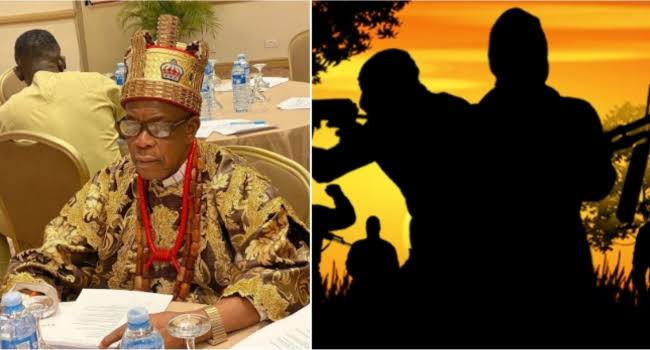
In the first week of March 2026, the Ndufu-Alike community in Ikwo Local Government Area of Ebonyi State was shaken by a tragedy that sent shockwaves across the southeast of Nigeria. Eze Francis Igwe, the traditional ruler of the community, was widely respected not only for his leadership but also for his unwavering commitment to cultural preservation and conflict resolution.
Generations had looked up to him as a guiding figure whose presence provided stability and a moral compass within the community. The suddenness of the events that would unfold made residents feel as though the safety and sanctity of the community itself had been violated.
Eze Igwe’s stature extended beyond his traditional duties because he was also the father of former Ebonyi State Deputy Governor Kelechi Igwe. This connection added political significance to an already sensitive incident, drawing attention not only from local authorities but also from state and national observers.
When his abduction became known, the community experienced a wave of shock, fear, and sorrow.
The Kidnapping of March 1
On the morning of March 1, 2026, Eze Francis Igwe set out for his usual church service, following a route he had traveled countless times without incident. Eyewitnesses later recounted that his vehicle was suddenly blocked by armed men in the Nwakpu area, who dragged him from the car and forced him into nearby bushland. The swift execution of the abduction indicated careful planning and prior knowledge of his movements. Locals described the incident as terrifying because such a direct attack on a traditional ruler of his prominence had never occurred in the area. The sheer audacity of the criminals left the community reeling.
Following the abduction, the community struggled to comprehend what had happened. Initially, there was confusion, with some residents assuming the monarch was delayed or involved in a minor dispute. As the hours passed, it became evident that the act was criminal and deliberate. Families quickly contacted local authorities, and informal neighborhood patrols attempted to trace the attackers. However, the dense forest surrounding Ndufu-Alike made immediate recovery or pursuit challenging, creating frustration and anxiety among residents who feared the worst.
The abduction carried broader implications beyond immediate danger. Eze Igwe’s family, including former Deputy Governor Kelechi Igwe, mobilized support from state officials and law enforcement agencies. The incident sparked nationwide attention, highlighting how organized criminality could challenge both cultural respect and public safety. The kidnapping emphasized the vulnerability of prominent figures and the limitations of existing protective measures for traditional institutions. It also marked the beginning of a prolonged struggle to restore justice and community confidence.
Security Forces Respond
By March 2, 2026, reports emerged confirming that Eze Igwe had been killed while in captivity, escalating the urgency of the response. Security agencies, including the Nigeria Police Force and the Nigerian Army, were deployed to track down the suspects. Intelligence gathered from informants guided operations in the dense bushland surrounding Ndufu-Alike. The complexity of the terrain and the sophistication of the assailants required a coordinated effort that combined traditional investigative methods with modern forensic and surveillance techniques.
During early operations, security forces engaged with suspects in their hideouts. In one instance, a shootout occurred that resulted in the death of one assailant while others managed to escape. Weapons, ammunition, and mobile phones were seized, providing crucial evidence. The recovered devices contained communications and transaction records that began to reveal the structure and network of the kidnapping operation. Forensic teams immediately began analysis to trace interactions and uncover the full scope of the crime, laying the groundwork for future arrests and prosecutions.
Public safety was also a priority for security forces. Officers conducted visible patrols throughout vulnerable communities and kept residents informed through local liaison channels. This approach served both to reassure the public and to deter further attacks. The combination of intelligence-led operations, community engagement, and sustained security presence demonstrated the commitment of state agencies to resolving the crisis while preventing additional violence.
Arrests and Confessions
By March 5, 2026, up to 9 suspects had been detained in connection with the kidnapping and murder of Eze Igwe. Among them was Nwazunku Stephen, aged 43, who allegedly admitted that the group targeted the monarch over unresolved land disputes and alleged grievances related to burial rites. The police emphasized that these confessions were significant, as they revealed the motivations behind the abduction and clarified the hierarchy within the criminal network. Each arrest contributed to mapping the structure of the kidnappers and understanding how they coordinated their actions.
The arrested suspects were also found with mobile phones, vehicles, and other items directly linked to the operation. Examination of these devices began to uncover communications between the kidnappers and intermediaries, including possible attempts to solicit ransom. The use of modern communication tools and careful planning demonstrated the organized nature of the crime and underscored the challenge faced by law enforcement in apprehending all participants. Investigators treated this as more than a local criminal case, recognizing that the incident involved a coordinated network with broader implications.
These confessions and physical evidence became essential in the continuing investigation. Security forces expanded searches to capture suspects who had fled during confrontations with law enforcement. The coordination between intelligence gathering, on-the-ground pursuit, and forensic analysis exemplified the multi-layered strategy required to tackle violent crimes that threaten both individual lives and community structures. The ongoing work of the authorities reflected the seriousness with which the state regarded an attack on a traditional ruler of Eze Igwe’s stature.
Political Angle Emerges
The murder quickly assumed a political dimension when, on March 6, 2026, Mr Simbad Ogbuatu, the publicity secretary of the All Progressives Congress in Ebonyi State, was detained for questioning. Intelligence suggested that a bank account linked to ransom negotiations had a connection to him. He later claimed that his involvement was accidental, resulting from a personal assistant’s request for account information. Nevertheless, the incident raised questions about whether political rivalries or local power disputes contributed to the brazen nature of the crime.
The involvement of a political figure intensified public concern. Analysts speculated that the crime might not have been driven solely by financial gain but could have included elements of intimidation or influence within the community. Security agencies were careful to emphasize that no charges had been filed and that investigations were ongoing. The situation highlighted the intersection of criminality and politics in the region and illustrated how high-profile victims can expose latent tensions and rivalries.
The case attracted national attention not only because of the political connection but also because it underscored the vulnerability of traditional institutions in areas of contested authority. Discussions in the media and among civic leaders questioned the extent to which political interests may create conditions that embolden criminals. This angle added a layer of complexity to the investigation, requiring authorities to consider multiple motivations and potential conspirators as they pursued justice.
Government Reaction
Governor Francis Ogbonna Nwifuru publicly condemned the murder on March 8, 2026, describing it as barbaric and an attack on the very foundations of community life. The state government ordered security agencies to sustain operations and intensify patrols in all communities considered at risk. Traditional rulers and local elders were consulted to strengthen preventive measures and to ensure that no other leader would face similar danger. The response demonstrated a unified effort by political authorities, security agencies, and community institutions to restore safety and confidence.
Beyond immediate security measures, the government engaged in public reassurance campaigns, emphasizing that the perpetrators would face the full weight of the law. Officials coordinated with federal agencies to ensure that intelligence, forensic evidence, and witness testimonies would be consolidated for eventual prosecution. The visibility of these efforts was crucial in calming public fears and in showing that the state would not tolerate attacks on its traditional leaders or any other citizens.
Traditional institutions across Ebonyi State issued statements demanding justice and calling for long-term solutions to protect cultural authority. Community groups organized prayers and peaceful demonstrations, emphasizing the moral and spiritual dimensions of the crime. These responses highlighted the deep emotional resonance of Eze Igwe’s murder and reflected the broader societal expectation that justice would be pursued not only legally but also as a restoration of communal dignity and order.
Investigation and Forensics
The forensic phase of the investigation focused on analyzing seized mobile phones, weapons, vehicles, and any physical evidence collected from the scene and hideouts. Specialists traced calls, messages, and banking transactions that helped reconstruct the kidnappers’ network and reveal accomplices. Each piece of evidence provided crucial insight into the planning, coordination, and execution of the crime. Analysts worked meticulously to ensure that all evidence would hold up in court, reflecting the seriousness of prosecuting high-profile offenders.
Investigators also examined the bushland paths used by the kidnappers to identify escape routes and safe havens. The integration of community intelligence with modern investigative techniques helped track fugitives who had initially evaded arrest. This combination of local knowledge and professional investigation emphasized the evolving methods required to combat organized criminal activity in Nigeria. The pursuit of justice became both a logistical and technical challenge, demanding constant adaptation and vigilance from security personnel.
The thoroughness of the forensic work was critical not only for criminal prosecution but also for community reassurance. Residents needed to see that the murder of Eze Igwe was being treated with full attention and seriousness, demonstrating that law enforcement could respond effectively to threats against prominent citizens. This phase underscored the broader implications of the case, showing that high-profile crimes require multi-dimensional strategies combining science, intelligence, and operational persistence.
Public Reaction and Community Impact
The community of Ndufu-Alike responded to the tragedy with grief, prayer, and a call for justice. Families and church congregations gathered for memorials, reflecting the deep sense of loss and mourning for a leader whose presence had anchored their social and cultural life. Emotional accounts from residents emphasized that Eze Igwe’s influence extended far beyond governance; he had been a guide, mentor, and moral authority in times of dispute and uncertainty.
Public discourse extended to social and traditional media, where citizens expressed outrage at the audacity of the crime and demanded that law enforcement authorities act decisively. The involvement of political figures heightened debate, suggesting to some observers that the community’s traditional structures might have been targeted because of broader tensions. Civic groups organized forums and discussions to reflect on the security of elders, the role of political influence, and the protection of traditional authority.
The tragedy also prompted discussions about preventive measures. Local elders and community organizations advocated for more robust early warning systems, neighborhood vigilance groups, and stronger collaboration with law enforcement. The consensus was that while the loss of Eze Igwe could not be undone, the community must adapt to prevent further attacks and restore confidence in both security institutions and cultural governance.
National Significance and Broader Security Implications
The murder of Eze Francis Igwe resonated beyond Ebonyi State because it highlighted several pressing national issues. First, it underscored the growing risk to traditional rulers who have historically been respected and protected. Second, it emphasized the sophistication of criminal networks capable of targeting high-profile individuals with precision and coordination. Third, the incident revealed the delicate intersection of politics, crime, and traditional authority, illustrating how unresolved disputes and rivalries could escalate into violence.
Security analysts noted that such incidents were part of a broader pattern in Nigeria, where organized crime increasingly challenges social and cultural norms. The attack demonstrated that elites, including monarchs and political families, are not immune to criminality. The national attention the case received pressured authorities to consider both immediate interventions and long-term policy measures to strengthen law enforcement presence, improve intelligence sharing, and protect vulnerable communities.
Finally, the case prompted reflection on governance and the rule of law. The public demanded accountability not only for the immediate perpetrators but also for systems and structures that allow such crimes to occur. The murder of Eze Igwe became a symbol of the urgent need for national reforms in security, community protection, and the safeguarding of traditional institutions. It illustrated how violence against a single individual can have wide-reaching implications for political stability, public trust, and the preservation of cultural authority.
Legal Process and Next Steps
With suspects in custody, authorities began preparing the legal framework for prosecution. The charges are expected to include murder, kidnapping, conspiracy, and other related offenses under Nigerian law. Prosecutors face the challenging task of presenting a coherent case that integrates physical evidence, digital records, witness testimonies, and suspect confessions. Each element of the investigation must withstand rigorous scrutiny in court to secure convictions that satisfy both justice and public expectation.
Security and legal officials also emphasized the need for transparency throughout the judicial process. Families and community members are being kept informed of developments to ensure confidence in the system. The legal phase is anticipated to extend over several months, allowing for meticulous examination of evidence and defense challenges, while maintaining pressure to ensure timely accountability.
The broader aim of the legal proceedings is not only to punish the perpetrators but also to send a clear message about the inviolability of traditional authority and the consequences of violent crime. Authorities hope that the combination of thorough investigation, competent prosecution, and public transparency will reinforce societal norms, deter future attacks, and restore confidence in the rule of law. The memory of Eze Francis Igwe remains central to these efforts, symbolizing service, leadership, and the enduring need to protect community pillars from harm.