
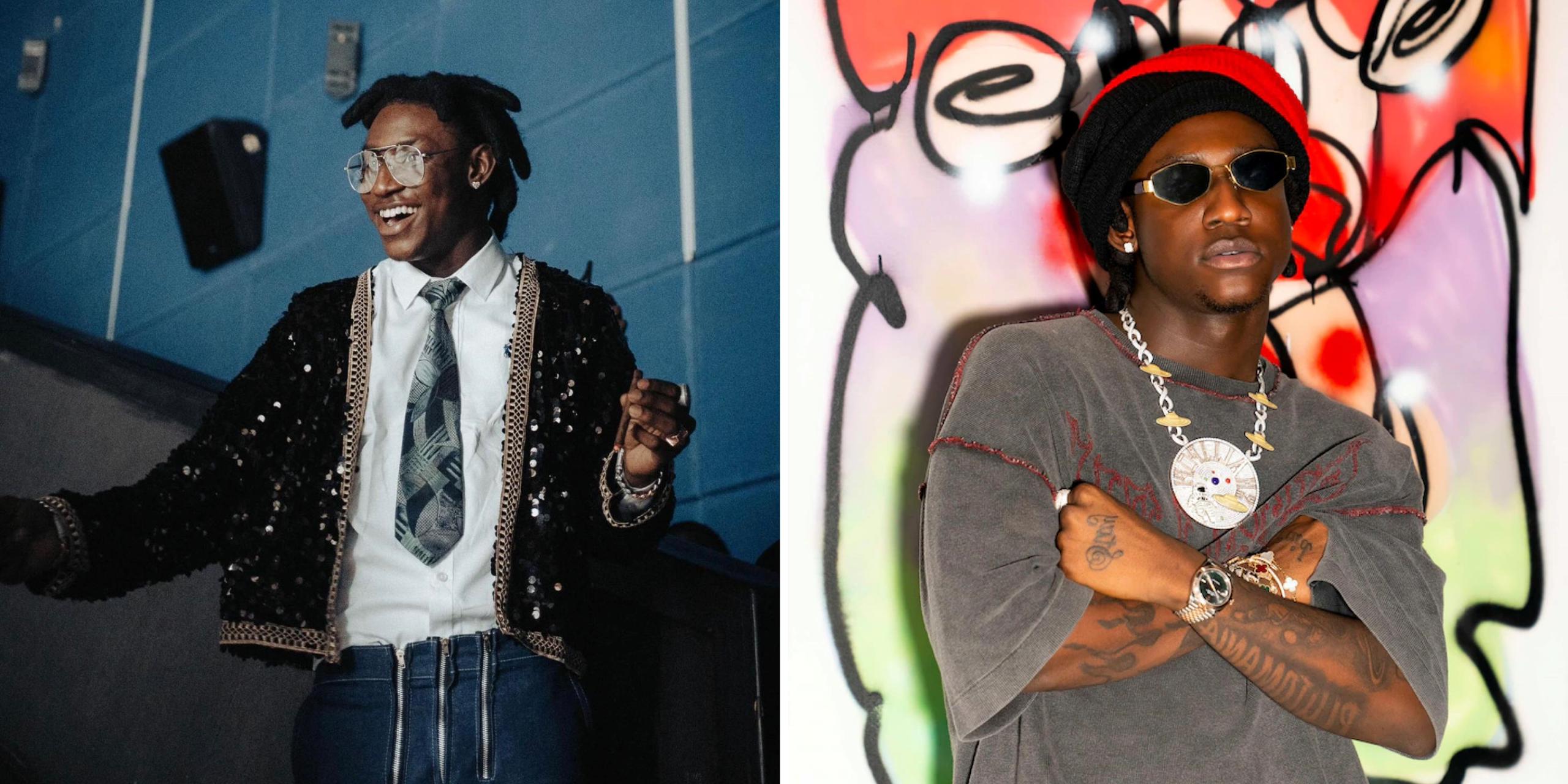
In the world of Nigerian pop, few artists have arrived as loudly or as strangely as Shallipopi. In barely two years, the Benin City native has gone from posting freestyle clips online to becoming a shorthand for an entire aesthetic of chaotic, flashy, unserious on the surface, but deeply calculated underneath. His rise has inspired a new way of thinking about street pop in the digital age, where virality is not a side effect but the main instrument. This phenomenon now has a name among fans and critics alike called “the plutomania effect”.
In simple terms, Plutomania is an obsessive, excessive, or abnormal desire for wealth, money, or material possessions, stemming from the Greek Ploutos(wealth) and mania (madness). It’s a craving for riches, sometimes to a pathological degree, and can also refer to a delusion that one is wealthy.
In Shallipopi’s universe, it is something else entirely. It is sound, attitude, branding, internet behaviour, and a worldview all rolled into one. It reflects how a new generation of Nigerian artists are using social media not just to distribute music, but to perform identity, provoke conversation, and manufacture cultural moments in real time.
From Benin City to the algorithm

Shallipopi, born Crown Uzama, did not emerge from the traditional pipelines of Nigerian pop. There was no early cosign from industry heavyweights or slow burn through radio rotations. Instead, his ascent followed the logic of the algorithm. Short clips, exaggerated slang, offbeat delivery, and a confidence that bordered on parody made his content ideal for TikTok and Instagram Reels.
What separated him from countless other viral hopefuls was consistency and self awareness. Shallipopi understood that the internet rewards repetition, character, and quotability. His lyrics were simple, sometimes absurd, but instantly memorable. His persona leaned into excess money talk, luxury name drops and street bravado exaggerated to the point of comedy.
This approach obviously paid off. Songs like Elon Musk did not just trend; they became raw materials for memes, skits, and dance challenges.
What digital street pop sounds like

Traditional Nigerian street pop has always thrived on rawness. From the early days of street anthems in Lagos to the rise of acts who fused local slang with dance heavy beats, the genre has always been about immediacy and relatability. Shallipopi updates this tradition for the digital era.
His songs are built for short attention spans. Hooks arrive early and repeat often. Beats are skeletal but punchy, leaving space for vocal personality rather than technical complexity. There is a deliberate looseness to his delivery, as if the song could fall apart at any moment but never does.
This is not accidental as digital street pop is engineered for looping. A 20 second clip must make sense on its own. Lyrics must be chantable by people who may not even know the full song. In this context, simplicity becomes strategy.
Shallipopi’s sound rejects polish in favor of impact. It is less concerned with international crossover and more invested in dominating timelines, group chats, and campus speakers. It is safe to say it has worked very well for him so far.
Plutomania as branding and belief

Plutomania is not just a lyrical theme. It is the backbone of Shallipopi’s brand. From naming his record label Plutomania Records to constructing a mythology around “Pluto” as a place of wealth and power, he has created a universe his fans can inhabit.
Also, his sound, Afro Pluto is a unique musical style and movement spearheaded by him. It blends Afrobeats, hip-hop, and amapiano with a distinctive “talking” or conversational delivery, creating memorable lyrics and a fresh sound that’s more about vibe than traditional singing.
This branding resonates because it reflects the aspirations and contradictions of Nigerian youth culture. It celebrates wealth while mocking it. It flexes luxury while acknowledging hustle culture’s absurdity.
In this way, plutomania functions as both fantasy and critique. It allows listeners to participate in the dream of success without pretending the system is fair or stable. The money talk is loud, but it is also knowingly theatrical.
Industry disruption and imitation

Shallipopi’s success has forced the Nigerian music industry to pay closer attention to platform driven growth. Labels, promoters, and A&R executives now actively scout TikTok trends and online personalities, hoping to replicate the formula.
A wave of new artists has followed and they are adopting similar aesthetics of exaggerated slang, hyper local references, and meme ready hooks. Some succeed briefly, others fade quickly. What is quite clear is that the plutomania effect is difficult to copy without authenticity. It works because it feels natural to Shallipopi’s personality and background.
Criticism and cultural debate

Not everyone is convinced. Critics argue that digital street pop prioritizes shock value over songwriting and reduces music to disposable content. There is concern that the rush for virality encourages shallow creativity and short careers.
However, lovers of this style counter that this movement democratizes the industry. Artists from outside traditional power centers can now break through without permission. Regional accents, local slang, and unconventional styles are no longer barriers but advantages and everyone is welcome.
Conclusion
What makes Shallipopi’s rise worth deeper attention is not just his chart performance, but what he represents. He is a case study in how Nigerian pop is evolving alongside technology. He embodies a generation that understands the internet instinctively and uses it as an instrument, not a tool.
Whether Shallipopi becomes a long term cultural figure or a defining symbol of a specific era remains to be seen. But his impact is already obvious. He has shown that street pop can be reimagined for the digital age, that branding can be as important as bars, and that sometimes the loudest strategy is also the smartest.
The plutomania effect is not simply about Shallipopi. It is about a shift in power, creativity, and visibility. It is about how music now lives online before it lives anywhere else. And it may well define the next chapter of Nigerian pop culture.