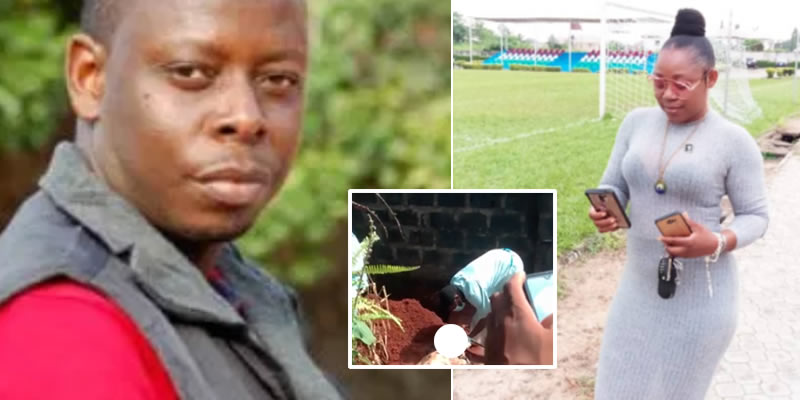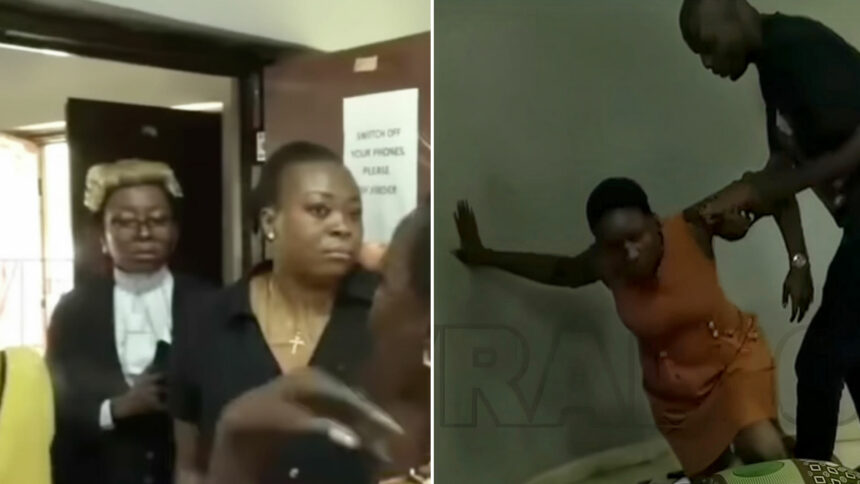
Family members of a 52-year-old woman who died inside the Federal High Court in Edo during a proceeding have accused the National Drug Law Enforcement Agency (NDLEA) of negligence, WITHIN NIGERIA gathered.
Titilayo Akindele, a resident of Edo State, was arrested in January by National Drug Law Enforcement Agency (NDLEA) officials for alleged possession of illicit drugs such as loud, among others.
According to a reliable source, a member of Titilayo Akindele’s church known only as IK acted as a whistleblower, reporting the deceased’s alleged illicit drug activities to the NDLEA.
WITHIN NIGERIA learned that the deceased, Titilayo, complained about her medical challenges and deteriorating health while in the custody of the NDLEA, which were ignored.
Akindele’s family claimed that Titilayo was offered bail by a judge due to her prolonged detention, but the NDLEA refused to release her despite meeting her bail conditions.
According to them, repeated court appearances, denial of medical attention, and prolonged detention all contributed to her deteriorating health, resulting in her collapse in court and eventual death.
Samuel Akinsola, the deceased’s son, told reporters that her mother, Titilayo Akindele, was denied medical care despite her obvious failing health.
“She begged for medical assistance, but they denied her. Some junior NDLEA officers admitted that she needed medical attention because they noticed her struggling to breathe at times. “If they had allowed her to seek medical attention, she would still be alive,” a depressed Akinsola explained.
Adebayo Bashiru, a family member, accused the NDLEA of negligence, claiming that a medical test was supposed to have been performed but the report did not surface.
“She (Titilayo) was held in NDLEA custody for more than four weeks. She had no access to medical professionals who could care for her deteriorating condition. The court granted bail, but the NDLEA did not release her. “She collapsed inside the courtroom during the proceedings,” Bashiru added.
Leonard Osa Uwagie, a lawyer and eyewitness, told reporters that he saw a lifeless body on the floor with people running around trying to resuscitate it.
Uwagie, who accused NDLEA officials of remaining silent, claimed that lawyers present in court pressed them to carry the woman, but they refused.
According to Uwagie, NDLEA officials entered their vehicles, fled, and left the lifeless body inside the courtroom.
He also revealed that NDLEA officers and some officials from the Edo Ambulance and Hospital arrived to pick up the deceased body from the court hours later.
A yet-to-be-identified woman also criticized NDLEA officials’ negligence, citing abandonment and a lack of access to quality medical care as contributing factors to Titilayo Akindele’s death.
She claimed that the deceased was constantly complaining about being weak and in need of medical attention, but was denied it until she collapsed and died.
As of the time of filing this report, the NDLEA had yet to issue an official statement on the subject.
In response to the development, Kingsley Awosuyi, a human rights activist, expressed concerns about the abuse of fundamental rights and processes by officials from some security agencies.
Awosuyi, a lawyer, condemned the prolonged detention of suspects in custody.
According to Awosuyi, suspects granted bail by a competent court of jurisdiction should be allowed to leave custody provided certain conditions are met.
Kingsley, while condemning the rate at which suspects are unlawfully detained, urged security agencies to improve and respect the rights of all Nigerians, including the accused.