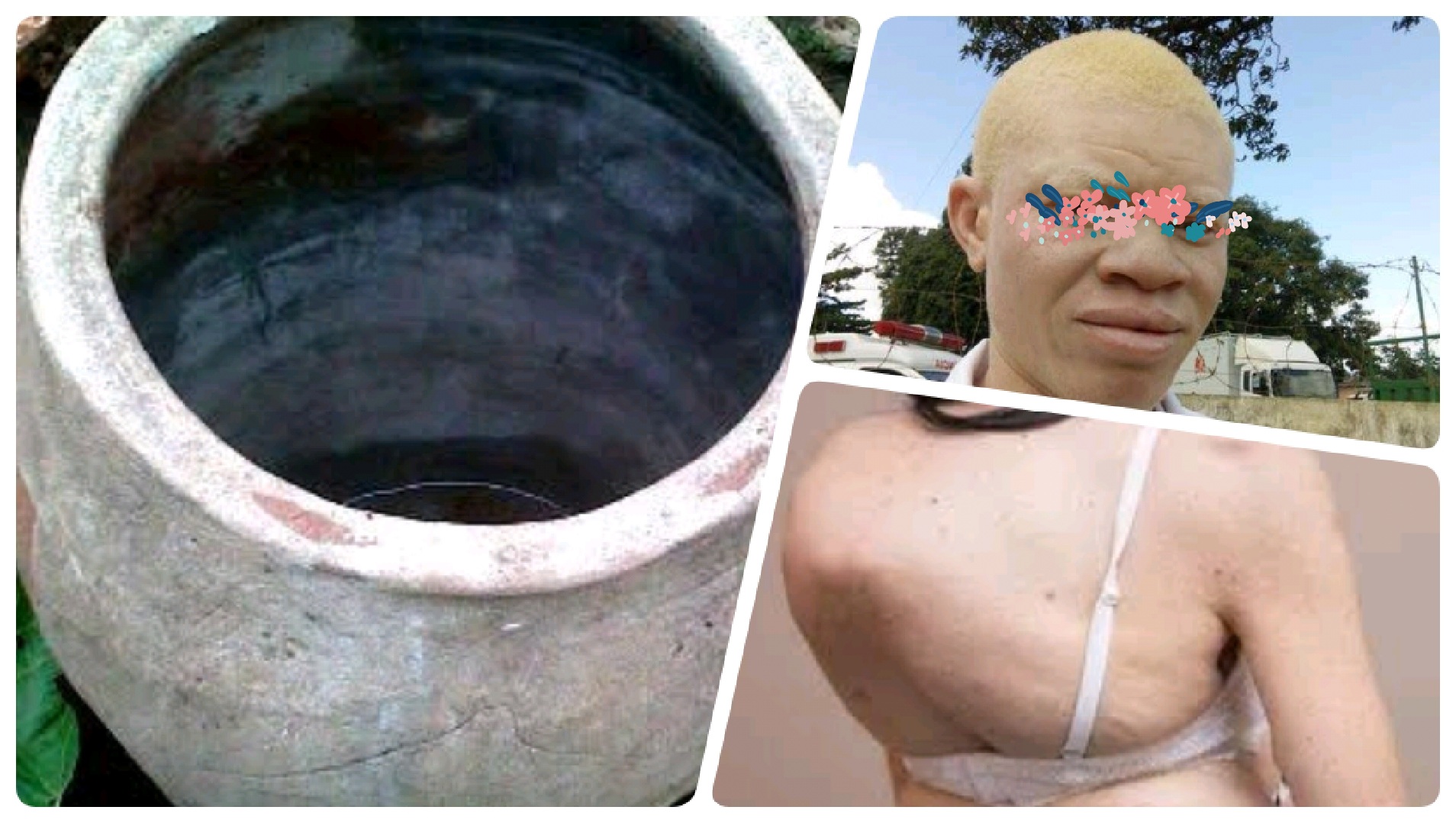
A preliminary inquiry by WITHIN NIGERIA revealed that albinos, hunchbacks, and pregnant women are also buried in secret. Pregnant women, hunchbacks, and albinos are seen as unique beings and, above all, as “loads or goods of deities—Eeru Oosa.”
Life is not only a bag of surprises. It is a home filled with sinister secrets. Over time, certain secrets have come to light, while others remain concealed to all but a select group of people known as “initiates” are not strange to these secrets.
In Yorubaland, people who are aware of secret information are referred to as “Initiates – Awo”, while others who are unaware are known as “non-initiates – Ogberi.” Many rites or rituals are performed in secret and are not known to the general public.
The Yoruba are a highly aware ethnic group. There is a rite or ritual that must be performed for every unusual thing, event, occurrence, or circumstance in order to either draw blessings or keep curses at bay. Certain rites are associated with specific circumstances or events, in addition to consulting the oracle for direction. The Oro festival is a well-known ritual that is performed on a regular basis.
For every strange occurrence or existence, the Yorubas definitely have corresponding acts. In Yorubaland, albinos, hunchbacks, lame including pregnant women are seen as special creatures that must be buried in a special way.
Babalawo Ifayemi Osundagbonu Elebuibon, in a conversation with WITHIN NIGERIA, disclosed that albino and hunchback are properties of deities, and Obatala priests are the ones responsible for preparing their heads for burial.
‘They do not dig the ground to bury them like other humans. They bury them inside traditional mud pots. The rite that would be performed for albinos and hunchbacks when they die is the same as the rite to be done for any lame person. They are all special creatures to be buried by Obatala adherents’, says Babalawo Ifayemi Osundagbonu Elebuibon.
We started looking for ardent Obatala worshippers and priests based on the recommendation of Baba Ifayemi Elebuibon. Kabiyesi Obalesu O.O. Dada, the Supreme Head of Obatala Worshippers, was suggested by Oluseyi Atanda, President of the Traditional Religion Worshippers Association, Osun State Chapter, to WITHIN NIGERIA. Obalesu O.O. Dada later consented to host this reporter at the Obatala Temple in Ile-Ife, the cradle of human race, following three months of consistent communication.
On a Tuesday morning, this reporter left Osogbo and traveled to Igbo Itapa, a neighborhood in Ile-Ife that was home to the Obatala Temple. Upon his arrival at the temple, he was greeted with warmth by a few young priests and given a drink. He then proceeded to explore the areas within the temple that were specifically allowed. At the gate, this reporter removed his shoes and, as he made his way to a bench a scant twelve meters from the gate, he observed deities such as Olode, Ogun, Esu Odara, and others.
The Obatala Temple is a collection of striking architectural elements. More than four deities are housed there, along with two halls, a nursery, and a primary school where children are taught both western education and fundamental Yoruba customs. This writer was unable to look away from “OBATALA nursery and primary school” while he waited for Obalesu, the man in the Obatala Temple.
When Obalesu’s Toyota Camry pulled up twenty minutes later, young priests from the temple were spotted helter-skeltering to spray large amounts of salt on the ground for him to walk on as soon as he got out of the vehicle. He approached Olode’s place (a diety) with a regal gait and submerged his hand in some water tagged as sacred. At the temple, young priests and Obatala devotees knelt at his feet and raised their two hands in front of them as a symbol of respect and intersection. He then placed his fingers inside their hands.
The reporter greeted Obalesu and went forward to introduce himself. “Black clothing is not permitted on our property.” He gently assured this reporter, “They will give you a white piece of cloth to wrap yourself in before I can attend to you,” and asked for a little while to calm down. This reporter wrapped himself in a white piece of linen that a young priest had given him. Less than 12 minutes later, youthful priests took him to Obalesu, the man in Obatala’s temple, in the temple’s rear.
One-on-one conversation with Obalesu, O.O. Dada, the man in Obatala Temple
Kabiyesi O.O. Dada revealed that he is the Obalesu Ase – Obatala Agbaye, the Oloja Ilu Iranje Idita (the town of Obatala in Ile-Ife), and the Obarisa of the universe while appreciating WITHIN NIGERIA for showing interest in Yoruba customs.
O.O. Dada told this reporter that he is the heir of the Obatala deity and scolded those who claim to be Obarisa because they were given certifications.
The reporter questioned Obalesu about how Yorubas bury albinos, hunchbacks, and other “loads of deities.” Obalesu answered that this is a serious question and one of the world’s secrets after he had been silent for a time.
Obatala supporters are renowned for powerful, significant events, according to Obalesu.
“In order to prevent disaster, expectant mothers should invite us to attend a dignified funeral. We were not called to bury a woman whose wife passed away eleven years ago due to pregnancy. Not only did their child not enjoy life, but his home was never established. Upon our summons, we carried out the essential ceremonies to enable them to relish life. Then, as Obalesu explained, he came to thank us.
He went on to say that Obatala devotees are required to bury an albino or hunchback when they pass away.
The affected family and the community as a whole will suffer serious repercussions if they forbid us. It’s a terrible secret in the world that only certain people are supposed to know about.
The funeral process is a very dark secret that is extremely difficult to reveal among people who are not initiates, and these processes are not supposed to be shared in public at all, Obalesu informed WITHIN NIGERIA when this reporter persisted in her questioning about it.
Obalesu revealed that burial customs vary depending on the unique characteristics of the creature—for example, albinos, hunchbacks, or expectant mothers.
Everything has evolved. Because today’s kids are unpredictable, I am unable to freely convey these procedures to you. They’ll find the other two if you state only one. Additionally, the one who informed them about the procedure or voodoo would also face legal repercussions for whatever crimes they committed throughout the process. Obalesu went on to say that it really is a dark secret.
How Yorubas bury albinos, hunchbacks, and deceased pregnant women
Citing case studies of previous interactions, this reporter persisted in applying pressure on Obalesu, asking him to give a brief or partial explanation of these procedures for academic and research purposes.
Though he didn’t seem persuaded, but Obalesu knew this reporter traveled from Osogbo to obtain information. Hence, he vowed that he would give a brief lecture about each of these unique creatures. Obalesu knew the reporter wouldn’t stop until he had information.
HUNCHBACKS
Responding to questioning, Obalesu informed this reporter that the Obatala devotees would only perform traditional burials for those who were born with a hunchback, not for those who were the victims of accidents.
As per the Obalesu, the burial ceremony would be carried out by Obatala priests during the night, following the hunchback’s family’ procurement of the necessary items for the burial.
It’s an extremely serious ritual. Since the procedures for burying hunchbacks must be carried out covertly by initiates, only a select few kings are aware of them. During the funeral ceremony, Obatala devotees can only be followed by kings who have become initiates and are well-known in Oruwa. Obalesu continued, “Oruwa means passage—the most recognized level of initiation.”
Obalesu claims that hunchbacks are not buried in caskets because they have already carried their coffin with them from heaven.
We make use of mud pots (ikoko), Aso Ofun, Aso Oofun, Schnapps (drinks), Omi Ero, and other necessary supplies that I won’t list. It is a really tough procedure that needs to be kept a closely-guarded secret. Certain things or procedures are restricted to serious initiates and not to regular people. No dead body could escape burial, but we have to perform the appropriate rituals before they do.
In Yorubaland, there are certain rulers whose interment is beyond the reach of the unaided eye. He went on, “Hunchbacks don’t go underneath the surface like other people do.
ALBINO
According to Obalesu, albinos are unique beings and “loads of deities—Eru awon’Oosa” that need to go through certain rituals before being buried.
Obalesu claims that whilst hunchbacks use mud pots for burial, Albinos are also buried in the dark.
Obalesu revealed that burying an albino is a more taxing and challenging task than stooping over someone.
Agbo, a traditional remedy, must be prepared using a few specific leaves. They will give him or her a full body wash with the Agbo. After using Agbo to wash the deceased, they will now start the burial process. Before going to the funeral, they will also get “ero water” from the Obatala Temple, he continued.
In response to a question about whether the deceased would be buried with the mud pot, Obalesu said that it is their business and he wasn’t ready to talk about it.
Obalesu went on to say that in his entire life, he has only witnessed the burial of unique creatures like albinos, hunchbacks, or pregnant women three times.
The high priest, who is in his early seventies, informed this reporter that although it’s a very difficult work and the world has changed, he does not pray to be experiencing such every time.
When placing an albino (afin) dead body in the ground, a specific tree (name withheld) will be chopped down from the forest and positioned next to the body. The ritual’s outlook determines how many trees are planted.
In response to a question concerning the tree, Obalesu stated he could identify the specific tree if he saw it and declined to specify the type of woodland in which it would grow.
The Obatala priest declined to go further and said it was one of the world’s dark secrets when this reporter pressed him on the issue.
“No high priest from the Obatala clan would ever explain to you the full procedure involved in burying an albino.” That is a top secret—the conclusion of initiation. Exaggeration is ingrained in human nature. He continued, “It’s safe that these procedures stay under wraps if people can exaggerate and manipulate the burial of kings.”
There are limitations on the right and obligation of relatives of exceptional creatures to attend the funeral. According to Obalesu, these unique humans had longer lifespans than regular people.
Every attempt to get more information from Obalesu, Kabiyesi O.O. Dada was unsuccessful. He claimed that everything he has said so far is more than sufficient to be used in academic or research contexts. Life’s mysteries are numerous. Interring unique humans in the ground is one, and it ought to remain such.