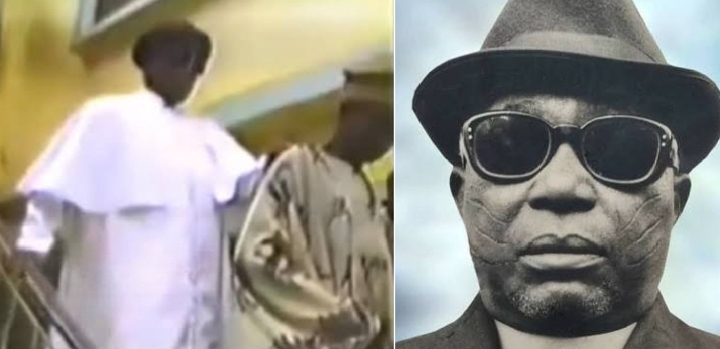
The air in Ede was heavy that year, pregnant with anticipation, with wedding preparations reaching their crescendo. Yet, just fifteen days before the ceremony that should have been the pinnacle of joy for young Samson Oladeji Akande, darkness crept silently into his life. One morning, his eyes could no longer greet the world; the light vanished as if swallowed by an unseen hand. The sudden blindness carried a weight far beyond the physical. It was an omen, a moment that would fracture the known path of his life and usher him toward a destiny he could never have imagined.
The shadow of personal tragedy had already followed him and his bride. Recurrent stillbirths had left their home hollow, the echoes of life that never began weighing heavily on their hearts. Within the community, whispers named him Baba Abiku—Father of the Stillborn—a label that stung with despair and societal judgement. For some, these losses might have signaled defeat; for Akande, they became the prelude to a spiritual awakening that would transform him from a grieving husband into a prophet, a leader, and eventually, a beacon at Ori‑Oke Baba Abiye.
Darkness, both literal and symbolic, became his teacher. His blindness was not merely a medical condition—it was a threshold, a point at which the ordinary met the extraordinary. The grief of childlessness intertwined with the sudden loss of sight, forming a crucible in which the boy who once recited the Qur’an with precision would be forged into a spiritual general, guiding others into light through prayer, discipline, and unwavering faith.
The transformation from despair to divine mission did not happen overnight. The early days of blindness were marked by confusion, fear, and a profound confrontation with mortality. Yet, even in the silence of his world, a quiet whisper began—a call that would redirect his life and the lives of thousands who would one day seek solace at his mountain sanctuary. This story, woven from grief, resilience, and faith, is not just about a man who lost his sight; it is the tale of Prophet Samson Oladeji Akande, known to many as Baba Abiye, whose journey would come to define a spiritual legacy in Nigeria.
Early Life and Formative Years
Samson Oladeji Akande was born in 1896 in the bustling town of Ede, a place framed by the rich cultural tapestry of what is now Osun State. Raised in a Muslim household, he was immersed from infancy in the rhythms of Islamic learning. His childhood was structured around memorization of the Qur’an, a discipline that honed his mind, sharpened his memory, and instilled in him a capacity for spiritual focus that would later define his ministry. Neighbors and family recount a boy with quiet determination, eyes bright with curiosity, reciting verses with precision, already carrying the weight of expectation both familial and spiritual.
Despite this disciplined upbringing, life’s trials soon pressed upon him. The societal importance of marriage and progeny was paramount. When he married, hope mingled with anxiety. Yet the couple was confronted with repeated loss—each stillbirth compounding sorrow with the weight of unfulfilled expectation. The label Baba Abiku was not given lightly. It carried the sting of societal judgment, a reminder of human frailty, and the shadow of misfortune that loomed over the household.
Then, in 1935, a seismic shift occurred. Fifteen days before what should have been the culmination of personal happiness, blindness struck. The physical world disappeared in an instant, yet the spiritual realm seemed to open wider than ever before. Within this sudden void, a profound questioning of purpose and destiny arose. The marriage that had already been marred by grief faced a new challenge, yet this event also became the pivot around which his spiritual journey would turn.

Conversion to Christianity did not come immediately. It was a gradual unfolding, a quiet awakening within the silence of blindness. Where previously the Qur’an had been his anchor, new texts, prayers, and spiritual practices began to inform his path. The repeated losses of children had taught him the transient nature of life and the depth of human sorrow. Now, blindness added a new layer to his understanding of suffering and purpose. Over time, these trials converged, shaping him into the man who would one day stand at the forefront of a mountain of prayer, guiding seekers toward healing and hope.
The Turning Point: From Baba Abiku to Baba Abiye
The journey from despair to spiritual leadership can often be traced to a single defining moment. For Samson Akande, it was not only the sudden blindness but the accumulation of grief from repeated stillbirths. These twin tragedies—the darkness before the wedding and the persistent absence of children—became the crucible in which his faith was tempered.
The name Baba Abiku, a moniker that once branded him with sorrow, gradually gave way to a new identity. With each step toward Christian faith and ministry, the narrative of loss transformed into a story of life. The community soon recognized the symbolic power of this change. Baba Abiye—Father of the Living—was more than a title; it was a declaration of hope, an emblem of resilience, and a testament to faith overcoming despair.
Even as he navigated this personal metamorphosis, Akande’s spiritual insights deepened. Blindness sharpened his inner vision, a paradox that became widely noted in his later ministry. Those who would later testify to his prophetic foresight emphasized that his lack of physical sight did not hinder his perception of hidden dangers, spiritual needs, or human intentions. This heightened intuition and spiritual acuity would become defining features of his leadership at Ori‑Oke, and a central reason why his legacy endures.
Through this lens, the tragedies that had once defined his identity—blindness, childlessness, and societal judgment—were reframed as instruments of divine preparation. The man who had once been labeled by grief alone would rise to become a figure whose story embodied transformation, resilience, and spiritual insight.
Ministry Formation and the Birth of Ori‑Oke Baba Abiye
The call to ministry came gradually, yet unmistakably, as if whispered by the wind that swept across the hills of Ede. After his conversion, Prophet Samson Akande joined the Christ Apostolic Church, where his zeal and spiritual insight became immediately apparent.

Mentorship under Joseph Ayo Babalola offered both guidance and exposure to the revivalist fervor sweeping Yoruba-speaking regions of Nigeria. Akande’s blindness, initially perceived by some as a limitation, emerged instead as a focal point of authority: the eyes of the spirit, rather than the flesh, had awakened.
By 1944, what had begun as an internal awakening became a directive from the divine. God is said to have instructed him to establish a prayer mountain on a hill located between Awo and Iwoye, along the banks of the Osun River. The hill was no ordinary landscape; locals believed it was a haven for spiritual darkness, home to pythons and the so-called “queen of the hill” demon. For many, the site radiated danger, a place where ordinary men dared not tread. Yet for Akande, the mountain represented a threshold—a space to confront fear, darkness, and human limitations through prayer.
The establishment of Ori‑Oke Baba Abiye was not simply a physical construction; it was a spiritual conquest. Visitors who came in later decades would recount stories of how the prophet’s presence seemed to purify the air, as though the very atmosphere bore witness to his prayers. Akande’s approach combined intense asceticism with practical discipline: he fasted, prayed, and guided others to engage in persistent spiritual warfare. The mountain became a site where the temporal and the divine intersected, a place where human despair could be confronted and transformed into hope.
As word spread, the prayer mountain drew thousands. Pilgrims from across Nigeria—and eventually from beyond—arrived seeking healing, guidance, and intervention in seemingly impossible circumstances. Each person who stepped onto Ori‑Oke was entering a narrative that had been shaped by tragedy, blindness, and the relentless pursuit of divine purpose. The site became both a physical sanctuary and a symbolic representation of Akande’s own life: a man who had walked through darkness and emerged as a conduit of light.
Character, Spiritual Insight, and Ministry Style
Despite physical blindness, Prophet Akande’s spiritual perception was widely regarded as extraordinary. Accounts describe him warning of hidden dangers, predicting challenges, and perceiving the intentions of those who approached him. One testimony recalls a young man observing Akande, questioning how he could “see” the traps of the mountain without physical sight. The answer lay not in ordinary vision but in spiritual attunement—an acute sensitivity cultivated through decades of prayer, meditation, and disciplined fasting.
Humility was a defining feature of his ministry. Even as crowds gathered, seeking miracles and guidance, Akande emphasized dependence on God rather than human authority. He taught that prayer, faith, and endurance were the true sources of power. Visitors often described moments in which the prophet would listen attentively, pray without fanfare, and guide them to confront personal challenges with patience and courage. This approach, seemingly simple, reinforced a profound truth: leadership rooted in service surpasses the allure of spectacle or dominance.
His style also incorporated elements of experiential guidance. Pilgrims were often encouraged to climb the hill, endure fasting, or engage in rigorous prayer routines, mirroring the prophet’s own ascetic practices. Each ritual reinforced resilience, perseverance, and spiritual discipline. These practices were not merely symbolic; they prepared individuals to confront the uncertainties of life, much as Akande himself had confronted blindness and recurrent grief. The mountain thus became a classroom for the spirit, where the lessons of suffering and faith were lived rather than merely preached.
The combination of personal authenticity, disciplined prayer, and perceptive spiritual insight solidified Akande’s reputation. Even those skeptical of miracles found themselves drawn to the mountain, compelled by the palpable sense of purpose, discipline, and unseen guidance that permeated every encounter. Ori‑Oke Baba Abiye was more than a site of devotion; it was a stage upon which the human and divine converged, a living testament to the life of a man who transformed personal tragedy into collective hope.
Legacy and the Continuing Influence of Ori‑Oke Baba Abiye
Decades after its founding, Ori‑Oke Baba Abiye remains a center of spiritual pilgrimage, attracting visitors who arrive seeking divine intervention, guidance, or spiritual fortitude. The daily rhythm of worship—morning and evening services, Friday vigils, and seasonal gatherings—reflects a continuity of practice established by Akande. Attendees often describe the atmosphere as electric, charged with a sense of expectation and reverence.
Beyond the spiritual dimension, the site contributes significantly to the local socio-economic landscape. Pilgrims require lodging, food, and services, creating a ripple effect that sustains local commerce. Vendors, guides, and service providers benefit from the influx, demonstrating how spiritual leadership can foster both faith and tangible community development. Akande’s influence, therefore, extends beyond prayer and healing; it encompasses cultural, economic, and social transformation.

The title “Blind God’s General” encapsulates the paradox of his life: a man without physical sight who wielded spiritual authority with clarity and precision. It is a sobriquet that speaks not merely to his physical condition but to his role as a spiritual leader, a pioneer of prayer mountain ministry, and a figure whose life story inspires resilience, devotion, and hope. Pilgrims and followers continue to invoke his name, seeking guidance and affirmation, ensuring that the legacy of Baba Abiye remains active and dynamic.
Akande’s ministry illustrates broader patterns within Nigerian Christianity. His life embodies the rise of indigenous revivalist movements, particularly among Yoruba communities, blending charismatic practices with culturally specific expressions such as mountain prayer, healing, and pilgrimage. His story offers a lens through which to understand how faith, tragedy, and cultural context intersect to produce enduring religious movements.
Critical Reflections: Faith, Myth, and Historical Context
Prophet Samson Akande’s life, like many revivalist figures, is wrapped in layers of myth, testimony, and reverence. Pilgrims and followers recount extraordinary feats—healing the sick, predicting calamities, and confronting malevolent spiritual forces on Ori‑Oke. Yet, for historians and scholars, these accounts require careful navigation. While faith provides the interpretive lens for believers, independent documentation of many of these events is scarce. The tension between hagiography and verifiable history is common in Nigerian revivalist Christianity, and Akande’s story is no exception.
Understanding his ministry also requires attention to cultural context. The Yoruba Aladura tradition, with its emphasis on intensive prayer, spiritual warfare, and divinely inspired leadership, shaped the practices at Ori‑Oke Baba Abiye. Akande’s blindness, recurring personal tragedies, and eventual spiritual insights resonate deeply within this cultural framework. They illustrate how personal suffering can be transformed into authority and credibility in religious movements, a pattern observed across 20th-century Yoruba Christianity.
The dynamics of place-based spirituality further complicate the narrative. Ori‑Oke was not merely a physical hill; it became a sacred landscape where local belief systems, Christian revivalism, and individual quests for divine intervention intersected. The interplay of pre-existing spiritual beliefs—python enclaves, hill spirits, and ancestral influences—with Christian prayer rituals demonstrates a syncretic adaptation that is common in Nigerian indigenous revivalism. For outsiders, the mountain’s mystical reputation may seem anecdotal or allegorical, yet for followers, it affirms a continuity of spiritual authority grounded in place, story, and faith.
Economic and social reflections also emerge. The influx of pilgrims transformed the surrounding communities, generating commerce, fostering local employment, and shaping social interactions. Yet, such spiritual tourism can raise questions about sustainability, land use, and the commercialization of sacred space. Akande’s leadership, intentionally or inadvertently, intertwined spiritual authority with tangible community impact, demonstrating the complex ways in which religious movements shape both faith and society.
Why Prophet Samson Akande Matters
The life of Prophet Akande stands as a testament to resilience and transformation. From a young Muslim student with a disciplined Qur’anic upbringing, he endured a cascade of misfortunes: recurrent stillbirths, personal grief, and sudden blindness. Each trial could have defined a life of despair, yet he transmuted these hardships into a ministry that touched thousands. His journey illustrates the power of faith to convert tragedy into a life of purpose, turning personal darkness into collective illumination.
Symbolism permeates every aspect of his story. Blindness, often seen as limitation, became a metaphorical lens through which spiritual truths were discerned. The transition from Baba Abiku to Baba Abiye embodies the human capacity for renewal—life emerging from repeated loss, vision emerging from physical darkness. The narrative resonates across religious, cultural, and psychological dimensions, offering lessons on endurance, divine calling, and the interplay of fate and agency.
His ministry reflects broader trajectories in Nigerian Christianity. Ori‑Oke Baba Abiye exemplifies the rise of indigenous, charismatic revivalist movements in Yoruba-speaking regions. Practices such as mountain prayer, healing rituals, pilgrimage, and spiritual warfare illustrate the adaptation of Christianity to local cultural and spiritual frameworks. Through this lens, Akande’s story illuminates how personal faith narratives can expand into collective religious identity, shaping communities and influencing generations.
Finally, Prophet Akande’s legacy is both spiritual and social. Ori‑Oke remains a pilgrimage site, a place where faith, culture, and community intersect. Pilgrims continue to experience the transformative power that he embodied, while the economic and social vitality of the surrounding region persists as a testament to the enduring impact of one man’s journey. The title “Blind God’s General” captures not only his spiritual leadership but the paradoxical triumph of insight over limitation, vision over darkness, and life over repeated loss.
Concluding Lens: Light from Darkness
The story of Prophet Samson Oladeji Akande is a study in contrasts. Darkness and light, loss and renewal, blindness and spiritual sight—each element underscores the profound human capacity to endure and transcend. His life shows that tragedy need not be terminal, that suffering can be instructive, and that spiritual awakening often arrives through the most unexpected pathways.
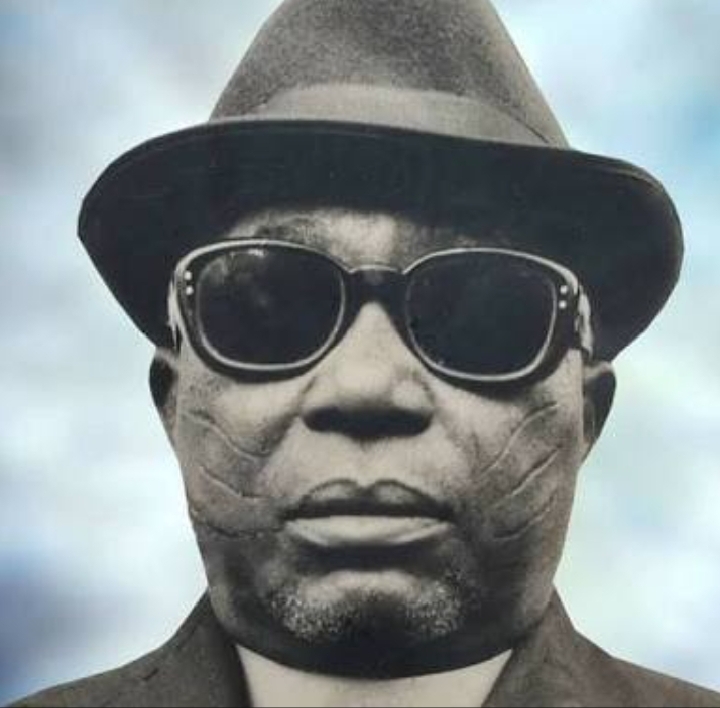
Ori‑Oke Baba Abiye, standing quietly along the Osun River, is more than a hill or a pilgrimage site. It is the embodiment of a journey from despair to divine purpose, a physical and symbolic manifestation of one man’s faith made tangible.
Each step on its slopes mirrors the struggle, discipline, and hope that defined Akande’s life. The mountain continues to teach, to guide, and to inspire—a living monument to the resilience of the human spirit and the transformative power of faith.
Prophet Akande’s narrative, framed by personal tragedy and societal expectation, resonates beyond Ede or Nigeria. It speaks to universal themes: confronting loss, navigating limitation, and discovering meaning in suffering.
As students of faith, history, and culture reflect on his life, Prophet Samson Oladeji Akande emerges not simply as a historical figure but as a symbol—an archetype of resilience, spiritual leadership, and the human capacity to transform suffering into legacy.
Through blindness, through loss, through the trials of life, he became a father of the living, leaving a light that continues to illuminate countless lives.