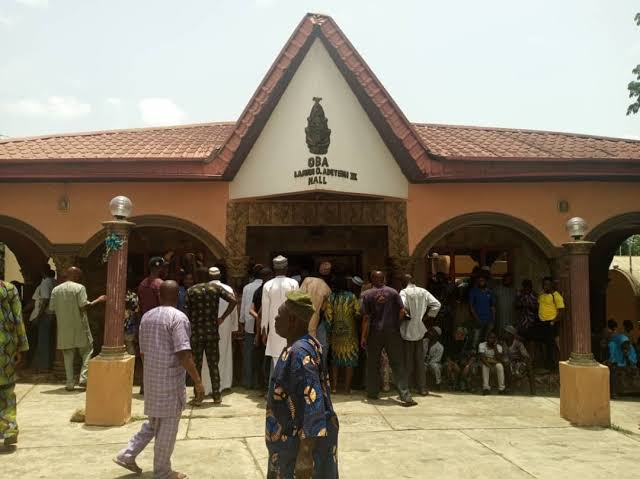
Silence slowly crept into many communities across Kwara South long before the nation fully understood what was happening. Markets that once echoed with traders’ voices suddenly became quieter. Farmers began returning home earlier than usual. Parents stopped allowing children to walk long distances to school. Fear gradually settled into villages that had spent decades relying on their traditional rulers as symbols of protection, authority, stability, culture, history, strength.
Then came the reports that changed everything. Rumours first moved quietly through local conversations before exploding across newspapers, radio stations, blogs, social media pages, community meetings. Stories emerged that several traditional rulers across parts of Kwara State had abandoned their palaces after repeated kidnappings, killings, armed invasions, terror attacks. What shocked many Nigerians was not merely the violence itself, but the growing belief that even kings no longer felt safe inside their own domains. Questions immediately followed.
What could force monarchs to flee ancestral palaces that had stood for generations? How dangerous had the situation become behind the scenes?
As more details surfaced between April 2026, May 2026, the story transformed from a regional security issue into one of Nigeria’s most haunting symbols of rural insecurity. Images of deserted palaces, frightened residents, abandoned farms, displaced families painted a troubling picture of communities slowly collapsing under fear.
What truly happened inside Kwara’s troubled communities became far bigger than headlines alone.
Fear Quietly Took Over Kwara South
Kwara State had long maintained a reputation as one of Nigeria’s calmer North Central states compared to several neighbouring regions battling severe insecurity. Many residents believed the state was relatively insulated from the scale of violence seen elsewhere across parts of Northern Nigeria. That perception slowly began to crack throughout 2025 as kidnappings, armed attacks, disappearances became more frequent across remote communities.
Tension reportedly escalated heavily across Ifelodun Local Government Area alongside surrounding settlements linked to forest corridors stretching toward Kogi State, Niger State. Residents increasingly spoke about strange armed men moving through forests at night, motorcycles entering villages at odd hours, gunshots interrupting sleep, suspicious camps hidden deep inside rural routes. Local fear grew gradually before eventually exploding into full national attention.
Several villages allegedly became trapped between fear, silence, helplessness. Farmers reportedly abandoned farmlands after repeated threats from armed groups. Some residents claimed kidnappers began imposing unofficial movement restrictions on certain roads after sunset. Transport operators allegedly reduced operations because drivers feared ambushes. Economic activity reportedly slowed across communities that depended heavily on farming, local trade, inter village commerce.
Traditional rulers found themselves at the centre of the growing crisis because villagers naturally turned to palaces for leadership, reassurance, intervention. Sadly, reports increasingly suggested that monarchs themselves had become vulnerable targets.
Reports About Fleeing Monarchs Sparked National Attention
Late April 2026 became the turning point that pushed the story into national consciousness. Multiple investigations alleged that more than 30 traditional rulers across Kwara South had either temporarily abandoned their palaces or drastically reduced their presence within their communities due to worsening insecurity.
Communities repeatedly mentioned within the reports included Oreke, Afin, Omugo, Olohuntele, Alabe, Owa Onire, Oro Ago, Igbo Agbon, Olayinka, Oke Oyan. Residents reportedly claimed several monarchs had relocated to safer locations including Ilorin, Offa, Osogbo, Lagos while leaving palace activities under caretakers, local chiefs, family representatives.
What disturbed Nigerians most was the symbolism behind the reports. Traditional rulers occupy deeply respected positions within many rural communities. Beyond cultural authority, monarchs often represent unity, conflict resolution, spiritual identity, historical continuity, communal protection. Seeing reports that kings themselves no longer trusted the security situation created a psychological shock that spread far beyond Kwara State.
Conversations immediately erupted across social media platforms where many Nigerians described the development as evidence that insecurity had entered another dangerous phase. Citizens questioned how ordinary villagers could possibly feel safe if monarchs reportedly feared staying inside royal compounds protected for generations.
Several accounts from residents painted heartbreaking pictures of communities gradually becoming ghost towns. Villages reportedly emptied as families relocated to safer urban areas. Schools allegedly witnessed declining attendance because parents feared abductions. Local markets reportedly collapsed as traders stayed away from high risk areas.
One statement that circulated widely online came from a resident who reportedly said the palace is empty, the entire community is deserted. That single sentence captured the emotional weight behind the crisis more than statistics ever could.
Rural Communities Started Living Under Constant Fear
Life reportedly changed drastically across several affected communities between late 2025, early 2026. Villagers allegedly adjusted daily routines around fear rather than convenience. Many residents reportedly stopped attending evening gatherings, ceremonies, community events that once defined rural social life.
Farmers became among the worst affected groups because agriculture remained the backbone of most local economies. Numerous villagers allegedly abandoned fertile farmland after repeated reports of kidnappings along bush paths leading to farms. Some families reportedly lost their primary source of income because venturing into forests became increasingly dangerous.
Women reportedly reduced travel between neighbouring villages to attend markets. Parents allegedly feared allowing children to walk alone even during daylight hours. Traders reportedly struggled to transport goods safely between communities because major routes became vulnerable to attacks.
Local economies naturally suffered severe consequences. Food production reportedly declined across some areas due to reduced farming activities. Businesses allegedly recorded lower patronage because movement became restricted. Commercial motorcycle operators reportedly avoided certain roads after evening hours. Fear gradually reshaped entire patterns of social, economic, cultural life.
Residents reportedly described hearing gunshots at night while others claimed suspicious armed groups openly moved through nearby forests without challenge. Many villagers allegedly developed deep distrust toward isolated roads, unfamiliar visitors, nighttime movement.
The emotional burden became equally devastating. Families reportedly slept with fear every night uncertain whether armed men might invade their homes before dawn. Children allegedly grew up surrounded by conversations about kidnappings, ransom payments, disappearances. Communities slowly transformed from peaceful settlements into places constantly preparing for possible attacks.
Monarchs Became Direct Targets
Public anxiety intensified further after several traditional rulers reportedly suffered direct attacks, kidnappings, invasions. The belief that monarchs themselves had become targets changed the entire perception surrounding the crisis.
One incident that generated widespread national attention involved the Oniwo of Afin, Oba Simeon Olaonipekun. Reports claimed armed men invaded his residence during late 2025 before abducting him alongside his son. The development reportedly shocked residents because royal palaces had traditionally symbolised authority, sacred protection, communal power.
Accounts surrounding the abduction painted disturbing images of heavily armed attackers operating boldly despite the monarch’s status. Reports later claimed the traditional ruler spent weeks in captivity while negotiations reportedly continued over ransom demands.
Stories surrounding the monarch’s eventual release generated even deeper sympathy nationwide. Reports suggested ransom payments exceeding ₦30 million were allegedly made before freedom was secured. Sources further claimed the traumatic experience severely affected the monarch physically, emotionally, psychologically.
Several reports alleged the royal father never fully resumed normal residence within the community afterward because of lingering trauma, security fears, health complications linked to the kidnapping ordeal. Nigerians reacting online described the situation as heartbreaking because traditional rulers are often viewed as custodians of communal courage, dignity, resilience.
Another disturbing incident reportedly occurred within Olayinka community where armed men allegedly stormed a palace around 1am before abducting a monarch, his wife, another resident. The nighttime invasion reportedly intensified fears because it suggested attackers operated with growing boldness, coordination, confidence.
Security agencies later reportedly arrested dozens of suspected illegal miners allegedly connected to criminal activities surrounding the attack. That development opened another major dimension within the Kwara insecurity crisis.
Illegal Mining Entered The Security Conversation
Illegal mining quickly became one of the most debated aspects surrounding insecurity across parts of Kwara State during 2026. Reports increasingly linked armed groups operating within forest regions to illegal mining networks stretching across rural corridors connected to Kogi State, Niger State.
Many analysts, local residents, security observers began questioning whether criminal groups had established operational camps around isolated mining zones hidden deep inside forests. Discussions intensified after repeated reports suggested armed gangs frequently operated within hard to access rural territories where government presence remained weak.
Forest routes allegedly became strategic hideouts because difficult terrain complicated security surveillance. Armed groups reportedly exploited isolated mining settlements where undocumented activities already existed beyond strong government oversight. Some residents allegedly claimed unfamiliar armed men regularly appeared around mining routes without attracting immediate intervention.
Public debate rapidly expanded beyond ordinary kidnapping discussions. Nigerians increasingly began questioning whether illegal mining networks indirectly financed armed groups through extortion, protection payments, illegal transactions, smuggling operations. Others raised concerns about weak border surveillance across forest corridors connecting multiple states.
Conversations also focused heavily on rural intelligence failures. Citizens questioned how criminal camps could allegedly expand within forests without timely detection. Some residents reportedly accused authorities of reacting slowly despite repeated warnings from local communities about suspicious activities.
Security concerns surrounding forests became even more serious because many attacks reportedly occurred near isolated rural routes difficult for security forces to patrol consistently. Communities bordering thick forests naturally became more vulnerable due to limited infrastructure, poor telecommunications coverage, difficult terrain.
Fear deepened as residents allegedly realised attackers often understood local geography better than security operatives themselves.
February 2026 Massacre Changed Everything
Panic across Kwara State reportedly escalated dramatically after deadly attacks struck Kaiama area during February 2026. The massacre quickly became one of Nigeria’s most horrifying security stories outside the North East insurgency region.
Reports surrounding the attacks described heavily armed militants storming villages before unleashing large scale violence against residents. Initial death toll estimates reportedly exceeded 160 victims while some later reports suggested casualties could have surpassed 200 people.
The brutality described within survivor accounts deeply shocked Nigerians nationwide.
Villages were reportedly burned during coordinated attacks that left homes destroyed, families displaced, residents missing. Gunmen allegedly carried out mass shootings while abducting several villagers. Local leaders reportedly became targets during the violence while properties connected to traditional authority allegedly suffered destruction.
Scenes emerging after the attacks reportedly revealed widespread devastation across affected communities. Burned structures, displaced survivors, traumatised residents painted painful images of rural populations overwhelmed by organised violence.
Many Nigerians viewed the massacre as proof that insecurity within parts of North Central Nigeria had reached extremely dangerous levels. Citizens expressed shock because Kwara had historically avoided the scale of bloodshed associated with some other regions battling insurgency, banditry.
Fear reportedly spread rapidly across neighbouring communities after the massacre. Villagers allegedly worried that attackers could expand operations toward additional settlements. Some families reportedly relocated temporarily to urban centres fearing similar attacks might occur elsewhere.
Federal authorities later reportedly intensified military operations across forest regions following the killings. Additional troop deployments allegedly targeted suspected criminal hideouts while security agencies reportedly increased surveillance across vulnerable rural corridors.
Despite those efforts, fear already deeply affected public confidence.
Church Abductions Intensified Public Anxiety
Another incident that kept Kwara State within national headlines involved the abduction of worshippers from a church located in Eruku town. The attack further reinforced growing fears that kidnappings had become deeply organised across several communities.
Religious spaces traditionally viewed as safe environments increasingly appeared vulnerable. Nigerians reacted strongly because worshippers gathered peacefully before allegedly becoming victims of armed criminals. Many citizens described the incident as another painful sign that insecurity no longer respected sacred spaces, cultural institutions, community boundaries.
April 2026 later brought significant developments after police reportedly announced the arrest of a 33 member gang allegedly connected to church abductions alongside several kidnappings across Kwara State, Kogi State.
Authorities reportedly linked the suspects to organised criminal networks operating across multiple communities. The scale of the arrests shocked many observers because it suggested kidnappings may have involved larger coordinated syndicates rather than isolated opportunistic criminals.
Public discussions intensified around how deeply kidnapping networks had allegedly expanded within parts of rural Nigeria. Citizens increasingly worried about criminal groups establishing sophisticated operations involving informants, negotiators, logistics providers, weapons suppliers, forest hideouts.
Several Nigerians reacting online questioned how rural communities with limited police presence could realistically defend themselves against heavily armed gangs operating across difficult terrain. Fear naturally continued spreading.
Empty Palaces Became A National Symbol
What transformed the Kwara story into a national emotional issue was not simply statistics surrounding kidnappings or killings. The strongest image that captured public attention remained the idea of empty palaces standing inside frightened communities.
Palaces represent far more than buildings within traditional Nigerian society. They embody history, ancestral identity, continuity, authority, spirituality, communal memory. Stories about abandoned royal homes therefore carried powerful emotional weight across the country.
Many Nigerians imagined elderly monarchs forced to flee ancestral palaces built by generations before them. Others pictured villages gradually losing cultural vitality as residents escaped insecurity. The symbolism became painful because traditional rulers often remain among the final visible pillars holding rural communities together.
Once reports suggested monarchs themselves felt unsafe, many citizens interpreted the situation as evidence that normal life had collapsed across several areas.
Online discussions frequently described the development as deeply humiliating for the nation. Citizens questioned how communities could function effectively when royal fathers allegedly operated from exile. Others expressed anger that villagers appeared abandoned while criminal groups expanded influence across forests, roads, settlements.
Some observers warned that prolonged insecurity could permanently damage local culture, agriculture, economic survival if displacement continued unchecked. Empty villages eventually risk becoming forgotten territories vulnerable to further criminal occupation.
Fear surrounding rural abandonment therefore extended beyond immediate violence into concerns about long term societal collapse.
Residents Faced Emotional Trauma Daily
Beyond headlines, statistics, political reactions existed thousands of ordinary people quietly struggling through fear every single day. Rural insecurity rarely affects communities only physically. Emotional trauma often leaves equally devastating scars lasting years beyond attacks themselves.
Many residents reportedly developed constant anxiety surrounding nighttime movement, unfamiliar visitors, motorcycle sounds, gunshots. Families allegedly lived uncertain whether relatives travelling short distances would safely return home. Parents reportedly worried continuously about children attending schools located near vulnerable routes.
Trauma reportedly deepened among families directly affected by kidnappings. Relatives often faced agonising periods negotiating ransom demands while fearing victims might suffer violence in captivity. Financial pressure reportedly destroyed savings, businesses, properties as families desperately sought money to secure loved ones’ release.
Communities allegedly became psychologically exhausted from living under prolonged uncertainty.
Traditional ceremonies reportedly declined because large gatherings increasingly felt unsafe. Nightlife within villages allegedly disappeared almost entirely. Residents reportedly avoided discussing sensitive issues publicly fearing informants might relay information to armed groups.
Some displaced villagers reportedly struggled emotionally after abandoning ancestral homes tied to generations of family history. Leaving communities under fear carried emotional consequences beyond economic hardship alone.
Children growing within such environments reportedly absorbed constant tension surrounding insecurity. Exposure to fear, rumours, violence, displacement potentially created long term psychological effects difficult to measure immediately.
Sadly, many rural communities battling insecurity often lack access to meaningful psychological support services capable of helping traumatised residents recover emotionally.
Nigerians Demanded Stronger Government Action
As reports surrounding fleeing monarchs spread nationally, pressure mounted heavily upon security agencies, political leaders, government authorities. Citizens demanded urgent intervention before insecurity expanded further across North Central Nigeria.
Many Nigerians criticised perceived slow responses toward rural insecurity despite repeated warning signs. Others questioned whether security forces possessed sufficient manpower, equipment, intelligence capabilities necessary to secure vast forest regions allegedly occupied by armed groups.
Conversations also focused heavily on rural policing weaknesses. Several communities reportedly lacked adequate security presence despite growing threats. Citizens argued that isolated villages remained dangerously exposed because response times during attacks often proved too slow due to poor road networks, communication challenges, limited personnel.
Questions surrounding illegal mining activities equally intensified. Nigerians demanded stronger oversight regarding forest operations allegedly linked to criminal movements. Calls emerged for improved border security coordination between Kwara State, Kogi State, Niger State due to concerns about armed groups crossing territorial boundaries freely.
Government officials reportedly promised stronger military operations, intelligence sharing, tactical deployments following growing public outrage. Security agencies allegedly expanded raids targeting suspected criminal camps across vulnerable forest corridors.
Still, many residents reportedly remained fearful because restoring confidence after prolonged insecurity requires more than temporary operations alone.
Communities wanted visible long term protection capable of allowing displaced families safely return home, resume farming, rebuild businesses, restore normal life.
Rural Nigeria’s Bigger Security Crisis
The Kwara monarchs story resonated nationally because many Nigerians recognised broader patterns extending beyond one state alone. Rural communities across several regions increasingly face overlapping threats involving kidnappings, banditry, illegal mining, weak policing, poor infrastructure, difficult terrain.
Citizens therefore viewed the fleeing monarchs story not merely as isolated incidents but as warnings about wider national security challenges developing quietly across vulnerable rural territories.
Traditional rulers historically played important roles helping maintain local stability through conflict mediation, intelligence sharing, cultural influence, grassroots coordination. Once monarchs themselves reportedly became displaced by insecurity, concerns naturally grew about weakening traditional institutions within fragile communities.
Agriculture also remained central within national conversations because rural insecurity directly threatens food production. Farmers abandoning lands due to fear could eventually worsen economic hardship, inflation, food shortages affecting broader society.
Public anxiety intensified because many affected communities once enjoyed reputations for peace, coexistence, relative calm. Nigerians feared insecurity spreading steadily into previously stable territories across North Central regions.
The psychological effect became enormous. Citizens increasingly questioned whether any rural community remained truly safe from organised criminal violence. Reports involving kings fleeing palaces therefore struck emotional nerves nationwide because they challenged long standing assumptions about security, authority, tradition, protection.
Why The Story Still Haunts Nigerians
Months after the reports first exploded across national headlines, the image of fleeing monarchs continues haunting many Nigerians because it represented something larger than crime statistics alone.
The story reflected ordinary villages gradually surrendering daily life to fear.
It reflected farmers abandoning lands that fed families for generations.
It reflected children growing up surrounded by anxiety rather than peace.
It reflected traditional rulers facing dangers once considered unimaginable inside ancestral domains.
Most painfully, it reflected communities questioning whether anyone could truly protect them anymore.
For countless Nigerians, the reports about more than 30 monarchs allegedly fleeing their palaces became one of 2026’s strongest symbols of insecurity’s growing reach across rural Nigeria. The emotional impact stretched far beyond Kwara State because citizens everywhere understood the terrifying message hidden beneath the headlines.
When kings no longer sleep safely inside their palaces, fear has already travelled very far.