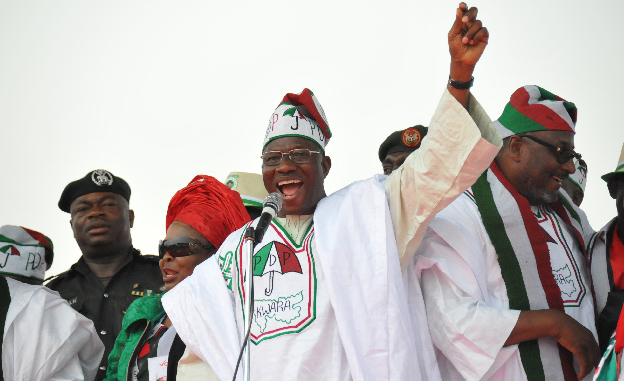
In May 2010, Goodluck Jonathan was sworn in as Nigeria’s president under circumstances nobody had planned for. Umaru Yar’Adua was dead, the country was uncertain, and a man who had spent most of his political life in someone else’s shadow was suddenly the most powerful person in the Federal Republic. He went on to win the 2011 election outright, governed for a full term, lost to Muhammadu Buhari in 2015, and conceded gracefully, something no sitting Nigerian president had ever done. That concession made him a democratic symbol across Africa. It also, as it turns out, left his constitutional status somewhat unresolved.
Now, more than a decade after leaving Aso Rock, Jonathan’s name is back in political circulation. Youth groups have been showing up at his Abuja office, opposition parties are reportedly courting him, and whispers about a 2027 presidential bid have grown loud enough to land the matter in a Federal High Court. The question is no longer hypothetical: can Goodluck Jonathan, who is 68 years old and has taken the presidential oath of office twice, legally run for president again under the 1999 Constitution?
The answer is not as straightforward as many assume, and the people debating it are not ordinary commentators. Some of Nigeria’s most respected Senior Advocates of Nigeria disagree sharply on what the law says and how it applies to Jonathan’s specific situation. Courts have been called in. A hearing is already scheduled. And depending on how the judiciary eventually rules, the answer could reshape the entire 2027 presidential race.
Can Goodluck Jonathan Run for President Again?

Goodluck Jonathan’s eligibility to contest the 2027 presidential election sits at the intersection of two constitutional provisions that were not designed with his exact circumstances in mind. Understanding whether he can run again requires reading the 1999 Constitution carefully, including an amendment that did not exist when Jonathan was president, and deciding how far back that amendment reaches.
How Jonathan Became President Twice Without Winning Two Elections
Jonathan’s path to the presidency was unconventional by any measure. He became Yar’Adua’s running mate in 2007 and was elected Vice President under the PDP ticket. When Yar’Adua fell seriously ill and left Nigeria for medical treatment in Saudi Arabia, the country entered a prolonged period of political uncertainty. The National Assembly eventually passed a resolution in February 2010 allowing Jonathan to assume full presidential powers as Acting President. Yar’Adua returned briefly but never recovered, and died on May 5, 2010. Jonathan was sworn in as substantive president the very next day, on May 6, 2010, to complete what remained of Yar’Adua’s term.
That term ended in May 2011. Jonathan then ran for a full four-year term in the April 2011 presidential election, won decisively with roughly 59 percent of the vote, and was inaugurated on May 29, 2011. He served that term through to May 2015, when Buhari defeated him in an election that became a landmark moment in Nigerian democratic history. By the time he left office, Jonathan had taken the presidential oath twice: once in 2010 to complete Yar’Adua’s tenure, and again in 2011 after winning his own mandate.
This is the factual baseline from which every legal argument about his eligibility flows. How you characterise those two stints in office, whether they count as one term, two terms, or something in between, determines what the constitution has to say about a third.
What Section 137 of the 1999 Constitution Actually Says
The primary constitutional provision governing presidential eligibility is Section 137(1)(b) of the 1999 Constitution, which states that a person shall not be qualified for election to the office of President if they have already been elected to that office at any two previous elections. On this provision alone, Jonathan appears in the clear. He was elected as president exactly once, in 2011. His 2010 assumption of the presidency was not through an election; it was through constitutional succession following Yar’Adua’s death.
The 2013 ruling of the Federal Capital Territory High Court confirmed this interpretation. In Cyriacus Njoku v PDP and Others, Justice Oniyangi held that Jonathan was serving his first elected term and was entitled to seek re-election in 2015. The Court of Appeal in Abuja upheld that position in 2015 in Cyriacus Njoku vs Goodluck Ebele Jonathan, ruling that Jonathan had only taken the oath of office once as an elected president and that his 2010 oath was simply to complete an unexpired tenure. Under that reading, Jonathan could have contested in 2015 for a second elected term, which he did, and lost.
That means, if the analysis stops at Section 137(1)(b), Jonathan has only ever been elected president once. He has one more election he could lawfully contest. This is the legal foundation on which his supporters rest their case.
The Fourth Alteration: The Amendment That Changed the Rules After Jonathan Left
The complication is Section 137(3), which did not exist when Jonathan was president. It was introduced through the Fourth Alteration to the 1999 Constitution, signed into law by President Muhammadu Buhari on June 7, 2018, three years after Jonathan left office. The provision reads: a person who was sworn in to complete the term for which another person was elected as President shall not be elected to such office for more than a single term.
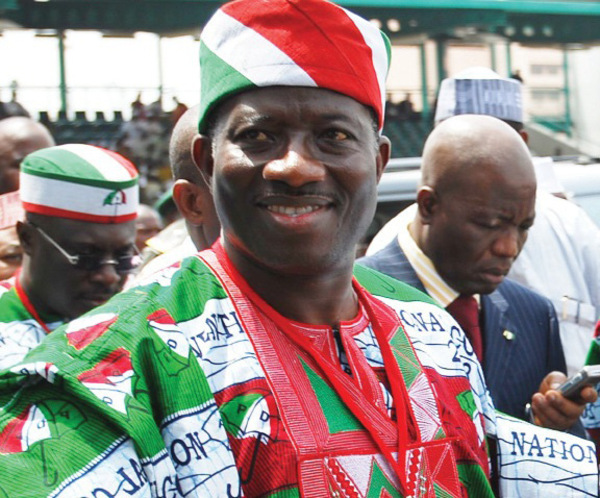
This clause was clearly designed to address exactly the situation Jonathan had been in. A vice president or acting president who steps into the top job mid-term and then wins a full election would under this provision be entitled to only one additional elected term, not two. The intention was to close the loophole that Section 137(1)(b) appeared to leave open: that someone could serve a partial term through succession and still contest twice as an elected president, potentially occupying the office for up to twelve years.
If Section 137(3) applies to Jonathan, the logic is straightforward. He was sworn in 2010 to complete Yar’Adua’s term. He then contested and won in 2011. The provision says a person in that situation cannot be elected for more than a single additional term. Jonathan has already used that single additional term. He cannot run again.
The problem, and this is where Nigerian constitutional lawyers have been at war with each other, is that the Fourth Alteration was enacted in 2018, seven years after Jonathan completed his presidency. Does a law passed after the fact apply to a situation that was entirely resolved before the law existed?
The Retroactivity Debate: Can a 2018 Law Bar a Man Who Left Office in 2015?
Nigerian law, like most common law systems, has a strong presumption against retroactive legislation. Courts have repeatedly held that statutes operate prospectively unless the law itself clearly states otherwise. The Supreme Court in SPDC v Anaro and Others articulated this as a fundamental principle: a statute should not be construed to have retrospective operation unless such an effect appears clearly in the terms of the Act or arises by necessary and distinct implication.
Section 137(3) says nothing about retrospective application. It has no savings clause, no express statement that it covers persons who completed another president’s term before the alteration came into force. On this basis, a significant group of Senior Advocates argues that the provision simply cannot reach Jonathan. His tenure was complete, his political rights as a former president had crystallised, and a law enacted three years later cannot retroactively strip him of an entitlement he had already earned under the constitution as it existed when he served.
Professor Mike Ozekhome, SAN, has argued this position forcefully, as have Dayo Akinlaja, SAN, and Chief Akinlolu Kehinde, SAN. Their position received judicial support in a Federal High Court ruling in Yenagoa, Bayelsa State, in May 2022, which held that Section 137(3) does not apply retroactively to bar Jonathan from contesting.
On the other side, Femi Falana, SAN, Professor Yemi Akinseye-George, SAN, and others argue that the total tenure concern animating Section 137(3) should govern regardless of when the amendment was made. Their position: the constitution does not permit anyone to hold the presidential office for more than two terms, however those terms are assembled, and Jonathan effectively has. Allowing him to run again would mean he could serve up to twelve years, the three years completing Yar’Adua’s term, plus four years of his elected term, plus a potential four-year third stint, which they argue defeats the entire purpose of term limits.
The Aiyedatiwa Ruling and What It Means for Jonathan
In March 2026, a Federal High Court in Akure, Ondo State, delivered a judgment that brought this debate sharply back into focus. Justice Toyin Adegoke ruled that Governor Lucky Aiyedatiwa of Ondo State is not eligible to contest the 2028 governorship election. The facts of Aiyedatiwa’s case closely mirror Jonathan’s in structural terms: he was sworn in as governor in December 2023 to complete the tenure of the late Rotimi Akeredolu, who died in office, then won a full gubernatorial election in November 2024. Section 182(3) of the constitution, the governor-level equivalent of Section 137(3), says that a person who was sworn in to complete a governor’s term shall not be elected to that office for more than a single term.

Justice Adegoke ruled that Aiyedatiwa had used that single additional term when he won the 2024 election. He cannot run again in 2028. The court also held that the 1999 Constitution, as amended, does not permit any elected president, vice president, governor, or deputy governor to remain in office for more than eight years.
The Aiyedatiwa ruling matters to Jonathan’s situation because it represents a court applying exactly the same constitutional logic that opponents of Jonathan’s candidacy have been advancing. Some analysts argue that since the provision at issue, Section 182(3) for governors, Section 137(3) for the president, is structurally identical, a court ruling on Jonathan’s eligibility would likely follow the same reasoning. Others point out that the Aiyedatiwa situation is different in one critical respect: when Aiyedatiwa stepped into the governorship in December 2023, Section 182(3) was already in force. He knew the constraint before he accepted the position. Jonathan, by contrast, completed Yar’Adua’s term in 2010, eight years before Section 137(3) was even written.
The retroactivity distinction remains the clearest legal dividing line. Aiyedatiwa’s case did not require any retroactive application of the law. Jonathan’s case, if Section 137(3) is to disqualify him, necessarily does.
The Live Court Case: FHC/ABJ/CS/2102/2025
The debate is no longer confined to op-ed pages and television panels. A suit marked FHC/ABJ/CS/2102/2025 is currently before Justice Peter Lifu of the Federal High Court in Abuja. It was filed by lawyer Johnmary Jideobi, who is asking the court to declare Jonathan constitutionally ineligible to contest the 2027 presidential election and to restrain INEC from accepting or publishing his name as a candidate.
Justice Lifu, on April 28, ordered that hearing notices be served on the defendants after they failed to file responses within the required time. Jonathan was listed as the first defendant, with INEC as the second and the Attorney-General of the Federation as the third. Jonathan’s lawyer, Chris Uche, SAN, appeared in court and said he had only become aware of the suit through media reports and was working to file all necessary processes. He also referenced previous court decisions on similar issues and questioned why the eligibility question was being relitigated.
The court adjourned the matter to May 11, 2026. That hearing had not concluded at the time this article was written. The case could produce a definitive ruling, or the matter could travel through appeals for years before any final resolution is reached. Whatever the trial court decides, the losing side has obvious incentive to appeal, and an issue this consequential is unlikely to be settled below the Supreme Court.
Jonathan’s Own Position and the Political Backdrop
Jonathan himself has said nothing that constitutes a formal declaration of intent. On a Thursday in early May 2026, he received a delegation of youth groups at his office in Abuja who were pressing him to join the 2027 race. He acknowledged their appeal but did not commit. His exact words were: presidential race is not a computer game. But I’ve heard you and I’ll consult widely. He added that he would not rush into a political decision without wide consultations across the country.
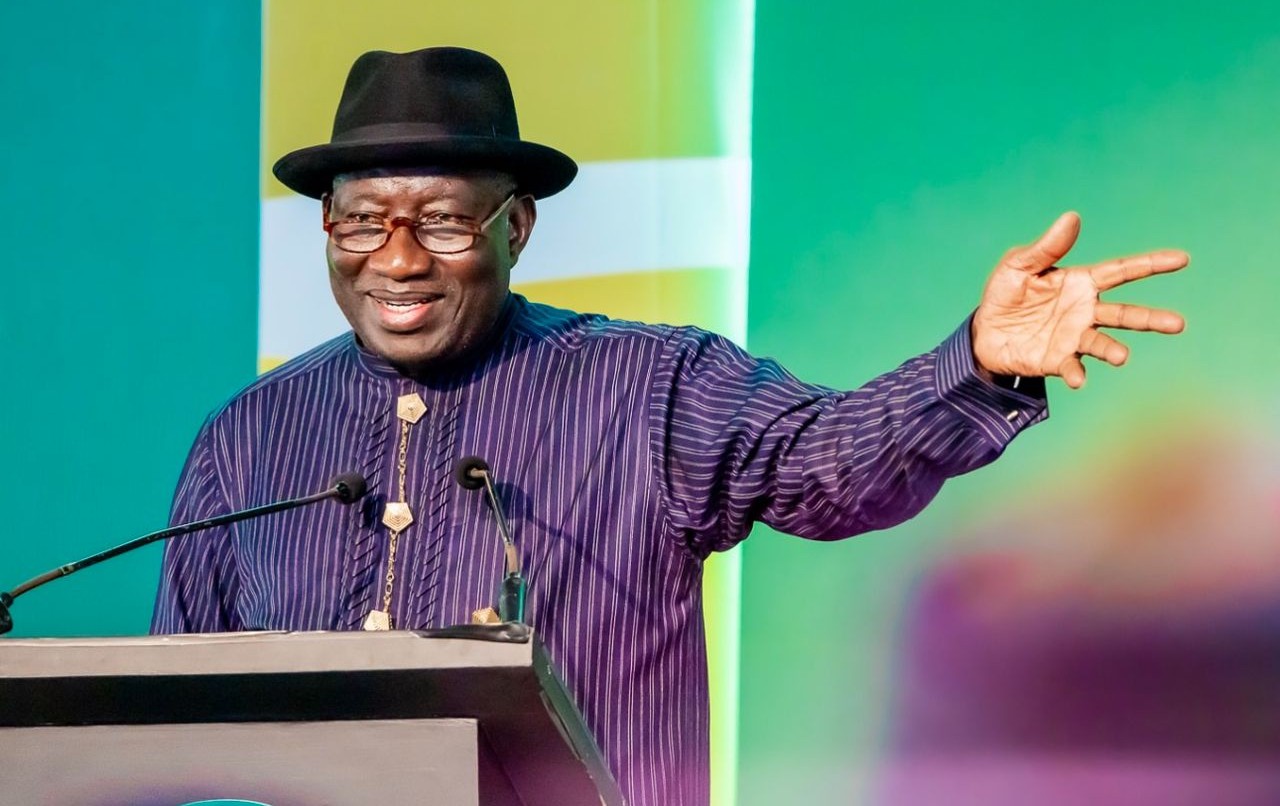
That response is calibrated for a man who knows a court case is active against him. A formal declaration of candidacy before the eligibility question is settled would be politically premature, and his legal team would know that. But the interest is clearly there, at minimum among his supporters. Reports suggest he may be considering aligning with the Nigeria Democratic Congress, a party that has also been courting former Labour Party presidential candidate Peter Obi and former Kano Governor Rabiu Kwankwaso. If Jonathan joins that platform, the opposition to Tinubu’s expected 2027 re-election bid suddenly has a very different shape.
Jonathan’s reported May 6 visit to President Bola Tinubu at Aso Rock Villa, described by officials as relating to regional and continental issues, added another layer of political intrigue to an already complicated picture. Whether that meeting had any bearing on his presidential intentions is not publicly known.
What Nigerian Voters Should Understand About This Legal Fight
For ordinary Nigerians watching this, the constitutional argument can feel abstract. What it comes down to in plain terms is this: the constitution says no president can serve more than two terms. Jonathan served one partial term by succession and one full term by election. Whether that totals one term or two, for purposes of the constitutional limit, is a question that no Nigerian court has definitively answered at the highest level.
The 2013 FCT High Court and the 2015 Court of Appeal both said Jonathan had only served one term as of those dates, which is why he was allowed to contest in 2015. But those rulings predate the Fourth Alteration of 2018. No Nigerian court has yet ruled on whether Section 137(3), as introduced in 2018, applies retroactively to Jonathan’s specific situation. The Yenagoa Federal High Court in 2022 said it does not. The active Abuja court case may say otherwise. And the Supreme Court has never spoken directly to the matter.

This legal fog is not a minor technicality. INEC cannot screen and clear a presidential candidate whose eligibility is being actively litigated. Political parties cannot risk fielding someone who might be disqualified after primaries. And any election involving Jonathan without prior judicial clarity would almost certainly be challenged immediately. The cleanest outcome for everyone, Jonathan included, is a Supreme Court ruling that settles the question before 2027 campaigns begin in earnest.
A Question the Courts Have to Answer Before Anyone Else Can
Goodluck Jonathan is not constitutionally barred from running for president under a simple, obvious reading of the law. The provision most clearly aimed at his situation, Section 137(3), was enacted three years after he left office, and there is a serious, well-reasoned legal argument that it cannot reach him. At the same time, a recent court ruling on an analogous provision for governors has shown that Nigerian courts are willing to apply these limits firmly. The legal outcome for Jonathan is genuinely uncertain.
What is certain is that the question will not resolve itself through debate. The Federal High Court case in Abuja is the beginning of a process, not the end of one. If Jonathan eventually declares and the courts clear him, he enters 2027 as one of the most recognisable opposition figures Nigeria has seen in years, backed by the democratic credibility his 2015 concession earned him. If the courts rule against him, the 2027 race looks entirely different. Either way, a case adjourned to May 11, 2026, is already one of the most consequential legal proceedings in this election cycle.
For a country that has had to fight hard for every inch of democratic ground it holds, the principle underneath this dispute matters beyond Jonathan himself. Term limits are not procedural fine print. They are the constitutional mechanism by which power changes hands without violence. How Nigeria’s courts handle this question will say something about whether those limits are enforced consistently or applied selectively depending on who is asking.