This is indeed not the best of time for Nigerians following the rising cost of Liquefied Natural Gas, LNG and other essential commodoties and services in the country.
WITHIN NIGERIA gathered that this sudden price increase has given rise many households and users of the product looking for possible alternatives.
However, when our reporter visited one of the LNG seller in Enugu, it was gathered that the price of one kilogram has skyrocketed from N1400 to N1800, leaving the users in harsh economic condition.
A litre of kerosene also sells at between N3500 and N4000 at many filling stations.
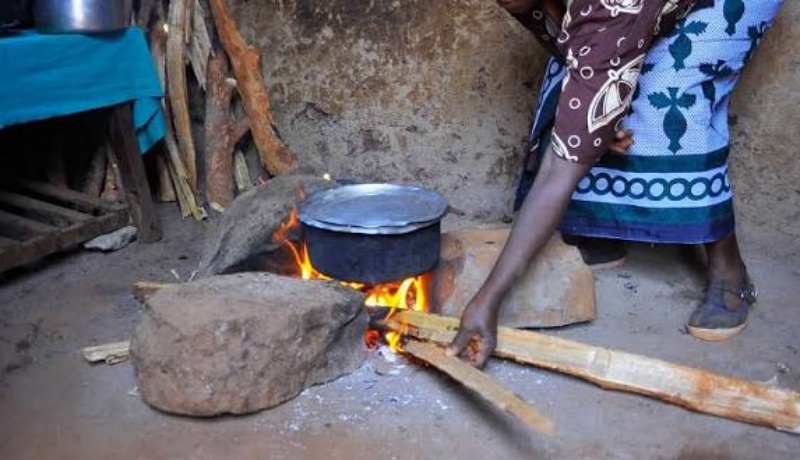
Findings by our reporter equally showed due to this rising domestic energy crisis, many families in both rural and urban areas are gradually returning to primitive method of using firewood for cooking.
In any case, data from the National Bureau of Statistics (NBS) showed that the cost of refilling a 12.5kg cooking gas cylinder has surged to an average of N22,382.20.
WITHIN NIGERIA gathered that many households in rural and semi urban areas trying to improve their lifestyle by using cooking gas for cooking have abandoned their gas cylinder because the retail prices for LPG has risen into a cut-throat price level of between N1700 to N2,000 per kilogram.
Also in its latest NBS Household Kerosene Price Watch, the average retail price of kerosene has approached N4,000 per litre in states like Sokoto, Kebbi, and Lagos.
This unprecedented astronomical rise in price has led to rapid financial squeeze which has forced a sharp shift in consumer behavior of so many families in Nigeria.
Felicia Ugwueke has a restaurant at Abakiliki, Ebonyi state capital. She told our reporter that the situation is quite frustrating as it painful.
According to her, the current price of cooking gas is indeed driving the cost food high for her customers.
“Before now, I used to refill my 12.5kg. But today, with the excruciating price of N2,000 per kilogram, it can not be sustained any more.
“I can’t buy it and still sell at the same quantity and price. Some meals which last long time to cook like local delicacies or even beans are no longer in our menu.”
”For now, we are using making use of dust stove and firewood to cook some food to curtail this high cost of domestic energy crisis.”
Further checks reveal that roadside food vendors, locally known as “Mama Put,” who for long have relied on the speed and cleanliness of LPG, are moving their operations back to woodpiles to protect their lean profit margins.
Roland Chikere is food seller at Awka where she runs a small restaurant with provision shop.
In a telephone chat with our reporter, he said that ” I can not afford cooking with cooking gas again.”
According to him, “I used to spend N10,000 on cooking gas for two weeks. But today, cooking gas of N10,000 can hardly last for five days. For now, I am using firewood to cook and use gas to warm the soup in my restaurant.
“This is indeed very hard on us who use it to run business. Our government should something fast to ameliorate this suffering. It is really getting out of hand.”
On her part, Mrs. Roda Ugwu is a private school teacher. She told our reporter that nobody is ashamed of returning to firewood because life is really hard for Nigerians.
“With price at N2000 per kilogram, who ashamed of using firewood? Who can blame anybody for that? The problem is that firewood is not all that cheap.”
.
Lamenting further, she said that “My monthly salary cannot even refill a 12.5kg cylinder twice again as it used to.”
Marketers give reasons for increasing
However, LNG marketers attribute the persistent price hikes to structural gaps within the energy value chain.
It was gathered even with Nigeria possessing largest natural gas reserves, the bane of the country is that lack of local processing infrastructure has forced the country to import a large percentage of its domestic LPG.
However, this ugly situation has inadvertently exposed local retail markets to international price shocks, high vessel charter costs, and foreign exchange volatility which which characterized such market.
WITHIN NIGERIA findings showed that wholesale terminal prices have climbed sharply, with marketers now paying up to N26.2 million or more for a single 20-metric-tonne truck of gas.
As Nigerians watch this ugly trend helplessly and to some extent hopelessly they are gradually returning to biomass fuels.
The situation, to say the least has continued to threaten the reverse decades of progress in clean cooking initiatives.
The environment effect of the ugly trend is increased logging to satisfy the rising urban demand for firewood and charcoal which has continued to accelerate deforestation, drives soil erosion, and destroys natural wildlife habitats.
Analysts have continued to warn that the continuous exposure to thick firewood smoke will in turn trigger a sharp rise in chronic respiratory diseases, cardiovascular issues, and optical complications among women and children.
How such situation will be handled is open to conjecture. But what is now clear is that Nigerians have to pay more for use of cooking gas, a trend that has now become a vicious cycle.