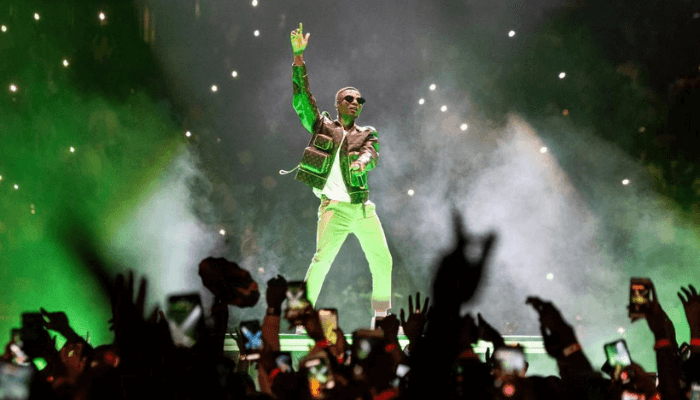
In March 2017, Wizkid walked into a deal that would change not only his own career but the terms on which African music interacts with the global industry. The multi-album worldwide agreement he signed with RCA Records, a subsidiary of Sony Music Entertainment, was announced in Billboard magazine and described by Sony Music International at the time as “an incredibly important signing” aimed at making Africa “a major source of repertoire for the world.” That framing was not hyperbole. It was a declaration of commercial intent by one of the three largest music companies on earth, and Wizkid was the man they chose to carry it.
To understand why that moment mattered, you have to look at where Afrobeats stood before it. The genre had passionate local audiences across Nigeria and a growing diaspora following in London. What it lacked was institutional backing from the infrastructure that controls global distribution, playlist placement, radio access, and award recognition. That infrastructure lived inside companies like Sony, Universal, and Warner. Wizkid was not the first Nigerian artist to sign with a major label, but the context surrounding his deal, what he had already achieved without one, and what followed after, made it the most consequential signing in the genre’s modern history.
How Wizkid’s Sony/RCA Records Deal Changed Afrobeats Forever
The Wizkid Sony/RCA Records deal arrived at the precise moment when Afrobeats was transitioning from a regional sound to a global commercial force. It gave the genre its most visible institutional endorsement and accelerated a movement that would eventually place Nigerian artists at the top of charts across North America, Europe, and beyond. Understanding the deal means understanding what came before it and what it unlocked.
The Road to RCA: From Ojuelegba to New York
Wizkid, born Ayodeji Ibrahim Balogun on 16 July 1990 in Surulere, Lagos, began his professional career in 2009 when he signed with Banky W’s Empire Mates Entertainment. His debut album, Superstar, arrived in 2011 and established him as a major domestic presence. By 2013, after five years with EME, he had departed and founded Starboy Entertainment, his own imprint, releasing his second album Ayo through it in 2014.
The breakthrough that set the international conversation in motion came in 2015. Drake, already the biggest rapper in the world, had been introduced to Wizkid through British grime artist Skepta. The two had previously collaborated on a remix of Wizkid’s song “Ojuelegba”, a stripped-back, autobiographical track about growing up in the Lagos neighborhood of the same name. That remix caught global attention. It pulled an introspective Lagos street record into the orbit of North American hip-hop culture without distorting it. For many listeners outside Nigeria, it was the first time they had heard a Wizkid record.
Drake and Wizkid then worked together on “One Dance”, released in April 2016 as the lead single from Drake’s fourth studio album Views. The song blended Afrobeats and dancehall rhythms around a sample from British singer Kyla’s 2008 track “Do You Mind”. It reached number one on the US Billboard Hot 100 in May 2016, a position it held for ten non-consecutive weeks through the summer. It topped charts in 15 countries and, by October 2016, became the first song in Spotify history to reach one billion streams, a record confirmed by Guinness World Records in December of that year. Wizkid became the first Nigerian artist to top the Billboard Hot 100.
That single performance, more than any other, created the commercial argument for a major label to sign Wizkid. The advance on the deal was reported to be a seven-figure sum in US dollars; the precise figure was never officially disclosed by either party.
What the RCA Deal Actually Meant Structurally
The nature of the agreement mattered as much as the fact of it. Wizkid signed a multi-album worldwide deal with RCA Records and Sony Music International, but crucially, Starboy Entertainment retained the copyright to his music. RCA and Sony handled worldwide distribution under an exclusive license, meaning his work could reach every market where Sony operates, covering streaming platforms, radio, retail, and live concert promotion pipelines, without Wizkid surrendering ownership of his masters. This structure placed him in a significantly stronger position than artists who sign full 360-degree deals, which hand labels a share of touring, merchandise, and endorsement income in addition to recordings.
When the deal was announced, RCA chairman and CEO Peter Edge described Wizkid as “a game-changer in bringing African music to the world.” Adam Granite, then Sony Music International president of Northern and Eastern Europe and Africa, framed it in terms of continental ambition, saying the signing was “incredibly important” as the company looked to make Africa “a major source of repertoire for the world.” These were not the usual promotional statements. They signaled a strategic pivot in how a major music corporation was thinking about the African market.
Wizkid joined a growing Sony/RCA family of Nigerian artists that already included Tiwa Savage, Davido, YCee, and Ayo Jay. But his profile, amplified by “One Dance”, gave the group a commercial anchor with proven crossover appeal across the US, UK, Canada, Australia, and Western Europe simultaneously.
The First Album Under Sony: Sounds from the Other Side
Wizkid’s first album under the RCA deal, Sounds from the Other Side, was released in July 2017. The project was a deliberate international statement. It featured guest appearances from Drake, Major Lazer, Chris Brown, Ty Dolla Sign, and Trey Songz, and its production reflected a decision to reach Western audiences rather than speak primarily to a Nigerian one. The album debuted at number 107 on the US Billboard 200 and number 58 on the Canadian Albums Chart.
The critical reception was mixed. Some praised its commercial ambition; others felt it leaned too far toward a generic international sound, trading the textural specificity that had made “Ojuelegba” and earlier work so resonant. Wizkid himself had told Billboard at the time of signing: “It’s hard for me to describe what I do, since I work with rhythms from Afrobeat, reggae, hip-hop, dancehall and others. What’s important to me is for music to be real, authentic, raw and timeless. I don’t wanna be boxed in to any one genre.”
That tension between accessibility and rootedness would define his next creative chapter. The lesson from Sounds from the Other Side was not that crossover could not work, but that it worked better when the African DNA of the music was preserved rather than softened. His next album would demonstrate this conclusively.
Made in Lagos: The Deal’s Full Fruit
Released on 30 October 2020 under Starboy Entertainment and RCA Records, Made in Lagos became the most significant Afrobeats album in commercial history. Wizkid delayed the release date out of solidarity with the nationwide End SARS protests against police brutality in Nigeria, a decision that reflected his continuing rootedness in Lagos even as his audience extended across continents.
The album’s standout track was “Essence”, a collaboration with then-emerging Nigerian singer Tems. The song initially launched quietly alongside stronger promotional attention on the Burna Boy-assisted track “Ginger”. Within months, “Essence” overtook everything. It became the first Nigerian song to chart on the US Billboard Hot 100, debuting at number 82 in July 2021. When a remix featuring Canadian star Justin Bieber dropped in August 2021, the song climbed to number 9, making it the highest-charting song on the Hot 100 by an African artist at that point. Rolling Stone named it the best song of 2021.
Made in Lagos debuted at number 1 on the Billboard World Albums chart and accumulated over one billion on-demand streams in the United States alone. It earned Grammy nominations for Best Global Music Album and Best Global Music Performance at the 64th Annual Grammy Awards. The album received a four-star review from The Guardian, a 7.7 from Pitchfork, and broad recognition in year-end lists across the international music press. The Recording Academy described it as a “potent mix of Afrobeats and R&B” that “further accelerated the already unstoppable surge of Nigerian music throughout the world.”
None of that reach would have been possible at the same scale without Sony’s distribution infrastructure, honed over decades across every major music market on earth.
The Ripple Effect on Nigerian and African Artists
The Wizkid-Sony signing did not happen in isolation. Davido had signed with Sony before Wizkid, and Tiwa Savage had already been with the company. But Wizkid’s deal, arriving on the back of “One Dance” and its billion-stream record, carried a different signal to the industry. It demonstrated that an African artist, on their own terms, with ownership of their masters, could command a multi-album international deal from one of the world’s three largest record labels.
The years following the deal saw a surge of African artists securing major-label partnerships. Burna Boy signed with Atlantic Records, a Warner Music Group imprint, in 2019. Tems rose to global prominence, co-writing Rihanna’s “Lift Me Up” for the Black Panther: Wakanda Forever soundtrack after her breakthrough on “Essence”. Rema’s “Calm Down” became the most successful Afrobeats single in Billboard history and the first African artist-led track to hit one billion Spotify streams. Amapiano artists from South Africa, Afropop acts from Ghana, and new voices from across the continent gained increased international attention in a genre environment that Wizkid had helped make commercially credible to Western label executives.
Billboard stated in 2021 that Wizkid “is the first African artist to truly make a major pop breakthrough in the United States and seems best poised to do so globally.” That assessment came four years after the RCA signing, and reflected a trajectory that deal had made possible.
What the Deal Meant for Nigerian Music’s Business Model
For artists in Nigeria, the significance of the Wizkid-Sony deal extended beyond chart positions and streaming numbers. It established a viable model: an African artist could partner with a major international label at the distribution level, retain copyright through their own imprint, and still compete in global markets. This was different from the older model, where African artists either stayed entirely local or signed restrictive contracts that handed over creative and financial control.
The structure Wizkid used, in which Starboy Entertainment owns the recordings and Sony handles distribution under an exclusive license, has since been replicated and referenced by other African artists and their managers when negotiating international deals. It showed that leverage was possible, that African creative ownership did not have to be sacrificed in exchange for global reach.
Nigeria’s music export value has grown substantially in the years since. The Afrobeats category at the Grammy Awards, introduced as Best African Music Performance starting with the 65th ceremony in 2023, would not have arrived without the commercial credibility that artists like Wizkid, performing on the back of deals like his Sony agreement, helped build with Western institutions over the preceding decade.
Wizkid’s Grammy and Global Awards Record
In 2021, Wizkid won a Grammy Award for Best Music Video for his appearance on Beyonce’s “Brown Skin Girl”, a track from her 2019 project The Lion King: The Gift. It was his first Grammy win. He received Grammy nominations for Made in Lagos Deluxe Edition in the Best Global Music Album category and for “Essence” in the Best Global Music Performance category at the 64th Grammy Awards in 2022.
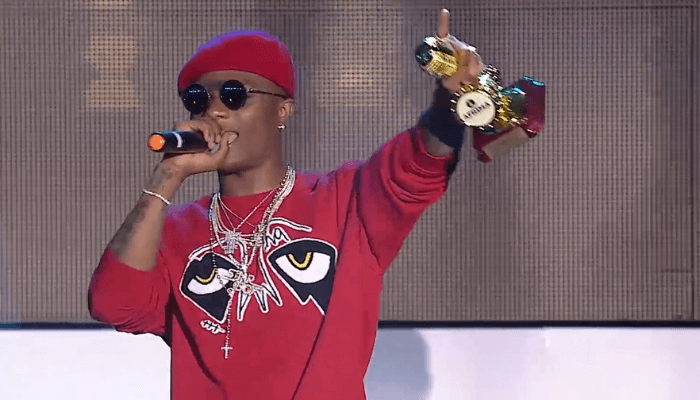
Beyond the Grammys, Wizkid is the most awarded African artist at the American Music Awards, holding two wins. He has won one MTV Video Music Award, three Soul Train Awards, three Billboard Awards, and two iHeartRadio Music Awards. He holds an ASCAP plaque for his songwriting contributions to “One Dance”. He is the most awarded artist in the history of The Headies Awards in Nigeria. Apple Music named him Artist of the Year for Africa in November 2021.
The Nigerian Audience: What This Story Means Locally
For listeners in Nigeria, the Wizkid-Sony deal represents something specific: it was the moment a Lagos boy from Ojuelegba, who had dropped out of university and started a label from nothing, was recognized by the global music industry not as a curiosity but as a commercial force. The deal did not Americanize him. Made in Lagos, his most celebrated album, wore the city proudly in its title. “I’m unapologetically Nigerian, I’m unapologetically Lagosian,” he told Vogue in 2021.
The local industry impact is also concrete. Wizkid’s success with Sony demonstrated to Nigerian producers, songwriters, and artists that world-class infrastructure was interested in their work on terms they could negotiate from a position of strength. It raised the floor of expectation for what an international deal could look like for an African artist, and it gave a generation of emerging acts evidence that staying rooted in Afrobeats, rather than diluting it for foreign audiences, was commercially viable.
“Essence” is the clearest proof. The song was made in Lagos, with a Lagos artist, singing in a voice unmistakably shaped by that city. It topped US charts, won critical acclaim in Rolling Stone, and launched Tems into one of the most successful careers in contemporary music. Sony’s distribution network did not change what the music was. It changed how far it could travel.
A Deal That Opened a Door
The Wizkid-Sony/RCA Records deal of March 2017 was not simply a business transaction. It was a signal that the global music industry was prepared to engage with African music on terms that did not require African artists to erase themselves. That signal changed what was possible.
In the years since, Afrobeats has moved from a genre that required explanation to Western audiences to one that competes at the highest levels of global pop without apology. Wizkid did not do this alone. But his deal, structured around creative ownership and global distribution, offered a template. And his music, most powerfully with Made in Lagos and “Essence”, proved that authentic African sound and international commercial success were not opposing ambitions.
The story of how Afrobeats changed forever is not one event. But if you had to identify the institutional moment that opened the door widest, the March 2017 signing of Ayodeji Ibrahim Balogun to RCA Records and Sony Music International is a strong place to start.