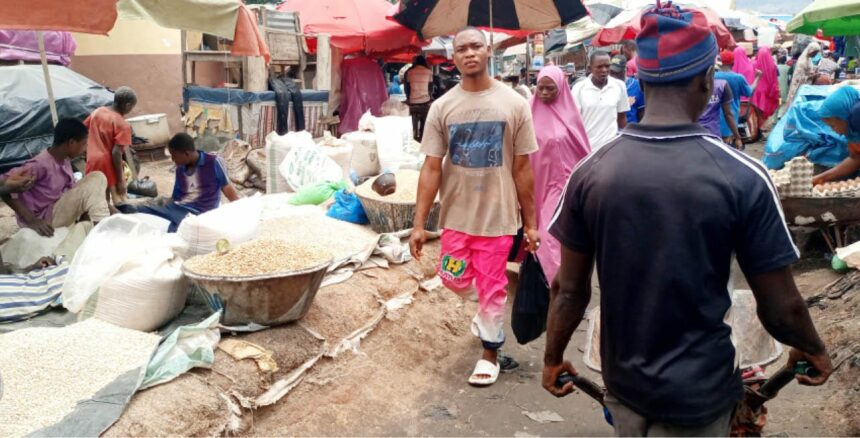
Something broke in the story Nigerians were told about inflation in 2026. Official numbers showed prices cooling, headline inflation eased from around 24% in early 2025 to roughly 15% by January 2026. At the market, though, the reality looked nothing like those figures. Rice was still above N60,000 for a 50kg bag. Garri had not come down. Yam tubers hovered near N3,800 a piece. The numbers said relief; the market said otherwise.
The contradiction is not invented. It sits at the intersection of statistical methodology, structural economics, and a sequence of shocks, some global, some entirely Nigeria’s own making. Understanding why food prices are rising again in 2026, even as the headline inflation rate appears moderate, requires separating what the numbers measure from what people actually experience at the point of purchase.
Reasons Why Food Prices Are Rising Again in Nigeria Despite Lower Inflation in 2026
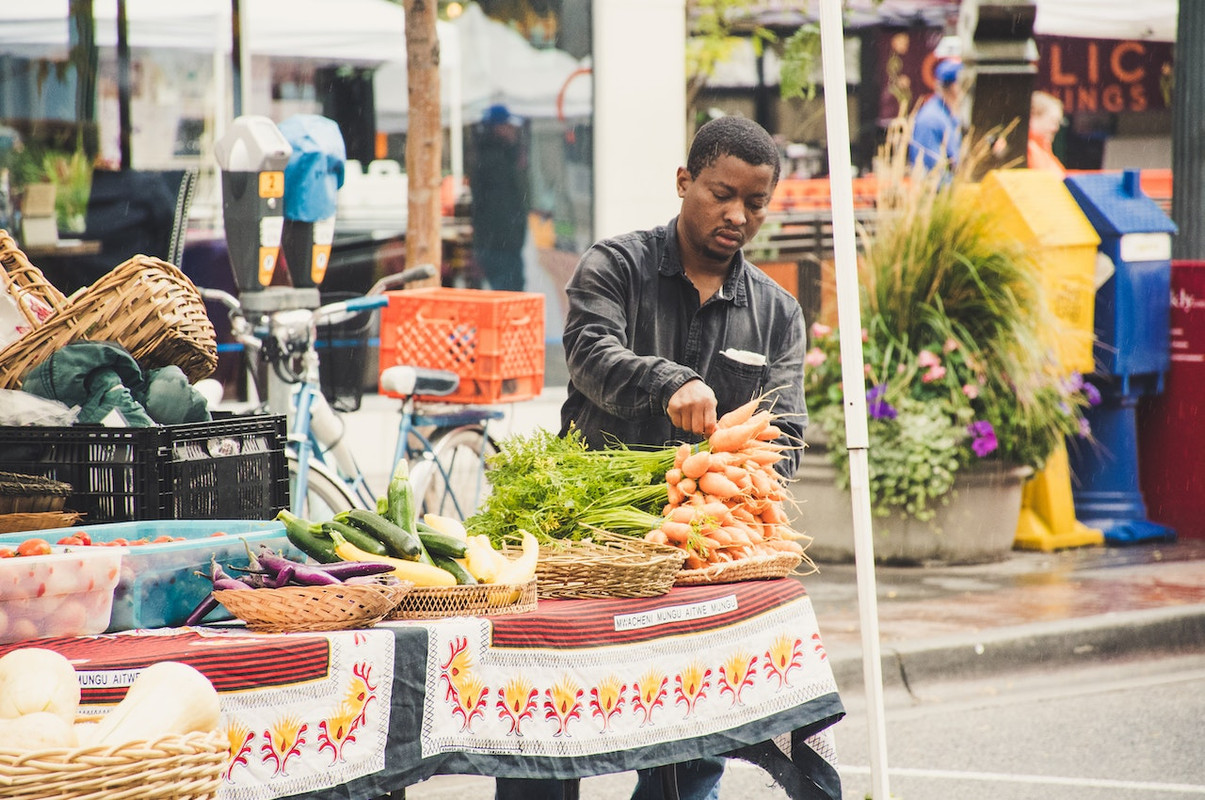
Nigeria’s food prices rising again in 2026 is not a simple reversal of fortune. It reflects how a brief statistical improvement, partly driven by a rebasing of the Consumer Price Index, masked the fact that absolute prices had never returned to pre-crisis levels and that new shocks were already building pressure from multiple directions. Month-on-month food inflation, which tracks price changes within a single month rather than comparing to a distant prior year, had been accelerating quietly before it became visible in the headline data. By April 2026, food inflation had climbed back above the broader all-items inflation rate for the first time since August 2025.
The Rebasing Effect: Why the Numbers Look Better Than They Feel
In late 2024, Nigeria’s National Bureau of Statistics completed a long-overdue rebasing of the Consumer Price Index. The old system compared current prices to a November 2009 baseline, a reference point so outdated that it had introduced severe distortions into the data. Under the new framework, the weight reference period shifted to 2023, and the price reference period became the full year of 2024. The updated CPI basket now covers 934 product varieties across 13 divisions.
The immediate effect was dramatic. December 2024 inflation under the old methodology was projected to hit around 31%. Under the new system, it came in at approximately 15%. January 2026 continued that pattern at 15.10%. The International Monetary Fund endorsed the methodology change, describing it as a welcome alignment with international best practices. But what the rebasing did not do, and was never designed to do, was reduce the actual cost of goods.
Prices had roughly tripled between 2022 and 2025 across most food categories. Rebasing the index means those elevated prices become the new normal against which future changes are measured. The rate of increase could slow to near zero, and grocery bills would still reflect years of accumulated price growth that wages never matched.
Food Inflation Acceleration: From 8.89% to 16.06% in Four Months
The statistical improvement was already fragmenting by early 2026. Food inflation stood at 8.89% year-on-year in January, a number that generated optimistic commentary from analysts and officials. By April, NBS data showed food inflation had climbed to 16.06%, surpassing the all-items headline rate of 15.69% for the first time in eight months. That is a rise of more than seven percentage points in four months, an acceleration of roughly 80% within a single quarter.
The month-on-month numbers told the same story more starkly. Food prices rose 4.69% in February alone, 4.17% in March, and 3.63% in April. Each month’s increase compounds the previous one. A household that stretched its budget to accommodate January prices faced a materially different set of costs by April, with no corresponding increase in income to absorb the difference.
Among the specific items driving the increase, millet, yam flour, fresh ginger, beef, garri, pepper, beans, tomatoes, cassava tuber, wheat grain, soybeans, guinea corn, plantain, carrots, and Irish potatoes all registered increases. This is not a narrow commodity-specific problem. It spans both northern staples and southern ones, both protein sources and carbohydrates, and both fresh produce and processed staples.
Fuel Prices and the Cost of Moving Food Across Nigeria
Transport costs sit beneath almost every food price increase in Nigeria. The country’s food supply chains depend almost entirely on road haulage, produce moves from farms in Kano, Plateau, Benue, and the North-West to markets in Lagos, Port Harcourt, and Abuja by truck. When fuel prices move, the cost of that journey moves with them, and traders pass the increase to buyers at the point of sale.
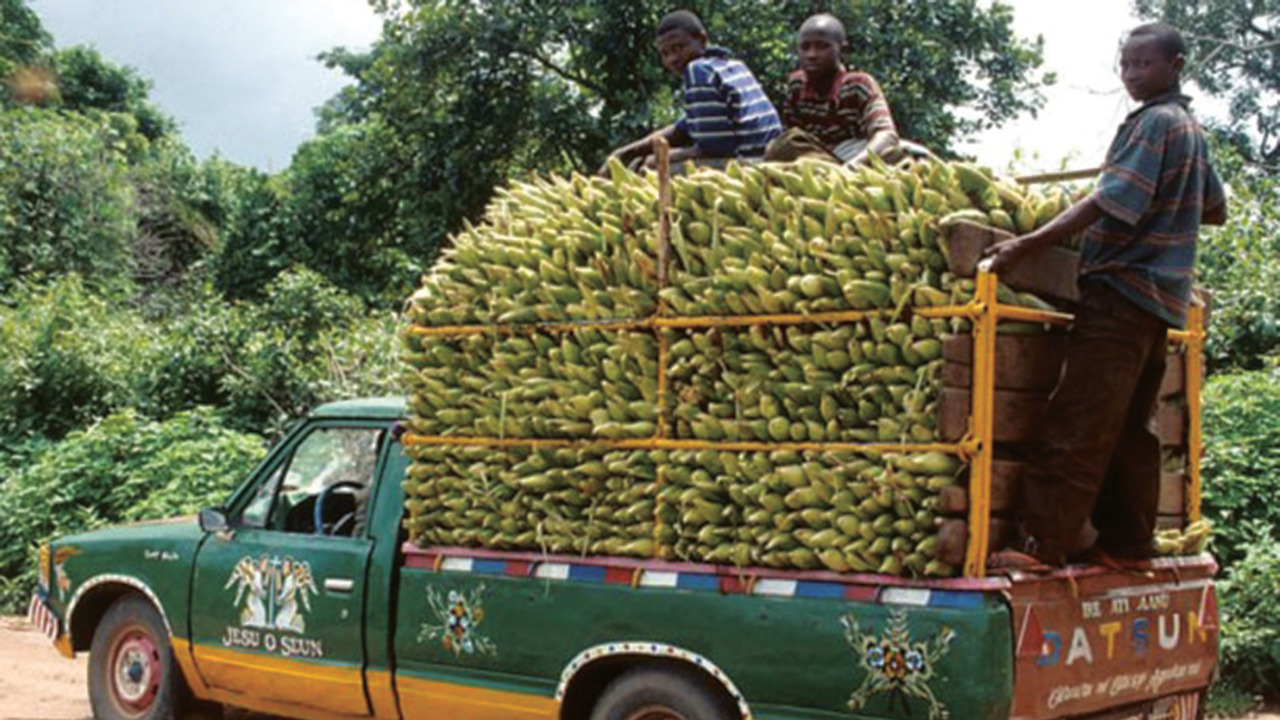
Petrol prices in Nigeria rose sharply in March 2026, reportedly ranging between N900 and over N1,250 per litre in different locations. By late March, some reports tracked prices closer to N1,300 per litre in certain areas, more than 45% higher than the roughly N890 per litre recorded in January. The removal of the fuel subsidy in 2023 was the original shock; what followed in 2026 was a second wave of price escalation driven by the global oil market disruptions traced to the Middle East conflict. Transportation price inflation tracked by the NBS rose 16.9% in March and remained at 16% in April.
For a smallholder farmer moving a truckload of yams from Taraba to Onitsha, or a tomato trader moving produce from Jos to Kano, fuel costs translate directly into the farmgate-to-market price gap. When that gap widens, it is the end consumer who closes it.
The Middle East Conflict and Its Reach Into Nigerian Markets
A geopolitical crisis more than 5,000 kilometres away is doing measurable damage to food affordability in Lagos and Kano. The escalating conflict in the Middle East disrupted global energy shipping routes in early 2026, Brent crude surged from around $72 per barrel at the end of February to $118 by the end of March, a 65% increase in a single month, according to World Bank commodity data. For a fully deregulated fuel market like Nigeria’s, where pump prices track global crude movements with limited buffering, that translated quickly into domestic cost increases.
The fertiliser impact may be even more consequential for food supply over time. The Middle East conflict disrupted natural gas production and shipping, and nitrogen-based fertilisers are manufactured from natural gas. Urea prices globally rose by approximately 49.6% according to AGRA’s April 2026 Food Security Monitor, while Diammonium Phosphate increased roughly 14.9% and potash by around 5%. Nigeria already imported fertilisers worth $244.74 million in 2024 according to UN trade data, making it heavily exposed to these global price shifts.
For Nigerian farmers already dealing with naira-denominated input costs that had surged after the 2023 devaluation, the additional pressure from the global fertiliser spike in 2026 compounds an existing crisis. A standard 50kg bag of fertiliser that cost around N20,000 in 2022 had already climbed to roughly N46,000 by 2024 according to field reports. The 2026 surge from the Middle East pushes those costs further, and further erodes the margin that keeps small-scale farming viable.
Input Costs and the Farmer Retreat
By February 2026, the Punch reported that farming leaders were openly warning that many smallholders were reconsidering their participation in the 2026 planting season. Mohammed Magaji, president of the All Farmers Association of Nigeria, said farmers he had spoken to were considering stepping back entirely: deciding not to plant and instead waiting to buy, a decision that, if widespread, would reduce domestic supply and push prices higher in subsequent months.
The arithmetic driving that decision is straightforward. A farmer who pays elevated prices for fuel to transport inputs, pays inflated costs for fertiliser and pesticides priced in or benchmarked to dollars, then harvests into a market where food prices may have fallen from their 2024 peaks, faces a margin squeeze at every stage. The brief decline in food inflation in late 2024 and early 2025, which provided some headline relief, actually reduced the revenue side of that equation for producers, while costs remained elevated.
The result is a production disincentive built into the system. Import-driven price suppression in 2025, the government removed duties on selected food items to cool prices, cut domestic producer revenues, which was predictable. Fewer farmers planting, or planting less intensively, sets up a supply shortage later that pushes prices upward again. This cycle, imports crash prices, domestic producers reduce output, prices rise again, is visible in the data and has been described by food policy analysts as a structural trap.
Insecurity in Farming Communities
Northern Nigeria, which supplies a large share of the country’s cereals, grains, and legumes, remains affected by ongoing conflict and insecurity in farming areas. The FEWS NET food security assessment from April 2026 noted that farming activity in many northern areas was atypically constrained by persistent insecurity, ongoing attacks and abductions disrupting farm operations, limiting movement, and restricting access to farmland in conflict-affected zones.
When farming communities are displaced or farmers cannot safely access their fields, the yield from those areas declines. The agricultural potential of the land goes unrealised. Supply falls short of what it would otherwise be, and the deficit must either be imported at foreign exchange rates or simply absorbed as higher prices. The security situation in the North-West, North-East, and parts of the Middle Belt has been a food supply constraint for several years, and it remains unresolved.
The Wage and Purchasing Power Gap
Nigeria’s national minimum wage was raised to N70,000 per month under legislation signed in July 2024, more than double the previous floor of N30,000. The increase was significant in nominal terms. In real terms, against what that money buys in a market where a 50kg bag of rice costs over N60,000 and frozen chicken runs roughly N6,000 per kilogram, it tells a different story.
Labour unions had demanded N494,000 as a living wage estimate; N70,000 was a political compromise. For many workers in the informal sector, the majority of Nigeria’s working population, even that floor is notional rather than binding. The gap between wages and food costs has not closed; it has widened through years of cumulative price increases that outpaced nominal wage adjustments. A household allocating the largest share of its income to food has almost no buffer when food prices accelerate again.
Urban households in Lagos, Kano, and Abuja that depend on transported food, rather than producing any themselves, absorb every link in the supply chain cost structure. The fuel markup, the fertiliser cost, the farm-to-market logistics, the urban market markup: all of it lands in the consumer’s shopping budget.
What the Absolute Price Level Means at the Market
Statistical discussion of year-on-year inflation rates can obscure something important: what things actually cost. A 16% food inflation rate is lower than the 25% recorded in August 2025, but it is measured against prices that were already historically elevated. The base has been reset upward. A 50kg bag of rice that costs N61,000 in April 2026 is cheaper relative to what it cost in April 2025 at the reported rate, but it represents a price level that did not exist three years ago, and it must be paid in naira earned at wage levels that have not recovered proportionally.
Market spot prices reported in April 2026 gave some indication of the practical reality: garri at roughly N1,900 per paint bucket, yam tubers between N3,700 and N3,900 per medium-sized tuber, onions at N1,400 to N1,500 per kilogram, frozen chicken around N6,000 per kilogram. These are not catastrophic figures by the standard of what food cost in Nigeria’s peak inflation months in 2024. They are, however, prices that reflect a structural step-change in the cost of basic nutrition, one that lower year-on-year percentage readings do not reverse.
The Structural Explanation
Nigeria’s food price problem in 2026 does not have a single cause or a single solution waiting to be implemented. It is the accumulated output of structural conditions: an agricultural sector underserved by infrastructure, security, and credit; a transport network whose costs move almost entirely in line with global crude prices; a currency that lost substantial value against the dollar and never fully recovered; a fertiliser and input market that imports what it cannot produce domestically; and a wage floor disconnected from the cost of living it nominally protects.
Against those conditions, the Middle East conflict arrived as an accelerant rather than a cause. It raised fuel and fertiliser costs on top of a system already operating under strain. The statistical improvement in headline inflation, real in its own terms, and partly the product of a more accurate measurement methodology, cannot substitute for a reduction in what people pay for food. The NBS data showing year-on-year food inflation at 16.06% in April is technically a significant improvement over 25% a year earlier. Month-on-month, prices are still moving upward every single month of 2026. For the trader at Mile 12 market, the farmer in Benue, and the household in Alimosho trying to feed a family, that is the number that matters.