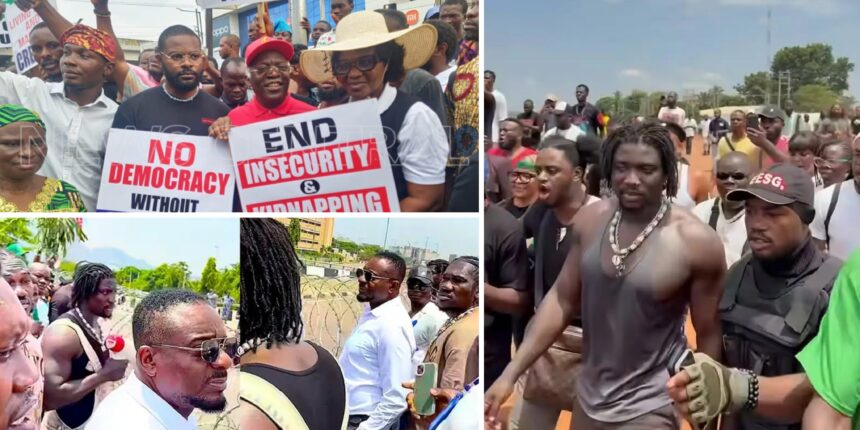
There are moments when a national date stops feeling like a calendar event and begins to behave like a pressure point, where memory, frustration and expectation all collide in the same space. June 12 in Nigeria has long carried that weight, but in 2026 the atmosphere around it moved in a direction that felt less ceremonial and more confrontational, shaped by voices that do not usually share the same stage but suddenly found themselves pulled into the same civic moment across Abuja and Lagos on June 12, 2026.
Different cities reflected different energies, yet the underlying thread remained consistent, demands voiced during the protests were not hidden or indirect, they were spoken clearly, repeated frequently, and tied closely to everyday realities.. Within that space, figures like VeryDarkMan, Emeka Ike and Falz became reference points for how public frustration was being voiced, interpreted and amplified.
Civic Atmosphere Overview
The civic atmosphere across June 12, 2026 protests carried a blend of urgency and restraint, with participants moving through designated public spaces while expressing frustration through chants, speeches and written placards. The gatherings were not structured under a single leadership command but rather formed through multiple civic clusters that shared similar grievances about insecurity, governance expectations and economic pressure.
Social media played a central role in shaping perception of events as videos, short clips and live recordings circulated widely within hours, giving the demonstrations a national reach beyond physical locations. The tone of engagement reflected citizens who were not necessarily calling for institutional breakdown but demanding response and accountability on issues affecting daily survival and mobility.
Official Democracy Day activities proceeded in parallel with state led ceremonies, creating a layered national atmosphere where celebration and protest existed in the same temporal space without fully merging into a single narrative. This dual reality defined the emotional structure of the day and shaped how different audiences interpreted the significance of June 12 in 2026.
Trigger Factors Behind Public Mobilization
The motivations behind the June 12 gatherings developed from multiple pressure points that had been building over time rather than a single immediate incident. Economic strain remained central as rising costs of essential goods placed pressure on households across urban and semi urban areas.
Security concerns formed another major pillar as repeated reports of kidnappings and highway attacks contributed to fear around travel routes that were previously considered safe for inter state movement. These concerns were frequently echoed in conversations among participants who described altered daily routines and restricted movement patterns.
Youth frustration also played a defining role as many young citizens expressed disappointment that democratic governance structures had not translated into visible improvements in living conditions. The symbolic importance of June 12 as Democracy Day added emotional weight, turning it into a reference point for civic reflection rather than a routine public holiday.
Civil society groups and activist networks framed the day as an accountability moment where citizens could collectively voice expectations that had accumulated over years of governance cycles. This framing contributed to the spread of localized gatherings across different cities.
Abuja Civic Gathering Sequence
The Abuja segment of the June 12 2026 protests attracted attention due to the visible participation of VeryDarkMan who appeared within protest clusters alongside supporters and civic participants. His presence was closely associated with street level mobilization and digital amplification that extended the reach of the Abuja gatherings beyond physical attendees.
Participants moved through parts of the Federal Capital Territory carrying placards and chanting slogans that directly referenced insecurity, governance expectations and political dissatisfaction. Among the chants recorded were “Terrorists Must Go”, “Kidnappers Must Go”, “Bandits Must Go” and “APC Must Go” as crowds expressed frustration over persistent insecurity concerns and perceived governance gaps.
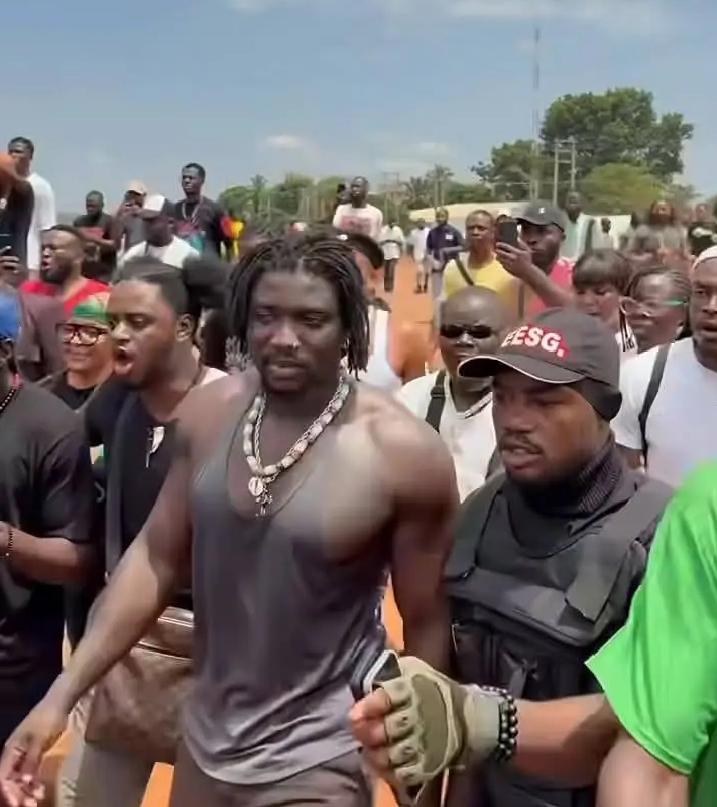
Addressing the crowd, VeryDarkMan stated “We are tired. We can no longer travel freely because bandits are taking over Nigeria” linking insecurity concerns directly to everyday mobility restrictions experienced by citizens. He further emphasized the need for accountability in security spending by stating that funds must be properly utilized to address ongoing challenges.
He also referenced earlier public commentary attributed to Islamic cleric Sheikh Ahmad Gumi noting that authorities were aware of criminal networks yet had not acted decisively. His words included “You know their faces and you know their names go and get them” reflecting a direct call for enforcement action.
Additional concerns raised focused on repeated school abductions and welfare conditions of security personnel. He described the situation as one where officers face armed groups under difficult conditions while citizens continue to experience fear in daily movement.
Emeka Ike Civic Participation Context
The presence of Emeka Ike added a different dimension to the Abuja civic atmosphere as his contribution reflected a veteran entertainment figure engaging with national insecurity concerns. His participation was widely circulated through video clips that captured him speaking on road travel safety and national stability concerns.
He stated “I love travelling by road, but today I am denied that freedom” highlighting how insecurity has affected personal mobility choices for ordinary citizens. He further added “So many Nigerians love travelling by road, but we are no longer safe. We are begging the government, please dont let this go too far. It might be your children tomorrow” emphasizing shared vulnerability across society.
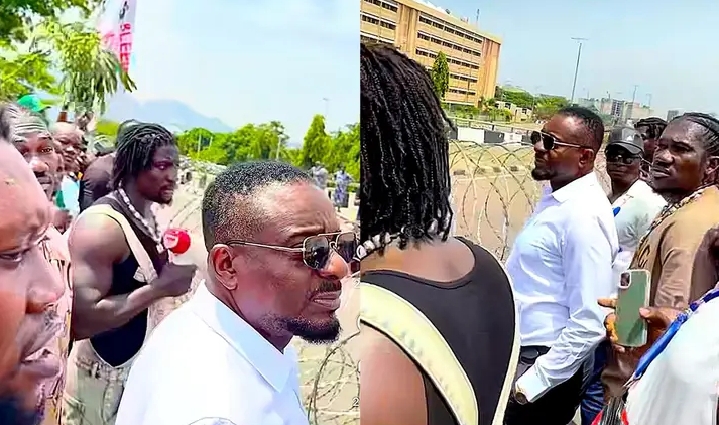
He continued by stressing that insecurity should not be viewed as isolated incidents affecting distant communities but as a national issue with direct impact on families. His statement “Our children may not be there today, but somebody’s child is there. Please, let’s stop this killing. Let’s stop bandits from taking over our country” captured the emotional tone of concern expressed during the gathering.
He further questioned national direction with the statement “If our country is taken over, where will all of us work Where are we going to be Some people can travel overseas and have homes there. Those of us who are here, we are here. We will live here and die here” reflecting a grounded perspective on staying within the country despite challenges.
His role was largely interpreted as participatory presence within civic expression rather than organizational leadership within the protest structure.
Lagos Civic Sequence
Prominent lawyer, Mr Femi Falana SAN, his son, afrobeats singer Mr Folarin Falana popularly known as Falz, alongside civil society organisations, youth groups, among others, on Friday staged a protest in Lagos.
The gathering point at Ikeja Under Bridge served as a convergence location where participants assembled with placards and slogans focused on national reform demands.
The involvement of Falz placed additional attention on the Lagos gathering due to his consistent association with civic advocacy themes related to youth rights and governance accountability. His presence aligned with broader coalition messaging that brought together civil society groups, legal advocacy voices and youth organizations.
Participants carried placards with messages such as “No Democracy Without Security”, “End Bad Governance”, “End Insecurity and Kidnapping”, “End Hunger”, “Free All Captives Now” and “End all anti people policies now” reflecting a wide range of civic concerns that extended beyond a single issue.
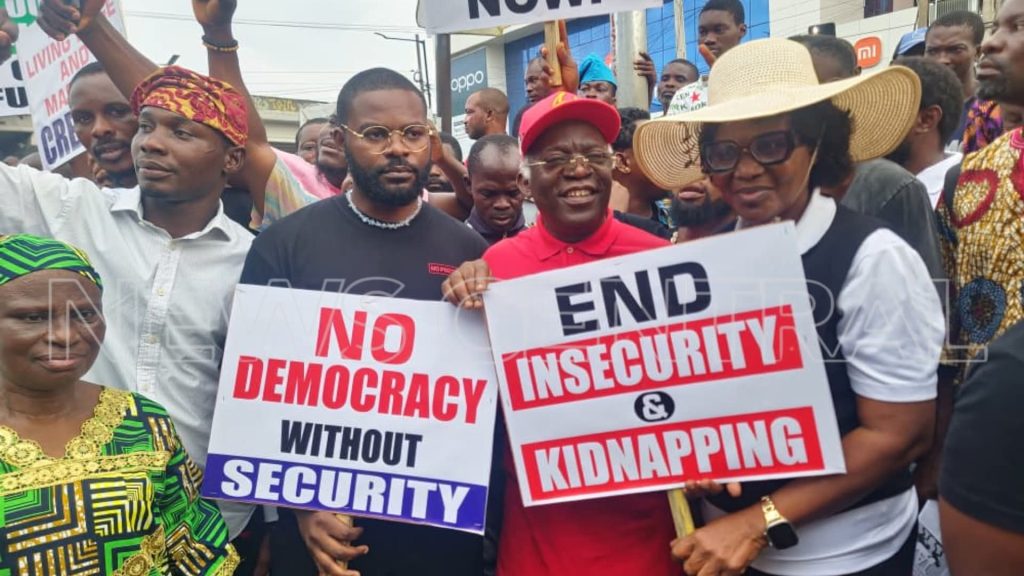
Speaking during the protest, statements attributed to Falz included “We are protesting the kidnapping of our children in Oyo State. We are also protesting injustice in our country, a situation whereby innocent school children in Oyo and Borno states have been in the custody of criminals for several weeks now” highlighting specific abduction concerns.
He further stated “We are also protesting injustice meted out to young people who are regularly arrested on the highways by the police” linking security enforcement practices with youth experiences on major roads.
He also added “We are protesting hunger and poverty in the land, and we are calling on the government to address these challenges” positioning economic hardship as part of the protest framework.
Another statement captured from his address included “Schools are still open while students are being kidnapped, whats happening in this country” reflecting concern about continuity of normal activity under insecurity pressure.
He further questioned accountability structures by noting lack of transparency following mass abductions and return of victims without clear resolution processes.
Coalition Structure Dynamics
The Lagos civic gathering was supported by multiple civic organizations that contributed to messaging structure and mobilization. These included civil society organizations, rights advocacy groups, labour aligned networks and legal advocacy circles linked to established human rights voices.
The coalition framing emphasized that Democracy Day should reflect lived realities rather than ceremonial expression alone. This framing helped shape the tone of placards and speeches across the gathering space.
Protest Structure Across Cities
The June 12, 2026 demonstrations in Abuja and Lagos did not operate under a unified national leadership structure. Instead they reflected distributed civic participation where different groups adopted similar themes independently while aligning on shared grievances.
Abuja displayed stronger street level mobilization with direct chants and movement through public spaces while Lagos reflected more structured coalition messaging anchored around designated gathering points. Both cities however shared consistent thematic focus on insecurity, economic hardship and governance accountability.
Social media amplification played a central role in connecting both locations as video clips circulated rapidly and merged into a broader national conversation that extended beyond physical attendance.
Security Observation Pattern
Security presence was observed across key protest zones with emphasis on monitoring movement rather than large scale disruption. Reports indicated managed engagement in public spaces where demonstrations occurred alongside official Democracy Day ceremonies.
No confirmed nationwide emergency escalation was directly linked to the protests and activities remained localized within major urban centers. This contributed to the perception of controlled civic expression rather than widespread disruption.
Symbolic Interpretation of Key Figures
The presence of VeryDarkMan represented digital age street mobilization where online influence translates into physical civic presence. His role reflected direct engagement with public frustration expressed in real time.
The participation of Emeka Ike represented veteran entertainment industry involvement in civic dialogue, bringing established public credibility into discussions around insecurity and mobility concerns.
The involvement of Falz represented structured civic advocacy rooted in youth engagement, legal rights awareness and coalition based activism.
Together these figures reflected a convergence of entertainment influence, digital activism and civic advocacy within a single national moment.
Final Thoughts
June 12, 2026 Democracy Day unfolded as a layered civic moment where celebration and protest existed within the same national atmosphere without merging into a single narrative. The demands voiced across Abuja and Lagos reflected accumulated concerns around insecurity, economic pressure and governance expectations expressed through both structured coalitions and spontaneous civic participation.
The presence of prominent public figures added visibility to existing grievances but did not replace the broader civilian voice that shaped the day. What emerged was a snapshot of a democracy negotiating its own meaning in real time as citizens used a symbolic national date to articulate urgency, demand attention and document lived realities across different parts of the country.