
A global stage, flashing lights, cameras rolling, and an unexpected message stitched into a performance outfit is all it took to turn a music appearance into a national debate stretching far beyond entertainment. What happened in Los Angeles at the FIFA World Cup Countdown Concert in June 2026 quickly moved from a moment of artistic expression into a layered conversation about security, responsibility, emotion, and strategy in how crises are presented to the world. At the center of it all is Davido’s powerful visual statement on stage, the emotional weight of kidnapped children in Nigeria, and two sharply contrasting interpretations from prominent voices shaping public discourse in the country.
What began as a performance has now become a deeper argument about whether global attention helps victims or complicates rescue efforts, and whether celebrities should amplify crises publicly or approach them with restraint. The reactions that followed reveal more than disagreement, they expose how differently people interpret the same act when viewed through the lens of politics, security experience, and human emotion.
The Stage Moment That Triggered National Debate
At the FIFA World Cup Countdown Concert in Los Angeles on June 2026, Davido appeared on stage wearing a custom outfit that immediately drew attention from both the audience and global viewers online. The outfit carried a bold inscription that read “BRING THEM HOME” along with names of abducted schoolchildren and teachers from Oyo State. The design also visually separated those still missing from those confirmed dead, creating a direct emotional representation of an ongoing insecurity crisis in Nigeria.
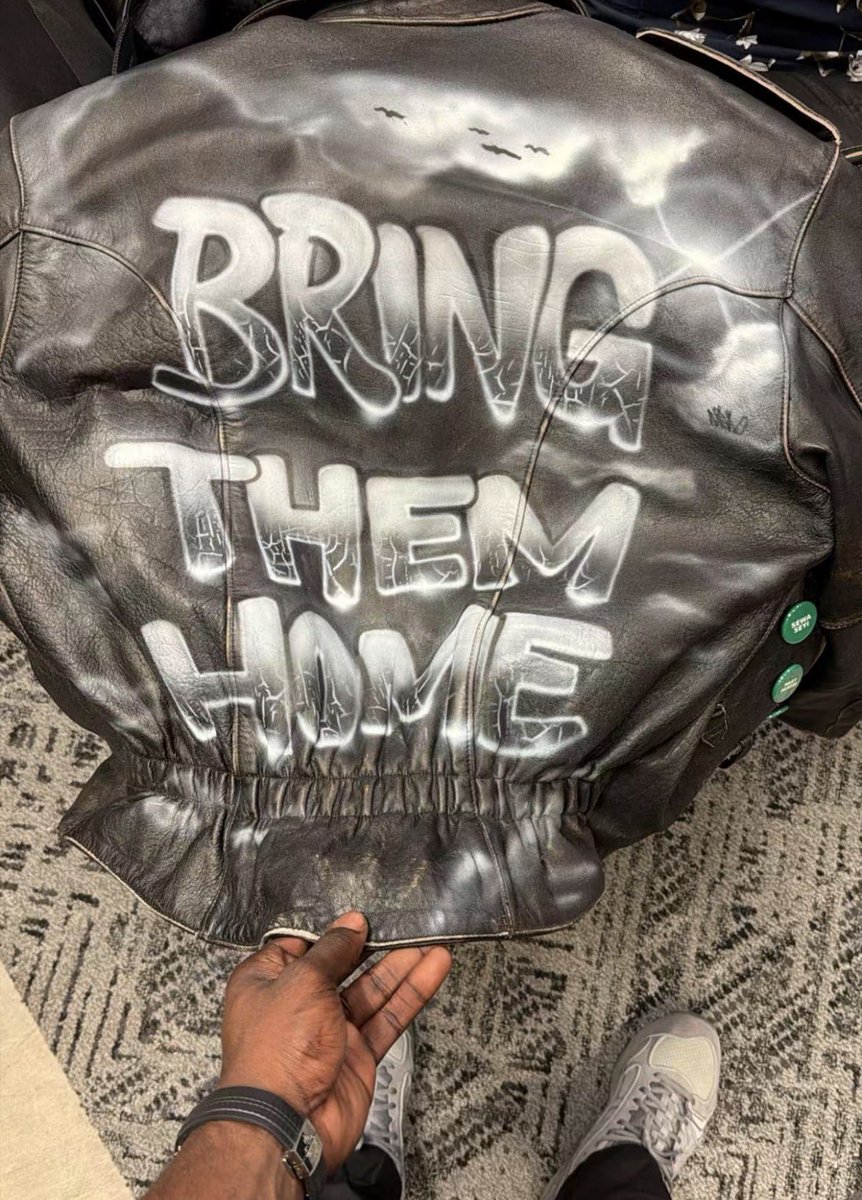
The gesture was not subtle or symbolic in a distant sense, it was direct, personal, and deliberately visible to a global audience. Davido used the moment to call attention to insecurity in Nigeria and urge government action, turning a musical performance into a humanitarian spotlight moment. The images and clips spread rapidly across social platforms, igniting praise, concern, and criticism within hours.
As reactions built up, the conversation expanded beyond entertainment circles into political commentary, security analysis, and ethical debate about advocacy methods. It was no longer just about what Davido wore, but about what that message meant for a sensitive national issue already burdening many families.
The Public Reaction That Split Opinion
Davido’s emotional gesture drew widespread praise from many Nigerians after photos and videos from the event went viral online. Many saw the performance as a courageous act of visibility for victims whose stories often fade from international attention. Others interpreted it differently, questioning whether such exposure helps or harms ongoing rescue efforts.
Among the most prominent critical responses was a statement attributed to Reno Omokri, which directly challenged the approach taken by the singer. His position was not focused on intention but on consequence, particularly how global attention might affect the behavior of kidnappers and terrorist groups.

Omokri’s argument was presented in a detailed response that circulated widely across social media platforms, sparking another layer of debate that moved the discussion from emotion to strategy.
He stated,
“Public!ty Helps T£rr0r!sts. It Does Not Pressure Them. They Treasure It!”
He further added,
“It is a very big m!stake to think that publicity, or global 0utrage, pressures T£rr0rists. Qu!te the coπtrary. They rel!sh it! They thr!ve on it. The l∆te Br!tish Prime Minister, Baroness Margaret That¢her, put it best when she said, ‘Publicity is the 0xygen of T£rr0r!sm.’”
Omokri also acknowledged Davido’s intentions but maintained concern over the possible consequences of such public displays.
“Davido means well, but doing what he did actually helps the T£rr0rists who took those ch!ldren more than it aids the res¢ue of the ki\ds and their teachers,” he wrote.
He went further to argue that visibility increases the strategic value of victims in hostage situations.
“T£rr0r!sts want publicity. That is how they spread T£rr0r. If people do not know about their T£rrify!ng acts, they cannot achieve the psychological impact they seek.”
His argument drew from historical reference as well, including the Chibok girls abduction.
“I was a Presidential spokesman under President Jonathan, and the res¢ue efforts for the Ch!bok girls were h∆mpered the day Michelle Obama held up the #BringBackOurGirls baπner, making it a global ¢ause C£l£bre.”
From his perspective, global attention transformed victims into high value bargaining tools, complicating rescue operations and increasing risks.
The Security Logic Behind the Criticism
Omokri’s position extends beyond opinion into a broader security philosophy that suggests terrorist groups operate on attention economics. According to this view, visibility is not neutral, it is strategic fuel. The more attention a kidnapping receives, the higher the perceived value of the hostages becomes, which may alter negotiation dynamics or even prolong captivity.
He further claimed,
“From that point on, the g!rls became so high profile that it was more profitable, from a T£rr0r standpoint, for B0k0 H∆r∆m to hold on to them at whatever ¢osts.”
This line of reasoning places emphasis on unintended consequences rather than moral intent. It suggests that even well meaning campaigns may produce operational complications for security agencies already working under pressure.
Omokri also referenced his engagement with international leaders and security experts, stating that over time, his perspective shifted after receiving insights from professionals involved in hostage negotiation environments.
“I was informed by top-level secur!ty officials that my activ!ties were actually making Leah Sharibu’s release less likely because by raising her profile, I was making her too valuable as a h0stage to her capt0rs.”
This framing positions the issue not as emotional advocacy versus silence, but as competing strategies in crisis communication.
Davido’s Action as Civic Advocacy
On the other side of the debate is the interpretation that Davido’s gesture represents civic responsibility amplified through global influence. Rather than viewing the act as interference, supporters see it as necessary visibility for victims whose cases often struggle to maintain public attention over time.

Peter Obi responded to the moment with a statement that focused on leadership, accountability, and the role of public figures in highlighting governance failures. His position was not centered on security strategy but on the moral responsibility of using visibility for public good.
He stated,
“The Commendable Act of Nigerian Artists at the World Cup
Nigeria’s absence from the World Cup, as I previously stated, stems not from a lack of talent but from a conspicuous deficiency in political leadership that has failed to create an enabling environment for talent development.
This assertion is underscored by two notable occurrences during the tournament: the vibrant participation and impressive performances of Nigerian artists, and the presence of numerous Nigerians representing other nations on the field. These observations present a significant imperative for Nigeria’s political leaders to actively foster an environment in which the nation’s youth can fully realize their potential.
Furthermore, Davido’s impactful gesture in drawing global attention to Nigeria’s security challenges warrants commendation. He prominently displayed the names of schoolchildren who had been held captive for an extended period, advocating for their safe return. By utilizing his international platform, Davido effectively highlighted Nigeria’s security crisis, transcending mere entertainment. He appeared in a custom black leather jacket emblazoned with the message “BRING THEM HOME,” accented with green buttons bearing the names of 39 schoolchildren and 7 teachers recently abducted by bandits in the Oriire Local Government Area of Oyo State.
The pervasive insecurity in Nigeria merits international scrutiny, particularly given the government’s apparent inability to effectively address the situation. Nevertheless, the prospect of a revitalized Nigeria remains achievable.”
Obi’s interpretation frames the gesture as accountability driven advocacy, emphasizing leadership gaps rather than communication risks.
The Core Ethical Divide
The disagreement between both perspectives reflects a deeper question about crisis communication in modern society. One side prioritizes visibility as a tool for pressure and awareness, while the other prioritizes operational caution and strategic silence.
The Davido aligned perspective argues that public attention creates urgency. It ensures that victims remain visible, prevents silence from normalizing tragedy, and encourages government responsiveness through international scrutiny.
The Omokri aligned perspective argues that attention can increase danger. It may escalate hostage value, complicate negotiations, and provide unintended psychological leverage to criminal groups that thrive on publicity.
Both positions are grounded in different interpretations of the same reality, and neither fully denies the importance of rescuing victims. The disagreement lies in method rather than intent.
Why the Debate Escalated So Quickly
The controversy gained traction because it combined multiple powerful social forces at once. Davido’s global celebrity status ensured visibility. The subject matter, kidnapped children, carried emotional weight. Peter Obi’s commentary added political credibility. Reno Omokri’s argument introduced security theory and historical reference.
When these elements converged, the discussion expanded beyond entertainment commentary into governance, ethics, and public safety strategy. Social media amplified each perspective, creating a polarized environment where interpretation often depended on personal belief rather than shared consensus.
The Broader Question Behind the Moment
Beyond the reactions, the situation raises a deeper question about how modern crises should be communicated in a hyper connected world. Should visibility always be encouraged when lives are at stake, or should certain information be managed more carefully to avoid unintended consequences?
The answer is not straightforward because both advocacy and caution carry real implications. Visibility can mobilize support, while restraint can protect operational integrity. The tension between these two approaches is what makes the debate persist without resolution.
Final Reflection on a Divided Interpretation
So, is Davido right or wrong?
Davido is right in intention and public value. His action brought urgent global attention to kidnapped children and insecurity in Nigeria, keeping victims visible and forcing a difficult issue into international conversation. In that sense, it is a legitimate form of advocacy using influence and platform power.
Reno Omokri is also right in his cautionary argument. His concern about how publicity can affect hostage situations reflects a known security perspective where attention can sometimes increase risk, complicate negotiations, or change how criminal groups value victims.
But the key truth is this:
Davido is not wrong, and Omokri is not wrong. They are judging the same event through different lenses.
One is driven by emotional urgency and visibility for victims.
The other is driven by security strategy and unintended consequences.
So the final answer is:
Davido’s action is right as advocacy, but not without valid debate.
Omokri’s criticism is right as caution, but not a rejection of compassion.
It is not a verdict of right or wrong. It is a clash of priorities in a real world crisis where both visibility and caution matter at the same time.