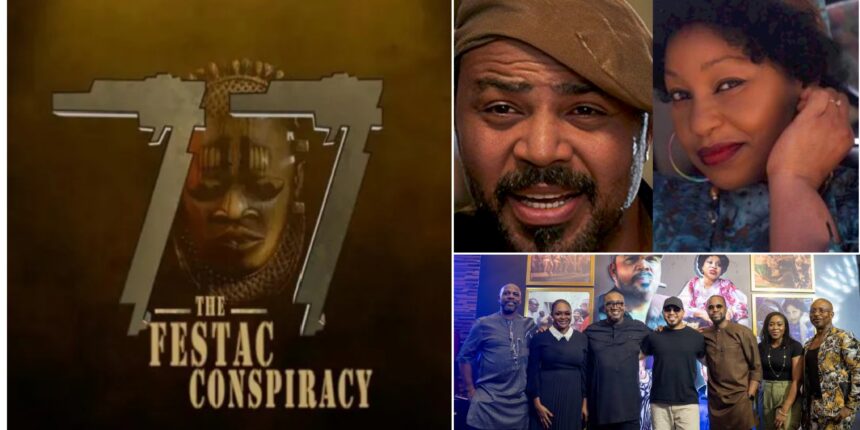
Very few moments in Nigeria’s history have carried the cultural weight, international attention, plus lasting legacy of FESTAC ’77. Nearly 5 decades after Lagos welcomed thousands of artists, musicians, writers, scholars, performers, plus cultural ambassadors from across Africa, the remarkable gathering continues to inspire conversations that reach far beyond music or dance.
Every generation discovers the event from a different perspective, while filmmakers continue to uncover fresh stories hidden beneath one of the continent’s most celebrated cultural milestones. That renewed curiosity has once again placed FESTAC ’77 at the center of public attention, opening the door to a remarkable cinematic journey that draws inspiration from history while weaving together a compelling fictional narrative.
Birth Of A Continental Dream
FESTAC ’77, officially known as the Second World Black African Festival of Arts Culture, was hosted in Lagos, Nigeria, from 15 January 1977 to 12 February 1977. The festival represented far more than a cultural celebration because it became a statement of identity, unity, pride, plus shared heritage for people of African descent across the world. Nigeria accepted the enormous responsibility of hosting the event after years of preparation, with government officials working alongside cultural institutions to deliver a gathering unlike anything Africa had witnessed before.
Preparations stretched across several years because the scale of the festival demanded careful planning. Roads received upgrades, accommodation expanded, security arrangements strengthened, while venues capable of welcoming thousands of participants were completed ahead of the opening ceremony. Every major decision reflected Nigeria’s ambition to present itself as a leading voice within Africa while celebrating creativity that had flourished across generations despite centuries of colonial rule plus cultural displacement.
National pride became deeply connected to the success of the festival because the event offered Nigeria an opportunity to demonstrate both organizational capacity plus cultural leadership. Visitors arriving from different continents encountered a country determined to celebrate African excellence through music, theatre, literature, visual arts, traditional performances, plus intellectual exchange. Those experiences helped transform FESTAC ’77 into one of the defining cultural moments of the 20th century.
Lagos Steps Into History
Lagos in 1977 looked very different from the bustling megacity known today, yet it possessed an energy that perfectly matched the significance of the festival. Streets became filled with delegates wearing traditional clothing from different nations, languages blended naturally within conversations, while performances echoed across specially prepared venues throughout the city. Every corner reflected the excitement of welcoming distinguished guests whose presence reinforced the importance of African unity through culture.
The National Theatre quickly emerged as one of the festival’s most recognizable symbols. Built specifically for the occasion, the impressive structure became the heartbeat of countless performances, exhibitions, conferences, plus cultural presentations. Its striking design remains one of Nigeria’s most famous landmarks, serving as a lasting reminder of the country’s commitment to preserving the memory of FESTAC ’77 long after the closing ceremony.
Hotels, restaurants, transportation networks, plus entertainment centres all experienced extraordinary activity throughout the festival. Businesses benefited from increased patronage, while residents witnessed firsthand the arrival of visitors representing diverse traditions from across Africa, the Caribbean, Europe, North America, plus South America. Every encounter strengthened cultural exchange beyond formal performances, creating friendships plus professional relationships that extended well beyond the festival itself.
Africa Meets The World
More than 50 countries participated in FESTAC ’77, bringing together thousands of performers, scholars, writers, artists, musicians, plus cultural practitioners. Delegations proudly displayed unique traditions that reflected centuries of history, allowing audiences to appreciate the remarkable diversity existing within African civilization. Every performance carried stories passed through generations, transforming stages into living classrooms where history came alive through artistic expression.
Music occupied a central place throughout the festival because rhythm has always served as one of Africa’s most powerful cultural languages. Traditional instruments shared space with modern compositions, while audiences embraced performances that celebrated heritage without losing sight of contemporary creativity. Dance performances equally captivated visitors through movements reflecting customs deeply rooted within different communities across the continent.
Literature also enjoyed remarkable attention during FESTAC ’77. Writers exchanged ideas concerning identity, independence, language, plus post colonial development, creating conversations that influenced African intellectual life for many years afterward. Theatre productions, visual art exhibitions, sculpture displays, textile presentations, plus cultural workshops further demonstrated the richness of African creativity before international audiences eager to experience authentic cultural expression.
Nigeria’s Moment Of Pride
Hosting an event of such magnitude strengthened Nigeria’s position within Africa during the late 1970’s. Oil revenues had created opportunities for ambitious national projects, while government leaders sought to project confidence through investments capable of attracting worldwide recognition. FESTAC ’77 therefore became both a cultural celebration plus a diplomatic statement demonstrating Nigeria’s readiness to assume greater continental leadership.
Every successful ceremony reinforced that ambition because international media closely monitored the festival from beginning to end. Reports highlighted Nigeria’s hospitality, organizational capacity, plus willingness to invest significantly in preserving African heritage. Delegates returned home carrying memories that contributed to Nigeria’s reputation as a country capable of organizing one of the largest cultural gatherings ever held on African soil.
Economic activity also expanded throughout the festival period. Hotels welcomed continuous arrivals, transport operators remained busy, local traders experienced increased demand, while tourism received valuable international exposure. Although the festival primarily celebrated culture, its economic impact demonstrated how major international events could stimulate business across several sectors simultaneously.
Legacy That Refuses To Fade
Decades after the closing ceremony on 12 February 1977, FESTAC ’77 continues influencing conversations about African identity, cultural preservation, plus creative collaboration. Younger generations who never witnessed the festival have gradually discovered its significance through documentaries, photographs, books, historical research, plus personal accounts shared by participants who experienced the remarkable gathering firsthand.
The National Theatre remains perhaps the festival’s most visible physical legacy despite years of changing fortunes. Its continued presence reminds Nigerians of a period when the country welcomed the continent through culture rather than politics or commerce alone. Numerous artworks, archival materials, recordings, plus historical documents preserved from the festival continue serving researchers interested in understanding one of Africa’s defining cultural moments.
Academic institutions regularly revisit FESTAC ’77 because its influence extends beyond entertainment into sociology, political history, international relations, cultural diplomacy, plus heritage preservation. Every fresh study uncovers additional perspectives that deepen appreciation for an event whose importance continues expanding rather than fading with time.
Cinema Revisits History
Historical events often provide filmmakers with opportunities to explore larger human experiences through compelling storytelling. FESTAC ’77 naturally presents enormous creative possibilities because the festival combined politics, diplomacy, security, celebrity, culture, international cooperation, plus national ambition within one extraordinary period. Such richness allows storytellers to imagine fictional narratives while remaining anchored within authentic historical settings.
Director Izu Ojukwu recognized that potential through the creation of 77: The FESTAC Conspiracy. Rather than attempting a documentary recreation of every historical event, the production uses FESTAC ’77 as the backdrop for a political thriller that blends authentic historical atmosphere with fictional suspense. That creative decision allows audiences to experience the excitement surrounding the festival while following an entirely imagined conspiracy unfolding behind the scenes.
Earlier success achieved through 76 established confidence that Nigerian audiences would embrace historical storytelling presented with cinematic ambition. Building upon that foundation, 77: The FESTAC Conspiracy expands its scope by transporting viewers into another defining chapter within Nigeria’s post independence history while maintaining dramatic tension from beginning to end.
Story Draws From History
Although the conspiracy driving the film remains fictional, nearly everything surrounding its setting reflects recognizable elements drawn from Nigeria during the late 1970’s. Military administration shaped national governance, international politics influenced diplomatic relationships, while Cold War tensions created uncertainty across different regions of the world. Those realities provide fertile ground for suspense without altering the documented history surrounding FESTAC ’77 itself.
Authentic costumes, carefully recreated environments, vintage vehicles, architecture, plus production design all contribute toward transporting audiences into 1977. Such attention to historical detail strengthens immersion because every visual element supports the illusion of returning to a defining moment within Nigerian history.
Historical fiction succeeds best when factual foundations remain respected while creative imagination fills spaces left untouched by documented events. 77: The FESTAC Conspiracy follows that principle by presenting an original thriller whose fictional storyline unfolds within an accurately recreated historical environment.
Cast Brings History Alive
Ramsey Nouah leads a distinguished cast whose performances aim to capture the emotional atmosphere surrounding the period. Rita Dominic joins him alongside Daniel K Daniel, Ibinabo Fiberesima, Seun Kuti, plus Soibifaa Dokubo, creating an ensemble capable of balancing dramatic intensity with historical authenticity.
Ramsey Nouah plus Rita Dominic revealed during promotional discussions surrounding the film’s screening that both deliberately gained weight to portray their respective characters more convincingly. Physical transformation often becomes essential when portraying personalities rooted within earlier decades because appearance contributes significantly toward convincing audiences that they have truly entered another era.
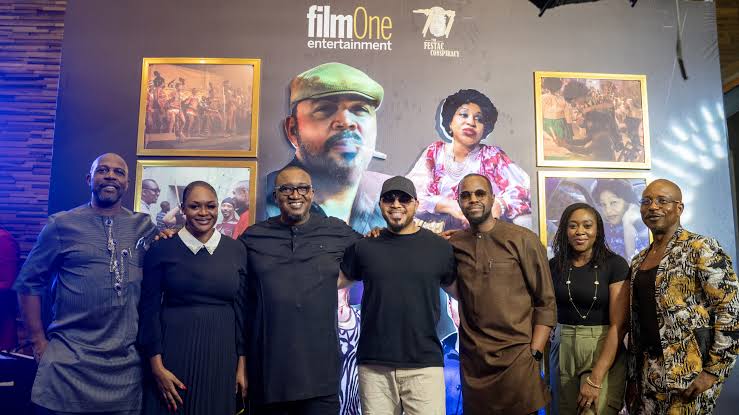
Seun Kuti’s portrayal of his father, Fela Kuti, carries particular historical significance because Fela remained one of Nigeria’s most influential cultural figures during the period surrounding FESTAC ’77. That connection adds another layer of authenticity by linking the fictional narrative with one of Africa’s greatest musical icons whose influence continues shaping global conversations about art, activism, plus identity.
International Stage Beckons
Long before its recent appearance in Zambia, 77: The FESTAC Conspiracy had already begun attracting attention beyond Nigeria’s borders. Historical films often rely upon international festivals to introduce their stories to distributors, streaming platforms, cinema chains, plus cultural institutions seeking original African productions. Every successful screening expands the conversation beyond entertainment because it also introduces audiences to chapters of history that remain unfamiliar outside the continent.
The production first gathered wider international interest through activities connected with the 2025 Cannes Film Festival. Although the film’s story remains firmly rooted in Nigeria’s past, its themes possess universal appeal because questions surrounding patriotism, sacrifice, loyalty, political power, plus national identity resonate across different societies. Presenting the project before international buyers created opportunities for conversations that could eventually take the story to audiences far beyond Africa.
Growing recognition at respected film markets also reflects the steady rise of Nollywood’s global reputation. Nigerian filmmakers have increasingly demonstrated their ability to produce stories capable of competing on international platforms without abandoning local identity. Historical productions demand even greater commitment because costumes, locations, research, production design, plus performances must work together to convince viewers that every frame belongs to another era.
Lusaka Screening Opens Fresh Chapter
Another important milestone arrived during the Africa Creative Market 2026 held in Lusaka, Zambia, where 77: The FESTAC Conspiracy received a major international screening. Rather than serving as an ordinary cinema showing, the event combined a red carpet premiere with an industry showcase attended by filmmakers, investors, distributors, producers, media executives, plus cinema professionals representing several African countries.
Such screenings hold enormous value because they allow decision makers within the global film business to experience projects before negotiating distribution agreements. Every audience reaction, professional discussion, plus networking session contributes toward determining how widely a film may eventually travel across cinemas, television networks, streaming services, plus international festivals.
Attention during the Lusaka event extended beyond the film itself because it also celebrated African storytelling as a growing creative force. Nigeria’s ability to present a historical thriller inspired by one of Africa’s defining cultural moments demonstrated the expanding ambition of filmmakers determined to tell local stories with international production values. That achievement strengthened Nollywood’s reputation as a leading contributor to African cinema’s continued growth.
Cast Shares Commitment
Promotional activities surrounding the Lusaka screening offered audiences an opportunity to hear directly from members of the cast about their preparation for the film. Ramsey Nouah plus Rita Dominic explained that portraying characters from 1977 demanded more than memorizing scripts because physical appearance formed an essential part of recreating the period with convincing realism.
Both actors revealed that they intentionally gained weight before filming began, believing the transformation would help reflect the lifestyles, fashion, plus physical characteristics associated with Nigeria during the late 1970’s. Such dedication highlights the demanding nature of historical productions where authenticity often depends upon countless small decisions that audiences may notice only subconsciously while watching the finished film.
Preparation also extended beyond appearance because actors portraying historical periods frequently immerse themselves in archival photographs, documentaries, recorded interviews, plus written accounts describing the social atmosphere of the time. Every detail contributes toward performances capable of transporting viewers into another generation without feeling artificial or exaggerated.
Recreation Of 1977 Nigeria
Historical films succeed only when audiences believe they have stepped into another period. Achieving that illusion required careful recreation of 1977 Nigeria through production design that respected documented history while supporting the fictional narrative unfolding across the screen. Every costume, hairstyle, building, newspaper, military uniform, motor vehicle, household object, plus street environment contributed toward preserving the visual identity of the era.
Design teams devoted considerable attention to matching clothing styles commonly worn throughout the decade because fashion communicates social status, profession, personality, plus historical context without requiring lengthy dialogue. Traditional attire appeared alongside military uniforms, business clothing, plus everyday garments reflecting the diversity of Nigerian society during that period.
Locations equally played an important role because architecture from the 1970’s differs noticeably from modern urban landscapes. Production crews carefully selected environments capable of preserving historical atmosphere while minimizing contemporary visual distractions. Combined with thoughtful cinematography, lighting, props, plus sound design, those efforts strengthen the audience’s emotional connection with the world presented throughout the film.
Themes Beneath The Surface
Although the story presents itself as a political thriller, several deeper themes shape its emotional foundation. Patriotism emerges through characters whose personal decisions influence events extending far beyond their individual lives. Loyalty becomes equally important because relationships frequently face pressure whenever national interests collide with personal convictions.
Political corruption forms another significant layer within the narrative, reflecting challenges that have appeared throughout different periods of history. Rather than offering simple answers, the story explores how ambition, influence, secrecy, plus competing interests can gradually reshape institutions trusted with protecting national stability.
African unity also remains central because FESTAC ’77 itself represented one of the continent’s greatest celebrations of shared identity. Setting the fictional conspiracy against such an inspiring cultural gathering creates powerful dramatic contrast, allowing audiences to appreciate both the beauty of international cooperation plus the hidden dangers capable of threatening moments intended to celebrate peace, creativity, plus common heritage.
Cold War politics quietly influence the atmosphere surrounding the story as well. During the late 1970’s, many African nations found themselves navigating global rivalries involving powerful countries competing for influence across the continent. That historical reality adds credibility to the film’s broader political environment while remaining faithful to the international tensions that characterized the era.
Nollywood’s Historical Ambition
Historical cinema occupies a unique position within Nollywood because productions inspired by real events often demand greater financial investment than contemporary stories. Period costumes, vintage vehicles, carefully selected filming locations, extensive research, plus large ensemble casts significantly increase production requirements before cameras even begin recording.
Choosing to revisit FESTAC ’77 reflects growing confidence among Nigerian filmmakers that audiences appreciate stories exploring the nation’s history through ambitious cinematic experiences. Rather than relying exclusively upon modern settings, productions such as 77: The FESTAC Conspiracy demonstrate that Nigeria’s past contains remarkable events capable of inspiring compelling entertainment while encouraging historical reflection.
Every successful historical production also creates opportunities for younger viewers to discover important chapters of national history through cinema. Films frequently inspire audiences to explore books, documentaries, museum collections, plus academic research after leaving the theatre, allowing entertainment to become a gateway toward deeper historical understanding rather than replacing factual history itself.
Legacy Beyond The Screen
Perhaps the greatest achievement of 77: The FESTAC Conspiracy lies not only within its fictional narrative but also within its ability to renew public interest in one of Africa’s greatest cultural celebrations. Many younger Nigerians know little about the extraordinary scale of FESTAC ’77 despite its lasting influence upon the country’s cultural identity. Every conversation generated by the film therefore carries the potential to introduce fresh audiences to a remarkable historical event deserving continued recognition.
Cinema possesses a unique ability to preserve memory because powerful stories often encourage people to revisit forgotten moments through renewed curiosity. By placing FESTAC ’77 at the heart of a suspense filled historical thriller, the production reminds audiences that history extends beyond textbooks into the lives, ambitions, achievements, plus challenges experienced by real people whose decisions helped shape modern Nigeria.
Nearly 5 decades after delegates from more than 50 nations gathered in Lagos to celebrate African culture before the world, FESTAC ’77 continues inspiring new generations of artists determined to keep its legacy alive. 77: The FESTAC Conspiracy stands as another chapter within that continuing journey, proving that remarkable moments from Nigeria’s past still possess the power to captivate audiences across Africa while introducing the richness of the continent’s history to the rest of the world.