Say you registered your business two years ago, called it something that felt right at the time, and now the name no longer fits. Maybe your services shifted. Maybe you rebranded. Maybe you discovered the name is too close to another company and clients keep confusing the two. Or perhaps, looking back, the name was just not what you would have chosen if you had thought it through. In any of these cases, the question becomes: can you actually change it, and how do you do it without losing your registration number or starting from scratch?
The short answer is yes, you can change your registered business name in Nigeria without losing your existing registration. The Corporate Affairs Commission allows for this through a formal alteration process, and it applies whether you operate as a sole proprietor under a business name or as a limited liability company. The process differs depending on which structure you registered under, and that distinction matters a lot before you log into the CAC portal.
What many Nigerian business owners discover too late is that there are conditions attached. Your annual returns must be up to date, the new name must pass the CAC’s availability check, and the paperwork requirements are different depending on your entity type. Skipping any of these steps leads to rejection, delays, and sometimes repeat payments.
How to Change Business Name After CAC Registration
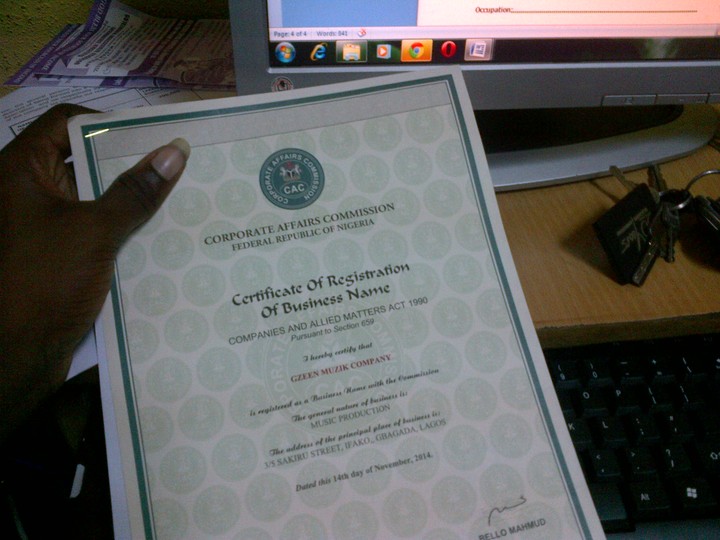
Changing your business name after CAC registration in Nigeria is a formal legal process governed by the Companies and Allied Matters Act (CAMA) 2020. It involves reserving a new name, filing the appropriate alteration forms, and in the case of a limited company, passing a board resolution before submission. The process is now fully online through the CAC’s Company Registration Portal (CRP), and once approved, CAC issues a new certificate reflecting the updated name while your original registration number stays intact.
Why Nigerian Business Owners Change Their Registered Names
Rebranding is the most common reason, but it is far from the only one. A Lagos-based fashion entrepreneur who registered under a casual, personal-sounding name three years ago might now be pitching corporate clients who expect something that sounds more professional. The name on the CAC certificate is the one that appears on contracts, invoices, and bank records, so a mismatch between your brand identity and your legal name creates friction at every point of transaction.
Trademark conflicts are another driver. As more Nigerian businesses run formal checks before launching, they sometimes discover post-registration that their name is already trademarked or registered by another entity. The CAC can also compulsorily direct a business to change its name when it determines there is confusion between two registered names. Under Section 30(1) of CAMA 2020, where a business is registered with a name identical or dangerously similar to an existing one, the commission can issue a directive, and the affected business has six weeks to comply.
Business restructuring also triggers name changes. When partners split, when new investors come on board, or when a sole proprietor formalises into a company and the original business name no longer accurately describes the expanded operation, updating the registered name becomes necessary. There are also cases where a simple typo or error in the original registration creates compliance headaches, and a name alteration is the cleanest fix.
The practical consequences of carrying an outdated or mismatched name are real in Nigeria. Banks conducting due diligence, procurement officers verifying vendor details, and grant administrators cross-checking CAC records will all flag inconsistencies. An updated CAC record is not just about aesthetics; it affects your ability to access financing, win contracts, and maintain credibility with institutional clients.
Two Different Processes: Business Name vs. Limited Company
This is the part most guides skip past too quickly, and it is where Nigerians who have read the wrong article end up wasting time. The process for changing a registered business name is not the same as changing the name of a limited liability company. The form numbers differ, the legal authority behind each process differs, and the supporting documents required differ significantly.
If you registered under a Business Name, meaning you are a sole proprietor or a general partnership, the authority for a name change comes from Section 815 of CAMA 2020. You will file using Form CAC/BN 5, which is the official alteration form for business name registrations. This is a relatively straightforward process because it does not require board resolutions or special meetings. The proprietor, or proprietors in the case of a partnership, signs off on the alteration and the application goes through the portal.
If you registered as a Limited Liability Company, the process is governed by Sections 30 to 31 of CAMA 2020. Here, a company cannot just decide to change its name casually. A special resolution must be passed by the shareholders at a general meeting, or through a written resolution for private companies. The resolution, along with supporting documents, is what triggers the CAC application. The commission then reviews the application, and upon approval, issues a new certificate of incorporation bearing the new name. The original RC number does not change.
One thing that applies to both is the compliance prerequisite. The CAC will not process any name change application for an entity that has outstanding annual returns. If your last return was filed two or three years ago, the application will stall. This is not a minor administrative hurdle; it is a hard gate in the system. Clearing any outstanding annual returns before initiating a name change saves you from having to re-submit everything after the fact.
Step-by-Step: Changing a Business Name with CAC
The process starts before you even open the portal. The first thing to do is confirm that your existing annual returns are fully filed and up to date. Log in to the CAC’s Company Registration Portal at icrp.cac.gov.ng and check your compliance status. If there are outstanding returns, file them first and ensure payment is confirmed before moving forward.
Once your compliance status is clean, the next step is to search for and reserve your desired new name. On the portal, navigate to the name availability search. Type in the proposed new name and check whether it is taken. The CAC will flag names that are identical or too similar to existing registrations. If your preferred name is available, proceed to reserve it. Reservation costs 500 naira in CAC fees, with Remita processing charges bringing the actual total to approximately 661 naira. You will receive a name reservation approval slip, which you must download and keep because it is required for the next stage.
After securing the name reservation approval, the actual alteration filing begins. Log in to the post-registration section of the portal and select the business name alteration option. This is where you will fill in your current registration details, including your existing business name registration number and the new name you are proposing, along with the name reservation code from the approval slip. The form that captures this alteration for business names is Form CAC/BN 5. Complete the details, upload the required documents, and pay the filing fee.
The CAC fee for filing a notice of change of business name is 5,000 naira according to the official CAC fee schedule for business name services. Once payment clears, the commission reviews the application. If everything is in order and error-free, the name change is processed within three to ten working days. You will receive an updated Certificate of Registration and a new certified extract reflecting your new business name. Your BN registration number remains the same.
Step-by-Step: Changing a Company Name in Nigeria
For a limited company, the process requires more internal steps before the portal even comes into the picture. The first thing that needs to happen is a board-level decision. Shareholders must pass a special resolution approving the name change, either at a duly convened general meeting or, for private companies, through a written resolution signed by all the members entitled to vote. The resolution must capture the exact proposed new name and authorise the directors to take all necessary steps to effect the change.
Once the resolution is passed and documented, go to the CAC portal and run the name availability check for your proposed new name. Reserve it and download the approval slip, just as with the business name process. The reservation cost is the same: 500 naira plus Remita charges. If you are changing to a name that is similar but not identical to the old one, the availability search will confirm whether that specific formulation is taken.
With the name reservation in hand, proceed to the post-incorporation section of the portal. Select the change of name option and complete the required online forms. The supporting documents needed for upload at this stage include the copy of the special resolution, the name reservation approval, the current certificate of incorporation, and valid identification for the director making the application. Where the company falls under a regulated sector such as banking or financial services, additional approvals from the relevant regulator, like the Central Bank of Nigeria, may be required before CAC will process the change.
There is also a stamp duty payment involved. The altered documents, particularly the special resolution, attract stamp duty payable to the Federal Inland Revenue Service (FIRS). This is processed through the FIRS portal, and proof of payment must be uploaded as part of the application. After full submission, CAC reviews the package. A query-free application typically processes within three to fourteen working days. Once approved, CAC issues a new Certificate of Incorporation and an updated status report bearing the new name. The company’s original RC number remains unchanged.
Documents You Need to Gather Before You Start
For a business name change, the document list is manageable. You need your current CAC business name certificate, your BN registration number, the name reservation approval slip from the availability search, and a valid means of identification (National ID card, international passport, or driver’s licence). If you are doing this yourself without an agent, you will also need access to your CAC portal login credentials. In some cases, particularly where the original registration documents show discrepancies, CAC may request additional supporting materials during review.
For a limited liability company, the list is longer. The special resolution passed by shareholders must be included, and it needs to clearly state the proposed new name. You will need the current certificate of incorporation, the CAC Form CAC 3 (which is the change of company name form), the stamped version of the special resolution (with FIRS stamp duty paid), the name reservation approval slip, and valid identification for the applicant. If there has been any change in the company’s directors or ownership since the original incorporation, those updates also need to be reflected in the CAC records before a name change application is accepted.
One practical point worth noting: any discrepancy between the name on your ID and the name in the CAC records, or any inconsistency between document dates and event dates, will trigger a query. Nigerian applicants who have had rejections before will tell you that the CAC reviewer checks these details carefully. Make sure every document is consistent before uploading.
What It Costs to Change Your CAC-Registered Business Name
The CAC’s official fee schedule makes the government charges relatively predictable. For a business name change, the name reservation costs 500 naira, and the filing of the notice of change of business name costs 5,000 naira. Add the Remita processing charges on top, and the government-side cost comes to roughly 5,661 naira or a bit more, depending on the current Remita fee rate. This is the out-of-pocket cost if you handle the application yourself through the portal.
If you use a CAC-accredited agent or a corporate services firm to handle the process, expect professional fees on top of those government charges. Agent fees for business name alterations vary widely across Nigeria. Lagos and Abuja-based agents tend to charge more than those in other states. Some all-in-one service providers offer fixed packages that cover portal access, document preparation, filing, and follow-up with CAC. These packages for business name changes tend to run from around 15,000 naira upwards, depending on the provider.
For a limited liability company name change, the cost is higher because of the additional steps involved. Beyond the name reservation fee, there is the CAC filing fee, stamp duty to FIRS on the special resolution, and if you use a professional, the cost of having a corporate secretary or legal practitioner prepare and stamp the board resolution. Companies using service providers typically budget between 30,000 and 80,000 naira for the full name change process, depending on the provider, the company’s compliance status, and whether there are any outstanding issues that need resolving first.
It is also worth keeping in mind that CAC revised its service fees upward from September 2025. The figures above reflect the current fee structure, but the safest approach is to verify the current charges directly on the CAC portal at the time of your application, since fees are subject to further adjustment.
What Happens After CAC Approves the Change
The approval is not the end of the process; it is actually the starting point for a second round of updates across several institutions. Once you have your new certificate and updated status report in hand, the next stop is your bank. Nigerian banks require a formal notification of a registered name change, and they will ask to see the new CAC certificate alongside the old one. Some banks also require a board resolution or a letter of instruction before they update their records. Until the bank updates your account, your existing account continues to operate under the old name, which creates a mismatch between your CAC records and your financial records.
Your Tax Identification Number also needs to be updated at the Federal Inland Revenue Service. The TIN is linked to your registered name, and operating under a new name without updating FIRS records can create problems during tax filing and whenever your TIN is verified. The process involves visiting a FIRS office with your new CAC documents and a formal letter requesting the update. Some banks will assist with TIN-related updates during their own onboarding process.
Any existing contracts, MOUs, or service agreements that reference your old registered name should be reviewed. Where those contracts are ongoing, the counterparties need to be notified of the name change and, where necessary, an addendum should be executed to reflect the new name. This is especially important for Nigerian businesses that operate on government contracts, where the procurement records are tied to specific registered entity names and procurement numbers.
All other public-facing records also need updating: your NAFDAC number if you are in food or consumer goods, your FCCPC registrations, professional licences, your website, social media pages, and any physical signage. The CAC certificate change is the legal anchor, but until the downstream records are updated, the name change is not fully effective in practice.
Common Reasons CAC Rejects Name Change Applications
Outstanding annual returns are the leading cause of rejection, and it is entirely preventable. The CAC portal flags entities with unfiled returns during the application process. If your returns are not current, the system will not let the application through. This trips up a lot of business owners who assume that because they paid their registration fee at inception, they are in good standing. Annual returns are a separate, ongoing obligation under CAMA 2020, and failing to file them attracts penalties beyond just the blocked name change.
The proposed new name being taken is another common stumbling block. Sometimes business owners do not run a thorough availability search before committing to a name, only to find during the formal reservation stage that the name is registered or reserved by someone else. The CAC will not approve a name that is identical to an existing registered name or one that is so similar it could mislead the public. Running multiple name options through the availability search before starting the alteration process saves time.
Document inconsistencies also cause rejections. A director’s name spelled differently across ID documents and CAC forms, a resolution that references a different name than the one being reserved, or an upload of an unclear or low-resolution scan can all trigger a query from the CAC reviewer. For limited companies, a special resolution that is not properly dated, lacks the required signatures, or was passed before the name reservation was secured can also cause problems.
For regulated sector companies, applications that arrive without the required prior approval from the sector regulator are rejected outright. If you operate in banking, insurance, or financial services and you need to change your company name, the CBN, NAICOM, or SEC approval must come before, not after, the CAC application. Missing that sequence means starting the external approval process all over again after an avoidable rejection.
Keeping Your Business Name Aligned With Your Business Reality
There is nothing irreversible about a business name in Nigeria once you understand the process. The CAC has built a clear pathway for it, and for most business names, it is not complicated. The friction usually comes from either starting the process without clearing annual returns, or conflating the business name process with the more involved company name change procedure.
The key practical takeaways are straightforward. Check your compliance status before anything else. Run the name availability search before you fall in love with a new name. Make sure your documents are consistent and your scans are clean. And once the new certificate arrives, do not stop there. Update the bank, update FIRS, and work through every institution and contract that holds a record of your old name. The legal name on your CAC certificate is only as useful as the accuracy of the records built around it.
For Nigerian entrepreneurs managing multiple facets of a growing business, the practical advice is to either use the portal directly if you are confident in navigating compliance requirements, or engage a CAC-accredited agent who can manage the process end to end. The fees are reasonable, the turnaround is typically under two weeks for a clean application, and the outcome is a certificate that accurately reflects who your business has become.