Every decision affecting Nigeria’s education system carries consequences that stretch far beyond classrooms. Parents look toward the future with hopes that their children will receive better opportunities, teachers work to shape young minds despite numerous challenges, while students depend on policies that can influence the quality of learning throughout their academic journey. Whenever a major education proposal reaches the National Assembly, attention naturally turns to what it could mean for millions of families across the country. That renewed focus has returned following President Bola Tinubu’s latest move on secondary education, placing another important piece of his administration’s education agenda before lawmakers.
Fresh discussions have already begun across homes, schools, staff rooms, plus public institutions as Nigerians seek to understand the purpose of the proposed legislation. Several questions have emerged regarding what the bill seeks to achieve, whether it changes the current education structure, plus how it could affect students already progressing through the existing system. Careful examination of the proposal shows that the legislation centres on strengthening the management of senior secondary education rather than introducing immediate changes to classroom learning, making it important to separate established facts from widespread misconceptions.
Bill reaches Senate
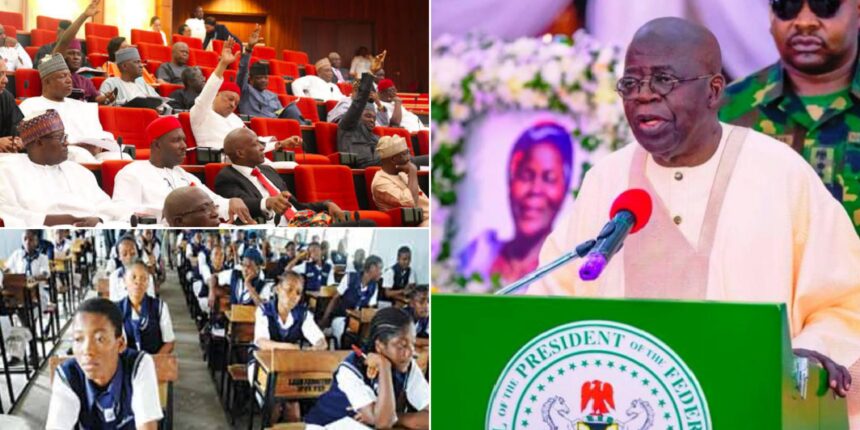
President Bola Tinubu formally transmitted the National Senior Secondary Education Commission Amendment Bill, 2026, to the Nigerian Senate as part of the legislative process required before the proposal can become law. Transmission of the bill represents another significant stage in the Federal Government’s continuing effort to strengthen Nigeria’s education sector through legal reforms designed to improve institutional performance.
Presentation of the proposed legislation followed earlier approval by the Federal Executive Council, commonly known as the FEC. Once executive approval had been secured, the next constitutional step required forwarding the bill to the National Assembly for legislative consideration. That process officially began after the President’s communication was read before senators during plenary by Senate President Godswill Akpabio.
Sending a bill to the Senate does not automatically change existing laws or introduce immediate reforms. Rather, it begins a legislative journey during which lawmakers carefully examine every provision before deciding whether the proposal should eventually become part of Nigeria’s legal framework. Several additional stages remain before any changes can take legal effect.
Growing public interest surrounding the proposal reflects the importance of education within national development. Millions of students, parents, teachers, school administrators, plus education stakeholders naturally seek clarity whenever legislation concerning schools reaches parliament because such reforms often influence future planning across the country.
Proposal targets governance
Contrary to widespread assumptions circulating across various social media platforms, the proposed legislation does not establish an entirely new secondary education system. Rather than replacing existing structures, the amendment seeks to strengthen the legal framework governing the National Senior Secondary Education Commission, better known as the NSSEC.
Creation of stronger institutional structures forms the central objective of the proposal. Federal authorities believe improved governance can help create a more efficient system for supervising public senior secondary schools while encouraging greater accountability among institutions responsible for implementing education policies.
Administration of secondary education involves far more than classroom teaching. Planning, monitoring, funding, policy coordination, quality assurance, data collection, institutional oversight, plus cooperation between different levels of government all contribute to the effectiveness of the education system. The proposed amendment focuses largely on improving those administrative responsibilities.
Strengthening an institution through legislative amendment often aims to provide clearer responsibilities, stronger operational authority, plus improved coordination among agencies responsible for delivering public services. Those objectives appear to form the foundation of the latest proposal placed before the Senate.
Purpose behind reform
President Tinubu’s communication to lawmakers outlined several reasons why the amendment has become necessary at this stage. Among the stated objectives is strengthening the administration of public senior secondary schools across Nigeria through a more effective institutional framework capable of responding to current educational challenges.
Improving governance also forms an important part of the proposal. Good governance within education extends beyond policy announcements because it requires clear responsibilities, transparent decision making, efficient allocation of resources, effective monitoring, plus measurable accountability throughout the system.
Another objective identified by the President involves enhancing the effectiveness of the National Senior Secondary Education Commission itself. A stronger commission may be better positioned to coordinate policies affecting senior secondary education while supporting higher standards among public schools operating across different states.
Federal authorities further believe stronger institutions can contribute toward improved learning outcomes for students. Better planning, closer supervision, more consistent policy implementation, plus improved cooperation between education agencies all have the potential to strengthen educational performance over time if properly implemented.
Reform follows wider education agenda
Latest developments emerge against the backdrop of broader discussions concerning Nigeria’s education sector. Federal authorities have repeatedly expressed concern regarding longstanding challenges affecting access to quality education, particularly at the secondary school level where many students encounter difficulties completing their studies.
Earlier policy conversations focused attention on transition points within the education system. Officials argued that movement from primary school into Junior Secondary School, together with progression from Junior Secondary School into Senior Secondary School, has presented difficulties for many learners, contributing to the country’s large number of out of school children.
Education planners have continued examining ways to reduce school dropout rates while encouraging more students to complete their academic journey. Every child who leaves school before graduation represents not only a personal setback but also a broader national challenge affecting future economic growth, workforce development, plus social progress.
Those wider education discussions provide important context for understanding the current amendment bill. Rather than appearing as an isolated proposal, the legislation forms part of ongoing efforts aimed at strengthening educational institutions capable of supporting long term improvements throughout the sector.
Current education structure remains
Perhaps the greatest misunderstanding surrounding the latest proposal concerns widespread claims that Nigeria has already abandoned the long established 6 3 3 4 education system. Those reports have generated unnecessary confusion among parents, teachers, plus students attempting to understand whether immediate changes should be expected.
Officially, Nigeria continues operating under the existing structure consisting of 6 years of primary education, followed by 3 years of Junior Secondary School, 3 years of Senior Secondary School, plus 4 years of tertiary education. That framework remains the recognised national education structure at the present time.
Nothing contained within the current amendment bill automatically abolishes or replaces that arrangement. Legislative proposals specifically targeting institutional governance differ significantly from reforms designed to restructure the overall education system. Confusing those separate issues has contributed to inaccurate interpretations of the bill’s purpose.
Any future proposal seeking fundamental changes to Nigeria’s education structure would require additional policy decisions together with appropriate legislative approval before implementation. Until such processes occur, students presently enrolled across the country continue progressing under the existing framework.
Stronger commission proposed
Central to the amendment is the intention to strengthen the National Senior Secondary Education Commission by providing greater capacity to oversee public senior secondary education across Nigeria. Although detailed legislative scrutiny still lies ahead, several broad objectives have already been identified.
Expanded oversight responsibilities may enable the commission to supervise implementation of education policies more effectively while supporting higher standards among public senior secondary schools. Stronger institutional oversight can also improve consistency across different regions despite variations in local administration.
Improved coordination between the Federal Government plus state governments also features prominently within expected outcomes associated with the proposal. Education responsibilities are shared across multiple levels of government, making effective cooperation essential for achieving national objectives.
Planning, monitoring, policy implementation, data management, plus institutional accountability may likewise benefit from clearer legal authority if lawmakers eventually approve the amendment. Those improvements could help create a more organised administrative system capable of responding more efficiently to emerging educational needs.
Challenges driving change
Several longstanding challenges continue influencing discussions surrounding education reform in Nigeria. High school dropout rates remain among the most significant concerns because many students fail to complete their secondary education despite beginning their academic journey with strong aspirations.
Millions of out of school children also continue presenting one of the country’s greatest educational challenges. Every child unable to remain within the education system represents lost opportunities for personal development together with broader national progress.
Infrastructure shortages continue affecting learning conditions across many public schools. Classroom congestion, inadequate teaching facilities, limited instructional materials, plus ageing buildings create additional obstacles that education authorities continue working to address through various reform initiatives.
Teacher shortages, poverty affecting household incomes, plus insecurity limiting access to education across certain parts of the country have further complicated efforts to improve learning outcomes. Those interconnected challenges highlight why many policymakers believe stronger educational institutions remain necessary for delivering sustainable long term improvements.
Legislative process continues
Transmission of the National Senior Secondary Education Commission Amendment Bill, 2026, to the Senate represents an important milestone, yet several constitutional stages remain before the proposal can become law. Every bill introduced before the National Assembly must pass through a detailed legislative process designed to give lawmakers sufficient opportunity to study its contents, debate its merits, propose amendments where necessary, plus determine whether it serves the national interest.
Following its formal presentation through a letter read by Senate President Godswill Akpabio, the bill entered the Senate’s legislative calendar for further consideration. Presentation before the Senate marks only the beginning of parliamentary scrutiny because lawmakers must still examine the proposal clause by clause before deciding whether to approve it.
First reading primarily serves as the formal introduction of the bill into the legislative process. During that stage, the title of the proposed legislation is read before senators, after which it is scheduled for further consideration. No detailed debate usually takes place at that point because the objective is simply to notify the chamber that the bill has been officially introduced.
Greater attention normally comes during the second reading, where lawmakers discuss the general principles, objectives, plus importance of the proposal. Senators examine whether the legislation addresses genuine national needs before deciding whether it should proceed for more detailed examination by the appropriate committee.
Committee review follows
Successful completion of the second reading usually leads to referral of the bill to the relevant Senate committee responsible for education related matters. Committee members examine the proposal carefully, reviewing every provision while considering whether adjustments may improve the legislation before it returns to the full Senate.
Committee work forms one of the most important stages of lawmaking because it allows specialists within the legislature to study technical details that may receive less attention during plenary debates. Officials from relevant government agencies, education institutions, plus other stakeholders may also provide useful information where necessary.
Recommendations emerging from committee review are later presented before the Senate for consideration. Lawmakers may accept proposed amendments, reject certain provisions, or introduce additional changes before the legislation proceeds toward the third reading.
Approval during the third reading completes Senate consideration of the bill, although that achievement alone does not make the proposal law. Nigeria’s bicameral legislature requires identical approval from both chambers of the National Assembly before presidential assent can take place.
House of Representatives plays vital role
After Senate consideration, the proposed amendment must also pass through the House of Representatives using a similar legislative process. Members of the House will conduct their own first reading, second reading, committee examination, plus third reading before reaching a final decision regarding the proposal.
Differences sometimes arise between versions approved by the Senate plus the House of Representatives. Where such differences occur, lawmakers establish mechanisms to reconcile conflicting provisions so that both chambers eventually agree upon a single final version.
Agreement by both legislative chambers represents another major constitutional requirement before any bill can proceed to the President for assent. Without identical approval from both the Senate plus the House of Representatives, the legislative process remains incomplete.
Only after every constitutional stage has been successfully completed can the President sign the bill into law. That final signature transforms the proposal from legislation under consideration into an enforceable Act governing public institutions throughout the country.
Immediate impact remains unchanged
Parents whose children currently attend public or private secondary schools should understand that no immediate changes take effect simply because the bill has reached the National Assembly. Existing education policies remain fully operational while lawmakers continue considering the proposal.
School admission procedures remain exactly the same across Nigeria. Parents seeking admission for children entering Junior Secondary School or Senior Secondary School will continue following the established processes already used by schools under current regulations.
National examinations conducted by the West African Examinations Council, commonly known as WAEC, together with the National Examinations Council, known as NECO, also remain unaffected by the proposed amendment at this stage. Examination schedules, registration requirements, plus certification processes continue under existing guidelines.
Classroom teaching, promotion from one class to another, graduation requirements, school calendars, plus curriculum delivery equally remain unchanged. Students already enrolled within the education system will continue learning under the existing structure until any future reforms are formally approved, announced, plus implemented.
Parents should understand proposal
Understandably, education reforms often generate anxiety because parents naturally want certainty regarding their children’s future. Rumours spreading through social media can easily create unnecessary concern, especially when complex legislative proposals are simplified into misleading headlines lacking proper context.
Current discussions surrounding the amendment have demonstrated why careful understanding of official information remains important. Many reports have incorrectly suggested that Nigeria’s education structure has already changed, creating confusion among families preparing for new academic sessions.
Careful reading of the proposal shows that the legislation focuses primarily on strengthening governance within senior secondary education rather than changing classroom arrangements or introducing immediate academic restructuring. Recognising that distinction helps parents separate verified information from inaccurate speculation.
Families should therefore continue supporting children’s education using the existing academic framework while monitoring official announcements issued through appropriate government institutions as the legislative process progresses.
Teachers remain central
Teachers occupy a central position within every successful education reform because policies alone cannot improve learning without dedicated professionals responsible for classroom instruction. Strengthening institutions may support better administration, yet meaningful educational progress ultimately depends upon the quality of teaching taking place every school day.
Improved coordination among education authorities may help create better opportunities for teacher development, stronger supervision, more consistent standards, plus improved planning across public senior secondary schools if the proposed amendment eventually becomes law.
Administrative improvements may also contribute toward more organised policy implementation, allowing teachers to operate within clearer institutional structures supported by better planning together with more effective monitoring systems.
Educational success therefore depends upon cooperation among policymakers, school administrators, teachers, parents, plus students themselves. Every part of that relationship contributes toward creating learning environments capable of preparing young Nigerians for future responsibilities.
Broader vision emerges
Education remains one of the most significant investments any nation can make because classrooms shape future professionals, entrepreneurs, scientists, teachers, healthcare workers, engineers, plus public servants whose contributions influence national development for decades.
Federal authorities have consistently identified education reform as an important component of wider national development efforts. Improving governance, expanding access to quality learning, reducing school dropout rates, plus strengthening educational institutions all reflect objectives connected to long term social together with economic progress.
Although the amendment before the National Assembly concentrates specifically on senior secondary education governance, it also reflects broader efforts to modernise public institutions responsible for delivering educational services across Nigeria.
Whether those ambitions eventually translate into measurable improvements will depend not only upon passage of the bill but also upon effective implementation, adequate funding, strong institutional leadership, plus sustained cooperation between federal together with state authorities.
Looking ahead
Attention now turns toward lawmakers as the National Assembly begins detailed consideration of the National Senior Secondary Education Commission Amendment Bill, 2026. Every stage of parliamentary scrutiny will help determine the final shape of the legislation before any decision regarding passage can be reached.
Students should remain focused on their studies, parents should continue supporting children’s education under the existing system, while teachers carry forward their responsibilities without expecting immediate classroom changes arising from the current proposal.
Passage of legislation represents only one stage within the broader process of educational improvement. Real progress ultimately depends upon consistent implementation, effective supervision, adequate resources, plus institutions capable of translating policy objectives into meaningful learning outcomes across schools nationwide.
President Bola Tinubu‘s latest education proposal therefore opens another chapter within Nigeria’s continuing effort to strengthen public education. Whether the amendment eventually becomes law will be determined through constitutional legislative procedures, while its long term success will ultimately be measured by its ability to strengthen senior secondary education for generations of Nigerian students.