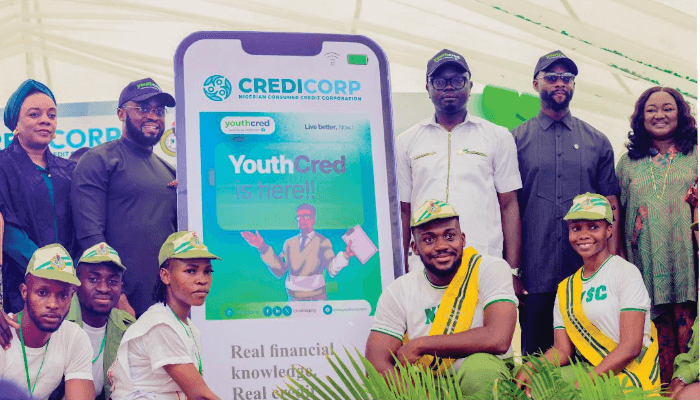
The Federal Government has opened a new lending window for young business owners, and this time, the usual demand for collateral and audited accounts is off the table.
On Wednesday, the Minister of Finance and Coordinating Minister of the Economy, Taiwo Oyedele, launched the YouthCred for Entrepreneurs programme in Abuja. Under the scheme, eligible young Nigerians can access loans of between N200,000 and N2 million to start, sustain, or expand their businesses. No collateral. No guarantor. No audited financial statements.
For the thousands of tailors, mechanics, caterers, content creators, and ride-hailing drivers who have spent years locked out of bank credit simply because they don’t have a title deed or a company account showing three years of audited profit, this is the kind of announcement that gets forwarded around WhatsApp groups within minutes.
What YouthCred for Entrepreneurs Actually Is
YouthCred isn’t a brand-new government idea pulled out of thin air. It’s the third phase of a consumer credit programme that the Nigerian Consumer Credit Corporation, known as CREDICORP, has been building since late 2024. The first two phases targeted NYSC members and salaried young workers, giving them access to credit for mobility and digital tools. This phase turns its attention to something arguably harder to finance: small businesses run by people who don’t fit neatly into a bank’s risk model.
Oyedele explained why the programme exists at all. Many young business owners, he said, are unable to access conventional bank loans because they lack collateral, don’t keep audited financial records, or haven’t formally registered their business. That’s not a small group. It’s most of Nigeria’s micro and small enterprises.
CREDICORP’s Managing Director, Uzoma Nwagba, put some numbers behind the ambition. The corporation has already facilitated more than N47 billion in consumer credit for over 301,000 Nigerians in the past two years, and says it has kept a zero percent non-performing loan rate through that stretch. He wants YouthCred for Entrepreneurs to reach 500,000 beneficiaries in this phase, with a longer-term target of one million Nigerians by the end of the year.
“Hardworking young Nigerians deserve structured credit, not charity,” Nwagba said at the launch. Oyedele echoed that framing, urging applicants to see the loan as exactly that: a loan, to be repaid, not a handout or an entitlement.
Who Can Apply
The age bracket has shifted slightly across different announcements, with some officials citing 18 to 35 and others 18 to 39, so it’s worth confirming the exact cutoff on the CREDICORP platform when you apply. Beyond age, the core requirements are:
- You must own or run a business, whether formally registered or not
- You need to show your business generates real income
- You should be able to demonstrate the ability to repay the loan
- A reasonably clean credit history helps, though the absence of one won’t automatically disqualify you
The scheme is explicitly designed to catch people conventional banks tend to overlook. CREDICORP has named several categories of small business owners it’s targeting: caterers, makeup artists, fashion designers and tailors, ride-hailing drivers, content creators, mechanics, and young farmers, alongside NYSC members and other micro and small business operators.
How Much You Can Get, and What It Depends On
The loan band runs from N200,000 at the low end to N2 million at the top. Where you land inside that range isn’t fixed. It comes down to your business’s cash flow, your repayment capacity, and your credit behaviour. Someone running a small tailoring shop with steady weekly income and no red flags on their credit file is naturally in a stronger position than someone applying with no track record at all.
There’s a built-in incentive to treat the first loan well. Beneficiaries who repay on time, keep a clean credit record, and complete the financial literacy training available on the platform become eligible for larger amounts down the line. In other words, this isn’t a one-off disbursement; it’s the start of a credit relationship, and the government wants people to build it up rather than cash out once.
Repayment periods run from one to 12 months, and applicants choose whatever timeline suits their business cycle. A farmer with seasonal income might need a longer runway than a content creator with more predictable monthly earnings.
How to Apply
Applications don’t go through a government office or a physical counter. They’re processed through financial institutions participating in the YouthCred programme, which plugs into CREDICORP’s broader credit infrastructure.
Here’s the general flow:
- Confirm you meet the age and business-ownership requirements
- Apply through one of the participating financial institutions under the YouthCred scheme
- Submit the personal and business information required for credit assessment
- Go through the evaluation, which looks at your cash flow, credit history, and repayment capacity
- Receive approval and disbursement if your application is successful
Because the programme is still fresh, off the back of a Wednesday launch, the list of participating institutions and the exact application portal are things to verify directly rather than rely on secondhand information. Scammers tend to move fast whenever a government loan scheme makes headlines, so treat any link asking for upfront “processing fees” with suspicion. CREDICORP has not indicated that legitimate applications require payment.