The figure of $65,000 is enough to make any ambitious entrepreneur stop scrolling and take a second look, especially at a time when access to serious business funding remains one of the biggest hurdles facing startups across Nigeria and West Africa. Yet behind the headline lies a competition that goes beyond a simple promise of money, with a defined application window, specific eligibility requirements, selected business sectors, a regional selection process and a final stage where only the strongest applicants will remain standing.
For Nigerian entrepreneurs watching the opportunity closely, the real question is not simply how much money is attached to the programme, but whether their business fits the rules, whether they can prove its potential and whether they can present their story strongly enough to survive the selection process.
The opportunity currently open to startups
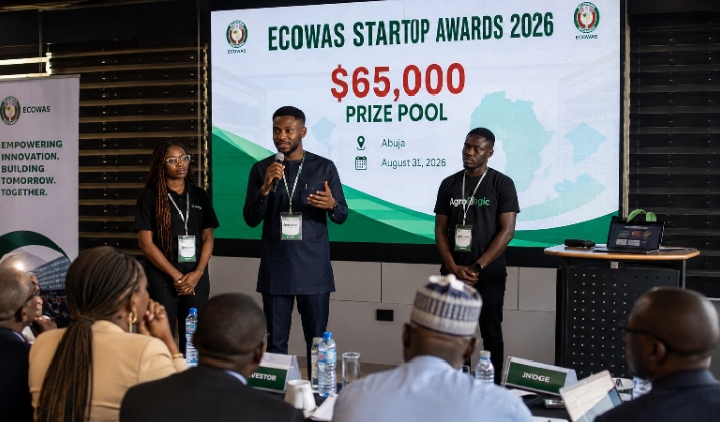
The Economic Community of West African States, ECOWAS, has opened applications for the 2nd edition of the ECOWAS Startup Awards, creating a fresh opportunity for innovative businesses across the region to compete for recognition, exposure, business support and a combined cash prize pool of $65,000. Applications officially opened on August 3, 2026, giving eligible entrepreneurs a limited period to prepare their documents, present their businesses and submit their entries before the closing date of August 31, 2026 at 10:59 p.m. GMT. The timing matters because the opportunity is not an open ended funding window where entrepreneurs can submit applications whenever they are ready, meaning anyone considering the programme has a specific deadline to work towards.
The programme is designed around startups that are contributing to innovation, digital transformation, regional integration and sustainable economic development within West Africa. That description immediately places the opportunity in a different category from ordinary business support programmes that may accept almost any type of small business. ECOWAS is looking for businesses with a working product or service, evidence that the business has moved beyond the idea stage and the potential to grow within a market that extends beyond a single community. For Nigerian entrepreneurs, the opportunity therefore sits at the intersection of funding, recognition, regional exposure and access to a broader entrepreneurial ecosystem.
What the $65,000 really means
The most important clarification concerns the $65,000 figure itself because the amount circulating in viral descriptions can easily create the impression that ECOWAS is offering $65,000 to every successful Nigerian applicant. That is not how the programme is structured. The $65,000 represents the entire cash prize pool for the competition, with the money divided between the top 3 startups that emerge from the regional competition. The winner receives $30,000, the 1st runner up receives $20,000 and the 2nd runner up receives $15,000, bringing the total to exactly $65,000.
That distinction changes the way entrepreneurs should look at the application. This is not a situation where a qualifying applicant submits a form and later receives a fixed amount of funding from ECOWAS. It is a competitive awards programme in which startups have to pass through a selection process before reaching the stage where the cash prizes are decided. The prize therefore belongs to the strongest businesses that make it through the competition, rather than to every company that meets the initial eligibility requirements. Anyone approaching the programme should understand that difference from the beginning because it affects everything from the documents submitted to the way the business is presented.
The August 31 deadline matters
Applications for the 2026 edition opened on August 3, 2026, while the application portal states that submissions close on August 31, 2026 at 10:59 p.m. GMT. That gives applicants a clearly defined window to complete the process, but the deadline should not be treated as an invitation to wait until the final hours before submitting. Businesses applying for a competitive programme of this nature have several pieces of information to organise, including identification documents, business records, financial information, a business plan, a pitch deck and a pitch video.
A rushed application can create avoidable problems, particularly when a founder has to gather documents from different sources or prepare a business plan from scratch. Businesses that already maintain proper financial records, registration documents, customer information and evidence of business activity will have an easier starting point than applicants who have never organised their business information. The August 31 deadline therefore represents more than a date on the calendar because it marks the point at which the opportunity closes and the selection process moves forward without late submissions.
Nigerian startups are eligible
Nigeria is one of the ECOWAS member states, which means Nigerian startups are eligible to participate in the regional competition provided they satisfy the stated requirements. The opportunity is therefore not restricted to startups from a particular West African country, nor does a Nigerian founder need to leave Nigeria to submit an application. The programme is structured as a regional competition involving eligible startups from ECOWAS member states, giving Nigerian entrepreneurs the opportunity to compete on a wider West African stage.
Nationality alone, however, does not make an applicant eligible. The programme requires more than simply being a citizen of an ECOWAS country. The startup itself must meet the operational requirements, including registration and location within an ECOWAS country, a minimum operating history of 2 years, a working product or service and evidence of market traction or scalability. This means an entrepreneur should assess the business against the full criteria before investing time in the application rather than assuming that Nigerian citizenship automatically guarantees qualification.
The basic eligibility requirements
The current requirements point toward startups that have already demonstrated that their businesses can operate beyond the concept stage. Applicants must be citizens of an ECOWAS member state and must operate a startup that is registered and based within an ECOWAS country. The business must also have been operating for at least 2 years, which immediately removes many newly launched ventures from consideration even if those businesses have promising ideas or strong founders.
A working product or service is another major requirement because the programme is not structured as an idea competition. Applicants are expected to show that the business has something functioning that customers or users can interact with, purchase or benefit from. Market traction or scalability also matters because the competition is interested in businesses capable of demonstrating growth potential. An entrepreneur with a registered company but no working product, no evidence of activity and no credible path toward growth may therefore struggle to satisfy the substance of the programme even if the company exists legally.
The 6 sectors at the centre of the programme
ECOWAS has identified 6 priority sectors for the Startup Awards, giving applicants a clear indication of the types of innovation the programme is seeking. These areas are EdTech and Skills Development, FinTech, HealthTech, AgriTech and Food Systems, CleanTech, Climate and Green Innovation, plus Tourism, Hospitality and TravelTech. A startup applying should therefore be able to explain clearly how its product or service fits within one of these areas rather than attempting to force an unrelated business into the programme.
EdTech and Skills Development covers technology driven solutions designed to improve education, learning, training and skills acquisition. FinTech focuses on technology based financial solutions, while HealthTech covers innovations designed to improve healthcare delivery or solve problems within the health sector. AgriTech and Food Systems focuses on technology and innovation within agriculture, food production and related systems. CleanTech, Climate and Green Innovation covers environmental sustainability, climate related challenges and green technology, while Tourism, Hospitality and TravelTech focuses on innovative solutions serving travel, tourism and hospitality.
Who may struggle to qualify
The eligibility requirements make it clear that the programme is not designed for every business owner simply because the business generates income. Someone operating a newly established business with less than 2 years of operating history should not assume that a good idea will overcome the requirement. The same applies to an informal venture without the necessary evidence of registration or documentation, a business without a working product or service and a conventional business that does not fit within the programme’s priority sectors.
An entrepreneur should also avoid confusing the size of a business with the quality of a startup application. A small startup can still be competitive if it has a strong solution, clear market demand, evidence of traction and a convincing growth story. Conversely, a larger business does not automatically become a strong candidate simply because it has more revenue or employees. The programme is assessing innovation, execution, market potential, financial viability and impact, meaning the quality of the underlying business case matters considerably.
The documents applicants need
The application process requires applicants to provide documentation that allows the organisers to understand both the founder and the business. These requirements include a national passport or ECOWAS approved identity document belonging to the lead founder, a recent passport photograph and business registration documentation where applicable. Applicants are also expected to provide financial information covering 2 years, which can take the form of financial statements, management accounts or projections depending on the circumstances of the business.
The application also requires a business plan with a maximum length of 10 pages, a pitch deck with a maximum of 10 slides and a 1 minute pitch video. The pitch video can be submitted in MP4, MOV or WebM format and has a maximum file size of 100MB. These requirements tell applicants something important about the level of preparation expected from the organisers. This is not simply a registration form where a founder writes a short description of a business and waits for a response. The organisers want enough information to assess the business, its market, its finances, its team and its potential.
The business plan requirement
The business plan is limited to 10 pages and the stated formatting requirement is single spaced, Times New Roman, size 12. That restriction forces applicants to become selective about what they include because there is not unlimited space to explain every detail of the company. A strong business plan needs to communicate the central problem, the proposed solution, the target market, the business model, the competitive position, the growth strategy and the wider impact of the startup without becoming unnecessarily complicated.
The founder should also make sure that the claims made in the business plan can be supported by evidence. If a startup claims to have thousands of customers, there should be records that can support the claim. If the company describes rapid growth, the financial information should not tell a completely different story. The strongest application is likely to be one where the documents reinforce each other rather than presenting disconnected versions of the same business.
The pitch deck
The pitch deck has a maximum of 10 slides, creating another test of the founder’s ability to communicate clearly. A pitch deck should allow someone who has never encountered the company before to understand what the business does, who it serves, what problem it solves, how it makes money and why it has room to grow. The limited slide count means that every slide has to serve a purpose rather than simply filling space with text.
A startup can have an excellent product and still struggle if the founder cannot explain it clearly. The pitch deck therefore becomes more than a presentation document because it gives judges a quick view of the business opportunity. Numbers such as customer growth, revenue, market size and user activity can be useful when they are accurate and relevant. The objective should be clarity because a complicated presentation can make a promising business appear less convincing than it actually is.
The 1 minute pitch video
The 1 minute pitch video creates another opportunity for founders to communicate the heart of the business. With such a short time available, the applicant cannot afford to spend most of the video on greetings or lengthy personal introductions. The video needs to quickly establish the problem, explain the solution and give the viewer a reason to believe that the startup has potential.
The technical requirements also matter because the application specifies acceptable formats of MP4, MOV or WebM and a maximum file size of 100MB. Founders should therefore check the final file before submission rather than discovering at the deadline that the video cannot be uploaded. A clear recording with understandable audio and a confident explanation can communicate the founder’s ability to execute far better than a complicated production that distracts from the actual business.
How the selection process works
The selection process is divided into national and regional stages, creating a pathway through which startups can progress from their individual applications to the wider ECOWAS competition. Each ECOWAS member state will nominate half of its allocated slots, while the remaining half will come through open public applications. That public application route is particularly important for founders because it means a startup does not necessarily need to secure a government nomination before entering the competition.
The structure also means that applicants should not think of the initial application as the final contest. Reaching the next stage will require the business to stand out against other startups within the regional programme. The selection process therefore gives importance to the quality of the application from the very beginning because the documents submitted become part of the evidence used to determine which businesses deserve to progress.
The 60 startup target
The programme is expected to select 60 startups from across the ECOWAS region. That figure gives applicants a useful sense of the scale of the competition because the $65,000 prize pool is not being distributed across hundreds or thousands of successful businesses. A relatively limited group of startups will move into the programme, meaning the application needs to communicate why the business deserves to be among those selected.
For a Nigerian founder, the regional nature of the competition also creates a different kind of opportunity. A startup that demonstrates a solution capable of expanding beyond Nigeria may have a stronger regional story than one whose entire growth plan is limited to a single local market. This does not mean every business must already operate across West Africa, but a credible explanation of how the solution could serve wider markets can make the startup’s scalability easier to understand.
What happens after the first selection
Startups that make it through the selection process will enter a programme that includes virtual masterclasses, startup clinics, pitch competitions, exhibitions, investor deal rooms, policy discussions, networking opportunities and the regional final. The virtual masterclasses are scheduled for September 21 to September 25, 2026, giving selected founders an opportunity to participate in the educational phase before the physical programme begins.
The physical programme in Abuja is scheduled for September 28 to September 30, 2026, with the regional final scheduled for September 30. This stage brings together founders and other participants within a more concentrated environment where businesses can present their ideas, build relationships and take part in activities connected to the regional startup ecosystem. The programme therefore offers opportunities that extend beyond the eventual cash prize.
The 8 judging criteria
The judging framework provides one of the clearest indications of what applicants should focus on. Problem clarity and solution fit account for 20 percent of the score, while innovation and originality also account for 20 percent. Team capacity and execution ability carry 15 percent, market potential and scalability carry 10 percent, business model and financial viability carry 10 percent, social and economic impact carry 10 percent, alignment with ECOWAS priorities carry 10 percent and pitch, online voting and data integrity account for 5 percent.
The scoring shows that an impressive idea by itself is not enough. A founder needs to demonstrate that the problem is real, that the proposed solution addresses it effectively and that the business has the team required to execute the plan. Financial viability also matters because the judges need to see how the business can sustain itself, while scalability determines whether the solution has room to expand. The scoring structure gives applicants a practical framework for checking whether their application has addressed the areas that will ultimately influence the outcome.
The $30,000 top prize
The startup that emerges as the overall winner receives $30,000, making the first prize the largest individual cash award in the competition. For a growing startup, that amount can potentially support product development, market expansion, technology upgrades, hiring, customer acquisition or other business priorities, depending on the company’s needs and the rules governing the award.
Winning the top prize would also place the startup at the centre of the programme’s regional recognition. The value of that recognition can be particularly important for a young company seeking partnerships, customers or investor attention. A founder should therefore approach the competition with a broader objective than simply winning cash because the platform can potentially help position the business within the wider West African innovation ecosystem.
The $20,000 runner up prize
The 1st runner up receives $20,000, which represents a substantial award in its own right and reinforces the competitive structure of the programme. The difference between the top prize and the 1st runner up prize does not remove the value of reaching the final stage because selected startups can also gain access to visibility, networking, investor connections and other programme opportunities.
A startup reaching this stage has already demonstrated enough quality to compete among a limited group of regional finalists. For founders, that recognition can become useful when approaching customers, partners and investors after the programme. The competition therefore has value at several levels, with the cash prize representing one part of a broader package available to successful startups.
The $15,000 second runner up prize
The 2nd runner up receives $15,000, completing the $65,000 cash prize pool. Although this is the smallest of the 3 cash awards, it remains a meaningful amount for a startup seeking resources to strengthen its operations or pursue a new stage of growth. The prize structure gives the top 3 startups a financial reward while also recognising the wider achievement of reaching the final stage of a regional ECOWAS competition.
The cash prizes should nevertheless be viewed within the full programme rather than in isolation. A founder who enters purely because of the possibility of receiving money may overlook some of the other opportunities available through the programme. Investor access, mentorship and regional networking can be particularly useful for startups that are already preparing for their next stage of expansion.
The benefits beyond the cash
Selected startups can receive regional visibility, investor access, networking opportunities, mentorship and acceleration support. The programme includes investor deal rooms that can create opportunities for founders to connect with potential investors, while networking activities can bring entrepreneurs into contact with policymakers, development partners and other business leaders within the ECOWAS ecosystem.
The programme also includes a 6 month post award acceleration and mentorship component, giving successful startups continued support after the competition. Participants can also receive access to digital tools, including computers, accessories and software. These benefits make the opportunity more substantial than a single day of pitching for a cash award because the programme is designed to provide continued support around the businesses that make it through the process.
History behind the 2026 edition
The 2026 ECOWAS Startup Awards is the 2nd edition of the initiative. The inaugural edition took place in Niamey, Niger, in November 2021, making the current programme a return of an initiative that has previously brought West African startups into a regional competition. The 2026 edition therefore builds on an earlier ECOWAS startup awards framework while presenting a fresh opportunity for businesses across the region.
For entrepreneurs, the history provides useful context because the programme is not simply a newly announced online promotion created around a viral funding claim. It sits within a broader ECOWAS effort to recognise innovative businesses and strengthen entrepreneurship across West Africa. The 2026 application cycle is therefore part of a structured regional initiative with defined stages, eligibility requirements and a formal competition process.
What Nigerian founders should do before applying
A Nigerian entrepreneur considering the opportunity should first compare the business against every eligibility requirement rather than beginning with the application form. The founder should establish whether the startup has operated for at least 2 years, whether the business is properly registered and based within an ECOWAS country, whether there is a working product or service, whether the business can demonstrate traction or scalability and whether the solution fits one of the 6 priority sectors.
The next stage should be document preparation. Financial records covering 2 years, business registration documents, founder identification, the business plan, pitch deck and pitch video should be prepared carefully and checked for consistency. A founder should also make sure that the figures presented in the business plan match the financial information and that the pitch deck tells the same story as the application. Small inconsistencies can create unnecessary questions when a business is being evaluated competitively.
The danger of fake application agents
Because the opportunity has attracted attention around the $65,000 figure, applicants should be careful about unofficial individuals claiming that they can guarantee selection or secure the prize for a fee. A legitimate competition does not become more legitimate because someone contacts an entrepreneur through WhatsApp, Telegram or social media and offers to process an application in exchange for money.
The safest approach is to begin with the official ECOWAS Startup Awards application portal and follow the instructions provided there. The current application information does not state that applicants are required to pay an application fee, so any person demanding a registration fee, verification payment, activation charge or guaranteed selection fee should be treated with caution. Entrepreneurs should avoid sending money or sensitive documents to unverified agents simply because they promise to improve the chances of winning.
The real meaning of the opportunity
The ECOWAS Startup Awards represents a genuine opportunity for qualifying startups, but its value becomes clearer when the viral description is stripped away. The programme is not a general offer of $65,000 to every Nigerian business owner. It is a regional startup competition with 60 expected startup selections, 6 priority sectors, a defined eligibility framework and 3 cash prize positions worth a combined $65,000.
The opportunity becomes particularly relevant for founders whose businesses already have operating history, a working product, market traction and a credible path toward growth. Such businesses are not simply entering a funding application because they need money, they are presenting a case for why their solution deserves regional recognition. That distinction matters because the programme is built around competition, assessment and selection rather than automatic disbursement.
What the deadline means for applicants
With applications closing on August 31, 2026 at 10:59 p.m. GMT, entrepreneurs who intend to participate have a clear final date to work towards. The application should be treated as a serious business presentation rather than a last minute form. A founder who waits until the final hours may discover that financial documents are incomplete, the pitch video exceeds the permitted file size or the business plan still needs major revisions.
The strongest approach is to use the remaining application period to check every requirement against the startup itself. The founder should confirm eligibility, prepare the supporting documents, refine the business plan, reduce the pitch deck to its most important points and rehearse the 1 minute pitch. The objective is not simply to submit before the deadline but to submit an application that gives the judges a clear picture of why the business deserves consideration.
The bottom line for Nigerian entrepreneurs
The ECOWAS Startup Awards 2026 is a real regional startup competition with applications open from August 3, 2026 until August 31, 2026 at 10:59 p.m. GMT. Nigerian startups are eligible to participate provided they satisfy the programme requirements, including the 2 year operating history, registration and location requirements, working product or service, evidence of market traction or scalability and alignment with one of the 6 priority sectors.
The $65,000 figure is genuine, but it represents the total cash prize pool rather than an individual grant. The winner receives $30,000, the 1st runner up receives $20,000 and the 2nd runner up receives $15,000. Beyond the money, selected startups can gain regional visibility, investor exposure, networking opportunities, mentorship, acceleration support and access to digital tools, making the programme relevant to founders who are looking beyond immediate financial assistance.
For any Nigerian entrepreneur considering an application, the opportunity is worth approaching with preparation rather than excitement alone. The competition rewards businesses that can explain a real problem, present an innovative solution, demonstrate the ability to execute, show market potential and connect their work to wider ECOWAS priorities. The application window is already open, the deadline is fixed and the competition will ultimately narrow a large pool of businesses down to a much smaller group of selected startups before the regional final in Abuja on September 30, 2026. The next move for an eligible founder is therefore straightforward: check the requirements carefully, assemble the evidence, prepare the application properly and submit through the official portal before the August 31 deadline.