Across Nigeria’s social impact space, a new funding story is beginning to attract attention, although the details become more interesting once the announcement is examined beyond the headline. The NNPC Limited and FIRST Exploration and Petroleum Development Company Joint Venture has introduced Impact FIRST: Heritage, a programme built around a different approach to supporting organisations that have spent years working on difficult social problems.
The initiative arrives with a carefully selected group of beneficiaries, a history that stretches back to 2024, and a funding philosophy that could prove more important than the amount attached to any single grant.
For Nigerian NGOs watching the funding landscape closely, the real question is not simply who received money in 2026, but why these organisations were chosen, what their previous work reveals, and what the latest programme says about the direction of corporate social investment in Nigeria.
The New Programme Taking Shape
The roots of Impact FIRST can be traced to 2024, when the NNPC Limited and FIRST E&P Joint Venture launched the initiative to support Nigerian NGOs working across important areas of social development. The first edition supported 5 organisations with more than ₦50 million, creating the foundation for what would later become a broader funding platform. The beneficiaries at the time included The IREDE Foundation, Cerebral Palsy Centre, OISA Foundation, Human Development Initiatives and Niola Cancer Care Foundation. Each organisation approached social challenges from a different angle, showing from the beginning that the programme was not confined to a single area of intervention.
That first edition also created an important reference point for what would eventually become Heritage. Rather than focusing exclusively on large organisations with established national profiles, Impact FIRST was built around practical social interventions capable of producing identifiable outcomes. The organisations worked across disability support, healthcare, education, community development and other areas where targeted funding could translate into direct assistance for vulnerable groups. The experience of the 2024 cohort would later become relevant because some organisations returned to the programme, creating a pattern in which previous performance became part of the story.
The Expansion Came In 2025
The second edition in 2025 showed just how quickly the initiative had expanded. The number of supported organisations rose from 5 in 2024 to 12 in 2025, while the amount committed increased substantially. More than ₦287 million was reported for the 2025 programme, while a detailed FIRST E&P announcement placed the grant figure at ₦298 million. The beneficiaries included Asido Foundation, Health Emergency Initiative, Sickle Cell Foundation Nigeria, Raising Star African Foundation, The IREDE Foundation, Cerebral Palsy Centre, FREEE Environmental Sustainability & Clean Climate Initiatives, FATE Foundation, Street 2 School, HANDS, Chrysalis Youth Foundation and Glow Initiative for Economic Empowerment.
The projects attached to those organisations reveal the kind of measurable impact that has characterised Impact FIRST. Chrysalis Youth Foundation, for example, received support connected to the training of 32 teachers who would subsequently mentor 640 students in Delta State, while FATE Foundation was linked to training 1,000 entrepreneurs through AI driven learning management systems. Glow Initiative for Economic Empowerment planned to train 200 young people in solar power installation, while The IREDE Foundation planned support involving prosthetic limbs for 15 child amputees. HANDS also presented a major healthcare intervention involving 36,000 eye screenings and 1,200 cataract surgeries, while FREEE Environmental Sustainability & Clean Climate Initiatives planned to produce 12,600 sandals from recycled tyres.
Heritage Brings A New Direction
The arrival of Impact FIRST: Heritage in 2026 adds another layer to the programme because the focus is no longer simply on identifying organisations for an annual grant cycle. Heritage is designed around multi year support for organisations that have already demonstrated strong institutional governance, measurable impact, sustainable programme delivery, accountability and the ability to scale responsibly. That creates a different relationship between funder and beneficiary because the organisation is being viewed not merely as the operator of a single project, but as an institution capable of producing social value over a longer period.
The significance becomes clearer when the progression is placed side by side. The 2024 edition began with 5 NGOs and more than ₦50 million, the 2025 edition expanded to 12 NGOs with more than ₦287 million reported and ₦298 million stated in a detailed FIRST E&P release, while the 2026 Heritage edition introduces 5 inaugural beneficiaries under a multi year framework. The numbers tell part of the story, but the structure tells another part. Impact FIRST has moved from establishing a grant platform toward developing a mechanism for sustained relationships with organisations that have demonstrated what they can accomplish.
Why Heritage Matters
The word Heritage carries significance within the programme because the initiative is positioned around continuity, institutional development and sustained impact. A conventional project grant can provide resources for an organisation to complete a particular intervention, after which the organisation must begin searching for another source of financing. A multi year relationship can offer a different level of predictability, allowing an organisation to think beyond the immediate project cycle and focus on institutional strengthening, programme expansion, better systems and deeper community reach.
That does not mean every organisation receiving support will automatically receive the same amount for the same period. The available information does not provide a public figure establishing a universal grant amount or a fixed duration such as 3 years or 5 years for every beneficiary. What can be established is that Heritage introduces multi year support and is aimed at high impact organisations that have already demonstrated their capacity. The careful distinction is important because it prevents the programme from being presented as a public cash distribution exercise when its structure is closer to strategic social investment.
The 5 Heritage Beneficiaries
The inaugural Heritage cohort consists of 5 organisations, each working in an area with a clear social development dimension. The IREDE Foundation focuses on children living with limb loss and provides prosthetic limbs alongside related support services. Asido Foundation works in mental health, including rehabilitation and reintegration for people facing severe mental health challenges. Cerebral Palsy Centre provides long term care and support services for people living with cerebral palsy, while Health and Development Support Programme, known as HANDS, works particularly in healthcare and eye care interventions. Health Emergency Initiative, known as HEI, focuses on emergency healthcare and strengthening first responder capacity.
The selection becomes particularly revealing when the organisations are viewed through the history of Impact FIRST. The IREDE Foundation and Cerebral Palsy Centre were beneficiaries in the 2024 edition and returned during the 2025 funding ecosystem. Asido Foundation and HEI were also among the 2025 beneficiaries, while HANDS was part of the 2025 programme and had a major healthcare intervention attached to its funding. The recurrence of several names indicates that Heritage is closely connected to previous programme experience, rather than being a completely separate competition detached from earlier Impact FIRST activity.
The IREDE Foundation
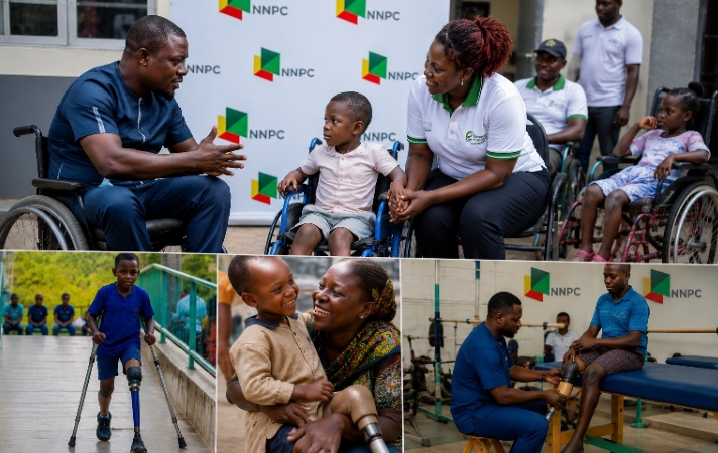
The IREDE Foundation stands out because its journey through Impact FIRST provides one of the clearest illustrations of the Heritage concept. The organisation works with children living with limb loss and supports access to prosthetic limbs and other services that can improve mobility, independence and quality of life. Its work addresses a need that requires more than a single moment of intervention because children grow, circumstances change and access to appropriate support can remain difficult for families.
The organisation appeared among the beneficiaries of the 2024 programme and returned during the 2025 cycle, while its 2025 intervention included plans to provide prosthetic limbs for 15 child amputees. Its selection for Heritage therefore places a longer term framework around an organisation that has already passed through earlier stages of the Impact FIRST programme. The journey provides a useful indication of how sustained performance may connect with the new model, particularly when an organisation can demonstrate the people reached, the intervention delivered and the broader value generated through its work.
Asido Foundation
Asido Foundation brings mental health into the centre of the Heritage programme. Its work includes rehabilitation and reintegration for people experiencing serious mental health challenges, including interventions connected to mentally ill homeless people. Mental health remains an area where sustained programmes can be particularly important because rehabilitation, reintegration and continued support cannot always be completed within a short project window.
The organisation was among the beneficiaries of the 2025 Impact FIRST programme before becoming part of the inaugural Heritage cohort. That progression places Asido within the broader pattern of organisations moving from demonstrated project delivery toward a longer relationship. Its selection also reinforces the diversity of the programme, showing that Heritage is not restricted to conventional infrastructure projects or easily visible community interventions, but can support specialised organisations addressing complex human needs.
Cerebral Palsy Centre
Cerebral Palsy Centre represents another area where long term institutional support can have particular importance. The organisation provides care and support services for people living with cerebral palsy, working within a field where families can require sustained assistance rather than temporary intervention. Its inclusion in both the earlier Impact FIRST editions and the inaugural Heritage programme makes it one of the clearest examples of continuity within the funding structure.
The organisation was one of the 5 beneficiaries in 2024 and was again included among the 2025 beneficiaries. Its return in 2026 shows how the programme has retained a connection with organisations that have already participated in its ecosystem. The Heritage framework can therefore be viewed as a deeper stage for selected organisations whose previous activities have provided evidence of their ability to implement programmes, reach beneficiaries and maintain the institutional capacity needed to handle longer term support.
HANDS
Health and Development Support Programme, commonly known as HANDS, adds a strong healthcare dimension to the Heritage cohort, particularly through its work in eye care. Its 2025 Impact FIRST project included targets of 36,000 eye screenings and 1,200 cataract surgeries, figures that demonstrate the programme’s interest in measurable outputs rather than broad statements of intention. Eye care interventions also provide a clear way of tracking the relationship between resources committed and people directly reached.
The inclusion of HANDS in Heritage after its 2025 participation places the organisation within the same progression seen among several other beneficiaries. Its previous project gives the funder an opportunity to assess practical delivery, while its sector focus demonstrates how social investment can be connected to specific health outcomes. The combination of a defined intervention, a measurable target and a large potential beneficiary base fits closely with the wider philosophy visible across Impact FIRST.
Health Emergency Initiative
Health Emergency Initiative, known as HEI, focuses on emergency healthcare and efforts to strengthen first responder capacity. Its work addresses situations where the difference between immediate intervention and delayed assistance can be significant, particularly for accident victims and other people requiring urgent medical support. The organisation was among the beneficiaries of the 2025 Impact FIRST programme, receiving support connected to medical assistance for accident victims.
Its selection for Heritage adds emergency healthcare to a cohort that already includes disability support, mental health and eye care. The organisation’s previous involvement also reinforces the importance of established programme experience within the new model. Rather than introducing 5 organisations with no relationship to the earlier Impact FIRST programme, the Heritage cohort largely draws from organisations that have already demonstrated their ability to operate within the programme’s funding environment.
What The Selection Reveals
The 5 beneficiaries share a number of characteristics that help explain the direction of Heritage. They have established interventions, identifiable target groups, measurable programmes and previous experience within Impact FIRST. Their work also covers areas where social impact can be demonstrated through tangible outcomes, whether that involves prosthetic limbs, rehabilitation, healthcare services, eye screenings, cataract surgeries or emergency assistance.
That pattern is important for Nigerian NGOs because it offers a clearer picture of the qualities associated with the Heritage model. The evidence from the programme suggests that a compelling idea alone is not enough to establish a strong position. Institutional governance, accountability, evidence of previous impact, sustainable programme delivery and the capacity to scale responsibly appear to form an important part of the framework used to identify organisations for longer term support.
The Programme Has Reached More Than 20,000 People
The wider Impact FIRST initiative has now supported 15 NGOs since its launch in 2024 and has reached more than 20,000 beneficiaries, according to the programme’s latest description. That figure places the 2026 Heritage announcement within a broader story rather than treating it as an isolated corporate funding event. The programme has evolved through different editions, increased the number of participating organisations, expanded its financial commitment and now introduced a multi year structure.
The progression from 2024 through 2026 also demonstrates why the history of the programme matters. The first edition established the platform, the second edition significantly expanded participation and funding, while Heritage now places emphasis on organisations with a demonstrated record. For anyone following the Nigerian NGO funding ecosystem, the sequence provides useful context because the latest development is easier to understand when viewed as the third stage of a programme that has been building its own institutional history.
The Areas Covered By Impact FIRST
Healthcare has featured strongly within Impact FIRST, with previous projects covering eye care, cataract surgery, emergency healthcare, mental health and disability support. The programme has also supported interventions involving prosthetics, showing that healthcare funding can extend beyond conventional medical treatment into services that affect long term independence and quality of life. This broad approach allows organisations working on different sides of the healthcare system to participate within the wider social investment framework.
Education and economic empowerment have also featured prominently, with projects involving school improvement, teacher training, entrepreneurship, youth skills and solar installation training. Environmental initiatives have equally appeared through projects focused on recycling, climate action and the reuse of waste materials. Community development forms another part of the wider landscape, making Impact FIRST broader than a programme dedicated to a single social sector or one particular type of beneficiary.
What The 2025 Projects Tell Us
The 2025 projects provide some of the clearest evidence of the programme’s preference for defined outcomes. Chrysalis Youth Foundation’s project involved 32 teachers with a planned reach of 640 students, while FATE Foundation’s programme targeted 1,000 entrepreneurs through AI driven learning systems. Glow Initiative for Economic Empowerment planned to train 200 young people in solar power installation, creating a direct connection between training and economic opportunity.
Other projects were equally specific. The IREDE Foundation planned prosthetic support for 15 child amputees, HANDS planned 36,000 eye screenings and 1,200 cataract surgeries, while FREEE Environmental Sustainability & Clean Climate Initiatives planned to produce 12,600 sandals from recycled tyres. These numbers matter because they provide a measurable basis for assessing what funding is expected to achieve. They also help explain why organisations with established systems for tracking beneficiaries and outcomes may be better positioned for sustained partnerships.
Is There An Open Application Window?
This is where the latest announcement requires careful attention. Impact FIRST: Heritage should not currently be described as a general public application window where every Nigerian NGO can submit an application and expect consideration for a fixed amount. The inaugural 5 beneficiaries have already been selected following an assessment process, while no current public application deadline or universal application portal has been announced in the material surrounding the launch.
That means an NGO seeing headlines about the programme should resist the temptation to treat the announcement as an immediate application opportunity. The more accurate description is that NNPC Limited and FIRST E&P have launched a new multi year funding programme for high impact Nigerian NGOs and have selected 5 organisations as the inaugural Heritage beneficiaries. Future opportunities may emerge, but a current universal application process should not be presented as confirmed without an official announcement.
Is There A Confirmed Heritage Amount?
The financial value of the 2026 Heritage commitment has not been publicly disclosed in the material available for the latest announcement. That makes it difficult to attach a single headline figure to the programme without risking an inaccurate representation. The confirmed figures belong to the earlier Impact FIRST editions, with more than ₦50 million distributed in 2024 and more than ₦287 million reported for 2025, alongside a detailed FIRST E&P figure of ₦298 million.
The distinction becomes especially important because multi year funding can create assumptions about the total value of a programme. A multi year partnership does not automatically mean that every beneficiary receives a publicly stated fixed amount for a publicly stated number of years. Until NNPC Limited or FIRST E&P releases those specific figures and terms, the safest fact based description remains that Heritage is a multi year support model for selected high impact Nigerian NGOs.
What NGOs Can Learn From Heritage
Nigerian NGOs looking toward future opportunities can draw useful lessons from the organisations selected for Heritage. A properly established organisation needs more than a strong mission statement, because funders assessing longer term partnerships are likely to examine governance, financial accountability, programme delivery and the ability to document results. A clear record of beneficiaries reached can be particularly useful because it transforms claims of impact into evidence that can be reviewed and evaluated.
Sustainability is another important consideration. Organisations seeking larger or longer term partnerships need to demonstrate how their programmes work beyond a single intervention and how additional resources can increase reach without weakening delivery. The previous Impact FIRST projects suggest that measurable targets, clearly defined beneficiaries and practical outcomes are valuable elements of a strong funding proposition. For NGOs preparing for future opportunities, building reliable reporting systems and maintaining transparent records can therefore be as important as developing the project itself.
The Heritage Model In Perspective
The development is best understood as an evolution of corporate social investment rather than a simple announcement of another annual grant. Impact FIRST began in 2024 with 5 NGOs, expanded to 12 NGOs in 2025 and has now introduced Heritage as a multi year framework for selected organisations. The journey shows increasing emphasis on continuity, institutional strength and measurable social outcomes.
For the organisations involved, the potential value of a longer relationship extends beyond the immediate financial support. Predictable support can allow an organisation to plan programmes more confidently, improve internal systems, strengthen staff capacity, expand successful interventions and build a stronger evidence base around its work. The precise terms of each Heritage partnership remain important, but the structure itself represents a notable development in how the NNPC Limited and FIRST E&P Joint Venture is approaching NGO support.
The Bigger Picture
Impact FIRST: Heritage arrives after 2 years of experimentation, expansion and programme development. The 2024 edition established the concept with 5 beneficiaries and more than ₦50 million, the 2025 edition grew to 12 beneficiaries with more than ₦287 million reported and ₦298 million stated in the detailed FIRST E&P release, while the 2026 edition has introduced 5 organisations into a multi year partnership structure. The programme now says it has supported 15 NGOs and reached more than 20,000 beneficiaries since its launch.
That history gives the latest announcement its real significance. Heritage is not simply a new name attached to an old grant process, but the next stage of a programme that has been building a track record with Nigerian NGOs. The inaugural beneficiaries include organisations that have previously participated in Impact FIRST, making the 2026 selection particularly important for understanding how demonstrated impact can translate into deeper institutional support.
What Is Confirmed Today
The confirmed picture is relatively clear. NNPC Limited and FIRST E&P Joint Venture has launched Impact FIRST: Heritage as a multi year funding initiative for Nigerian NGOs with demonstrated social impact, institutional strength, accountability and capacity for sustainable delivery. The inaugural cohort contains 5 organisations, namely The IREDE Foundation, Asido Foundation, Cerebral Palsy Centre, HANDS and Health Emergency Initiative.
The wider Impact FIRST programme began in 2024, supported 5 NGOs in its first edition with more than ₦50 million, expanded to 12 NGOs in 2025 with more than ₦287 million reported and ₦298 million stated in the detailed FIRST E&P announcement, and has now evolved into the Heritage model. The latest programme also reports more than 20,000 beneficiaries reached across the initiative since 2024, giving the 2026 announcement a much wider context.
What Remains Undisclosed
Several details remain outside the public information currently available. The precise amount allocated to each Heritage beneficiary has not been disclosed, while the overall financial value of the 2026 Heritage commitment has also not been publicly established. The exact number of years covered by each partnership has not been stated either, meaning claims about a universal 3 year or 5 year arrangement would go beyond the confirmed information.
There is also no confirmed public application window for every Nigerian NGO at the time of the Heritage launch. The 5 inaugural beneficiaries have already been selected following assessment, so organisations looking to participate should distinguish between the current Heritage cohort and any future application process that may be announced. That distinction could prevent prospective applicants from relying on unofficial claims, fabricated deadlines or unverified funding figures.
The Story Behind The 5 Names
Look closely at the 5 organisations and the pattern becomes easier to understand. The IREDE Foundation brings years of work around children living with limb loss, Asido Foundation brings specialised mental health interventions, Cerebral Palsy Centre brings long term disability support, HANDS brings large scale eye care interventions and HEI brings emergency healthcare and first responder capacity. Their areas are different, but their programmes share an emphasis on practical intervention and identifiable beneficiaries.
Several of the organisations also have a history within Impact FIRST itself. That continuity gives Heritage a distinct character because the initiative is not starting from a blank page. The funders have had previous opportunities to observe programme delivery, assess outcomes and understand the institutional capabilities of organisations that have participated in earlier editions. The 2026 cohort therefore provides a window into how the programme is beginning to identify organisations suitable for deeper and more sustained engagement.
What This Means For The NGO Funding Landscape
The most important development may ultimately be the model rather than the immediate beneficiary list. Nigerian NGOs frequently operate in an environment where project funding can be tied to short cycles, making long term planning difficult. A programme that deliberately identifies organisations with demonstrated impact and supports them through longer partnerships creates a different funding pathway, particularly for institutions that have already established effective programmes.
Heritage therefore introduces an idea that could become increasingly important within Nigeria’s social investment ecosystem, namely the progression from proving an intervention to scaling it through sustained institutional support. The programme’s first 2 editions provide the foundation for that approach, while the 2026 beneficiaries represent the first visible group operating under the new Heritage structure. The extent of the programme’s future expansion will depend on subsequent announcements, but the direction established by the inaugural cohort is already clear.
The Takeaway
Impact FIRST: Heritage is a genuine new development from the NNPC Limited and FIRST E&P Joint Venture, but its significance goes beyond the simple announcement of another NGO grant. The programme represents a move toward multi year support for organisations that have demonstrated social impact, strong governance, accountability, sustainable delivery and the ability to scale responsible interventions. The inaugural beneficiaries are The IREDE Foundation, Asido Foundation, Cerebral Palsy Centre, HANDS and Health Emergency Initiative, with several having participated in previous Impact FIRST editions.
The timeline also provides the clearest way to understand where the programme is heading. The first edition in 2024 supported 5 NGOs with more than ₦50 million, the 2025 edition supported 12 NGOs with more than ₦287 million reported and ₦298 million stated in a detailed FIRST E&P release, while the 2026 Heritage edition introduces a multi year partnership model involving 5 selected organisations. The latest announcement does not establish a universal public application window, a total Heritage funding figure or a fixed duration for every beneficiary, so those details should not be presented as confirmed.
For Nigerian NGOs, however, the message from the programme’s evolution is worth watching closely. The organisations moving into Heritage have established interventions, measurable outcomes, institutional structures and previous programme experience, creating a clear picture of the type of organisation that can become a candidate for deeper support. The story therefore does not end with the 5 names announced in 2026, because the more consequential development may be the funding pathway that Impact FIRST: Heritage has now placed on the table for high performing Nigerian social impact organisations.