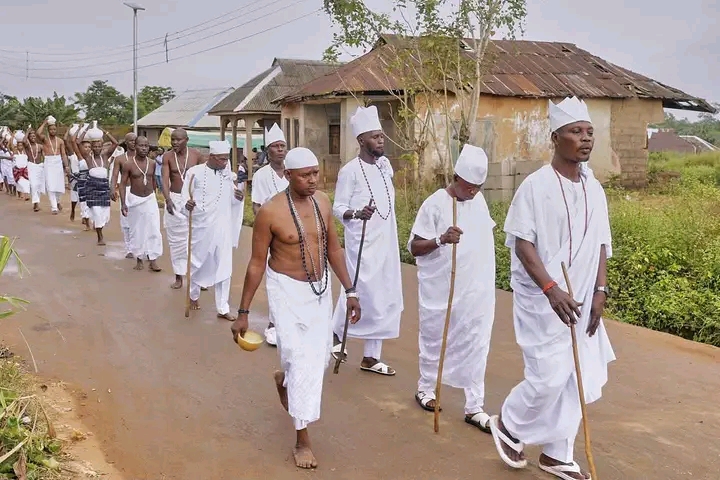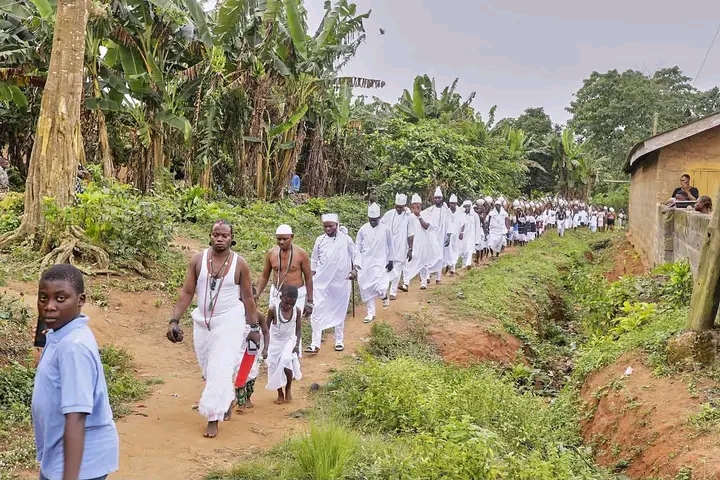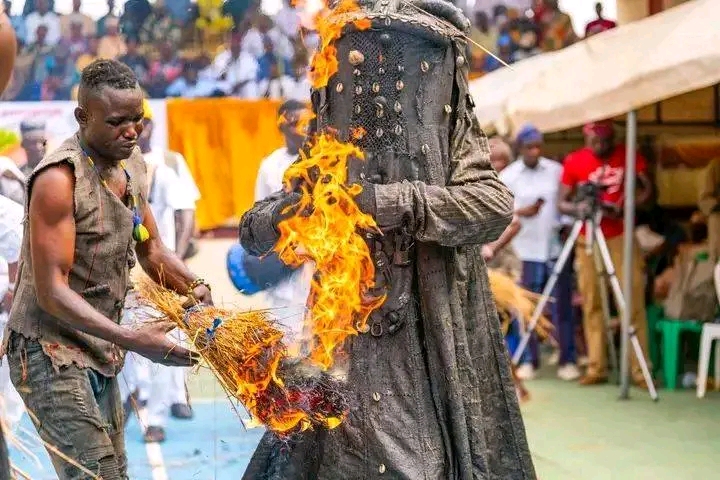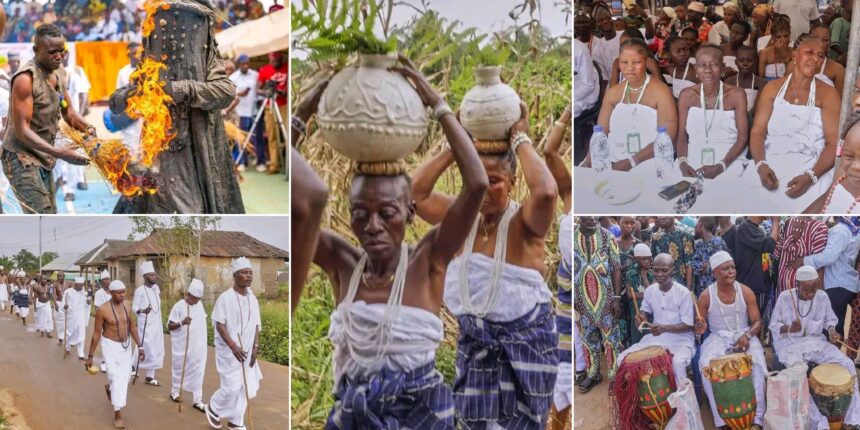
For many people watching from a distance, August 20, 2026, may have looked like another public holiday quietly passing across the Southwest, but behind the colourful clothing, drums, prayers, processions and gatherings was a celebration carrying a much deeper meaning about identity, memory and the place of indigenous tradition in modern Nigeria. Lagos, Ogun, Oyo and Osun gave the day official recognition, while traditional worshippers, cultural custodians, monarchs, government officials and heritage advocates gathered in different locations to mark Ìṣẹ̀ṣe in ways that reflected both its spiritual roots and its growing cultural importance.
The events did not follow one single pattern, because each state brought its own emphasis to the celebration, creating a wider picture that stretched from traditional rites and cultural performances to questions about preservation, tourism, younger generations and the future of Yoruba heritage. By the time the celebrations unfolded across the region, August 20 had become more than a date on the calendar, with the different events revealing how an ancient tradition is finding a new place within contemporary public life.
Four Southwest States Set the Stage
Thursday, August 20, 2026, was observed as a work free day across Lagos, Ogun, Oyo and Osun, giving residents, traditional worshippers and cultural groups the opportunity to participate in activities marking Ìṣẹ̀ṣe Day. The recognition was significant because it placed the observance within the official calendar of several major Yoruba speaking states, while still remaining different from a nationwide Federal Government public holiday. Government offices and public institutions in the participating states adjusted around the observance, creating room for communities to organise ceremonies, cultural gatherings and traditional activities connected with the day. The development also reflected the growing institutional recognition of indigenous culture within the Southwest, where Ìṣẹ̀ṣe has gradually moved from being viewed mainly through the lens of traditional religious practice to being discussed more broadly as part of Yoruba heritage, customs, values and identity.
The decision by the 4 states to recognise August 20 also provided a common platform for different communities to celebrate traditions that have survived through generations despite major changes in religion, education, urbanisation and popular culture. Lagos brought the largest public attention because of the scale projected by the state, while Osun placed emphasis on cultural recognition and institutional representation, Oyo connected the occasion strongly with unity, tourism and development, and Ogun formed part of the wider regional recognition that has continued to strengthen the significance of the date. Each state therefore contributed a different layer to the 2026 story, making it difficult to understand the celebration simply as a religious holiday. The broader picture was one of cultural remembrance, public recognition and an attempt to keep indigenous heritage visible within a rapidly changing society.
Lagos Takes the Biggest Spotlight
Lagos entered the 2026 celebration with an unusually ambitious projection, as the state government said more than 3 million people were expected to participate in activities connected with Ìṣẹ̀ṣe Day. That figure was presented as an expectation rather than a verified final attendance figure, but it nevertheless demonstrated the scale the government associated with the celebration and the importance it attached to the occasion. Public servants, political appointees and other government employees were given August 20 as a work free day, creating an opportunity for people across the state to participate in the celebrations. The announcement also helped bring attention to the fact that Lagos, despite being Nigeria’s most commercially driven and heavily urbanised state, continues to contain deep layers of indigenous Yoruba history across its different communities.
The government’s messaging around the celebration went beyond inviting people to attend ceremonies, because it attempted to explain Ìṣẹ̀ṣe itself to the wider public. Lagos described Ìṣẹ̀ṣe as encompassing tradition, customs, values, heritage and established ways of life, presenting the concept as something connected to the cultural identity of the people rather than something that should automatically be placed outside modern society. The state encouraged residents across Lagos Island, Ikeja, Badagry, Ikorodu and Epe to approach the celebration with cultural pride and respect. That approach gave the Lagos celebration an important dimension because the state was not simply recognising a particular group of worshippers, it was also presenting indigenous heritage as part of the historical identity of Lagos.
The Cultural Message Behind Lagos
The emphasis on culture became even clearer through activities organised before the main celebration. The Lagos State Council for Arts and Culture worked with the Association of African Traditional Religion Nigeria and Overseas, known as AATREN, to organise a 1 day seminar at Akowanjo Playing Ground in Shasha, Alimosho. The programme brought together traditional rulers, cultural leaders and practitioners of African Traditional Religion for discussions around the theme, “The Role of Nigeria in World Culture Development.” The subject matter immediately placed Ìṣẹ̀ṣe within a wider conversation about Nigeria’s contribution to global culture, rather than restricting the discussion to religious observance.
Speakers at the seminar stressed the importance of preserving indigenous culture while encouraging younger Nigerians to understand the traditions handed down by previous generations. The discussion was particularly important because cultural survival does not happen automatically simply because a festival continues to take place every year. Language, traditional knowledge, rituals, music, clothing, oral history and cultural values can weaken when younger generations lose contact with the people who carry that knowledge. Lagos therefore used part of its 2026 programme to address the question of how indigenous culture can remain meaningful to children and young adults who are growing up within a highly globalised environment.
Traditional Rites Take Centre Stage
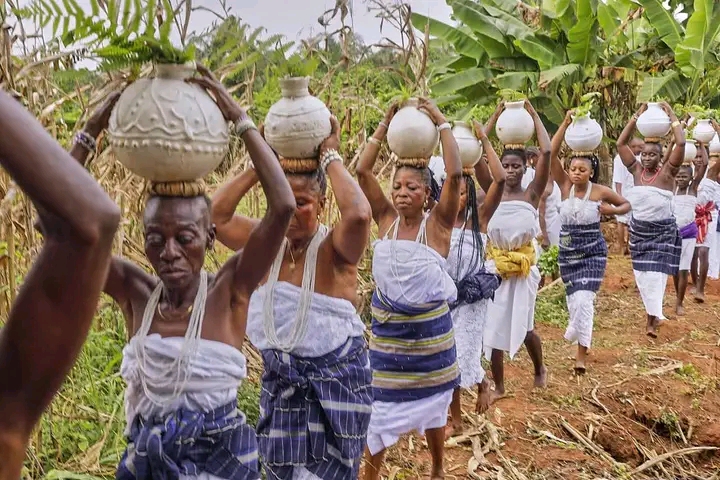
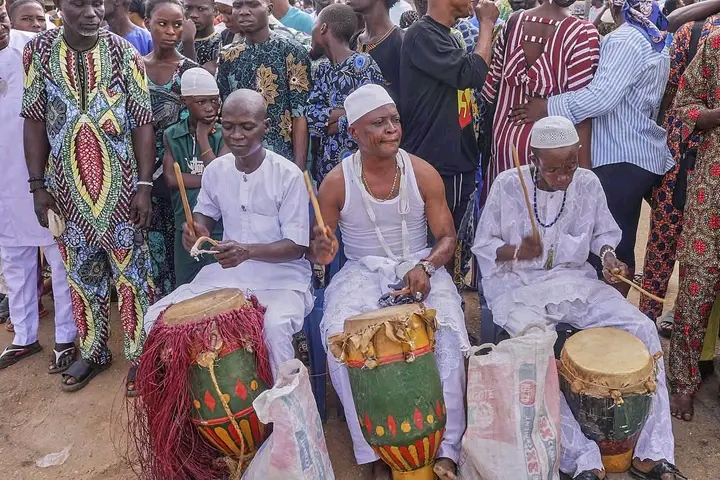
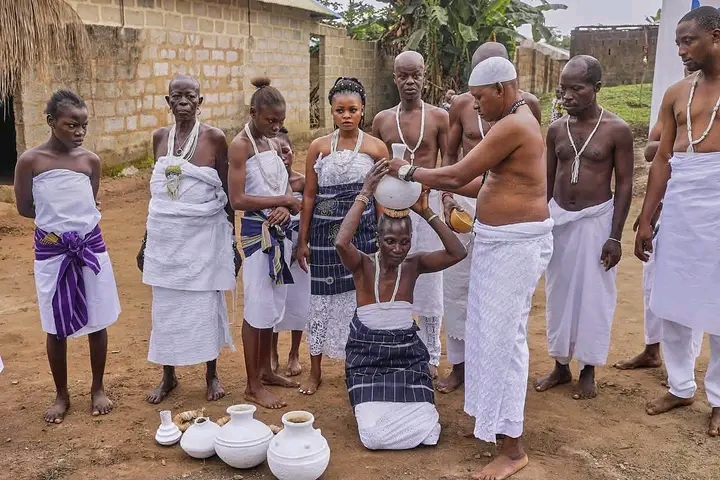
The main Lagos celebration brought the traditional character of Ìṣẹ̀ṣe directly into public view through prayers, rituals, processions, drumming, cultural performances, traditional clothing and activities associated with different Òrìṣà. AATREN coordinated activities involving traditional practitioners and cultural custodians, while traditional rulers and representatives of different indigenous religious traditions participated in the programme. The Oba of Lagos, Oba Rilwan Akiolu I, traditional chiefs, Babaláwo, Ìyánífá and Olóòrìṣà were among the traditional figures recognised within the wider programme. Their involvement reflected the structure of a celebration rooted in communities that have preserved different forms of indigenous knowledge and spiritual practice.
The atmosphere surrounding the Lagos activities also carried a strong emphasis on peaceful participation. Government officials repeatedly encouraged residents to approach the occasion with respect, particularly because Lagos is home to people from different religious and cultural backgrounds. That message mattered because the celebration was taking place in one of the most religiously diverse cities in Africa, where Christianity, Islam and indigenous traditions exist within the same social space. Rather than presenting Ìṣẹ̀ṣe as an event requiring separation from modern Lagos, the 2026 programme placed it within the city’s wider cultural landscape, giving traditional worshippers an opportunity to express their heritage publicly while remaining part of the larger society.
Osun Brings Politics Into the Conversation
Osun produced one of the most significant developments of the 2026 celebration when Oba Adekunle Oyelude Makama, the Olowu of Kuta, used the occasion at Freedom Park in Osogbo to make a direct appeal to President Bola Tinubu. The monarch called for the creation of a Special Adviser on Culture and African Traditions at the federal level, arguing that practitioners of indigenous traditions should have stronger institutional representation within Nigeria’s cultural policy structure. His demand moved the conversation beyond the celebration itself and into the question of how traditional culture is represented within government.
The Olowu referred to the precedent of the administration of former President Olusegun Obasanjo, when Professor Wande Abimbola served as Special Adviser on Culture and African Traditions. His argument was straightforward, traditionalists form an important part of Nigeria’s cultural landscape and deserve a recognised channel through which indigenous traditions can receive attention at the highest level of government. The request gave the Osogbo celebration an institutional dimension that was not as prominent in the Lagos programme. Instead of focusing solely on the day’s activities, the monarch used the gathering to raise a question about the future relationship between indigenous traditions and the Nigerian state.
Osogbo Celebrates Its Cultural Custodians
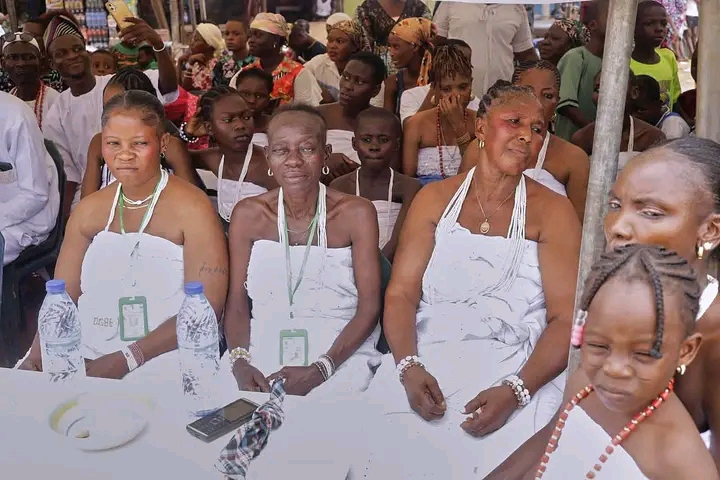
The Osogbo gathering attracted traditional rulers, cultural custodians, traditionalists and government representatives from across Osun. Governor Ademola Adeleke was represented by the Special Adviser on Culture and African Traditions, while the Araba Awo of Osogbo, Chief Yemi Elebuibon, the Olufon of Ifon and other traditional rulers participated in the event. Their presence gave the celebration a strong connection to the historical and spiritual reputation of Osun, a state widely associated with Yoruba heritage, traditional institutions and important cultural sites.
Awards of Excellence were also presented to individuals recognised for their contributions to the preservation and promotion of Yoruba culture. The Olowu of Kuta was among those honoured, receiving recognition for his contribution to Yoruba cultural heritage. The awards added another layer to the gathering because they shifted attention towards the individuals who have spent years preserving traditions, teaching cultural knowledge and keeping indigenous practices visible. Such recognition also placed cultural preservation within the public conversation, showing that the survival of tradition depends not just on annual festivals but on people who continually carry the knowledge behind them.
Adeleke Emphasises Religious Harmony
Governor Ademola Adeleke’s message for the 2026 celebration followed a different but equally important direction. Rather than presenting traditional religion as being in competition with Christianity or Islam, the governor emphasised religious diversity, tolerance and peaceful coexistence. He urged traditional worshippers to use the occasion to pray for peace and progress in Osun and Nigeria, while also encouraging celebrants to remain responsible and modest throughout the activities.
That message fitted into one of the most consistent themes visible across the 2026 celebrations, the recognition of indigenous tradition without turning the occasion into a confrontation between religions. Ìṣẹ̀ṣe Day brought people together around traditional beliefs and cultural heritage, but the official messages from Osun and other participating states repeatedly placed the celebration within the wider Nigerian reality of religious diversity. The emphasis on peace allowed the event to retain its traditional character while also acknowledging the social environment in which the celebration was taking place.
Oyo Places Unity at the Centre
Oyo State gave its 2026 celebration a clear message through the theme, “Unity is the Way to Success.” The grand finale was held at the Indoor Tennis Court of the Lekan Salami Sports Complex in Adamasingba, Ibadan, bringing together traditionalists, cultural figures, government representatives and members of the public. Acting Governor Bayo Lawal, represented by Deputy Chief of Staff Kazeem Adeniyi, urged residents to maintain peaceful coexistence among followers of different religions. The theme gave the Oyo celebration a strong social message, placing unity at the centre of an occasion that could otherwise have been viewed purely through its religious dimension.
Officials in Oyo also connected Ìṣẹ̀ṣe with cultural tourism, economic development and the preservation of Yoruba identity. The celebration featured cultural displays, traditional performances, Ifá renditions and prayers for peace and prosperity, while traditional leaders called for stronger government funding and logistical support for cultural programmes. Attention was also drawn to the protection of sacred and historical sites, reflecting concerns that cultural heritage cannot survive if the physical locations connected with it are neglected. Oyo therefore presented the celebration as a meeting point between tradition, community development and the economic possibilities associated with cultural heritage.
Tourism Gains Greater Attention
The tourism potential of Ìṣẹ̀ṣe became one of the clearest long term themes surrounding the 2026 celebration. Yoruba heritage contains a network of locations, festivals, traditional institutions, sacred sites, museums, historical structures, food traditions, crafts, music and oral histories that could form a major cultural tourism experience. A possible route could connect Lagos, Badagry, Abeokuta, Ibadan, Oyo, Ile Ife and Osogbo, creating a heritage corridor capable of exposing visitors to different aspects of Yoruba history and traditional culture.
Such a cultural tourism network could also create opportunities for people whose livelihoods depend on hospitality, transportation, food, fashion, crafts, entertainment and local guiding services. Hotels could benefit from increased visitor traffic, restaurants could showcase indigenous cuisine, artisans could sell locally produced crafts and young people could develop businesses around heritage storytelling, photography, event production and cultural experiences. The celebration therefore opened a conversation that goes beyond the ceremonies themselves, because the same traditions attracting people to August 20 could potentially support a broader tourism economy throughout the year.
The Global Yoruba Connection
The 2026 Lagos messaging also highlighted the relationship between Yoruba heritage in Nigeria and Yoruba communities across the global diaspora. References to places such as Cuba, Brazil and the Caribbean drew attention to the historical journey of Yoruba traditions beyond West Africa. Religious practices, names, music, spiritual concepts and cultural expressions associated with Yoruba heritage have survived in different forms across the Atlantic, creating a cultural connection between communities separated by thousands of kilometres.
That connection gives Ìṣẹ̀ṣe a dimension that extends beyond the boundaries of Lagos, Ogun, Oyo and Osun. A celebration taking place in Nigeria can resonate with descendants and cultural communities elsewhere who identify with Yoruba heritage or maintain traditions influenced by Yoruba history. The drums, rituals, clothing, stories and spiritual practices displayed during the celebration can therefore be viewed as part of a much wider cultural family. The 2026 events brought that global dimension into sharper focus, showing how local cultural recognition can also become part of a conversation about heritage across borders.
Young People Become Central to the Future
One of the strongest questions surrounding the celebration concerned the younger generation. Traditional culture cannot remain alive simply because older people continue to practise it, because every generation eventually needs to inherit the knowledge, language, stories and practices that make the tradition meaningful. The Lagos seminar placed particular emphasis on involving children and younger people, while the Olowu of Kuta also urged younger Yoruba people to learn, preserve and promote the traditions inherited from their ancestors.
That concern is particularly relevant in an age when young Nigerians consume culture from around the world through social media, music, films and digital platforms. Yoruba culture already has a powerful presence within popular entertainment, fashion, music and film, but Ìṣẹ̀ṣe involves deeper layers of history and traditional knowledge that cannot always be captured through entertainment alone. The challenge is therefore to make cultural knowledge accessible enough for younger people to understand while preserving the seriousness and authenticity of the traditions being passed down.
Ogun Strengthens the Regional Picture
Ogun was one of the 4 Southwest states that declared August 20 work free for the 2026 Ìṣẹ̀ṣe celebration. Although the state’s events received less national attention than the major gatherings in Lagos and Osun, its inclusion remained important because Ogun represents another major Yoruba population centre within the regional cultural landscape. The state’s participation reinforced the idea that the observance is not confined to one city or one traditional institution, but forms part of a wider movement across the Southwest.
The significance of Ogun also lies in its geographical and historical relationship with other major Yoruba cultural centres. Its proximity to Lagos, Abeokuta’s historic importance and the state’s numerous traditional communities give it a natural place within any wider conversation about Yoruba heritage tourism. Recognition of August 20 therefore strengthens the possibility of connecting celebrations and cultural sites across state boundaries, creating a broader regional identity around indigenous heritage.
The History Behind August 20
The modern recognition of August 20 did not appear suddenly in 2026. Osun is widely recognised as the pioneer of the state level observance, with former Governor Rauf Aregbesola approving August 20 as a work free day for traditional worshippers. Other Southwest states subsequently introduced their own forms of recognition, gradually transforming the date into a significant annual occasion for traditional communities.
Lagos has observed August 20 as a work free day since 2023 following a request from the Lagos State Council of Obas and Chiefs. Oyo later strengthened its own institutional recognition, with the administration of Governor Seyi Makinde linking the observance to cultural tourism and recognition of traditional religion. The expansion across 4 major Southwest states in 2026 therefore represented another stage in a process that has developed over several years rather than a completely new movement.
Ìṣẹ̀ṣe Moves Beyond a Single Day
The events of August 20 showed why the significance of Ìṣẹ̀ṣe cannot be measured only by what happens during the holiday itself. Seminars, cultural discussions, awards, traditional performances, tourism conversations and calls for stronger institutional recognition all formed part of the wider story. The celebrations created opportunities for traditional custodians to speak publicly about preservation, for governments to discuss heritage and for communities to bring cultural practices into public spaces.
That wider structure also explains why the 2026 observance attracted attention beyond traditional worshippers. A cultural celebration can involve people who may not personally practise indigenous religion but still identify with Yoruba history, language, music, food, clothing, art, traditional institutions and ancestral heritage. The public recognition of Ìṣẹ̀ṣe therefore creates room for a broader cultural conversation, while the spiritual foundation of the celebration remains important to those who actively practise the traditions.
Lagos, Oyo, Osun Reveal Different Priorities
The 2026 celebrations became particularly interesting because the participating states did not tell exactly the same story. Lagos focused heavily on scale, cultural identity, public education and the role of indigenous heritage within a modern megacity. Osun placed stronger emphasis on institutional recognition, traditional leadership, cultural awards and the political demand for federal representation. Oyo concentrated on unity, cultural tourism, economic development and the protection of historical sites, while Ogun strengthened the wider regional recognition through its official observance.
Those different priorities did not necessarily compete with one another. Instead, they created separate pieces of the same larger picture. Cultural identity requires preservation, preservation requires younger generations, younger generations need education, cultural sites need protection, tourism requires investment and traditional communities require institutional recognition. The 2026 celebrations brought these different needs into the open through events that were taking place across the Southwest at the same time.
The Meaning of the 2026 Celebration
The most important story from Ìṣẹ̀ṣe Day 2026 is therefore not simply that traditional worshippers gathered on August 20. The deeper story is the increasing visibility of indigenous Yoruba culture within public life and the different ways governments, monarchs and cultural organisations are attempting to give that heritage a lasting place in modern Nigeria. Lagos used the occasion to speak about cultural identity, Osun used it to raise the question of federal representation, Oyo connected it with unity and tourism, while Ogun joined the wider regional recognition.
The projected participation of more than 3 million people in Lagos, the work free declarations across 4 Southwest states, the gathering of traditional rulers and cultural custodians, the cultural seminars and awards, the calls for government support and the renewed focus on tourism all point towards an observance that is becoming increasingly institutionalised. Yet the celebration also remains deeply connected to practices that existed long before modern government structures, political boundaries or annual public holidays. That combination of ancient tradition and contemporary recognition is what gives the occasion its distinctive character.
A Tradition Looking Towards the Future
Ìṣẹ̀ṣe Day 2026 ultimately placed an old question inside a very modern setting. Yoruba traditions have survived enormous social changes, but survival alone is not the same as continuity. The future of indigenous culture depends on whether younger generations learn its language, understand its history, respect its institutions and find meaningful ways to carry its values into their own time. The activities in Lagos, Osun, Oyo and Ogun showed that this conversation is already taking place, with government officials, monarchs, traditionalists and cultural organisations increasingly speaking about preservation in practical terms.
August 20, 2026, therefore became another chapter in the evolving public story of Ìṣẹ̀ṣe. The drums and prayers formed the visible part of the celebration, but beneath them were questions about identity, heritage, tourism, representation, education and the future of Yoruba culture. Lagos brought the scale, Osun brought the institutional demand, Oyo brought the message of unity and development, while Ogun reinforced the regional character of the observance. Together, the 4 states showed how an indigenous tradition can move from private community practice into a recognised cultural institution without losing the history that gave it meaning in the first place.
The journey is far from finished, because each August 20 now creates another opportunity to decide what should be preserved, what should be taught, what should be protected and how Yoruba heritage should be presented to a new generation. The 2026 celebration made that journey visible across the Southwest, turning a single day of traditional observance into a wider expression of cultural identity. For Lagos, Ogun, Oyo and Osun, the day carried different messages, but the common thread remained clear, Ìṣẹ̀ṣe is no longer being discussed simply as an annual gathering for traditional worshippers, it is increasingly being presented as part of the living cultural story of Yoruba people in Nigeria and across the world.
SEE PHOTOS FROM ÌṢẸ̀ṢE DAY CELEBRATION