For more than two decades, Nigeria’s National Assembly has summoned ministers and agency heads, investigated alleged misconduct, debated public concerns and adopted resolutions intended to influence government action, yet what happens after those resolutions are passed has remained largely outside the public spotlight.
From demands for the reinstatement of dismissed workers to calls for compensation, road rehabilitation, environmental interventions and responses to humanitarian crises, lawmakers have repeatedly invoked their oversight powers to address issues affecting citizens.
But a recent Senate report has brought a different aspect of legislative oversight into focus: the extent to which ministries, departments and agencies actually comply with resolutions adopted by the upper chamber.
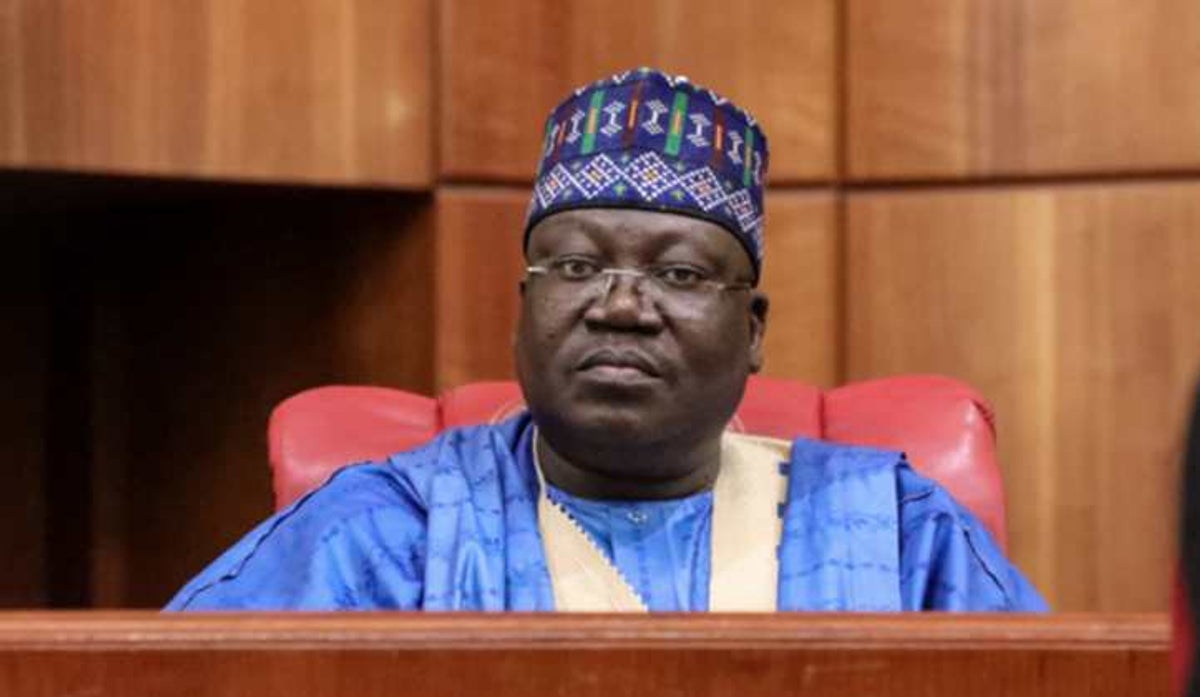
The report, presented by the senator representing Kebbi South, Garba Maidoki, who chairs the Senate Committee on Legislative Compliance, examined 27 referrals arising from Senate motions and committee reports between July 2023 and December 2025.
Its findings showed that several agencies either failed to respond to lawmakers’ correspondence, ignored invitations to appear before committees or left adopted resolutions outstanding.
When resolutions meet institutional resistance
The Senate’s directive concerning the Nigerian Railway Corporation is one example highlighted by the committee, following its decision that engineer Aniekan Ukpe should be reinstated after lawmakers found that he was not involved in allegations of railway vandalism.
Despite repeated letters, reminders and invitations, the corporation did not implement the resolution, while its managing director later appeared before the committee and requested additional time.
Another case involved the National Drug Law Enforcement Agency after two-year-old Onosereba Omhonria was fatally shot during an operation in Asaba, Delta State, while his sibling sustained injuries.
The Senate directed the NDLEA to compensate the family and provide funding for the surviving child’s overseas medical treatment, but the compliance committee said the recommendation remained unresolved.
According to the report, the agency cited funding difficulties and its inability to access the confiscated and forfeited assets account, while the Attorney-General of the Federation also failed to respond to correspondence from the committee.
Environmental concerns in Ogijo, Ogun State, provided another example, with the committee saying the Federal Ministry of Environment failed to respond to its letters concerning lead poisoning, despite interventions by agencies including the National Environmental Standards and Regulations Enforcement Agency, Nigeria Centre for Disease Control and National Emergency Management Agency.
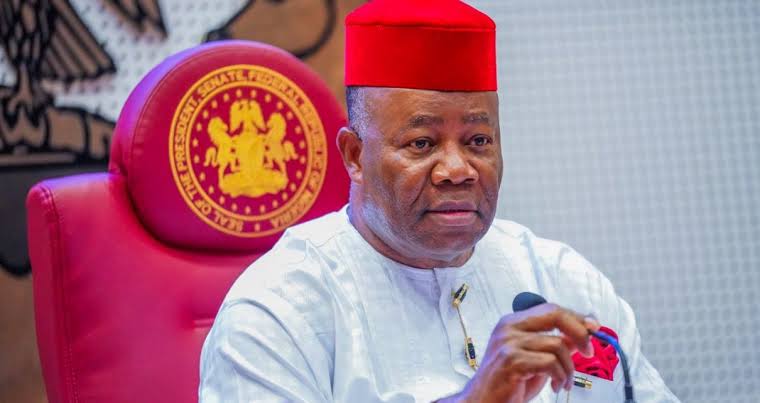
Senate President Godswill Akpabio described the compliance report as unprecedented, noting that no Senate Committee on Legislative Compliance had produced a similar comprehensive assessment since Nigeria returned to democratic rule in 1999.
Why agencies can ignore Senate resolutions
The difficulties highlighted by the report are not necessarily caused by a lack of investigative authority, according to constitutional lawyer and media expert, Onogwu Muhammed, who said the legal status of parliamentary resolutions is central to the problem.
“The persistent non-compliance with, or failure to implement, resolutions of the national assembly by ministries, departments and agencies is a matter of serious concern,” he said.
“It not only undermines the effectiveness of legislative oversight but also results in a waste of public resources. Considerable public funds are expended by the national assembly in carrying out its constitutional oversight responsibilities.
“Once investigations are concluded and resolutions are adopted, it is reasonably expected that the affected government agencies will implement them promptly.”
However, Muhammed explained that Senate resolutions generally do not have the same legal force as Acts of the National Assembly because they do not pass through the complete legislative process, including presidential assent.
“They are generally not legally binding. Unlike acts of the national assembly, resolutions do not undergo the full legislative process required for a bill to become law, including presidential assent,” he said.
“Consequently, an MDA’s failure to comply with a resolution does not ordinarily amount to a breach of any specific constitutional or statutory provision.”
Sections 88 and 89 of the 1999 Constitution empower the National Assembly to investigate public institutions, summon officials and request documents, but those provisions do not automatically transform every resolution into an enforceable executive directive.
Funding is another factor, particularly where compliance requires expenditure that was not provided for in an approved budget.
“Many resolutions require financial resources for their execution, but implementation often becomes impossible where the necessary funds have not been appropriated or included in the national budget by the executive arm of government,” Muhammed said.
“Since public funds may only be spent for purposes authorised through appropriation, redirecting funds allocated for one purpose to another would amount to financial misappropriation.”
Senate considers budget sanctions
The compliance committee has proposed that resolutions delayed strictly because of funding should be considered during subsequent appropriation exercises, while agencies seeking additional resources should submit their requests through the Secretary to the Government of the Federation.
More significantly, the committee recommended sanctions through the budgetary process for agencies that repeatedly disregard Senate correspondence, committee invitations or adopted resolutions.
Such a measure could give lawmakers greater leverage during annual budget negotiations by making compliance part of the relationship between Parliament and government institutions.
Yet the Senate itself has recently demonstrated that its enforcement powers also have limits.
A Senate committee investigating the Nigerian National Petroleum Company Limited issued what it described as a warrant for the arrest of its former group chief executive officer, Mele Kyari, before the chamber subsequently distanced itself from the action.
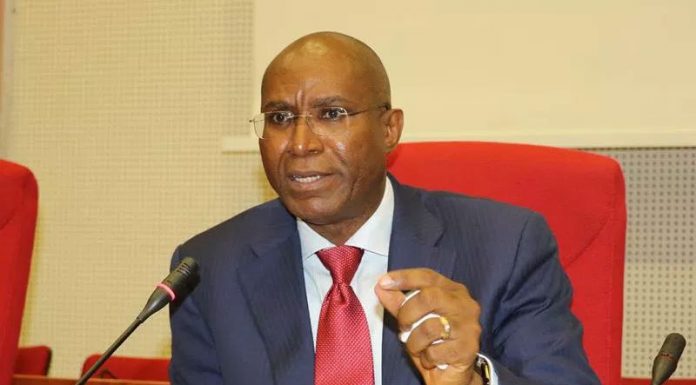
Senate Leader Opeyemi Bamidele explained that, under the Legislative Houses (Powers and Privileges) Act, only the Senate President has the authority to issue such a warrant, while Deputy Senate President Barau Jibrin described the episode as a lesson for committees.
Legislative aide Yemi Itodo, however, argued that lawmakers possess significant investigative powers under the Constitution.
“The national assembly is empowered by the law to issue a warrant of arrest to any individual or head of agency that refuses to honour its summons or invitations,” he said.
“Sections 88 and 89 of the 1999 constitution as amended empower them to do so. It’s part of their oversight functions.”
The broader challenge identified by the compliance report, however, begins after investigations, summonses and hearings have ended, as the real measure of oversight ultimately lies in whether government institutions act on the resolutions adopted by lawmakers.
If the Senate’s proposal to connect compliance with budgetary allocations is implemented, it could provide a stronger incentive for agencies to respond to legislative demands.
Otherwise, the latest report could become another example of the paradox at the heart of Nigeria’s legislative oversight system, where Parliament has the power to investigate government but struggles to ensure that its recommendations translate into action.