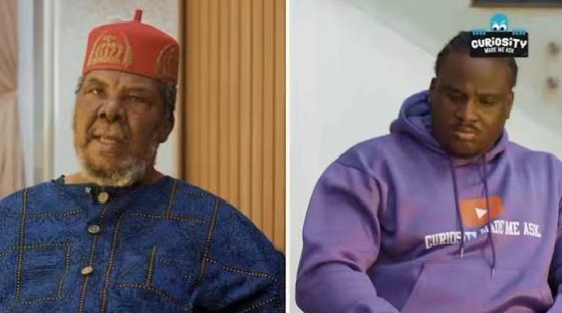
The conversation began with the kind of questions that can make a guest laugh, pause, or reveal more than expected. By the time Pete Edochie settled into his exchange with Isbae U, it became clear that this was not going to be a routine interview about Nollywood, fame, or the stories audiences have heard about him over the years. The veteran actor brought his familiar confidence into the discussion, but the questions opened doors into parts of his life, career, family, culture, and personal convictions that have since attracted considerable attention.
Released around September 5, 2026, the episode of Curiosity Made Me Ask has generated several separate talking points, with some clips travelling far beyond the original conversation. One moment focused on his standing among actors, another on the meaning of respect, while the marriage discussion moved into questions of tradition, responsibility, and family leadership. His comments about Obafemi Awolowo added another dimension to the interview, revealing the kind of political achievement he admires.
The interesting part is how naturally these subjects connected. A question about his favourite actor became a discussion about seniority. A simple exchange over his first name turned into a lesson about age and respect. A question about marriage opened a wider conversation about the expectations placed on men. Then, when politics came into the picture, Edochie returned to the importance of clear plans and measurable achievements. The result was an interview filled with strong opinions, personal stories, and several moments that have kept the conversation moving.
The Interview Begins With A Question About Nollywood
One of the earliest moments to attract attention came when Isbae U asked Pete Edochie to name his favourite actor. It was the sort of question that could easily produce a familiar answer, perhaps the name of a respected colleague or a younger performer he admired. Edochie, however, approached it from a different direction. Rather than placing another actor above himself, he made it clear that he considers his own standing in the industry to be greater than that of every other actor.
The statement immediately became one of the most discussed parts of the interview because it went beyond ordinary praise of a long career. Edochie was not simply saying that he has achieved a lot or that he deserves respect. He was speaking about his position in Nollywood with a level of confidence that left little room for uncertainty. His response also connected with a broader discussion about actors who have claimed greater seniority or believe they are on his level.
Edochie explained that he does not normally respond to people who make such claims. However, when the conversation turned to those who believe they are his equals, he challenged them to come forward publicly and say so. The exchange gave the interview one of its strongest moments because it brought questions of reputation, seniority, and professional standing into the open.
“People have been writing that they are older than me in the industry, but I don’t respond,” he said.
“Whoever said they are of the same level with me should come out and say it,”
“I don’t know the definition of people’s legend, but I’m glad to be celebrated”.
His comments also attracted attention because of the timing. Shortly before his appearance, Yemi Solade had appeared on the same platform and maintained that he began acting before Edochie, despite Edochie being older. Solade’s interview had already generated discussion after his verbal clash with Isbae U, so the arrival of Edochie’s episode naturally created another layer of interest.
It is important, however, to separate the timing from the evidence. Edochie did not mention Yemi Solade by name in the response described above. The connection between the 2 interviews has therefore been drawn largely from the surrounding circumstances and the subject of the questions. Unless the full video establishes that Edochie was directly responding to Solade, it is more accurate to describe the connection as an interesting coincidence rather than a confirmed exchange between the 2 actors.
A Career That Began Before Acting
Another revealing part of the conversation was Edochie’s explanation that acting was not the profession that originally established him. For many Nigerians, his name is closely associated with Nollywood, traditional titles, memorable characters, and a career that has lasted for decades. His explanation therefore offered a different perspective on how his professional life developed before he became widely known as an actor.
Edochie said he was already professionally established before entering the acting industry. He eventually retired from his previous career as a Director of Programmes before becoming known primarily for his work in film. That detail is important because it shows that his acting career was not the beginning of his professional journey. He had already built experience and achieved a level of professional recognition before moving into the industry that would later make him a household name.
The revelation also helps explain why he speaks about his career with such confidence. His experience did not begin with the first film that introduced him to a wider audience. There was already a professional foundation behind him, and acting became another stage in a life that had developed through different responsibilities and experiences.
For viewers who know him mainly through Nollywood, the story adds another layer to his public image. It reminds audiences that the man associated with some of the most recognisable characters in Nigerian cinema had a professional identity before the screen became his main platform. His explanation was brief, but it gave the interview a useful historical detail about his life.
The Moment Isbae U Called Him Pete
The discussion about age and respect became one of the lighter moments in the episode, although Edochie clearly took the issue seriously. At one point, Isbae U addressed him simply as Pete. Edochie objected to the use of his first name and questioned whether a younger person should address an older person in that manner.
The exchange was not simply about a name. Edochie used it to explain his understanding of respect within African culture, particularly the way younger people are expected to address older members of society. His argument was that age carries a certain dignity, and that younger people should recognise that dignity in the way they speak to those who came before them.
He brought his eldest son into the conversation, saying that his son is 56 years old and would not simply watch somebody call his father Pete without reacting. The comment added humour to the exchange, but it also made the point more personal. Edochie was not discussing respect as an abstract idea. He was connecting it to his own family and the relationship between generations.
He also mentioned that he has 4 grandchildren who are graduates, another detail that gave the conversation a family dimension. His comments about his son’s height, which he described as about 6 feet 5 inches compared with his own 6 feet 2 inches, added to the playful tone. Even so, the central message remained clear. Edochie believes that age should be recognised and that younger people should be mindful of how they address older people.
The moment also showed how quickly a casual interview question can become a discussion about cultural values. What began with a name became a conversation about family, age, respect, and the expectations that come with being an elder.
His Position On Men Kneeling To Propose
The marriage discussion produced one of the most widely discussed statements from the interview. Edochie was asked about men kneeling when proposing to women, and he expressed a strong objection to the practice. His argument was not simply about the physical act of kneeling. He attached a deeper cultural meaning to it, saying that the gesture could be interpreted as a man conceding family headship to the woman.
Edochie compared the act of kneeling during a proposal with kneeling as a sign of reverence in religious settings. From his perspective, the symbolism matters because marriage is not just a private relationship between 2 people. It is also a union that carries expectations about responsibility, leadership, and the roles of husband and wife.
When Bae U Barbie challenged him to take the statement back, reports of the exchange indicate that Edochie stood by his position. He did not treat the issue as a casual joke or retreat from the point he had made. Instead, he continued to explain why he believed the gesture carried a meaning that should not be ignored.
The discussion also moved into differences between Western societies and traditional African family arrangements. Edochie connected his argument to what he sees as changes in marriage and property expectations, particularly where the wife becomes the main financial provider. His comments reflected a broader view of marriage in which the man is expected to carry responsibility for the household and maintain a position of leadership.
It is important to understand that this was Edochie’s personal position, not an established explanation for why marriages succeed or fail. His argument was based on his own cultural understanding of marriage and family roles. The interview presented his view clearly, but it should not be treated as a universal rule about how every marriage must operate.
His Views On A Man Becoming A Househusband
The conversation about proposals naturally led into a wider discussion about financial responsibility within marriage. Edochie was asked about situations where the wife becomes the main provider, and he expressed strong disapproval of a man deliberately hoping to depend financially on his wife.
His comments reflected the same traditional view of male responsibility that appeared throughout the marriage discussion. He argued that a man should not make financial dependence on his wife the goal of his household arrangement. The issue, as he presented it, was not simply about who earns more money. It was about the expectations attached to being a husband and the responsibility he believes a man should carry.
Edochie was speaking about the role of the man in the family and the kind of responsibility he believes should come with marriage. His position was consistent with his earlier comments about family headship and the symbolic meaning of a proposal.
The exchange also showed how his views on marriage are connected. For Edochie, the question of who provides, who leads, and how a couple relates to one another are all part of a larger understanding of family structure. He did not present these as separate issues. They were connected by his belief in traditional responsibilities and the importance of men taking their role seriously.
Obafemi Awolowo Becomes His Favourite Politician
The political discussion brought another major revelation from the interview. Despite saying that he is not a politician, Edochie identified Chief Obafemi Awolowo as his favourite Nigerian politician. His explanation focused less on political slogans and more on the importance of having a clear plan for development.
Edochie praised Awolowo for being specific about what he wanted to achieve, how much it would cost, and where the money would come from. That was the quality he appeared to admire most. Rather than simply making promises, Awolowo was presented as a leader who could explain his objectives and the resources required to carry them out.
The discussion also touched on several of Awolowo’s well known achievements in the former Western Region. Edochie mentioned free primary education, the introduction of television broadcasting, and the establishment of Western Nigeria Television, commonly known as WNTV, in 1959. These examples formed the basis of his admiration for Awolowo’s approach to leadership.
The point was not merely that Awolowo had achieved important things. Edochie was interested in the process behind those achievements. He admired the idea of a leader who could identify a problem, explain the solution, calculate the cost, and show how the plan would be funded. That emphasis on measurable objectives was one of the clearest themes in the political part of the interview.
He also mentioned M.I. Okpara as another political figure he respected. The reference added to the impression that his admiration is based on the record of public service rather than party loyalty. His comments were focused on the achievements of the leaders he mentioned and the practical nature of their development plans.
His Affection For Yoruba People
The discussion about Awolowo also led to one of the lighter moments in the interview. Edochie spoke warmly about Yoruba people and connected his affection for them to his family. He mentioned that one of his sons is married to a Yoruba woman, which gave him a personal reason to speak fondly about the community.
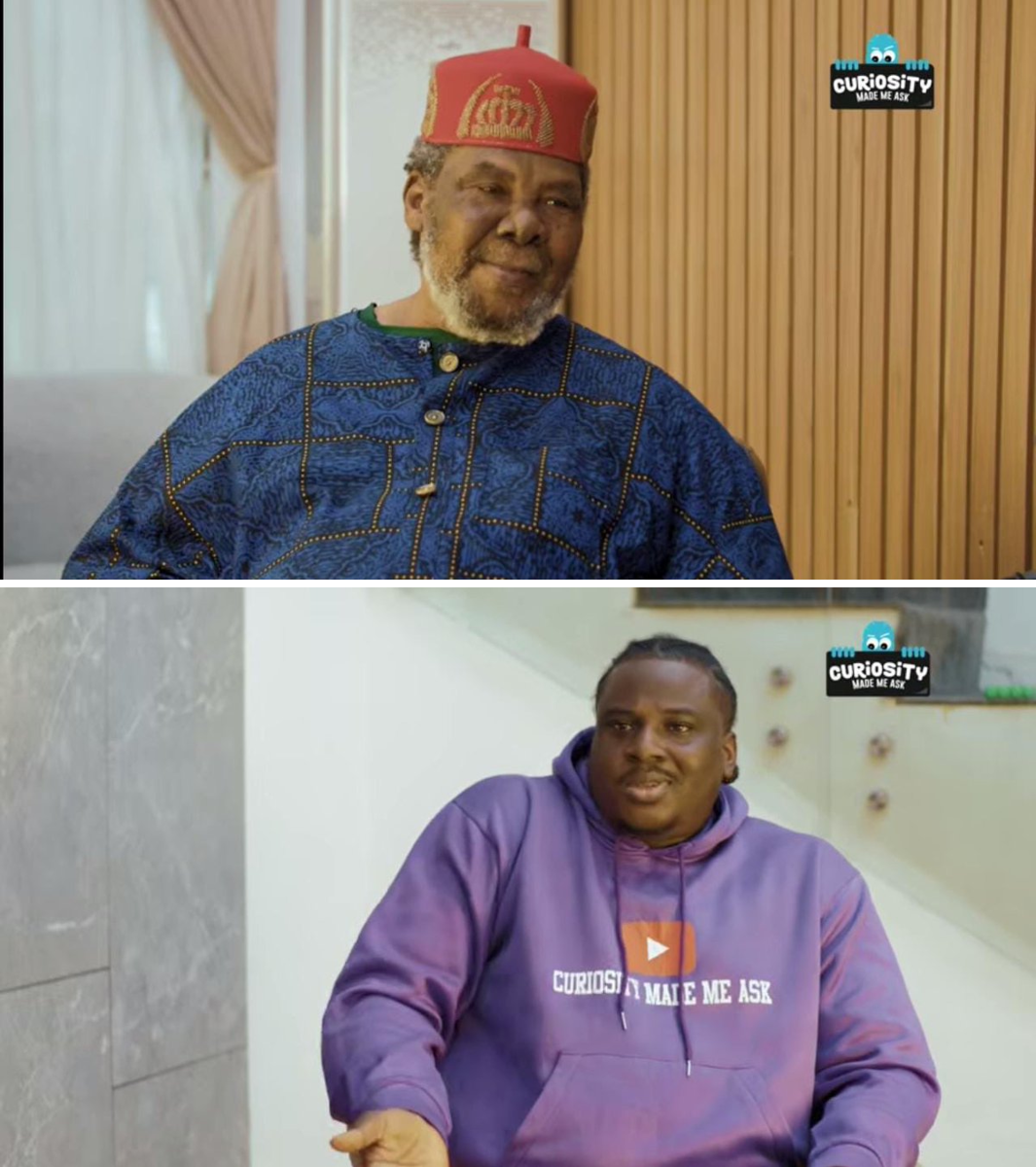
The comment also allowed him to joke with Isbae U, whom he described as his in law because of the marriage connection. It was a playful exchange, but it added a human touch to the political discussion. The conversation moved from a serious assessment of Awolowo’s achievements to family, marriage, and cultural relationships.
That moment also showed how naturally Edochie moves between serious subjects and humour. The interview did not remain focused on politics for long. His comments about Yoruba people brought the discussion back to his own family and the relationships that connect people across different backgrounds.
The Yemi Solade Connection
The Yemi Solade angle has made the interview more interesting because of the sequence of events surrounding the 2 appearances. Solade had appeared on Curiosity Made Me Ask shortly before Edochie and had spoken about his own seniority in acting. His claim that he began acting before Edochie, despite being younger, had already attracted attention.
Edochie’s appearance then brought another discussion about seniority and actors who believe they are on his level. The timing naturally encouraged people to connect the 2 conversations. However, the available details do not establish that Edochie was directly responding to Solade.
That distinction matters because the interview itself is stronger when the comments are understood on their own terms. Edochie was asked about his standing in Nollywood, and he gave a confident answer. The fact that Solade had recently discussed a related subject adds context, but it does not automatically turn the exchange into a direct response.
The episode therefore presents an interesting sequence. Solade’s interview raised questions about seniority, Edochie’s interview brought another perspective on the same subject, and the timing created a natural point of comparison. Until the full video provides a clearer connection, the most accurate way to describe the situation is that the 2 conversations have become linked in public discussion.
What The Interview Revealed About Edochie’s Worldview
The most interesting feature of the interview is the consistency of Edochie’s views across different subjects. His comments about acting, age, marriage, and politics may appear unrelated at first, but they are connected by a clear emphasis on responsibility, hierarchy, and achievement.
When discussing Nollywood, he focused on seniority and his own standing in the industry. When Isbae U called him Pete, he spoke about the respect owed to older people. When the conversation turned to marriage, he emphasised family headship and the responsibility he believes men should carry. When politics came up, he praised Awolowo for having clear objectives and measurable achievements.
These subjects reveal a man who places importance on experience, status, responsibility, and results. His comments are not simply about being recognised. They are about the standards he believes should guide people in their professional lives, family relationships, and public service.
The interview also showed that Edochie is comfortable expressing strong opinions. He did not appear interested in giving answers simply because they might be easier to accept. On several occasions, he made his position clear and continued to explain it when challenged. That approach is part of what made the episode stand out.
The Most Discussed Revelations So Far
The episode has produced several memorable moments, but 3 areas have attracted the strongest attention. The first is Edochie’s claim that he is bigger than every other actor and his challenge to anyone who considers himself his equal. The second is his argument that men who kneel to propose are symbolically conceding family headship. The third is his decision to name Obafemi Awolowo as his favourite Nigerian politician and explain why he admires his approach to development.
Other details have also contributed to the conversation. Edochie’s explanation that he was professionally established before acting added useful background to his career. His objection to being called Pete revealed his views on age and respect. His comments about his 56 year old son and 4 graduate grandchildren gave the discussion a personal and humorous dimension.
The marriage discussion also extended beyond proposals. His disapproval of a man deliberately depending on his wife as the main provider showed that his position is part of a wider philosophy about family responsibility. Meanwhile, his affection for Yoruba people and his son’s marriage to a Yoruba woman added a lighter cultural moment to the interview.
The episode therefore stands out because it covers a wide range of subjects without losing the personality of the guest. Edochie’s confidence, humour, and strong opinions remained visible throughout the conversation. That combination is what has made the interview so memorable.
A Conversation That Continues To Generate Attention
Released around September 5, 2026, the episode has already produced enough material for several separate discussions. The comments about Nollywood seniority, the exchange over respect, the proposal argument, and the Awolowo revelation have each attracted attention in their own right.
The full interview may still contain additional details that have not yet been widely reported. Some portions of the conversation have not been independently transcribed in full, so the available breakdown should be understood as a summary of the major points that have emerged so far rather than a definitive transcript of every statement.
Even with that limitation, the interview has offered a useful look at Edochie’s personality and the ideas that shape his public image. He spoke about his career, his family, his understanding of marriage, and the political figures he admires. The conversation also showed how a veteran actor can move from humour to serious cultural questions without losing his confidence.
The result is an episode that has given audiences plenty to discuss. Edochie’s comments about Nollywood, marriage, age, respect, and politics have created several memorable moments, while the timing of his appearance after Yemi Solade’s interview has added another layer of interest. As more clips and reports emerge, the conversation is likely to continue attracting attention, but the main revelations already provide a clear picture of why the episode has become such a talking point.