
Small business owners in Lagos often reach a point where they need more money to keep their businesses moving, whether it is to restock a shop, purchase equipment, increase production or open another outlet. Getting that money through conventional bank loans can be difficult, especially for entrepreneurs who lack the collateral lenders usually request or cannot afford expensive borrowing terms. A business may already have customers and steady sales, yet the owner can still struggle to secure the capital needed to expand.
The Lagos State Government has introduced a financing initiative designed to address some of these challenges through a cooperative based approach. Known as LASMECO, the programme was launched in partnership with the Bank of Industry and Sterling Bank, with financing advertised at up to ₦10 million for eligible micro, small and medium sized enterprises. Its reported terms have attracted attention among entrepreneurs seeking business capital, particularly following a major funding announcement by the state government in May 2026.
For business owners considering this opportunity, the key details go beyond the amount available. Understanding the loan conditions, the role of cooperatives, the application process and the current status of the programme can help applicants decide whether LASMECO is suitable for their businesses.
What Is LASMECO?
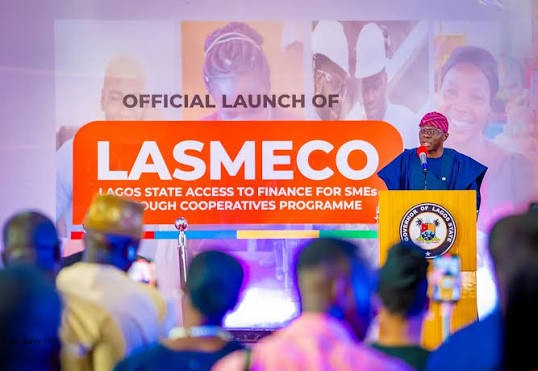
LASMECO stands for the Lagos State Government and Bank of Industry Access to Finance for MSMEs through Cooperatives programme. It was established to improve access to financing for micro, small and medium sized enterprises operating in Lagos State, using cooperative societies as an important part of the lending structure. The initiative brings together the Lagos State Government, the Bank of Industry and Sterling Bank to support eligible businesses seeking capital for their operations and expansion.
The Bank of Industry announced the programme on May 9, 2025, presenting it as a financing initiative intended to help address the difficulties small businesses face when seeking affordable credit. Many entrepreneurs struggle to obtain conventional bank loans because they cannot provide acceptable collateral or meet all the conditions imposed by lenders. LASMECO was designed to offer an alternative route through which qualifying businesses could access financing under the programme’s advertised terms.
Entrepreneurs should understand that LASMECO is a loan scheme rather than a cash distribution programme. Successful applicants are expected to repay the funds according to the approved loan agreement, including the applicable interest and repayment conditions. The programme is intended to help businesses obtain capital they can use productively, rather than provide unrestricted financial assistance to every Lagos resident.
The official announcement is available on the , which is an appropriate starting point for entrepreneurs seeking information about the initiative.
How Much Can Entrepreneurs Borrow?
LASMECO advertises financing of up to ₦10 million for eligible businesses. This is the maximum advertised loan amount, not a promise that every applicant will receive ₦10 million. The amount approved for an individual business will depend on the applicable assessment procedures, the programme’s requirements and the final lending decision.
A smaller business seeking funds to purchase equipment or increase stock may have different financing needs from an established enterprise planning to expand production. Applicants should therefore prepare a clear explanation of how much they need, why they need it and how the investment will support their business. A realistic funding request supported by business records can help explain the purpose of the proposed borrowing.
The advertised maximum may be attractive to entrepreneurs who have struggled to secure sufficient capital through other channels, but the figure alone should not determine whether they apply. Business owners need to consider the amount they can reasonably repay from their expected revenue. Borrowing more than a business can support financially could create additional pressure, even when the interest rate is relatively affordable.
LASMECO Loan Terms at a Glance
The principal terms reported for LASMECO include a maximum advertised loan of ₦10 million, an annual interest rate of 9%, a 6 month repayment moratorium and a repayment period of up to 36 months. The programme is also advertised as not requiring conventional collateral, making it relevant to entrepreneurs who may have difficulty providing the security demanded under traditional lending arrangements. These terms should be confirmed with the programme administrators before an applicant commits to a loan.
The initiative was structured around a ₦10 billion financing arrangement involving the participating institutions and the Lagos State Government. On May 21, 2026, Channels Television reported that the state government had released ₦5 billion as its contribution to the programme. BusinessDay subsequently reported in July 2026 that 19 accelerator partners had been onboarded to support implementation and facilitate access to financing for eligible enterprises.
These announcements provide useful information about the programme’s funding and implementation. They do not establish that every interested business can currently submit an application or that all applicants will be approved. Prospective borrowers should confirm the current application window, the authorised application route and the conditions applying to their particular business.
What the 9% Interest Rate Means
One of LASMECO’s advertised features is its annual interest rate of 9%. This gives prospective borrowers a figure they can use when assessing the cost of financing, although the actual repayment amount will depend on the approved facility and the interest calculation method. Applicants should request a written repayment schedule showing the principal, interest and any applicable charges before accepting an offer.
The repayment moratorium is another important feature. The reported 6 month period is intended to give borrowers time before repayments begin, but it should not automatically be interpreted as an interest free period. Applicants need to establish whether interest accrues during the moratorium, when the first repayment becomes due and how the remaining balance will be spread across the agreed repayment period.
A repayment period of up to 36 months may give qualifying businesses time to use their capital and generate income before clearing the debt. Even so, borrowers should calculate whether expected revenue can cover operating costs, loan repayments and other financial obligations. Understanding the full terms before signing an agreement can help prevent problems later.
What the ₦5 Billion Funding Announcement Means
On May 21, 2026, Channels Television reported that the Lagos State Government had released ₦5 billion under LASMECO as part of the programme’s funding arrangement. The wider financing structure was reported to be worth ₦10 billion, with the state’s contribution intended to support access to credit for qualifying businesses through the cooperative based initiative. The announcement was an important development following the programme’s launch in May 2025.
BusinessDay reported in July 2026 that 19 accelerator partners had been onboarded to help implement the initiative. The involvement of these partners suggests that the programme was moving beyond its original announcement towards the processes required to reach eligible enterprises. For business owners, the next step is to establish which partners are authorised to handle applications and whether their cooperatives can participate.
The release of public funding does not mean that every entrepreneur automatically qualifies for a loan. Applicants must still satisfy the relevant requirements, follow the authorised application process and obtain approval. The availability of funds, the status of applications and the conditions for individual businesses should be confirmed through official programme channels.
Who Can Benefit From LASMECO?

LASMECO is intended for eligible micro, small and medium sized enterprises operating in Lagos State, particularly those seeking financing through cooperatives. This makes the initiative relevant to a wide range of business owners who need capital for stock, equipment, production or other legitimate business purposes. The exact eligibility rules should be checked before an applicant begins the process.
Businesses worth asking about include retail shops, neighbourhood stores, fashion and tailoring businesses, food processing enterprises, catering services, agricultural production, agro processing, manufacturing, fabrication, beauty services, hairdressing, printing, branding, distribution and other commercial activities. These examples illustrate the kinds of enterprises that may seek business financing, but they should not be treated as an official list of sectors approved under LASMECO.
Entrepreneurs should confirm whether their specific business activity qualifies under the current programme guidelines. They should also establish whether the business must have operated for a minimum period, whether particular registration documents are compulsory and whether there are restrictions on the use of loan proceeds. Meeting the general description of an MSME does not by itself guarantee eligibility or approval.
Must Applicants Belong to a Cooperative?
The cooperative structure is central to LASMECO, making membership one of the first issues prospective applicants should clarify. The programme was designed to improve MSME access to finance through cooperatives, so entrepreneurs should not assume that they can apply independently without participating in an approved arrangement. The administrators need to confirm whether individual business owners must belong to a registered cooperative and how those cooperatives participate in the application process.
Applicants should ask whether newly established cooperatives can participate, whether a minimum membership period applies and whether existing cooperative societies must meet particular registration conditions. They should also find out whether the cooperative submits applications on behalf of its members or whether individual business owners complete separate applications through an approved partner. These details can affect the preparation required before a business owner starts the process.
The current public information available for this breakdown does not establish a complete set of official rules covering every cooperative requirement. Entrepreneurs should obtain the latest guidance from the programme administrators rather than relying on assumptions or unverified claims shared online. Anyone considering joining a cooperative solely to access LASMECO should confirm that the society is eligible to participate before paying membership fees.
Is LASMECO a Grant or a Loan?
LASMECO is a repayable business loan, not a free cash grant. Applicants who receive financing must meet the repayment obligations stated in their loan agreements, including the applicable interest and repayment schedule. The fact that the programme is supported by the government and offers advertised financing terms does not remove the responsibility to repay borrowed funds.
For example, a business approved for ₦1 million should expect to repay the principal and the applicable borrowing cost according to its agreement. The 9% annual interest rate provides an indication of the advertised financing terms, but the actual repayment amount should be confirmed in writing. Borrowers should also ask whether any administrative charges apply and how the moratorium affects their repayment obligations.
Entrepreneurs searching specifically for non repayable financial assistance should distinguish LASMECO from grant programmes. A loan may help a business expand and generate additional income, but it creates a financial obligation that must be managed carefully. Applicants should consider their expected cash flow and repayment capacity before accepting any facility.
How to Find the LASMECO Application Channel
The first step is to consult the official Bank of Industry announcement and ask for the current application procedure. The Lagos State Government’s Ministry of Commerce, Cooperatives, Trade and Investment is also a relevant contact point because the programme is linked to the state’s cooperative and MSME financing framework. Entrepreneurs should request the latest guidance rather than relying on old application instructions or unverified links.
The most important details to establish are whether applications are currently open, whether an online portal is available and whether applications must be submitted through approved cooperatives or implementation partners. Applicants should also request the current eligibility guidelines, the authorised list of participating organisations and the deadline, if one has been announced. The information provided for this article does not establish a verified public closing date or confirm a dedicated public application portal.
Business owners should be cautious about anyone promising guaranteed approval in exchange for unofficial payments. They should verify that any organisation claiming to process LASMECO applications is authorised to do so and obtain receipts for legitimate payments where applicable. Personal information and business documents should only be submitted through channels confirmed by the programme administrators.
Documents Entrepreneurs Should Prepare
While confirming the official requirements, business owners can begin organising records that explain their operations and funding needs. These may include a description of the business, its operating address in Lagos State, sales records, expense information and a clear account of how the requested money will be used. Keeping these details ready can make it easier to respond when the authorised application process is confirmed.
Applicants can also prepare estimates of the additional revenue they expect the investment to generate, together with information about existing loans and other financial commitments. Where applicable, they should have their business registration documents and cooperative membership details available for review. These are sensible preparation steps rather than a confirmed, exhaustive LASMECO checklist, so applicants must follow the actual instructions issued by the programme administrators.
A business owner seeking money to buy equipment, increase stock or expand production should be able to explain the proposed expenditure clearly. The funding request should reflect a genuine business need, with realistic estimates of the expected costs and potential returns. Good preparation can help an applicant understand the financial decision being made, even though it does not guarantee approval.
What Makes LASMECO Different From Conventional Bank Loans?

LASMECO’s advertised terms include an annual interest rate of 9%, financing of up to ₦10 million, a 6 month moratorium and a repayment period of up to 36 months. The programme is also advertised as not requiring conventional collateral, which may make it relevant to business owners who cannot offer the security typically requested by lenders. Its cooperative based structure is another central feature, providing a framework through which eligible enterprises can seek financing.
The absence of conventional collateral should not be mistaken for an absence of lending conditions. Applicants may still need to satisfy eligibility requirements, undergo assessment and agree to repayment terms. The precise requirements should be obtained from the authorised programme administrators, particularly where the cooperative’s role affects how applications are submitted or evaluated.
Business owners should compare the written LASMECO offer with other available financing options before accepting a loan. They need to understand the total cost, repayment dates, consequences of late payment and any additional charges. An attractive advertised interest rate is useful, but the suitability of the facility ultimately depends on its full terms and the business’s ability to repay.
What Entrepreneurs Should Confirm Before Applying
The first priority is to confirm whether LASMECO is accepting new applications as of October 2026. The public announcements and implementation reports cited in this breakdown provide background on the programme, but they do not establish the current application status for every cooperative or business category. Applicants should obtain confirmation directly from the Bank of Industry, the relevant Lagos State ministry or an authorised implementation partner.
The next step is to establish the cooperative membership requirements, eligible business activities and documentation rules. Applicants should also confirm how the loan amount is determined, whether interest accrues during the moratorium and whether any charges apply beyond the advertised interest rate. Written answers to these questions can help entrepreneurs make an informed decision before sharing sensitive business records or signing an agreement.
Finally, business owners should ask for the official repayment schedule and assess whether their business can meet the required payments under realistic trading conditions. Borrowing should be based on a clear business purpose and a credible plan for generating enough income to repay the facility. This is particularly important for small businesses whose revenue changes from month to month.
Final Details About LASMECO in Lagos State
LASMECO is a business financing initiative launched in May 2025 by the Lagos State Government in partnership with the Bank of Industry and Sterling Bank. Its advertised terms include loans of up to ₦10 million, an annual interest rate of 9%, a 6 month repayment moratorium and a repayment period of up to 36 months. The state government confirmed the release of ₦5 billion towards the programme in May 2026, while subsequent reporting indicated that 19 accelerator partners had been onboarded by July 2026.
For Lagos entrepreneurs who need capital to expand eligible businesses, LASMECO is worth investigating. The cooperative based structure and advertised financing terms may offer a route to credit for businesses that struggle to access conventional bank loans. However, the programme’s current application window, exact cooperative requirements, complete document checklist and availability of financing must be confirmed through official channels.
Entrepreneurs should begin with the Bank of Industry’s official announcement, contact the relevant Lagos State ministry or an authorised implementation partner, and request the latest application guidance. Most importantly, they should remember that LASMECO is repayable business financing rather than free cash assistance, and that receiving an application form does not guarantee approval.