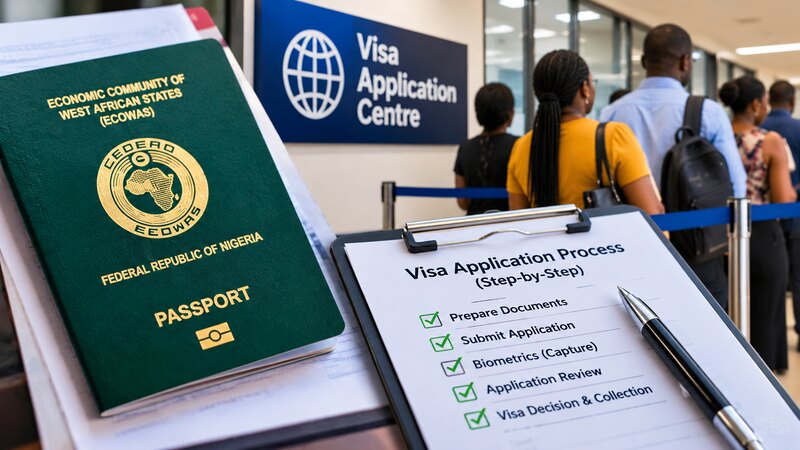
Every international visa application begins with a journey that extends far beyond the documents presented by an applicant at a counter in Lagos or Abuja. Behind the appointment bookings, fingerprint collection, passport submission and application tracking notifications is a network of institutions operating across different locations, with each responsible for a particular stage of the process. A Nigerian applying to visit the United Kingdom, Canada, France, Germany, the United States or Australia may encounter private companies, diplomatic missions and government immigration departments before receiving a final decision.
The movement of an application between these organisations follows procedures that are largely invisible to applicants, yet they determine how documents are received, examined, verified and eventually returned. Understanding how these institutions connect reveals the structure behind one of the most important processes facing Nigerians who intend to travel abroad.
The institutions that handle visa applications
The international visa application system operating in Nigeria involves several organisations whose responsibilities are connected but not interchangeable. The process generally begins with the applicant completing an online form through the destination country’s official immigration platform, followed by payment, document preparation and an appointment where physical attendance is required. Depending on the country, the application may then pass through a private visa application centre, a diplomatic mission or a government processing department before a decision is communicated.
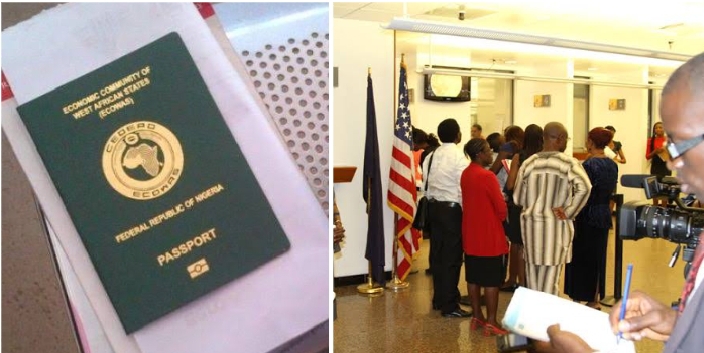
Visa application centres are commonly operated by private contractors such as VFS Global and TLScontact, which provide services under agreements with foreign governments. Their responsibilities can include receiving applications, collecting fingerprints and photographs, scanning supporting documents, handling passports and arranging their return. The exact services depend on the contract awarded by the government concerned, meaning a company operating a Canadian application centre may perform different functions from the same company collecting Australian visa biometrics.
Embassies and consulates represent foreign governments in Nigeria and perform diplomatic and consular responsibilities, including visa processing where their governments assign such duties. Central immigration authorities establish the requirements and procedures governing applications, while authorised officers assess eligibility and make decisions. This division explains why submitting documents to a private company does not transfer the government’s immigration powers to that company.
How the application enters the processing system
The first stage normally takes place online, where applicants select a visa category, complete personal information, provide travel details and upload supporting documents where the platform permits it. The relevant government website also explains the applicable requirements, payment procedures and whether the applicant must attend an appointment for biometric enrolment or an interview. Examples include the UK’s government visa platform, Canada’s IRCC portal, France Visas, the United States Department of State’s DS 160 system and Australia’s ImmiAccount.
After completing the application, the applicant pays the applicable government fee and follows instructions concerning biometric collection and document submission. Some countries require applicants to book appointments through an authorised contractor, while others direct them to attend a diplomatic mission or designated government facility. This stage creates the connection between the applicant’s online immigration record and the physical services required to complete the application.
The appointment confirmation usually contains information about the application centre, attendance requirements and documents to bring along. Applicants may also encounter separate charges for optional services such as courier delivery, SMS notifications and premium lounge access. These payments are distinct from the government’s authority to assess the application, and purchasing additional services does not change the immigration requirements.
The role of VFS Global in Nigeria’s visa system
VFS Global is one of the most prominent private companies involved in visa application services in Nigeria, operating facilities for several foreign governments. Its responsibilities vary according to the country concerned, but commonly include biometric collection, document handling, passport submission and delivery services. Nigerian applicants encounter its services when applying for visas to destinations such as the United Kingdom, Canada, Germany and Australia.
For UK applications, VFS Global provides facilities in Abuja and Lagos, including locations in Ikeja and Victoria Island, alongside designated premium application facilities in other Nigerian cities. Applicants complete their UK visa applications online before attending their scheduled appointments for fingerprints and photographs. The company handles the contracted administrative stages, while UK Visas and Immigration, which operates under the British Home Office, remains responsible for assessing applications and issuing decisions.
Canada also uses VFS Global to provide Visa Application Centre services in Lagos and Abuja. Its responsibilities include collecting biometrics and facilitating passport transmission after applicants receive the necessary instructions from Immigration, Refugees and Citizenship Canada. The Canadian government has explained that these centres operate as private service providers under formal arrangements, with immigration decisions remaining within the authority of IRCC.
How applications reach foreign immigration departments
After the application centre completes its assigned responsibilities, the relevant information becomes available to the government department handling the case. Depending on the country’s system, this can involve electronic transmission of application records, biometric information and scanned supporting documents, while physical passports follow separate custody arrangements. The government then registers or updates the application and directs it to the appropriate processing team.
The next stage involves examining the applicant’s information against the requirements of the requested visa category. A visitor visa application, for example, may require an assessment of the applicant’s travel purpose, financial circumstances, accommodation arrangements and intention to comply with the conditions of the visa. A student application may involve additional examination of admission documents, educational arrangements and financial evidence.
Applications can also be allocated to processing offices outside Nigeria, depending on the destination country’s administrative structure. The applicant may continue receiving updates through an online government account or the application centre’s tracking platform, although the information displayed by both systems may not be identical. A notification confirming that documents have been forwarded is an administrative update, not confirmation that the immigration assessment has been completed.
The United Kingdom’s processing arrangement
The United Kingdom provides a useful example of how applications submitted in Nigeria can enter a government processing network operating across different locations. UK Visas and Immigration is responsible for examining applications under the country’s immigration rules, while VFS Global provides the designated application centre services. A Nigerian applying for a Standard Visitor visa begins by completing the online form, paying the applicable fee and booking a biometric appointment.
At the scheduled appointment, the applicant provides fingerprints and a photograph, alongside any documents required under the submission procedure. The application centre performs its assigned administrative duties before the application proceeds through the UKVI system for consideration by authorised decision makers. Depending on the application category and government arrangements, the case may be handled by a processing office outside Nigeria.
The British government’s published list of international application points and decision making centres identifies locations associated with applications submitted from different countries, including Nigeria. Its November 25, 2021 publication identifies processing locations such as Liverpool, Croydon and Sheffield for different application categories. These locations describe the wider processing arrangement and should not be interpreted as a guarantee that every Nigerian application will be assigned to a particular office.
An important disclosure about the system came on October 26, 2023, when the British Home Office responded to a parliamentary question concerning passport handling at visa application centres in Nigeria, Ghana, Kenya and South Africa. The government explained that TLScontact, which operated the relevant centres at the time, did not courier physical passports and supporting documents from those locations to the United Kingdom. Instead, passports were stored at the application centre or at a remote printing location.
The explanation provides an important insight into how electronic processing and physical passport custody can operate separately. A visa officer may examine an application through the government’s processing system while the applicant’s passport remains within an authorised facility in Nigeria. The arrangement also explains why the location of the decision making office does not automatically establish where the passport is being kept during processing.
Canada’s connection between VFS Global and IRCC
Canada operates a similar division of responsibilities, with Immigration, Refugees and Citizenship Canada controlling the immigration assessment and VFS Global providing designated application centre services. A Nigerian applying for a study permit, visitor visa or other eligible category generally begins through the IRCC online system. Where biometrics are required, the applicant receives a Biometric Instruction Letter directing them to complete the process at an authorised collection centre.
The applicant then books an appointment at the designated facility in Lagos or Abuja, where fingerprints and a photograph are collected. The biometric information is associated with the immigration application through the established government arrangements, allowing IRCC to continue its assessment. VFS Global handles the collection service but does not determine whether the applicant qualifies for the requested Canadian visa.
Passport submission follows another important stage, particularly for applicants whose applications have progressed to the point where IRCC requests their travel documents. Canada’s procedure requires applicants to wait for the passport request before submitting their passports through the designated arrangement. This means an applicant who has completed biometrics should not automatically assume that the passport must immediately be handed over to the application centre.
Canada’s overseas visa offices also operate differently from ordinary public service counters. IRCC explains that its visa offices process applications for different immigration categories but are not generally open to members of the public. Applicants therefore rely on the official online system and designated communication channels rather than simply visiting an overseas processing office to demand an update.
France’s relationship with TLScontact
France uses TLScontact to provide visa application centre services in Nigeria, while the authority to decide applications lodged in the country belongs to designated French diplomatic missions. These are the Consular Section of the French Embassy in Abuja and the Consulate General of France in Lagos, as identified by the official France Visas platform. The arrangement places TLScontact at the application submission stage, with the relevant French consular authority responsible for examining applications and determining their outcomes.
A Nigerian applying for a French visa begins by completing the France Visas procedure and following the instructions for booking an appointment. The applicant then attends the appropriate TLScontact centre to submit the required documents and complete biometric procedures where applicable. The application subsequently reaches the responsible French authority for examination under the relevant visa requirements.
France introduced an important restriction affecting applications at its Abuja centre on November 17, 2025. According to the official instructions, the centre would receive only applications involving family members of French nationals, family reunification and diplomatic travel until further notice. This restriction means applicants must check the current category specific arrangements before choosing Abuja as their submission location.
The French government also advises applicants to allow more than 1 month between submission and intended departure for short stay applications, while long stay applicants are advised to allow at least 2 months. Applications can generally be submitted up to 6 months before the intended journey. These are planning recommendations rather than guaranteed decision periods, since individual cases may require additional examination.
Germany’s system of diplomatic jurisdiction
Germany provides another example of how visa applications are distributed according to the applicant’s location and the purpose of travel. The German Consulate General in Lagos generally handles applications from residents of southern Nigeria, while the German Embassy in Abuja covers the Federal Capital Territory and specified northern and central states. However, the Abuja visa section operates under particular restrictions for certain application categories.
A Nigerian resident of Lagos applying for a German visa would generally fall under the jurisdiction of the Lagos consulate, while an applicant living in Kano would normally come under the Abuja mission’s geographical jurisdiction. The applicant’s state of residence is therefore relevant when determining the appropriate diplomatic office. Additional category specific conditions may still apply, particularly to certain short stay applications handled through Abuja.
Germany also follows the wider Schengen rule that an applicant should normally submit a short stay visa application to the country representing the main destination of the trip. Someone planning to spend 8 days in Germany and 2 days in France would generally apply through the German authorities. Where there is no identifiable main destination because the applicant intends to spend equal time in different Schengen countries, the country of first intended entry generally becomes responsible.
The United States’ direct consular arrangement
The United States operates a different system from the outsourced application centre model used by several other countries. Its Department of State is responsible for consular visa decisions, with authorised officers at diplomatic missions examining applications and conducting interviews where required. Nigerian applicants for visitor visas generally complete the DS 160 online form, pay the applicable fee and arrange an appointment through the designated US visa appointment system.
The applicant attends the relevant diplomatic mission for the required procedures, which may include fingerprint collection and an interview with a consular officer. The officer examines the application under American immigration law and determines whether the applicant qualifies. Passport return arrangements follow the procedures established for the relevant application category.
A particularly important procedure affects Nigerian immigrant visa applicants processed through the US Consulate General in Lagos. Effective January 1, 2025, the consulate introduced a requirement for applicants to attend at least 2 separate visits. The first involves an in person document review, during which consular staff examine the applicant’s supporting documents and identify outstanding requirements.
The formal visa interview takes place during the second visit, with the applicant attending on the date scheduled through the National Visa Center. The consulate explains that the preliminary document review is normally scheduled approximately 2 to 4 weeks before the interview. Applicants who fail to complete the required review may have to reschedule their interview.
The National Visa Center also performs an important role in many immigrant visa cases, particularly family sponsored and employment based applications. It receives approved petitions from US Citizenship and Immigration Services, collects applicable fees and supporting documents, and prepares eligible cases for interview scheduling. The final immigrant visa decision, however, remains with the authorised consular officer.
Australia’s biometric collection arrangement
Australia’s Department of Home Affairs uses designated biometric collection facilities to obtain fingerprints and photographs from applicants who receive instructions to provide them. VFS Global operates authorised Australian Biometric Collection Centres in several countries, including Nigeria. The distinction is that the company collects biometric information while the Australian government department remains responsible for assessing visa applications.
A Nigerian applying for an Australian visitor or student visa generally begins through ImmiAccount, the government’s online application platform. Where biometrics are required, the applicant receives instructions to attend an approved collection facility or use an alternative procedure where eligible. The applicant then completes the required biometric process before the government continues its examination.
VFS Global lists an Australian Biometric Collection Centre at Purple Lekki, 2 Purple Way, Freedom Way, Lekki Phase 1, Lagos. The facility provides the physical location for the designated collection service, with appointments and applicable charges governed by the published instructions. Completing the appointment satisfies a procedural requirement but does not establish that the applicant has been approved for an Australian visa.
How passports move between application centres
Passport custody is one of the most important parts of the processing arrangement because different countries use different procedures. Some require the physical passport to be transferred to a diplomatic mission or designated printing location, while others allow it to remain at an authorised application centre during the assessment. Certain arrangements also permit applicants to retain their passports while an application is being processed, subject to the relevant conditions.
The British government’s October 26, 2023 parliamentary response provides a documented example of local passport storage at African application centres. Canada’s passport request procedure provides another example of how an online application can progress before the applicant is instructed to submit the physical travel document. These arrangements demonstrate that electronic examination and physical document movement are separate parts of the process.
A passport may be required for identity checks, confirmation of travel document details and the placement of a visa sticker where the destination country uses physical visa labels. Countries issuing electronic visas may have different requirements, depending on the category and application procedure. Applicants should therefore follow the instructions attached to their individual applications rather than assuming every country handles passports in the same way.
How biometric information reaches immigration authorities
Fingerprints and facial photographs form an important part of identity verification in several international visa systems. The information is collected at an authorised facility and associated with the applicant’s immigration record through the procedures established by the destination government. Its handling and permitted use depend on the country’s immigration laws, data protection arrangements and relevant service contracts.
Canada requires applicants who receive biometric instructions to attend an authorised collection centre, where their fingerprints and photographs are captured for IRCC processing. Australia similarly directs applicants who are required to provide biometrics to approved collection facilities. The government authorities use the information as part of their immigration procedures, while the contractors perform the collection services assigned to them.
Completing biometric enrolment does not mean that an applicant has satisfied every visa requirement. An applicant may successfully provide fingerprints and still face further examination of financial evidence, travel purpose, immigration history and other relevant information. The biometric appointment is one stage of the application, not a substitute for the final eligibility assessment.
Why applications remain pending
The time between submission and a final decision can involve several stages, including application registration, document examination, case allocation, identity verification and additional checks. Some applications require interviews or requests for further evidence, while others progress without additional contact with the applicant. These activities may be handled by different officers or processing teams, depending on the destination country’s administrative structure.
The United States describes additional examination after an interview as administrative processing, which may require further information or checks before a final decision is reached. France also advises Nigerian applicants to allow sufficient time before their intended departure, with different planning periods for short stay and long stay applications. These procedures explain why completing a biometric appointment or receiving a submission notification does not guarantee an immediate outcome.
Application centres can affect the administrative stages through appointment availability, document handling and passport delivery arrangements. However, the government authority controls the immigration assessment and decision. Tracking notifications should therefore be interpreted according to the organisation issuing them, since an application centre confirming that a file has been forwarded is not the same as the government confirming approval.
Who handles complaints when something goes wrong?
Responsibility depends on the nature of the problem and the organisation involved at that stage. An applicant experiencing difficulty booking an appointment should initially contact the designated application centre or appointment provider, while biometric collection problems should be reported through the facility responsible for the service. Passport delivery delays may also require contact with the application centre or authorised courier handling the document.
Problems involving the actual immigration assessment should be directed through the destination government’s official communication channels. This includes requests for additional evidence, application decisions, refusal notifications and corrections to information on issued visas. Where a passport is missing, applicants should immediately report the incident through the relevant application centre and courier channels, while notifying the responsible diplomatic mission or immigration authority where necessary.
Applicants should retain appointment confirmations, payment receipts, biometric enrolment records, tracking references and official correspondence throughout the process. These documents help establish when an application was submitted, which organisation received the passport and which service provider handled its movement. Keeping these records is particularly important when several organisations participate in different stages of the same application.
The difference between application fees and service charges
Visa applicants may make several payments before completing the process, although the money does not necessarily go to the same organisation. The government application fee covers the immigration application, while the application centre may charge separately for contracted administrative services. Additional payments may apply to courier delivery, SMS notifications, document scanning and premium appointment facilities.
France provides a clear example because its official visa platform identifies the government application fee separately from the TLScontact service charge and optional services. Canada also has specific charges and procedures associated with its application centre arrangements. Applicants should consult the official government and contractor platforms to establish the current amounts before making payments, since charges can change.
Paying for an additional service does not increase the likelihood of visa approval. A premium lounge may provide a more convenient appointment experience, while courier delivery may remove the need to return personally for passport collection. Neither service gives the provider authority to influence the government officer examining the application.
The role of the Nigeria Immigration Service
The Nigeria Immigration Service operates a separate immigration system concerned with Nigeria’s travel documents, entry procedures, residence permits and border administration. Its responsibilities include issuing Nigerian passports, controlling the entry and departure of persons and enforcing applicable immigration laws under the Immigration Act 2015. It is not the authority responsible for deciding whether a Nigerian qualifies for a British, Canadian, French, American, German or Australian visa.
A Nigerian applying for a foreign visa therefore deals with the immigration authority of the intended destination, while the NIS retains its responsibilities under Nigerian law. At the point of departure, Nigerian immigration officers may examine travel documents and perform the relevant border checks. Upon arrival abroad, the destination country’s border authorities conduct their own examination under the laws governing entry into that country.
This creates 3 separate stages of immigration responsibility, involving the foreign visa decision, Nigeria’s departure procedures and the destination country’s admission process. A visa approval does not remove the authority of border officers to examine travellers when they arrive. The final decision on admission rests with the competent immigration authorities at the destination.
What happens after approval or refusal?
Once a government authority approves an application, the next stage depends on the visa issuance system. Where a physical visa sticker is required, the applicant may have to submit or make the passport available for printing and placement of the visa. Where electronic visas are used, the approval may be communicated through an online account or an electronic document, with instructions on how to travel.
Applicants should examine the issued visa carefully, checking their names, passport details, validity dates and permitted entries before making travel arrangements. A refusal, on the other hand, is communicated through the relevant government decision system, with the available options depending on the destination country’s immigration laws. These may include submitting a fresh application, requesting an administrative review or pursuing an appeal where such a right exists.
The application centre does not determine whether an applicant should receive a visa, and it cannot reverse a refusal issued by the responsible government authority. Its involvement generally concerns the administrative services covered by its contract. Applicants who disagree with a decision must follow the procedures established by the government department or diplomatic mission responsible for the application.
The system behind Nigeria’s international visa applications
The movement of visa applications between application centres, consulates and immigration authorities reveals how several institutions work together to process applications submitted by Nigerians. VFS Global and TLScontact provide important access points for biometric collection, document handling and passport services, while embassies, consulates and central government departments retain the responsibilities assigned to them under their respective immigration systems.
The arrangements differ considerably between countries, from France’s designated consular decision makers and Germany’s geographical jurisdiction rules to the United States’ direct consular interview system. Canada’s IRCC process and Australia’s biometric collection arrangement also demonstrate how private contractors can support government immigration operations without acquiring the power to determine visa eligibility.
Submitting an application at a centre in Lagos or Abuja is only one part of a wider process that may involve electronic records, biometric information, government processing offices and physical passport handling facilities. Understanding the sequence helps applicants identify the organisation responsible for each stage, interpret tracking notifications correctly and know where to direct complaints when problems arise.