
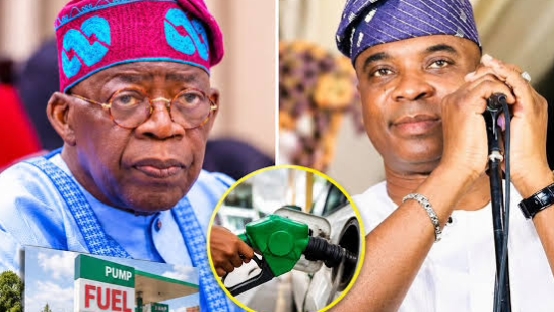
Nigeria’s petrol subsidy debate has returned to the centre of political conversation, with veteran Fuji musician Wasiu Ayinde Marshal, popularly known as KWAM 1 or K1 De Ultimate, offering a strong defence of President Bola Tinubu’s decision to end the arrangement. His remarks have drawn attention to a familiar but unresolved question surrounding the country’s petroleum industry: who actually benefited from the billions of naira spent by the government to keep petrol prices artificially low?
Speaking at an All Progressives Congress (APC) campaign event in Oyo State on November 21, 2026, the musician described the subsidy arrangement.
KWAM 1’s intervention goes beyond an endorsement of Tinubu’s economic policy, particularly because his comments touch on allegations of manipulation, public fund diversion and the influence of powerful interests in Nigeria’s petroleum sector. His remarks also bring back memories of previous subsidy investigations, including the controversies that emerged during the administration of former President Goodluck Jonathan, when lawmakers uncovered serious irregularities in payments to petroleum marketers and government agencies.
Why Tinubu Removed Petrol Subsidy? KWAM 1’s explanation offers an opportunity to examine the financial arrangement that existed before May 2023, the alleged operations of those who benefited from it, the historical investigations into subsidy fraud and the economic arguments behind the president’s decision.
What KWAM 1 said about Tinubu’s subsidy removal
KWAM 1 made his position clear while addressing the APC gathering in Oyo State on November 21, 2026, where he defended Tinubu’s decision to discontinue the petrol subsidy arrangement. The musician questioned the identity of those receiving the money spent by the government and argued that ordinary citizens were not the principal beneficiaries of the payments, despite the policy being presented as a measure intended to make petrol affordable for Nigerians.
He specifically referred to Tinubu as Akanbi and maintained that the president had taken a necessary decision by refusing to continue funding a system that allegedly enriched a privileged group. His comments focused on the difference between the people who were supposed to benefit from subsidised petrol and those who allegedly collected substantial payments through the arrangement.
He said, “It is true that Akanbi (Tinubu) removed the subsidy. If he had not done so… who are the ones collecting the subsidy money? It is not the citizens.”
The musician also alleged that the arrangement was being deliberately manipulated by individuals whose activities were not necessarily connected to the direct sale of petroleum products. According to him, the people involved in the alleged sabotage were not limited to fuel dealers or marketers, suggesting that the interests surrounding subsidy payments extended beyond the visible participants in the petroleum business.
He stated, “Some people are sitting somewhere sabotaging the fuel subsidy. Sometimes, it is not even those involved in the petroleum business.”
The cabal KWAM 1 accused of exploiting the subsidy arrangement
The reference to people allegedly operating from behind the scenes is one of the most significant aspects of KWAM 1’s speech. His argument suggests that the former subsidy arrangement involved more than the government paying part of the cost of petrol supplied to Nigerians, as powerful interests could allegedly exploit the system and benefit from public expenditure without being directly involved in the distribution of fuel.
Under the former arrangement, the government paid the difference between the approved retail price of petrol and the amount recognised as the actual cost of supplying the product. This meant that consumers could purchase petrol below its full calculated market cost, while government funds covered the difference through payments to approved participants in the supply chain.
The arrangement required accurate information about the volume of petrol imported, the amount distributed and the payments legitimately due to participating companies. Any manipulation of these figures could expose public funds to abuse, particularly where claims were poorly verified or payments were approved without adequate checks.
KWAM 1’s allegation is that certain individuals took advantage of these weaknesses, allowing them to benefit from money that was supposed to support the supply of affordable petrol. He did not identify the individuals involved, mention specific companies or provide transaction records to establish the identities of those he described as saboteurs.
He also made an important distinction by suggesting that some beneficiaries were not even petroleum dealers. This raises the possibility of interests operating through political, administrative or commercial connections, although his reported remarks did not establish which category of individuals he was referring to.
Why KWAM 1 distanced himself from petrol dealers
While explaining his position, the Fuji musician also made a statement about his personal relationship with the petroleum business. He appeared to be clarifying that his defence of subsidy removal was not based on personal involvement in fuel trading or close relationships with people operating within the industry.
He said, “I am not selling fuel, and I do not move with those who sell fuel.”
The statement followed his allegation that people outside the direct petroleum business could also benefit from the former arrangement. It formed part of his explanation of why he believed the subsidy system was being exploited and why Tinubu’s decision to discontinue it deserved support.
His remarks did not indicate that he had personally investigated the alleged beneficiaries or possessed evidence identifying the individuals responsible. Rather, he presented his position as an endorsement of the president’s decision and a rejection of a system he believed had allowed certain people to benefit disproportionately from government spending.
What Tinubu said when he assumed office on May 29, 2023
KWAM 1 also recalled Tinubu’s position when he became president, arguing that the decision to stop paying for petrol subsidies was part of the administration’s determination to end an arrangement that had become financially burdensome.
He said, “When Akanbi came, he said he would not pay for the subsidy.”
The musician added, “He said there is nothing like subsidy, that some people are simply pocketing the money.”
His account reflects the central argument behind Tinubu’s policy. The statement about people pocketing subsidy money is KWAM 1’s description of the president’s position rather than a direct quotation from Tinubu’s inauguration speech.
During his inauguration at Eagle Square in Abuja on May 29, 2023, Tinubu made the declaration that immediately changed the direction of Nigeria’s petroleum pricing policy.
“The fuel subsidy is gone,” the president announced.
He explained that the 2023 budget he had examined made no provision for continued subsidy payments beyond June 2023. Tinubu also commended the outgoing administration for beginning the process of phasing out the arrangement, arguing that the benefits had increasingly favoured wealthier Nigerians rather than poorer households.
The president’s position was that the enormous resources committed to petrol subsidies could be redirected towards public infrastructure, education, healthcare, housing and other essential services. The declaration effectively ended the previous pricing arrangement, although the transition subsequently involved further changes in petrol pricing and government policy.
How the former petrol subsidy arrangement operated
Understanding the controversy requires examining how the system worked before its removal. Petrol subsidy was designed to prevent Nigerians from paying the full cost of supplying imported petroleum products, with the Federal Government covering the difference between the approved pump price and the recognised cost of the product.
For example, where the actual recognised cost of supplying a litre of petrol exceeded the approved retail price, the government was expected to compensate the relevant participants for the difference. This arrangement was intended to protect consumers from international oil price fluctuations and other costs associated with importing petroleum products.
The government therefore committed substantial resources to maintaining the approved price, with payments depending on the quantity of petrol recognised as supplied and the applicable pricing calculations. The system required effective monitoring because inaccurate import figures, inflated claims and questionable documentation could result in payments being made for products that were not legitimately eligible for subsidy support.
Over the years, investigations raised concerns about the verification of petroleum imports, the activities of marketers and the role of government institutions responsible for approving claims. These controversies contributed to the growing perception that the arrangement was vulnerable to corruption and financial manipulation.
The issue became particularly prominent during the administration of Goodluck Jonathan, when the government attempted to remove the subsidy in January 2012. The announcement triggered nationwide protests, labour strikes and demonstrations as Nigerians rejected the immediate increase in petrol prices.
The January 2012 subsidy investigation exposed alleged financial irregularities
Following the nationwide protests, the House of Representatives established an ad hoc committee to investigate the petroleum subsidy regime and examine the payments made to petroleum marketers and other participants.
The investigation uncovered several questionable transactions and irregularities, with the committee recommending that approximately ₦1.067 trillion be refunded to the Federal Government over various alleged violations and excess payments.
The recommendations covered several categories, including payments connected to the Nigerian National Petroleum Corporation, marketers and the Petroleum Products Pricing Regulatory Agency.
Among the figures contained in the committee’s findings were approximately ₦310.415 billion relating to NNPC kerosene subsidy, ₦285.098 billion in payments above PPPRA recommendations and ₦108.648 billion associated with NNPC self discount.
The committee also identified approximately ₦8.664 billion involving marketers’ violations, ₦41.936 billion involving companies that failed to appear before the investigation and ₦312.279 billion relating to excess payments to the PPPRA.
Together, these figures amounted to approximately ₦1.067 trillion recommended for refund. They represented the committee’s findings and recommendations, not confirmation that the entire amount was subsequently recovered by the government.
How the alleged subsidy fraud operated
Another significant aspect of the 2012 investigation was the discrepancy between the volume of petrol reportedly imported into Nigeria and the quantity estimated to have been consumed locally.
Figures presented during the investigation raised questions about the accuracy of import and consumption records used in calculating subsidy payments. The committee examined claims involving substantial quantities of petrol and questioned how public funds were being disbursed to companies participating in the scheme.
One of the figures discussed was a difference of approximately 24 million litres daily between the volume discharged by vessels and estimated local consumption. The committee chairman, Farouk Lawan, put the associated subsidy overpayment at approximately ₦669 billion.
The investigation also raised concerns about companies submitting claims despite questions surrounding their assets, operations and ability to account for the petroleum products involved. Such findings demonstrated how weaknesses in verification and supervision could expose government funds to substantial losses.
Further investigations into the historical Petroleum Support Fund scheme also produced allegations of fraudulent claims. Former EFCC chairman Abdulrasheed Bawa was reported to have disclosed investigations involving more than ₦68 billion in petroleum subsidy fraud linked to 59 of the 141 companies that participated in the scheme between 2006 and 2011.
Other figures mentioned in the investigations included alleged fraudulent claims of ₦19.6 billion and an attempted ₦9.4 billion fraud involving forged documents. These historical cases provide context for the concerns surrounding the subsidy system and the payments made before Tinubu assumed office.
Why Tinubu described subsidy payments as money benefiting powerful individuals
Tinubu’s defence of subsidy removal was also built around the argument that the system had become an expensive government responsibility that disproportionately benefited powerful interests.
During his national broadcast on July 31, 2023, the president returned to the issue and explained why he believed the policy had to be discontinued.
He said, “For several years, I have consistently maintained the position that the fuel subsidy had to go.”
Tinubu further stated, “The subsidy cost us trillions of Naira yearly. Such a vast sum of money would have been better spent on public transportation, healthcare, schools, housing and even national security. Instead, it was being funnelled into the deep pockets and lavish bank accounts of a select group of individuals.”
The statement closely reflects the argument made by KWAM 1 during his appearance at the APC event in Oyo State. Both presented the subsidy arrangement as a system that consumed public funds while allowing certain individuals to enjoy benefits that were not necessarily reaching ordinary Nigerians.
The president’s statement about powerful beneficiaries does not establish that every individual or company involved in the petroleum supply chain committed fraud. Specific allegations require evidence, investigation and appropriate legal proceedings before individuals can be held responsible.
KWAM 1’s defence of Nigerians enduring temporary hardship
Beyond the allegations surrounding subsidy beneficiaries, KWAM 1 also addressed the economic difficulties associated with the policy. He suggested that Nigerians could endure a period of hardship if the removal of the subsidy eventually produced benefits for the country.
His position was that the government should not continue an arrangement simply because people had become accustomed to paying lower petrol prices, particularly if the system was allegedly being exploited by powerful interests.
He said, “Some people want the masses to keep eating crumbs or to suffer for a long time. Akanbi said no, it should not be so.”
He further stated, “He said if we suffer for a little while and then enjoy the benefits, that is a good thing. We should not suffer to death.”
The final expression is particularly important because it places a limit on the hardship he was defending. His reported argument was that Nigerians could experience temporary difficulties in exchange for future economic improvements, rather than continue bearing the cost of a system he believed was benefiting a privileged few.
The challenge remains the extent to which the expected benefits can be delivered within a reasonable period. The removal of petrol subsidy immediately changed the cost of purchasing fuel, with consequences for transportation, food distribution, electricity generation and the operating expenses of businesses across the country.
The economic consequences following the May 2023 decision
The removal of the subsidy significantly changed the financial conditions facing Nigerian households. Petrol prices increased as the previous government support arrangement ended, while the exchange rate, international supply costs and changes in domestic petroleum pricing also influenced the prices consumers encountered.
Commercial transport operators adjusted their fares to reflect higher fuel expenses, placing additional pressure on workers, traders, students and other Nigerians who depend on public transportation. The increased cost of moving agricultural produce also contributed to the difficulties facing food distributors and consumers.
Small businesses experienced additional pressure because many depend on petrol powered generators to operate during electricity interruptions. Higher fuel expenses affected production costs, delivery charges and the prices of goods and services, particularly among businesses with limited financial reserves.
The International Monetary Fund’s 2024 assessment acknowledged that the subsidy reform took place in June 2023 and highlighted shortcomings in the implementation of compensatory measures for poorer Nigerians. The World Bank also recognised the financial and economic challenges associated with the reforms while stressing the importance of social protection for vulnerable households.
These developments are central to the debate surrounding KWAM 1’s remarks because the expected economic benefits of subsidy removal must be assessed alongside the immediate financial pressure experienced by ordinary citizens.
The unanswered questions surrounding the alleged subsidy cabal
KWAM 1’s comments have brought renewed attention to the people he believes benefited from the former subsidy arrangement, but his reported speech did not identify any individual or company allegedly responsible for the activities he described.
The historical investigations provide evidence that the subsidy system faced serious allegations of fraud, inflated claims and questionable payments. The existence of those investigations does not automatically establish the identities of every person who benefited from the arrangement or demonstrate that all the alleged funds were recovered.
Several important accountability issues therefore remain relevant, including the amount of money recovered from companies implicated in previous investigations, the prosecution of individuals linked to fraudulent claims and the actions taken against government officials who approved questionable payments.
The removal of the subsidy also raises questions about the extent of savings achieved by the government and how those resources have been allocated since 2023. Tinubu promised that the money would support infrastructure, healthcare, education and other public services, making transparency over the use of the savings an important part of assessing the policy.
KWAM 1’s allegation that some beneficiaries were not even involved in the petroleum business makes the issue particularly significant. Identifying those individuals and establishing the methods through which they allegedly benefited would require specific financial records, investigative findings and evidence rather than general political statements.
What KWAM 1’s remarks reveal about Tinubu’s subsidy policy
The Fuji musician’s comments have placed the debate surrounding subsidy removal within a wider discussion about corruption, public spending and the influence of powerful interests in Nigeria’s petroleum sector. His position is that Tinubu took a necessary step by ending a system that allegedly allowed a privileged group to benefit from government payments while ordinary citizens continued to struggle with the cost of living.
His argument draws on concerns that have existed for years, particularly the findings of previous subsidy investigations that exposed questionable payments and weaknesses in the administration of the scheme. The January 2012 House of Representatives investigation remains an important historical reference because it demonstrated the scale of the financial irregularities that lawmakers associated with the arrangement.
The allegations made by KWAM 1 about unnamed individuals operating behind the scenes remain his claims, rather than independently established findings against specific people. The wider issue requires continued scrutiny of previous investigations, recovered funds, prosecutions and the financial records of the petroleum supply system.
Tinubu’s decision on May 29, 2023, ended the former petrol subsidy arrangement, but the larger question of accountability remains important. If the policy was introduced to stop powerful individuals from benefiting at the expense of ordinary Nigerians, identifying those responsible for previous abuses and demonstrating how the resulting savings are improving public services remain essential parts of the government’s responsibility.