The brief coup attempt in Benin has renewed concerns about the stability of democratic systems across West Africa.
The incident took place on December 7 when a small group of soldiers tried to take control of key locations in Cotonou.
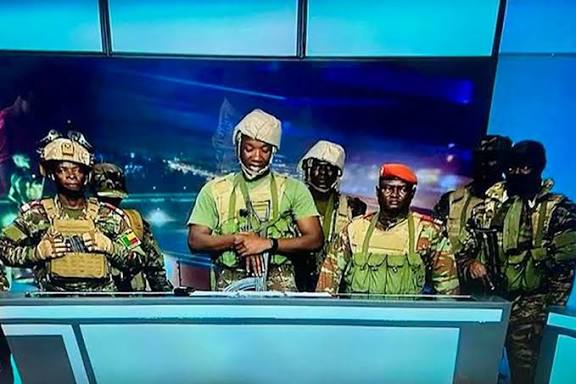
Security officials said the mutineers moved towards the residence of President Patrice Talon and attempted to seize the national broadcaster.
Witnesses reported hearing gunshots in the early hours, which created fear among residents living close to government offices.
The armed men later released a recorded message claiming that the president had been removed and that a new military group had taken charge.
The group introduced an officer who was described as head of a “refoundation” committee, but the identity of the individual remained unclear.
The country’s security agencies responded quickly and regained control of the situation within a few hours.
Officials confirmed that some members of the group were arrested while others escaped from the area.
By midday, the government announced that the attempt had failed and urged citizens to remain calm.
Although the event was short-lived, the online reaction was immediate and widespread.
Several influencers on social media celebrated the mutiny before the facts were verified by authorities.
Some of the posts included old protest footage that was shared as if it were current, creating confusion among users.
A number of online accounts repeated unverified claims that the government had fallen and that crowds were gathering to support the soldiers.
The rapid spread of misleading information has raised concerns about coordinated online activity targeting political transitions in the region.
Digital researchers have suggested that some social media users who often comment on events in Mali, Burkina Faso and Niger were also active during the Benin incident.
Their messages appeared to support instability and encouraged citizens to reject civilian rule.
The use of online platforms to influence political discussions has become more visible in recent years.
Some analysts say these networks are not limited to local activists but also involve external interests aiming to shift public sentiment.
This fear increased when reports emerged of two foreign-linked vessels spotted close to the port of Cotonou during the unrest.
The vessels later moved away once the situation was contained by Benin’s security forces.
Officials have not directly linked the ships to the failed coup, but the timing has created speculation about possible foreign monitoring.
Observers note that the presence of external actors near politically tense situations is now a common feature in parts of West Africa.
Countries in the region have been dealing with tensions caused by declining public trust, slow governance reforms and security challenges.
These issues create spaces that can be exploited by groups seeking influence through political or military means.
Despite this, Benin’s institutions maintained order throughout the brief unrest.
The armed forces remained united and publicly stated that they were committed to defending the republic.
Neighbouring countries, including Côte d’Ivoire, expressed support for Benin’s constitutional order and readiness to assist if needed.
The swift regional response highlighted a growing awareness of the impact that a successful coup in one country can have on nearby states.
Analysts say that West Africa is facing a difficult period because many citizens feel excluded from political processes.
Concerns about electoral transparency, economic hardship and weak public services often lead to frustration.
In some situations, this frustration is used to justify military takeovers, even though these actions rarely resolve underlying problems.
The trend of military rule in parts of the Sahel has added to fears that the region could experience more instability.
Regional organisations such as ECOWAS and the African Union have repeatedly stressed the need for stronger democratic institutions.
Experts argue that these bodies must adopt more active measures to encourage rule of law and reduce the appeal of unconstitutional changes of government.
Suggestions include regular assessments of governance indicators such as judicial independence, press freedom and civil-military relations.
Advocates believe that early warnings and preventive action could reduce the risk of more political upheaval.
The failed coup in Benin has become another reminder of the challenges facing democracies in the region.
The resilience of Benin’s institutions was praised, but the ease with which the attempt was made shows that weaknesses still exist.
Observers warn that future attempts could be more organised and more difficult to contain.
The situation underscores the need for political leaders to strengthen institutions, improve public trust and guard against external interference.
West Africa’s stability will depend on how quickly governments address these issues and show commitment to democratic principles.