The late T. B. Joshua remains one of the most talked about religious figures to emerge from Nigeria in the last three decades. Born Temitope Balogun Joshua on June 12 1963 in Ondo State Nigeria, he rose from modest beginnings to become the founder and spiritual leader of Synagogue Church of All Nations, widely known as SCOAN. At its peak in the 2000s and 2010s, the church drew thousands of worshippers from across Africa, Europe, Asia and the Americas, turning Lagos into a global pilgrimage site for those seeking healing, deliverance and prophetic direction.
Joshua died on June 5 2021 at the age of 57, but years after his death his sermons and prophecies continue to resurface whenever world events appear to align with past statements. One of the most frequently revived clips concerns his warnings about tension between Israel and Iran, a message many now refer to as his prophecy on an Israel-Iran war.
This article provides a comprehensive and fact based breakdown of what he said, when he said it, how it was framed at the time, how it resurfaced during later geopolitical escalations, and what clarifications have been issued by his ministry. It moves carefully through documented timelines, public statements and media reactions, separating verifiable information from interpretation.
The Historical Backdrop Between Israel and Iran
To understand why Joshua’s words drew renewed attention, it is important to examine the long standing tension between Israel and Iran. Diplomatic hostility between the two intensified after the 1979 Iranian Revolution, when Iran’s new leadership adopted a strong anti Israel position. Over the decades, disputes have centered on nuclear development, regional influence in Syria and Lebanon, and allegations of covert operations. These tensions have periodically flared into direct or proxy confrontations, especially in Syria where Israeli forces have targeted Iranian linked positions since the Syrian civil war began in 2011.
By the early 2010s, global media frequently reported on Iran’s nuclear program and Israel’s stated determination to prevent Tehran from acquiring nuclear weapons capability. In 2012, Israeli Prime Minister Benjamin Netanyahu addressed the United Nations General Assembly and warned about red lines regarding Iran’s enrichment levels. That same year, diplomatic negotiations and sanctions dominated international headlines. It was within this broader climate of heightened rhetoric that Joshua delivered sermons referencing rising tension between the two nations.
The Sermons Around 2011 and 2012
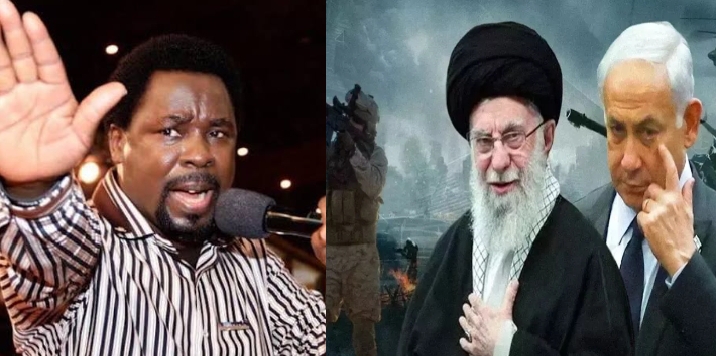
Clips widely circulated online are often traced to sermons delivered around 2011 and 2012 at SCOAN headquarters in Lagos. In these messages, Joshua reportedly spoke about seeing a situation in which Israel and Iran were in a posture of mutual aggression. The phrase most commonly quoted from those clips is “I want to fight, you want to fight”, which he used to describe the atmosphere he perceived between the two governments. He urged congregants and viewers of Emmanuel TV, the church’s broadcast arm, to pray for peace.
Importantly, the tone of those messages as seen in archived footage appears to be framed as spiritual caution rather than a dated military forecast. He did not publicly announce a specific date, battle plan or operational detail. Instead, he emphasized that prayer could alter outcomes and that the absence of prayer could allow conflict to escalate. In some excerpts he used metaphorical language, comparing previous conflicts to an atom and suggesting that a future confrontation could resemble something more elemental and devastating. The language was vivid, but it remained within the theological framework he often used in discussing global crises.
His words;
“War is not going to bring solution to the whole world – rather, crisis. We want God’s intervention in whatever differences between nation to nation. We pray for the nation, Iran. We pray for the nation, Israel. God’s intervention in whatever differences.
“If this kind of fight starts, every other one you have read about is an atom; this one will be an element.”
The Nature of Prophetic Language
Joshua was known for using symbolic imagery when discussing political events. Throughout his ministry he spoke about elections, disasters and international tensions using a mix of direct and allegorical speech. Scholars of Pentecostal prophecy note that such language often functions as a call to repentance or intercession rather than as a fixed prediction carved in stone. Within that tradition, prophecy is frequently conditional. The idea is that prayer can avert disaster and that warnings are opportunities for change.
This context matters when evaluating the Israel-Iran message. In the clips available online, Joshua appears to frame the situation as one that can be influenced through prayer. He does not say that war is inevitable. He suggested that continued hostility without spiritual intervention could lead to serious consequences. Supporters interpret this as responsible spiritual leadership. Critics argue that such framing is inherently flexible and can later be aligned with multiple outcomes.
Developments After 2012
From 2013 onward, negotiations between Iran and world powers intensified, leading to the Joint Comprehensive Plan of Action signed on July 14 2015 between Iran and the P5 plus one nations. The agreement sought to limit Iran’s nuclear program in exchange for sanctions relief. For a period, tensions appeared to ease somewhat, although mistrust remained. In May 2018 the United States withdrew from the agreement, leading to renewed sanctions and heightened rhetoric.
Throughout these years, Joshua’s 2011 and 2012 statements did not dominate headlines. They existed primarily within religious circles and archived church media. It was only when visible military exchanges escalated in later years that older clips began circulating more aggressively on social media platforms.
Renewed Attention in 2024 and 2026
In April 2024, Iran launched a large scale drone and missile attack toward Israel in response to an alleged Israeli strike in Damascus. Israel intercepted many of the projectiles with the assistance of allied defense systems. Global news coverage was intense, describing the event as one of the most direct confrontations between the two states in recent history. As footage of missiles filled television screens, social media users began reposting Joshua’s old sermon clips, claiming he had foreseen the crisis more than a decade earlier.
In 2026, further exchanges and proxy tensions in the region once again revived discussion. Articles and blog posts carried headlines suggesting that an old prophecy had resurfaced. The framing often implied a direct correlation between his words and current events. However, many of these articles relied on the same recycled video excerpts rather than new documentation. The sense of rediscovery was fueled more by timing than by newly uncovered evidence.
Renewed Attention and the U.S.-Iran-Israel War of 2026
By early 2026 tensions between Israel and Iran escalated into open warfare, drawing in the United States in a way that transformed a long standing rivalry into a full scale international confrontation. In February 2026 coordinated strikes targeted Iranian military infrastructure and nuclear linked facilities, with American forces supporting Israeli operations through direct military engagement and strategic defense coordination. What had once been proxy battles and covert operations shifted into overt battlefield exchanges, with missiles and drones launched across borders and U.S. bases in the Gulf region coming under threat.
Iran responded with retaliatory attacks on Israeli territory and on American military installations in parts of the Middle East, widening the conflict beyond a simple bilateral clash. Regional airspace disruptions, rising oil prices and emergency diplomatic meetings reflected how quickly the war affected global stability. The scale of confrontation in 2026 marked one of the most serious military escalations in the region in decades, turning what had been years of rhetoric and shadow conflict into visible and sustained warfare.
It was within this atmosphere of real time bombardment and geopolitical uncertainty that old clips of TB Joshua’s warnings about tension between Israel and Iran resurfaced once again. Supporters viewed his earlier call for prayer as strikingly relevant in light of a war now involving major powers, while critics maintained that decades of hostility had already made such conflict foreseeable. The outbreak of direct war in 2026 did not merely revive his words, it amplified them, placing past spiritual warnings beside unfolding global crisis.
Official Clarifications From SCOAN
After Joshua’s death in June 2021, SCOAN leadership under Pastor Evelyn Joshua continued to address public interest in his prophecies. In various statements and posts, the church clarified that he did not prophesy a third world war. They emphasized that his message was a call to prayer for peace. According to their communications, portraying his words as a definitive prediction of global war misrepresents his intention.
The church has maintained that prophecy should be understood within a spiritual lens rather than as political forecasting. They argue that isolating one phrase from a longer sermon can distort meaning. This position has been repeated in response to viral posts claiming he predicted a specific Israel Iran war scenario. The absence of a single official written transcript widely distributed by the church means that interpretation often depends on video context and selective quoting.
Media Coverage and Interpretation
Mainstream media outlets that have reported on the resurfacing of Joshua’s message typically adopt a cautious tone. They note that clips are circulating and that supporters see them as prophetic confirmation. At the same time, they often include disclaimers about the lack of precise dates or detailed predictions. Fact checkers point out that geopolitical tensions between Israel and Iran have been ongoing for decades, making warnings about possible conflict less specific than they might appear in hindsight.
This dynamic highlights a broader phenomenon in media culture. When conflict erupts, audiences search the past for signs and warnings. Religious figures with recorded sermons provide rich archives for this process. Statements that once seemed general can take on sharper meaning when viewed through the lens of breaking news.
Elements Behind Belief
For many of Joshua’s followers, the resurfacing of his words is not merely about politics. It is about reassurance that their spiritual leader possessed divine insight. His ministry emphasized healing, prophecy and personal transformation. Believers often recount testimonies of predictions they believe came to pass in their own lives. Against that backdrop, a warning about international tension feels consistent with his perceived spiritual authority.
On the other hand, skeptics view the situation differently. They argue that warnings about conflict in the Middle East are not unusual given the region’s history. From their perspective, the language I want to fight you want to fight reflects observable diplomatic hostility rather than supernatural foresight. The debate therefore becomes less about a single clip and more about competing worldviews regarding prophecy itself.
The Power of Timing and Memory
Memory is rarely neutral. When footage from 2011 resurfaces during a 2026 missile exchange, the emotional impact is amplified by fear and uncertainty. The mind connects past speech with present anxiety. This pattern is not unique to Joshua. Throughout history, statements by religious and political leaders have been reinterpreted after major events. The difference in the digital age is speed. Clips circulate globally within hours, detached from their original context.
Joshua’s Israel-Iran message fits squarely into this modern cycle of rediscovery. The fact that he delivered it during a period already marked by nuclear tension adds plausibility. The absence of a concrete timeline allows broad application. Both factors contribute to why the clip continues to resurface.
Separating Documentation From Interpretation
What can be stated with confidence is that around 2011 and 2012 Joshua spoke about rising tension between Israel and Iran and urged prayer for peace. Archived video supports that claim. It can also be stated that direct military exchanges occurred between the two nations in April 2024 and that tensions remained high into 2026. Those are documented events reported by international media.
What cannot be stated with equal certainty is that he predicted a specific war with defined characteristics or dates. The language available does not include operational details. It does not outline troop movements or identify a particular year of outbreak. It remains within the realm of spiritual admonition. Recognizing this distinction helps ground discussion in verifiable facts.
Reflection for Religious Prophecy
The conversation surrounding Joshua’s message reflects a larger global pattern. In times of crisis, societies revisit prophetic archives. Whether in Christianity, Islam or other traditions, apocalyptic language often gains traction during conflict. The Israel Iran tension carries symbolic weight in many religious narratives, particularly those concerning end times theology. As a result, statements touching on that region naturally attract attention.
Joshua’s ministry operated within charismatic Christianity, which places strong emphasis on contemporary prophecy. His international audience meant that comments about global politics reached beyond Nigeria. That global reach explains why his words are now debated far from Lagos.
Legacy and Continuing Debate
Since his passing on June 5 2021, assessments of Joshua’s life have grown more complex. Admirers remember large humanitarian outreach programs and televised healing services. Critics point to controversies including the 2014 building collapse at the SCOAN guesthouse that killed 116 people, an event that drew international scrutiny. His legacy therefore contains both devotion and dispute.
The Israel-Iran prophecy discussion sits within that broader legacy. For supporters, it reinforces belief in his spiritual insight. For skeptics, it exemplifies the elasticity of prophetic language. For observers, it provides a case study in how memory, media and faith intersect during geopolitical turmoil.
Final Thoughts: Between Warning and Fulfillment
The story of T B Joshua’s message about Israel and Iran is less about a single sentence and more about the interplay between faith and unfolding history. Around 2011 and 2012 he warned of rising tension and urged prayer. In February 2026, direct hostilities captured global headlines. Social media bridged the gap between those moments, presenting old footage as renewed evidence.
Whether one views his words as prophecy fulfilled or as broadly framed spiritual caution depends largely on prior belief. What remains undeniable is the power of recorded speech to travel across time. In an era where sermons are archived indefinitely, every warning carries the potential to reappear under new circumstances. Joshua’s Israel Iran message endures not because it offered military specifics, but because it touched on a fault line that the world continues to watch with concern.