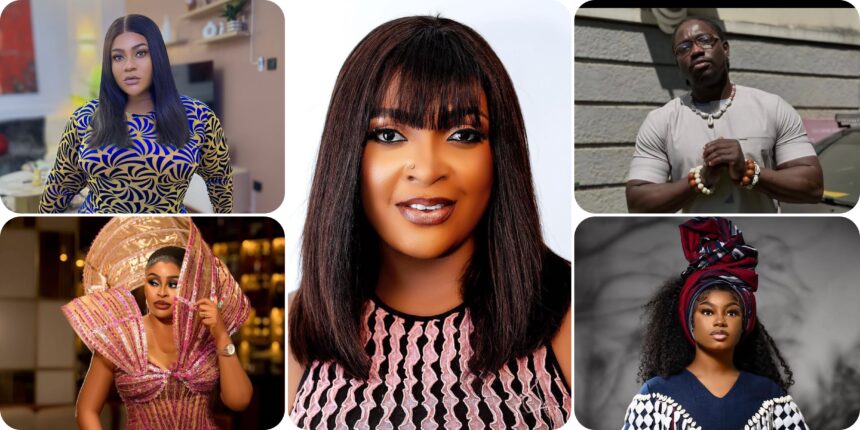
VeryDarkMan, King Mitchy, Nkechi Blessing Sunday and many other Nigerians have called for refund from self-styled relationship expert, Blessing CEO.
This clamour came after Blessing CEO announced she was battling stage 4 breast cancer and solicited public donations, sharing her account details on social media.
Known for loving to chase clout online, some netizens refused to believe her report and demanded to see her medical report. Still, well-meaning Nigerians who were driven by sympathy began donating into her account, with over ₦100 million raised, according to online claims.
Shortly after, concerns began to mount over inconsistencies in her claims and the absence of verifiable medical proof.
As pressure grew for transparency, some of the very figures who amplified her appeal or contributed financially, shifted their stance. They are now demanding refunds, arguing that without clear evidence, the legitimacy of the fundraiser remains in question.
What began as a public show of support has now turned into a credibility test that has put both the donations and the narrative behind them under intense scrutiny.
The Claim & Fundraising

She said the condition was serious and suggested she might undergo major surgery, including possible breast removal.
Her announcement quickly gained attention online. Many Nigerians reacted with sympathy, sending messages of support and donating money to assist with her treatment.
At the time, there was little public doubt. The emotional nature of the videos and the seriousness of the illness led many to respond in good faith, trusting that the situation was genuine.
What Triggered the Refund Demands
The calls for refunds began after doubts emerged over Blessing CEO’s cancer claim, particularly following questions about the authenticity of a medical test result that circulated online after she reportedly sent it to close friends.
As if that was not enough, a woman identified as Deborah Mbara claimed to be the patient whose medical records were allegedly altered. According to the claims, Blessing contacted Mbara, a former client, under the pretext of comparing medical results after stating she had also been diagnosed with breast cancer. Mbara’s family alleges that this interaction led to the patient sharing her original records, which were then edited to replace her name with Blessing’s.
One of the earliest and most vocal critics who reacted was VeryDarkMan. At the time, he publicly challenged Blessing CEO to provide clear medical evidence to support her claim. Shortly after, VeryDarkMan revealed he had financially supported Blessing CEO following her cancer claim, with circulating reports putting his donation as high as ₦10 million. But the contribution came with a condition. He argued that having sent money, he now had a vested interest and would personally verify her claims, stating he intended to visit her in Lagos to “inspect” the alleged condition.
Asides the public challenge to inspect, some netizens framed the social media critic’s move as strategic. By donating, VDM positioned himself not just as a critic but as a stakeholder with potential legal grounds to demand accountability or pursue action if the claims behind the fundraiser prove to be false.
By April 3, the tone had shifted. After Blessing CEO admitted to exaggerating aspects of her condition during a livestream session with Daddy Freeze, and failed to provide verifiable medical evidence, VDM began demanding a refund. He warned that the money in her possession would have to be returned, making it clear he intended to follow through after addressing other ongoing matters.
In response, Blessing CEO pushed back at the growing calls for repayment, maintaining that she never directly solicited funds and that donations were given voluntarily out of goodwill.
As the controversy grew, King Mitchy also joined the calls for accountability. In a viral reaction, she branded Blessing CEO a “Stage 4 thief” and accused her of trivialising the struggles of genuine cancer patients.
She also moved swiftly to demand her money back, taking to social media to insist on an immediate refund and warning in blunt terms that she expected every naira returned.
Beyond the personal demand, Mitchy raised a broader concern about the fallout from the controversy, warning that incidents like this could discourage people from supporting legitimate medical cases, as potential donors may become more cautious about who they trust.
The situation escalated further with reactions from other public figures. Actress Sarah Martins openly criticised Blessing CEO, alleging that the cancer claim was fabricated and pointing to what she described as evidence suggesting the test result was not genuine. She urged Nigerians who had donated to demand their money back, arguing that the public may have been misled.
Similarly, Nkechi Blessing Sunday also joined the growing backlash, launching a scathing attack on Blessing CEO over the controversy.
In a series of posts, the actress accused her of deceiving the public and demanded accountability over the donations received. She went further to call on the Economic and Financial Crimes Commission (EFCC) to intervene, alleging that Nigerians had been defrauded under the guise of a medical appeal.
Other individuals, including Alafaa Kariboye-Igbo, popularly known as Oil Money, has also escalated the matter, formally demanding a refund from Blessing CEO and threatening legal action.
On April 3, 2026, through his lawyers at Gideon Ugochukwu Chambers, he issued a letter of demand seeking the return of ₦20 million he contributed to her fundraiser. The legal team argued that the donation was made based on what they described as false, misleading and fraudulent representations about her stage 4 cancer diagnosis.
The letter gives her a seven-day ultimatum to refund the full amount or face immediate legal consequences, including a formal police complaint and further claims for damages.
As doubts intensified, contributors like him became part of the wider group now demanding accountability over how the funds were raised and what evidence supports the claim.
With multiple voices demanding proof and refunds, the issue shifted from sympathy to scrutiny, as more Nigerians began asking whether the donations were made based on accurate information or not.
Bigger Picture
The controversy surrounding Blessing CEO has once again raised concerns about how online fundraising is handled in Nigeria, especially when it is driven by emotional appeals and social media influence.
In recent years, platforms like Instagram and Facebook have made it easier for public figures to reach large audiences quickly and request financial support during personal crises. In many cases, donations are made within hours, often without formal verification, as followers rely on trust and emotional connection rather than documented proof.
However, this case shows the risks involved when such claims are later questioned. Once doubts emerge, it becomes difficult to separate genuine need from possible misinformation, and donors are left with limited options to recover their money or confirm how it was used.
The situation also highlights the growing role of influencers and online personalities like VeryDarkMan in holding others accountable. Rather than traditional institutions, it is often individuals with large followings who raise concerns, demand evidence, and push issues into the public spotlight.
At the same time, the involvement of figures such as Nkechi Blessing Sunday and Sarah Martins urging donors to seek refunds reflects a shift in how quickly public opinion can change. Support can turn into pressure once credibility is questioned.
More broadly, the episode underscores a key issue: the need for transparency in public fundraising. Without clear medical proof, verified channels, or structured accountability, cases like this can weaken public trust, making people more cautious about helping others in genuine need in the future.
Closing
For now, the controversy surrounding Blessing CEO remains unresolved. Despite the growing calls for refunds from VeryDarkMan and others, there has been no clear, widely accepted evidence presented to settle the doubts or bring the issue to a close. Instead, Blessing CEO has remained defiant in the face of these demands. In a live video on April 4, 2026, she told those demanding refunds, “If you want to cry, cry blood”. She insists that she did not “scam” anyone and that people gave out of their “free will and love”. Adding that “I did not carry a gun and put it to your head… you gave it out of your free will”.
Bottomline is, whether further clarification will be provided, or the pressure will continue to build, is still uncertain.
Until then, the questions raised and the money involved remain at the center of a controversy that shows no sign of fading.