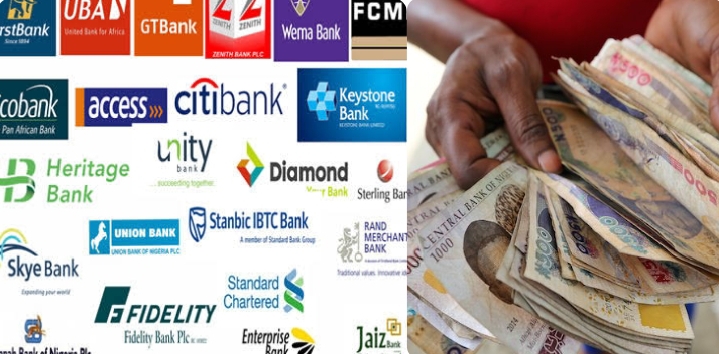
The Central Bank of Nigeria set the March 31, 2026 deadline for banks to meet new recapitalisation requirements, and the industry responded with a combination of determination, strategic maneuvering, and deep financial recalibration. This exercise was far more than a regulatory compliance measure; it was a moment of reckoning for every player in the Nigerian banking sector, reflecting both the strengths and weaknesses of institutions, and realigning power dynamics within the market.
For decades, the sector has navigated challenges such as currency volatility, inflationary pressures, and the evolving demands of global finance, yet this recapitalisation effort demanded a proactive response that went beyond traditional banking operations.
By March 31, 2026, some banks had not only met the requirements but had used the opportunity to cement dominance, while others were forced into mergers, strategic partnerships, or continued regulatory supervision. The implications of this event are profound, extending from investor confidence to market structure, and shaping the trajectory of Nigeria’s banking industry for years to come.
The Recapitalisation Exercise: What Really Happened
The 2026 recapitalisation exercise by the CBN was designed as a comprehensive overhaul of Nigeria’s banking system rather than a mere regulatory tick-box exercise. Its primary objective was to strengthen financial institutions against persistent macroeconomic pressures including inflation shocks, naira volatility, and global financial instability. The overarching vision was also aligned with Nigeria’s ambition to grow into a $1 trillion economy, an aspiration requiring a banking sector capable of underwriting large-scale corporate activity, infrastructure projects, and trade flows. The exercise involved differentiated capital requirements for various tiers of banks, ranging from ₦500bn for international banks, ₦200bn for national banks, ₦50bn for regional banks, to ₦20bn for non-interest banks.
The cumulative effect was striking, with over ₦4 trillion raised across the sector and 30–34 banks meeting or exceeding the capital thresholds before the deadline. Rights issues, private placements, and injections from foreign parent companies or institutional investors were the primary channels for raising the required funds, making this recapitalisation the largest financial mobilization in Nigeria’s banking sector since the 2004 consolidation.
The 2026 recapitalisation was a public affirmation that Nigerian banks are capable of mobilizing capital at unprecedented speed and scale. Beyond meeting regulatory requirements, banks were also signalling to investors, customers, and global financial institutions that they are resilient, competitive, and capable of sustaining growth in a volatile economic environment. This context is essential to appreciate the magnitude of the exercise, as it effectively reset the playing field, concentrating power among well-capitalized institutions while creating opportunities for mergers, acquisitions, and the emergence of new-generation banks.
Tier 1: International Banks and the ₦500bn Club
The top tier of Nigerian banks, often referred to as the international or global banks, faced the most demanding capital requirements, with a benchmark of ₦500bn. By March 31, 2026, the major players in this category did more than merely comply; they exceeded expectations, solidifying dominance within the sector. Access Holdings mobilized ₦662bn, Zenith Bank raised ₦614bn, First HoldCo achieved ₦789bn, Guaranty Trust Holding Company met ₦514bn, United Bank for Africa reached ₦512bn, Fidelity Bank achieved ₦506bn, and FCMB Group raised ₦535bn.
The strategies employed by these banks were multifaceted, combining public offerings, rights issues, and asset divestments, including pensions units, alongside significant support from institutional investors. The results were transformative, with these institutions now controlling over 70% of the industry’s total assets. This concentration translates to increased influence over credit allocation, foreign exchange access, and corporate financing. The 2026 recapitalisation has therefore reinforced existing hierarchies while also enabling these institutions to take advantage of new commercial opportunities, including expanded loan portfolios, larger-scale corporate financing, and deeper integration into international financial networks. The outcome is clear: power and market influence have become more concentrated at the top, providing the strongest institutions with both competitive leverage and resilience against potential economic shocks.
Tier 2: National Banks and the ₦200bn Threshold
The national or mid-tier banks faced a slightly lower capital threshold of ₦200bn, yet for many of them, survival depended on rapid execution, innovative funding strategies, and timely engagement with both domestic and foreign investors. Banks such as Ecobank Nigeria raised ₦353bn, Stanbic IBTC achieved ₦257bn, Wema Bank mobilized ₦215bn, Premium Trust Bank raised ₦203bn, Sterling Financial Holdings reached ₦248bn, Standard Chartered Nigeria, Globus Bank, Optimus Bank, and Citibank Nigeria each met the benchmark of ₦200bn.
Patterns within this tier reveal a clear division between foreign-backed banks and local players. Foreign institutions, including Stanbic, Standard Chartered, and Citibank, relied heavily on capital injections from their parent companies, reflecting their ability to leverage international networks. Local mid-tier banks turned to rights issues and retail investors, requiring active engagement with shareholders and creative financial engineering. New-generation banks such as Optimus and Premium Trust utilized aggressive private placements and insider capital, demonstrating entrepreneurial approaches to capital mobilisation. The result is a tier of banks that is now stronger, more resilient, and highly competitive, with the coming years likely to see intense rivalry for retail customers, SME lending, and niche market segments. The recapitalisation has effectively reshaped the competitive landscape, forcing each institution to clarify its strategy, market positioning, and customer acquisition approach.
Tier 3: Regional Banks and the ₦50bn Threshold
Regional banks, with a threshold of ₦50bn, quietly achieved full compliance by March 31, 2026, often through consolidation, partnerships, and strategic mergers. Providus Bank, for instance, merged with Unity Bank to strengthen balance sheets and operational capacity. Other compliant banks included Parallex Bank at ₦50bn, Signature Bank at ₦52bn, SunTrust Bank at ₦50bn, Titan Trust Bank at ₦50bn, Nova Bank at ₦50bn, and Alpha Morgan Bank at ₦50bn.
These institutions demonstrated that compliance was possible without necessarily accessing the massive capital networks available to top-tier banks. Mergers and partnerships allowed smaller banks to pool resources, diversify risk, and enhance operational efficiencies, ensuring they could meet regulatory requirements while remaining competitive in local markets. Regional banks, often more closely connected to specific communities or industrial clusters, now possess the structural and financial capacity to expand lending, improve customer services, and strategically position themselves for growth. The recapitalisation has thus created a tier of robust regional institutions that can act as important conduits for economic growth in their respective markets.
Non-Interest Banks and the ₦20bn Segment
Non-interest or Islamic banks faced a ₦20bn threshold, and all major players complied successfully, signaling growth and stability within this niche segment. Jaiz Bank raised ₦28bn, while TAJ Bank, Lotus Bank, and Alternative Bank each met the ₦20bn requirement.
The success of non-interest banks indicates that Islamic banking is quietly gaining traction in Nigeria, attracting ethical finance investors and consolidating its presence, particularly in northern Nigeria. These institutions are positioned to expand further, leveraging religious and ethical investment principles while providing alternatives to conventional banking services. Compliance with the 2026 recapitalisation ensures that these banks can access the same regulatory benefits and growth opportunities as conventional banks, including expanded lending capacity, market credibility, and digital banking investments.
Banks That Struggled or Missed the Deadline
Despite broad compliance across the sector, several banks did not fully meet the March 31 deadline. Union Bank of Nigeria, Polaris Bank, Unity Bank, and Keystone Bank lagged behind due to legacy financial challenges, regulatory complexities, or ongoing ownership restructuring.
The Central Bank of Nigeria maintained that there was no cause for panic, emphasizing that depositors’ funds remain secure while these institutions undergo special regulatory supervision. This approach underscores the CBN’s focus on stability, ensuring that the recapitalisation process strengthens the sector without causing systemic disruption. The banks that struggled are effectively under watch, with restructuring and corrective measures planned, which may include mergers, strategic capital injections, or operational overhauls. Their survival will depend on their ability to align with regulatory expectations and secure additional capital promptly.
Market Impact: Immediate Changes
The recapitalisation had an immediate effect on bank valuations, investor confidence, and market dynamics. GTCO and Zenith Bank both surpassed ₦4tn in market capitalization, while UBA, First HoldCo, and Stanbic IBTC rose above ₦2tn. Wema Bank recorded massive growth exceeding 200%, reflecting both investor enthusiasm and market recognition of effective capital mobilisation. Domestic investors contributed approximately 71% of the capital raised, while foreign investors remained actively engaged, signaling a high level of confidence in Nigerian banks’ resilience, competitiveness, and growth potential.
The market response demonstrates that recapitalisation is more than a regulatory milestone; it is a catalyst for increased valuations, deeper investor engagement, and a redefined competitive environment. Banks now operate with reinforced credibility, enhanced capital bases, and stronger public trust, providing a foundation for accelerated lending, expansion, and financial innovation.
Winners and Silent Casualties
The clear winners of the 2026 recapitalisation are Tier 1 banks, whose dominance has been reinforced, and new-generation banks, which fast-tracked credibility and market recognition. Investors who participated in capital raises enjoyed significant upside through stock appreciation and strengthened market positioning.
Silent casualties include smaller, weaker banks that were compelled to merge or seek partnerships, and legacy banks that struggled to meet the capital requirements. Competition has become intense, with the market now favoring institutions that are both financially robust and operationally agile. The recapitalisation has recalibrated industry hierarchies, highlighting that survival in the sector is increasingly tied to strategic foresight, capital access, and management efficiency.
Future Outlook and Strategic Implications
The 2026 recapitalisation is not the conclusion but the beginning of a new phase for Nigerian banks. Stakeholders should anticipate further mergers and acquisitions as weaker players consolidate to compete effectively. The total number of banks may decrease, but the remaining institutions will emerge stronger, better capitalized, and more competitive. Expansion into African markets is expected, driven by both strategic ambition and the need to diversify revenue streams beyond domestic borders.
Digital banking investments will intensify as banks seek to improve operational efficiency, customer experience, and financial inclusion. Larger loan capacities will enable banks to support businesses more effectively, contributing to economic growth while reinforcing market relevance. The power dynamics have shifted, establishing a system where speed, capital strength, and strategic acumen determine both survival and success.
Final Reality Check
The recapitalisation deadline of March 31, 2026 was not merely a compliance checkpoint but a decisive power shift within Nigeria’s banking sector. Strong institutions became stronger, weaker ones were exposed, and the system as a whole gained resilience. Market confidence has improved, operational capabilities have been enhanced, and competition has intensified.
Nigeria’s banking industry has reset itself, establishing a framework where only the fastest, smartest, and most capitalized players are positioned to thrive. The 2026 exercise has left an indelible mark on market structure, investor perception, and the strategic direction of banking operations across the country. Its lessons are clear: capital access, regulatory alignment, and strategic foresight are now the defining factors for success in Nigeria’s rapidly evolving financial landscape.