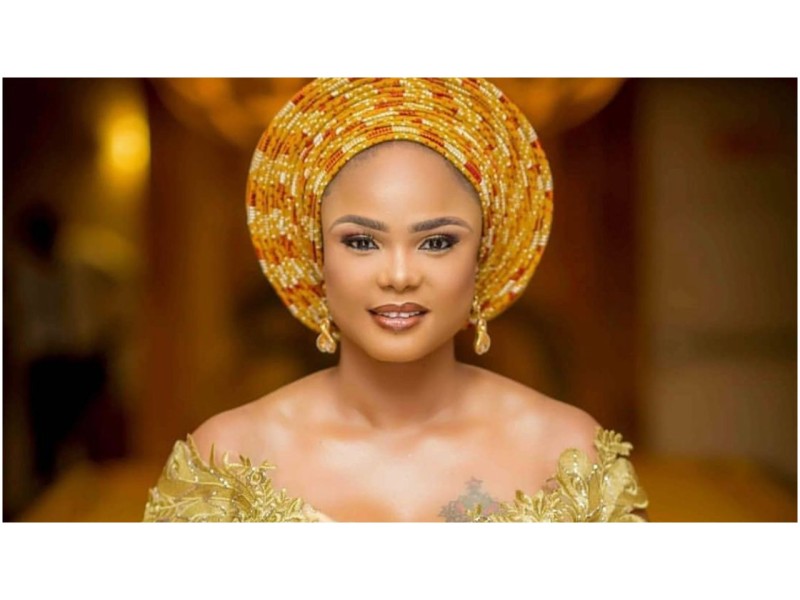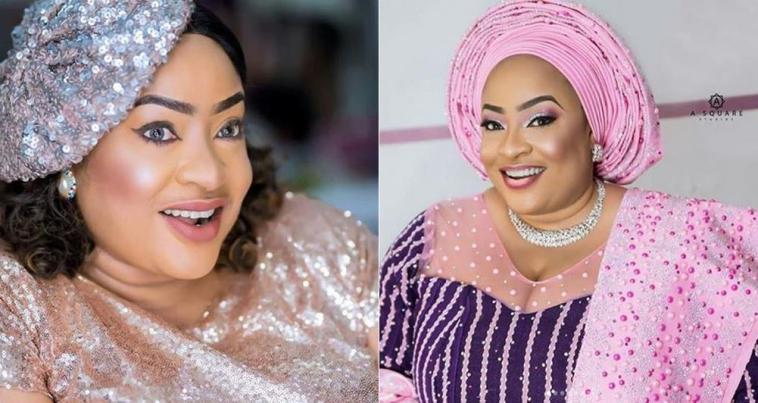
When Foluke Daramola-Salako walked into the All Progressives Congress national secretariat in Abuja to pick up her nomination and expression of interest forms in May 2026, it was not the act of a celebrity testing the waters. It was the next calculated move in a political journey that had been building quietly for years, visible to those paying attention but easy to dismiss as peripheral involvement for those who were not.
The Nollywood actress and filmmaker, who has spent more than two decades building one of the most consistently credible careers in Yoruba and English-language cinema, is now formally in the race for the Oshodi-Isolo Federal Constituency I seat in the House of Representatives, targeting the 2027 general elections under the APC platform. The announcement landed on her Facebook page alongside photographs of her holding the party forms, addressed directly to residents of the constituency.
It is a move worth understanding carefully, because the context surrounding it is richer than a headline allows.
Foluke Daramola Obtains APC Forms to Contest House of Representatives 2027
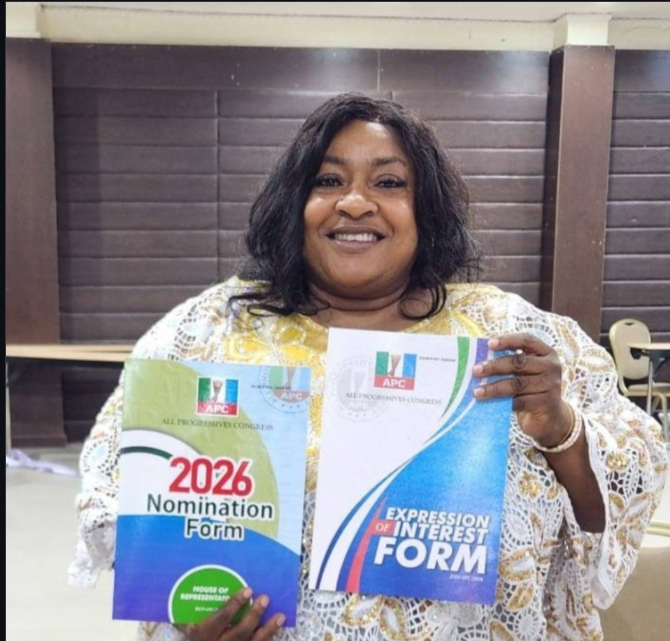
Foluke Daramola obtaining APC forms for the 2027 House of Representatives race is not an isolated celebrity moment. It is part of a broader realignment taking shape ahead of Nigeria’s next general elections, one where the line between entertainment visibility and political capital is being tested in multiple constituencies simultaneously. What makes her entry distinctive is not the act of form-buying itself, but who she is, what she carries into the race, and the specific ground she is choosing to contest.
Who Is Foluke Daramola-Salako: The Career Behind the Candidate
Foluke Daramola-Salako was born on February 15, 1978, and is currently 48 years old. She is from Ekiti State and grew up in Lagos, where she completed her secondary education before proceeding to Obafemi Awolowo University in Ile-Ife, Osun State, where she studied International Relations.
She made her professional acting debut in 1998 in the television series Palace, which she joined after attending an audition at AIT. Over the following two and a half decades, she built an extensive body of work spanning Yoruba-language productions and mainstream English-language Nollywood films. Her credits include Jenifa, Family on Fire, Iya Oko, Kudi Klepto, Cobweb, Above Love, Durodola, and Official Romance, among well over a hundred others.
In 2013, she produced and starred in Cobweb, a film drawn from her own childhood experiences. That production earned her a nomination for Best Actress in a Supporting Role at the Africa Movie Academy Awards. It was also the same year she founded PARAA, the Passion Against Rape and Abuse in Africa, a humanitarian NGO through which she has spent more than a decade advocating against sexual violence, domestic abuse, and child exploitation in Nigeria.
She holds a Bachelor’s degree in International Relations from OAU and a Master’s degree in International Law and Diplomacy from the University of Lagos. That academic grounding, combined with more than ten years of sustained advocacy work, gives her a profile that sits outside the typical celebrity-turned-politician bracket.
The Oshodi-Isolo Federal Constituency: Why This Seat, Why Now
Oshodi-Isolo Federal Constituency I is located in Lagos State, one of Nigeria’s most politically competitive states and the heartland of APC dominance in the Southwest. The constituency sits within Alimosho and Isolo local government structures, covering densely populated parts of metropolitan Lagos. For any legislative aspirant, winning here requires deep grassroots engagement, not just name recognition.
The choice of this constituency is not random for Daramola-Salako. She has been engaging residents of Oshodi-Isolo through direct public communications even before the forms were purchased. In a Facebook message that accompanied the form photos, she wrote: ‘As your servant and potential aspirant for the House of Representatives, Oshodi-Isolo Federal Constituency 1, I, Hon. Foluke Daramola-Salako, lift you up in prayers: May Almighty God open doors of opportunities for us all and keep us safe. Together, we will build a stronger, better Oshodi.’
The statement is structured as a message of solidarity and service, not a campaign slogan. She frames herself first as a servant, situates herself within the constituency before asserting her ambition, and closes with a collective commitment rather than an individual promise. That framing, deliberate or not, reflects an understanding of how constituency-level political communication works in Lagos.
The N10 Million Forms and the Cost of Entering APC’s 2027 Race
Daramola-Salako paid N10 million to obtain her APC forms, a figure that reflects the party’s officially gazetted fee structure for the 2027 elections. According to APC’s published timetable, which was signed by the National Organising Secretary Sulaiman Argungu and announced in Abuja by National Publicity Secretary Felix Morka, the House of Representatives forms break down as N1 million for the expression of interest and N9 million for the nomination component.
The party also confirmed a concession structure: women, young people, and persons living with disabilities are required to pay the expression of interest fee in full but receive a 50 percent discount on the nomination component. Whether Daramola-Salako benefited from this discount in her final payment has not been publicly disclosed.
The form sale window ran from April 25 to May 2, 2026, with submission of completed forms and accompanying documents closing on May 4, 2026. Screening of House of Representatives aspirants was scheduled for May 6 to May 8. The N10 million House of Representatives fee is significantly lower than the presidential form at N100 million, the Senate at N20 million, and the governorship at N50 million, but it remains a substantial barrier for most Nigerian citizens seeking to participate in democratic processes. Civil society organisations including CISLAC have criticised the overall fee structure as exclusionary and likely to entrench the influence of money in the nomination process.
Her Political History: Not a Newcomer to the System
One point that media coverage of Daramola-Salako’s form purchase has occasionally glossed over is that this is not her introduction to Nigerian partisan politics. Her involvement predates the 2027 cycle by several years and runs through two different political periods.
As far back as 2018, she received a political appointment as head of the Directorate of Contacts and Mobilisation in the Lagos State chapter of the Buhari/Osinbajo Mandate Group, a formal role within the APC campaign structure. That appointment was documented publicly and represented her first formal foray into party-linked mobilisation.
For the 2023 elections, she served as a media assistant for the APC presidential campaign council in Lagos, openly backing President Bola Tinubu’s candidacy at a time when her husband, Kayode Salako, was serving as the Lagos State Chairman of the Labour Party, having been appointed to the position in July 2022. The couple occupied opposing political loyalties during the 2023 campaign season, a dynamic that attracted significant media commentary.
Daramola-Salako later disclosed in an interview with Behind The Fame TV that her support for Tinubu in 2023 came at a considerable personal cost. She stated that she lost two ambassadorial deals totalling approximately N25 million as a result of backlash from supporters of the Labour Party’s presidential candidate Peter Obi, and that the political divergence between her and her husband strained their marriage. Her husband, Kayode Salako, had himself resigned as Lagos LP chairman in January 2023 to contest the Oshodi-Isolo Federal Constituency I seat under Labour Party, before eventually leaving the party entirely in April 2023.
It is notable that the constituency Foluke Daramola-Salako is now targeting in 2027 under the APC is the same seat her husband attempted to contest in 2023 under the Labour Party. That detail adds a layer of domestic and political complexity to a campaign that will likely be examined closely as the 2027 cycle progresses.
Her Policy Focus: Workers, Welfare, and Grassroots Development
In her public communications around the 2027 campaign, Daramola-Salako has emphasised workers’ welfare and the interests of ordinary Nigerians. She has spoken about her intention to support policies that improve conditions for working-class residents and has framed her candidacy around service and grassroots development rather than legislative prestige.
Her background in humanitarian work through PARAA gives this framing some credibility. For over a decade, the organisation has engaged with survivors of sexual violence and child abuse in Nigeria, built awareness campaigns, and advocated for policy changes at institutional levels. That record of sustained, ground-level engagement distinguishes her from candidates whose connection to constituency issues is primarily rhetorical.
Whether these commitments translate into a detailed legislative agenda will become clearer as the campaign progresses toward 2027. But the early signals from her public messaging are oriented toward the welfare of low-income residents and formal workers, constituencies that are heavily represented in Oshodi-Isolo.
The Wider Trend: Nigerian Entertainers Moving Into Politics
Daramola-Salako’s entry into the 2027 race is part of a visible and growing pattern. Multiple Nigerian entertainers and public figures have made moves into formal partisan politics ahead of the next election cycle.
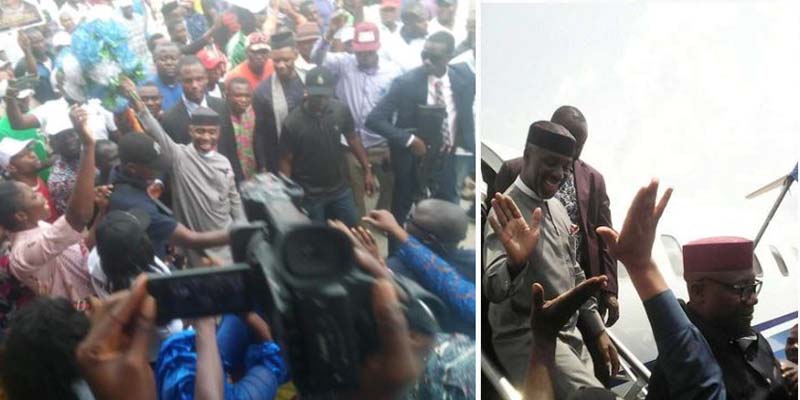
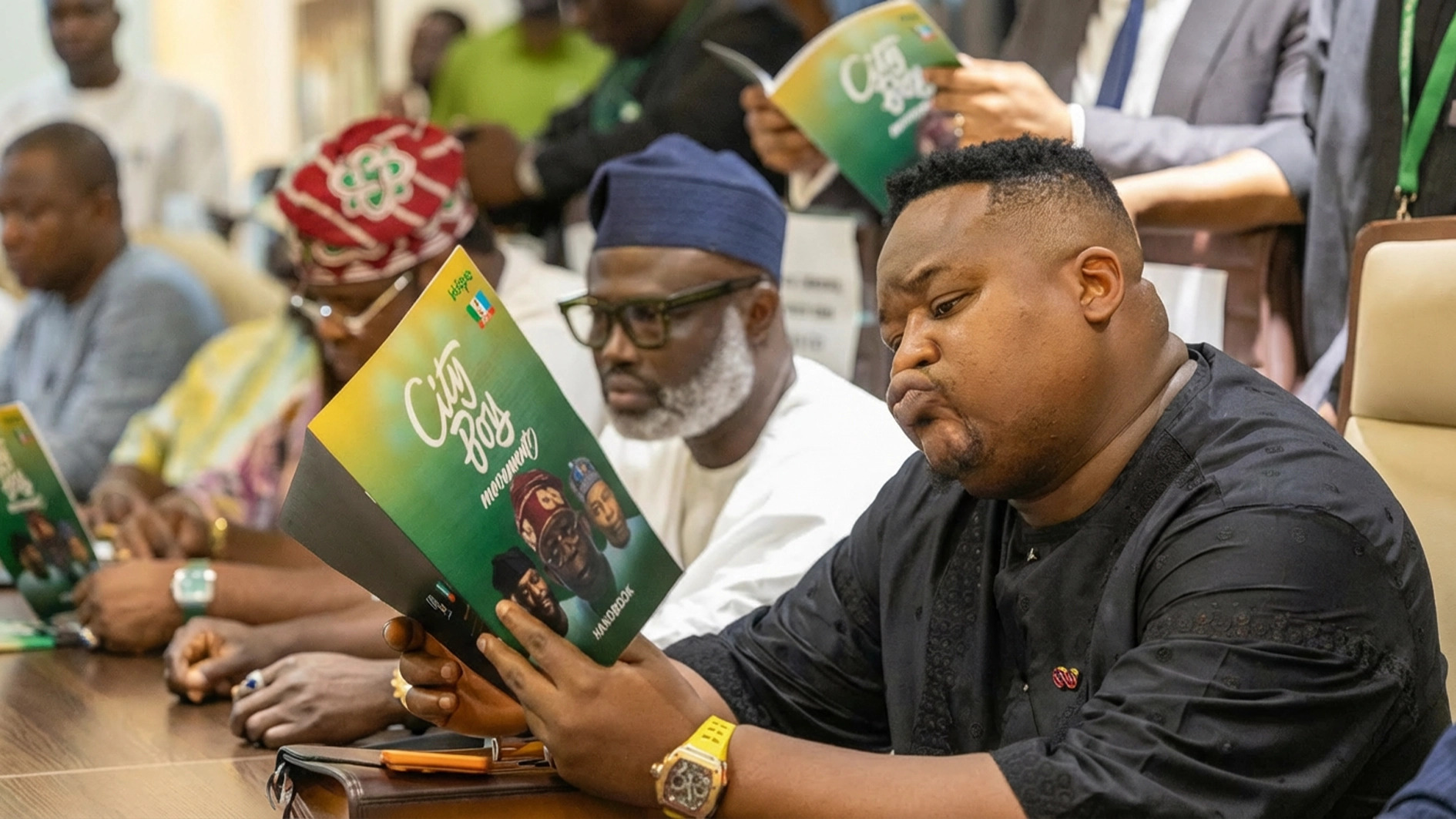
Celebrity businessman and nightlife promoter Pascal Okechukwu, widely known as Cubana Chief Priest, has obtained APC nomination forms to contest the Orsu/Orlu/Oru East Federal Constituency seat in Imo State. His entry into politics follows his appointment as Imo State Director of the City Boy Movement, a pro-Tinubu grassroots mobilisation network, in February 2026, suggesting that his political move was preceded by structured positioning within the ruling party’s informal support architecture.
Nollywood actor Zubby Michael has also announced his intention to contest a House of Representatives seat in Anambra State under the African Democratic Congress (ADC). Meanwhile, actor Rotimi Makinde, who has prior experience in the National Assembly, is seeking a return to the legislature under the APC in Osun State, contesting for the Ife Federal Constituency seat.
The pattern raises legitimate questions. Celebrity recognition and mass following are real political assets in a system where name recall and perceived personal connection to voters matter enormously. But legislative effectiveness requires sustained attention to policy, constituency service, negotiation within committee structures, and long-term commitment to the mechanics of governance that rarely generate the same public interest as a campaign launch. The entertainers entering the 2027 cycle will eventually be tested on those terms.
What the Oshodi-Isolo Seat Requires: The Path Ahead
Winning the Oshodi-Isolo Federal Constituency I seat is not a straightforward proposition for any candidate, regardless of name recognition. Lagos is an intensely competitive political landscape where ward-level structures, local government mobilisation networks, and party machinery frequently determine outcomes more than public profile alone.
Daramola-Salako must first navigate the APC primary process, which involves screening and a party primary among registered delegates, before she can secure the platform to contest the general election. The primary itself represents the first real test of her grassroots strength within the party structure.
Her campaign will need to address the specific concerns of Oshodi-Isolo residents, including infrastructure deficits, security, access to economic opportunities, and the welfare of market traders and transport workers who form a large segment of the constituency’s economic base. Messaging pitched at a national level tends to lose resonance at this scale. What counts is whether she can connect her policy commitments to the particular conditions of the people she is asking to elect her.
The experience of her husband’s attempt on the same seat in 2023, which did not result in a general election win, may offer instructive lessons about what the constituency responds to and where earlier efforts fell short.
What This Campaign Represents
Foluke Daramola-Salako obtaining APC forms for the Oshodi-Isolo Federal Constituency I House of Representatives seat is a serious move by someone with a longer and more substantive political history than her entertainment profile alone suggests. Her decade-plus of humanitarian work through PARAA, her formal involvement in APC campaign structures across two election cycles, her academic grounding in international relations and law, and her willingness to take a politically costly position in 2023 all indicate that this campaign is not casual.
What remains to be tested is whether those foundations translate into the specific kind of localised political work that constituencies in Lagos demand. The 2027 election cycle is still over a year away. Between now and then, the quality of her engagement with Oshodi-Isolo residents, her ability to build or consolidate party support within the constituency, and the coherence of her legislative agenda will determine whether the form purchase is remembered as the beginning of a serious political career or as a well-publicised moment that did not survive the primary season.
For now, the forms are picked. The race is joined.