The last time Brazil and Morocco met, it did not go the way most people expected. In a March 2023 friendly in Tangier, Morocco beat a weakened but recognisable Brazil side 2-1, goals from Sofiane Boufal and Abdelhamid Sabiri enough to hand the Selecão a defeat that felt like more than just a result. It was a statement. A sign of how far the Atlas Lions had come, and where Brazil still needed to go.
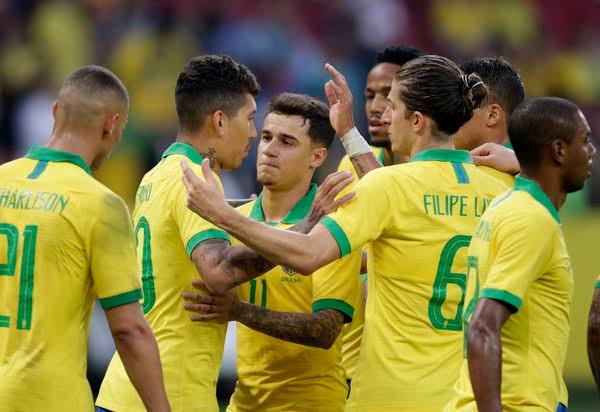
Now, three years later, they open their 2026 World Cup campaigns against each other at MetLife Stadium in New Jersey, in what is arguably the most intriguing group-stage opener of the entire tournament. It is Group C, and on paper it looks lopsided. Brazil are the five-time world champions, now managed by Carlo Ancelotti, with Vinicius Junior, Raphinha, and Neymar (fitness permitting) in the squad. Morocco, meanwhile, are coming in under a brand-new coach and without several of the players who made their 2022 semi-final run so special.
But football does not care much about paper.
The Head-to-Head Record
Three meetings. Two Brazilian wins. One Moroccan.
The historical ledger starts in October 1997, when Brazil beat Morocco 2-0 in a friendly in Belem, two late goals from Denilson doing the damage. Then came Bordeaux 1998, the only competitive meeting between these sides, where a Ronaldo-led Brazil dismantled Morocco 3-0 in the group stage on their way to the final. Rivaldo and Bebeto also got on the scoresheet that day. Morocco barely got a look in.
That 1998 defeat set the tone for how the footballing world viewed the matchup, until Tangier 2023 changed it. Morocco’s 2-1 win came on the back of their Qatar World Cup semi-final run, with Regragui’s defensive structure working exactly as designed. Sabiri’s late winner meant Brazil left empty-handed, and the result stuck.
The question for tonight, which is actually happening right now, is which version of this fixture we are going to see: the one from 1998, or the one from 2023.
Brazil: Built to Attack, Still Finding the Right Shape
Carlo Ancelotti is managing his first World Cup, and first international tournament, as a coach. The 66-year-old Italian arrived after leaving Real Madrid, bringing with him a reputation built on winning every major league in Europe and five Champions League trophies. His familiarity with several of Brazil’s key players, Vinicius Junior in particular, was part of the appeal.
Brazil are in Group C alongside Morocco, Haiti, and Scotland. It is, on balance, a kind draw, but Ancelotti knows better than anyone that kind draws can turn ugly if you do not start well.
Vinicius Junior is the headline name. The Real Madrid winger was the 2024 Ballon d’Or runner-up and has been performing at the very top of the game for the past two seasons. On his day, there are very few defenders in world football who can contain him consistently. Morocco will spend a large part of this game trying to work out how to neutralise him.
Raphinha has arguably been in even better form recently, shining for Barcelona under Hansi Flick in what has been a transformational season for him. He lines up on the opposite flank and brings an energy and directness that makes him genuinely difficult to manage from a defensive standpoint.
Through the middle, Matheus Cunha is expected to lead the line, with the Manchester United striker in form heading into the tournament. Young Endrick, the former Real Madrid man who spent the second half of last season on loan at Lyon, offers a different option off the bench, pacey and hungry and very much still making his case for more minutes.
In midfield, Bruno Guimarães and Casemiro form a sensible if ageing partnership. Casemiro, in particular, has had a difficult time at Manchester United, though his international performances have been more consistent. Guimarães provides the energy and ball-carrying quality that Casemiro no longer really offers.
The defensive picture is settled enough. Marquinhos remains the captain and organiser at centre-back, partnered by Gabriel Magalhães from Arsenal. Alisson is in goal. The spine of the team is experienced.
There are notable absences, though. Rodrygo misses out through injury, as do Estêvão and Éder Militão. Wesley, who was originally in the squad, also withdrew with injury before the tournament started. These are real losses, particularly Rodrygo, who has been one of the best players in Europe over the past two seasons. Ancelotti has depth, but the squad is not quite what it could have been.
And then there is Neymar. Brazil’s all-time top scorer with 79 goals is back in the squad after missing the 2022 World Cup entirely through injury. He is not expected to play tonight; he is still working his way back from a calf problem, but his presence in the squad means something, both to the players and to the watching world. If he gets minutes at this tournament, it will be a story.
Morocco: Transition, Turbulence, and Talent
This is not the Morocco of 2022. That needs to be said plainly.
Walid Regragui, the coach who turned the Atlas Lions into Africa’s first-ever World Cup semi-finalists, left his post in March, just three months before the tournament. The departure came after internal friction with the Moroccan football federation, following a chaotic Africa Cup of Nations campaign that ended with Morocco being beaten by Senegal in the final on home soil in Rabat, before the result was later overturned by CAF after Senegal walked off the pitch in protest at a penalty decision.
Into Regragui’s shoes steps Mohamed Ouahbi, a young coach who led Morocco’s Under-20 side to the 2025 Youth World Cup title. It is an appointment that carries enormous upside if things go right, but this is his first senior role, and he is walking straight into a group that contains one of the world’s most talented attacking squads.
The squad, too, has changed significantly from the one that lit up Qatar. Hakim Ziyech is out, his exclusion confirming a final break from the national team. Youssef En-Nesyri is gone. Sofiane Boufal, who scored in that 2023 win over Brazil, is not here. Several of the experienced names who gave Morocco’s defensive structure its backbone have been replaced by younger, less-tested players.
What Morocco do still have is Achraf Hakimi. The PSG right-back is the captain, and he is playing some of the best football of his career. Only two players created more chances than Hakimi at AFCON 2025. His ability to combine defensive discipline with devastating forward runs makes him the most complete right-back in the world right now, and on a good day he is capable of taking over any game.
Brahim Diaz offers creativity through the middle, bringing a technical quality that Morocco have rarely had from a central attacking position. Sofyan Amrabat is the defensive midfielder charged with protecting the back line. His role is exactly what it was in 2022, when he was one of the best individual performers in the entire tournament.
The defence, even without some of its old faces, has retained a structural competence that cannot be dismissed. Nayef Aguerd at centre-back and Noussair Mazraoui as the other fullback give Morocco a solid enough platform. Yassine Bounou in goal is among the best in Africa and has proved he can handle pressure in the biggest moments.
Ayoub El Kaabi is the striker carrying the most expectation up front — his goal record at international level (20 in 54 appearances) is better than many people realise.
Where the Game Will Be Won and Lost
This really comes down to one question: can Morocco stop Vinicius?
In 2022, they stopped Kylian Mbappé in the semi-final well enough to win the match. But Mbappé, for all his brilliance, operates differently to Vinicius. The Brazilian is more explosive in one-on-one situations, harder to push into wide areas where he becomes less effective, and more comfortable making runs off the ball into spaces that central defenders hate to leave.
Morocco’s approach will almost certainly be to defend deep, limit space behind the defence, and look to hurt Brazil on the counter through Hakimi and Diaz. If they can stay organised in the first 25-30 minutes and not concede cheaply, they will back themselves to create something on the break.
Brazil’s challenge is to be patient. Ancelotti’s best club teams have always combined attacking quality with tactical discipline; they do not simply throw bodies forward and hope. If he can get that balance right at international level, Brazil should have enough to break Morocco down eventually.
The width battle will be decisive. Raphinha vs Mazraoui on one side. Vinicius vs whoever Ouahbi trusts to handle him on the other. Those individual contests will shape 70% of what happens tonight.
Neymar Factor
Worth mentioning again: Neymar will not play tonight, but his name hovers over Brazil’s entire campaign in a way that is hard to ignore. At 34 and after more than two years out of the international setup, there is genuine uncertainty about what version of him returns when he is fit. But the fact that he is there, in the squad, at a World Cup, means something for Brazilian confidence.
Verdict
Brazil win this. Probably without too many goals, because Morocco will make it extremely difficult from a defensive standpoint. A 2-0 or 1-0 win for the Selecão is the most likely scenario, controlled, professional, with Vinicius or Raphinha providing the decisive moment.
But Morocco have beaten Brazil before, not long ago, and with a completely different coach just installed, there is enough of an unknown quantity around Ouahbi’s tactical setup that an upset cannot be dismissed entirely. If Morocco scores first tonight, this becomes a very different game very quickly.
That 2023 friendly result in Tangier still matters. Brazil have not forgotten it. And if Morocco’s veterans can drag their younger teammates through the pressure of a World Cup opener, tonight might matter too.
Brazil vs Morocco kicks off at 6:00 PM ET on June 13, 2026, at MetLife Stadium, East Rutherford, New Jersey. The match airs on FOX in the United States.