
There is a woman in Abeokuta who has been making adire for forty years. She does not have a shop. She dyes her fabric in a courtyard, dries it on a line, and sells from a mat at Itoku market on Saturdays. Her daughter does the same thing now, except the daughter also gets WhatsApp orders from London and ships twice a month. That gap between those two realities is where the adire business in Nigeria currently sits: one foot planted in a centuries-old craft tradition, the other moving fast into export markets, Instagram boutiques, and bulk corporate orders.
Adire has been having a moment for a while now, and the interesting thing is that the moment does not feel like it is stopping. Nigerian fashion designers are incorporating it into ready-to-wear collections. State governments are promoting it as cultural heritage. Young Nigerians who grew up side-eyeing tie-dye as something their grandmothers wore are now paying premium prices for the same fabric because someone put it in a linen set and called it slow fashion. For anyone considering starting an adire business in Nigeria, the market conditions are real. So is the work.
But it helps to go in clear-eyed about what this business actually involves, what the techniques are, what the startup requirements look like, and where the money actually comes from. This guide covers all of that.
How to Start an Adire Business in Nigeria
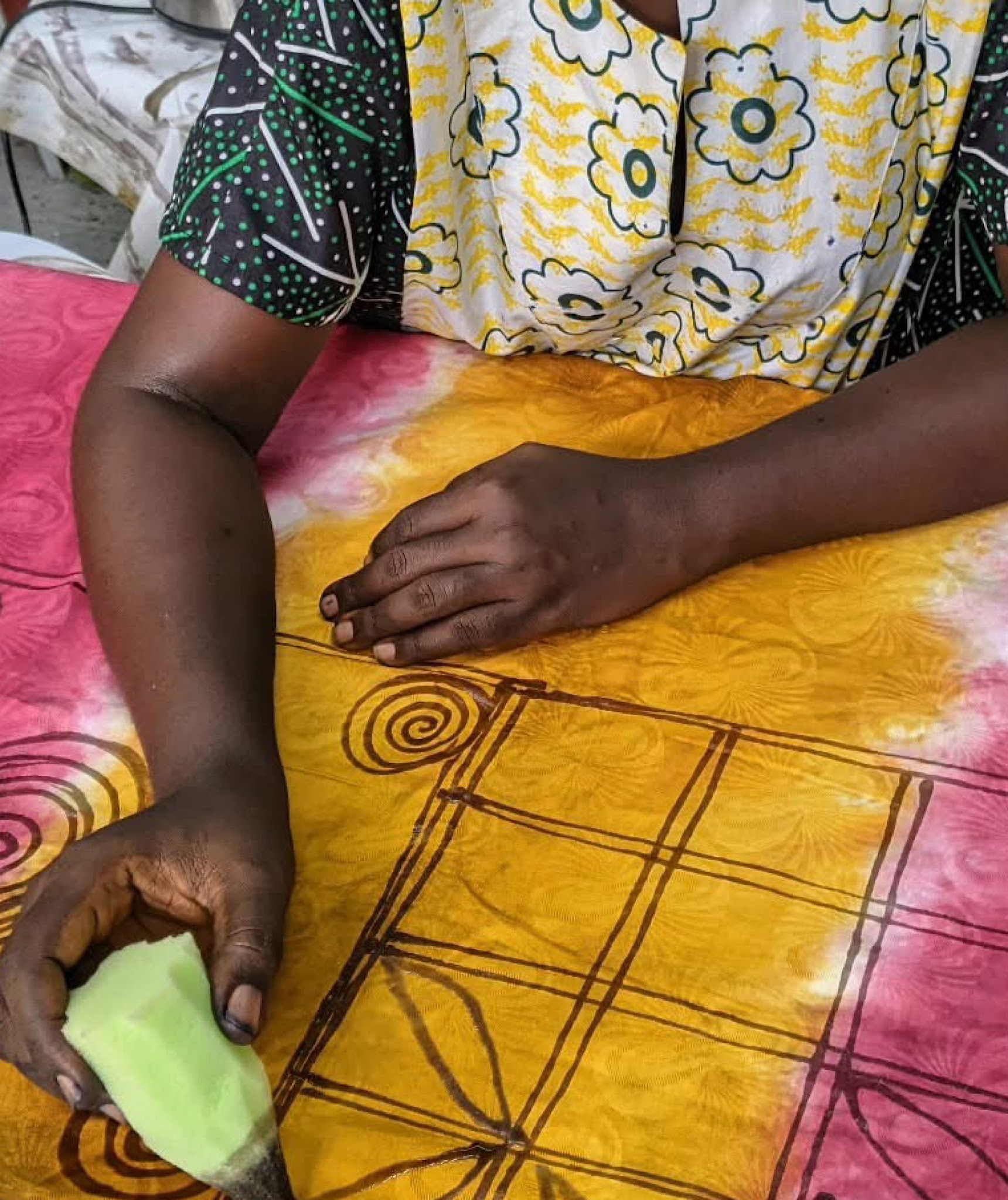
Starting an adire business in Nigeria means entering a craft with deep roots and an increasingly real commercial future. The fabric itself has been around for centuries, but the business structures around it are still evolving, which means there is space for people who approach it with both skill and strategy. What follows is a practical breakdown of how to start, what it costs, and how people are actually making money from adire today.
What Adire Actually Is and Why It Matters Beyond the Pattern
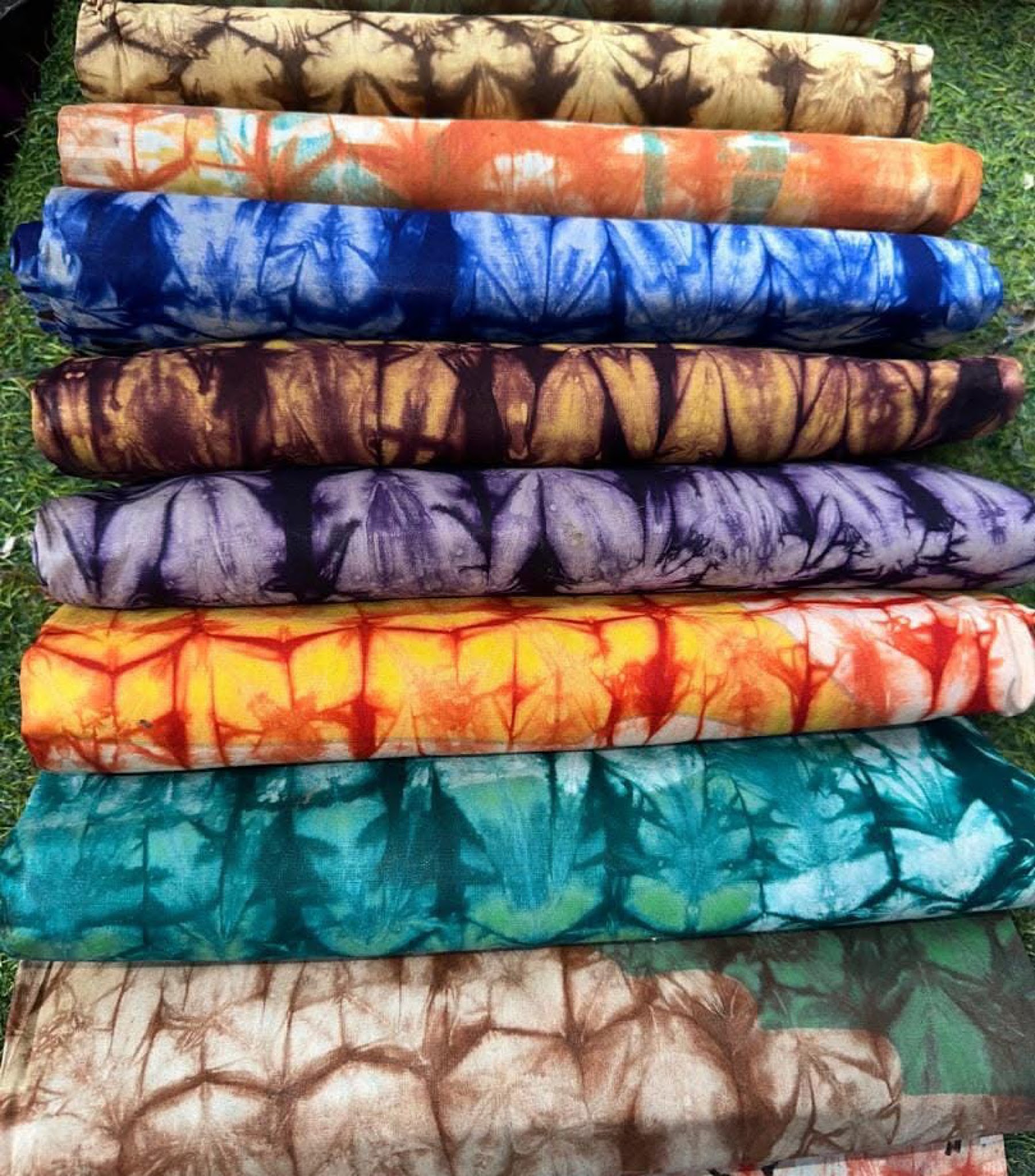
The word adire comes from two Yoruba words: adi, which means to tie, and re, which means to soak. So in plain terms, adire is tied and dyed fabric, a textile tradition that originated among the Yoruba people of southwestern Nigeria, particularly in Abeokuta, the capital of Ogun State. Abeokuta is still considered the capital of adire production in Nigeria today, with the Itoku Adire Market standing as the most concentrated hub for adire artisans in the country. But the craft long ago spread beyond Ogun State, with Ibadan and Osogbo also becoming major production centers.
The tradition is overwhelmingly female in origin. Historically, it was Yoruba women who produced, sold, and controlled adire. They formed guilds, trained their daughters and daughters-in-law, and built economic power through the trade. In many families, the craft was treated as proprietary knowledge, passed down within the household and not shared freely with outsiders. The Adire was first produced in Jojola’s compound of Kemta, Abeokuta, and is attributed to Chief Mrs. Miniya Jojolola Soetan, who was the second Iyalode, or Head of Women, of Egba land.
What makes adire distinctive as a product is that no two pieces look exactly alike. Because it is handmade using resist-dyeing techniques, the dye interacts differently with each piece of fabric depending on how it was tied, folded, stitched, or painted. That unpredictability is not a flaw. It is the selling point. In a market saturated with machine-printed Ankara fabric that looks identical across thousands of yards, genuine adire offers something you actually cannot replicate at scale. That is increasingly valuable to a certain class of customer, both in Nigeria and internationally.
The cultural dimension matters commercially too. Adire carries Yoruba symbolism. Patterns have names: Olokun, which references the goddess of the sea; Ibadandun, which translates roughly as Ibadan is sweet; Sunbebe, meaning the lifting of beads. When buyers understand what they are wearing, the product becomes a story rather than just fabric. That story is part of what people are paying for when they buy premium adire.
The Three Main Adire Techniques Every New Maker Should Know
Before you can run an adire business, you have to understand the craft. There are three primary resist-dyeing techniques used in Nigerian adire production, and each produces different visual results, requires different skills, and appeals to different market segments.
The first is Adire Oniko. This is the most fundamental tie-dye method, where raffia or thread is used to tie small objects, typically corn kernels, pebbles, or other seeds, into the fabric before dyeing. The tied areas resist the dye and emerge as small white circles on a blue background once the fabric is untied and dried. The fabric can also be twisted, knotted, or folded in various ways to produce stripes, concentric circles, or abstract patterns. Oniko is the technique most beginners start with because the tools are minimal and the learning curve is relatively short, though producing consistent, high-quality patterns takes practice.
The second is Adire Alabere, a stitch-resist method. Here, raffia is sewn into the fabric in a deliberate pattern before dyeing. The sewn-in raffia spine prevents dye from reaching certain areas, creating patterns that emerge when the stitching is removed after dyeing. The precision required for alabere is higher than for oniko, and the designs that result from skilled stitching are often more intricate and more valued in the market.
The third, and historically the most prestigious, is Adire Eleko. This is a cassava paste resist method, where starch made from cassava flour is painted directly onto the fabric, either freehand or through metal stencils, before the fabric is dyed. The paste resists the dye wherever it is applied, and when washed out after dyeing, it reveals detailed patterns in white or pale blue against the deeper indigo background. Eleko is the most technically demanding of the three methods. Traditionally, it was done with chicken feathers or carved calabash, though metal stencils cut from tin have been used since the early twentieth century. A skilled adire eleko maker with original, named patterns commands significantly higher prices than someone producing basic oniko work.
Modern adire production has expanded beyond traditional indigo to include synthetic dyes in a wide colour range, and contemporary makers also use hot wax batik methods, candle wax resist, and block printing. Multi-coloured adire, sometimes called kampala, is extremely popular with Nigerian buyers and is considered part of the adire family by most practitioners even though traditionalists sometimes debate this. For a new business, knowing which technique to lead with depends on your budget, your training, and your target customer.
Materials and Tools: What You Actually Need to Get Started
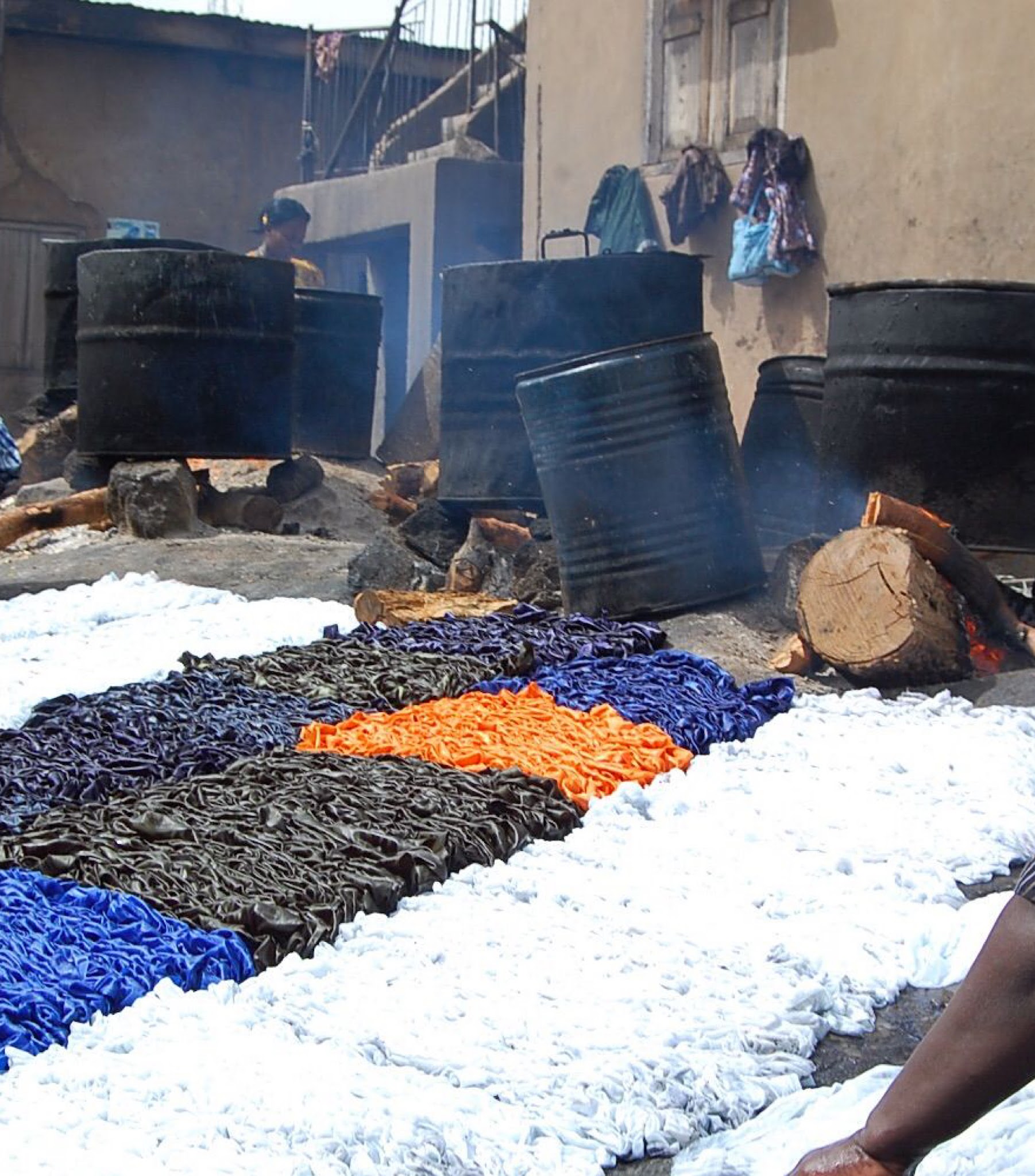
The startup cost for an adire business is one of the more accessible entry points in Nigerian fashion production. You do not need industrial machinery. The core equipment is your hands, some basic tools, and a good supply of fabric and dye.
For fabric, the standard base cloth for adire is plain cotton, usually white or off-white shirting material. Cotton takes dye evenly and holds colour well after washing. You can source plain cotton fabric at Balogun Market in Lagos, Dugbe Market in Ibadan, or Kuto Market in Abeokuta, among other textile markets across the country. The price of plain cotton fabric varies depending on grade and where you buy, but a yard of quality base cotton will run you between N1,500 and N3,000 in most major markets.
For dye, traditional adire uses indigo extracted from the elu plant, which grows in parts of Oyo and Kwara States. However, most commercial adire production today uses imported indigo powder or synthetic reactive dyes, which are more consistent in colour and easier to source. Dye suppliers are available in major fabric markets. Reactive dyes come in wide colour ranges and adhere well to natural fibres like cotton. For a small production batch, a few packets of reactive dye, combined with fixing agents like salt and soda ash, will handle a significant volume of fabric.
Other materials you will need include raffia for oniko and alabere work, cassava starch for eleko production, rubber bands, thread, needles, large plastic or metal basins for dyeing, and rubber gloves to protect your hands. A drying line and clothespins are also essential since adire fabric needs to dry fully in the open air after dyeing. None of these items are expensive individually, and most can be sourced locally.
In terms of space, you need an outdoor or semi-outdoor area where you can set up dyeing basins and hang fabric to dry without contaminating household surfaces. Many small-scale adire producers work from their compounds at home, which keeps overhead low at the beginning. The dye splashes, the starch is messy, and the indigo in particular stains everything it touches, so working in a dedicated space that you do not mind getting permanently tinted is non-negotiable.
For a beginner starting small, meaning buying fabric for your first twenty to thirty production pieces and the accompanying materials, a starting budget of between N80,000 and N200,000 is realistic depending on what technique you are practising and the quality of materials you choose. This does not include any formal training you may need to pay for upfront.
Training and Apprenticeship: How People Actually Learn This Craft
You cannot watch a few YouTube videos and start making adire at a professional level. The techniques, particularly eleko and alabere, require hands-on practice over time. Patterns need to be learned, dye processes need to be understood properly, and mistakes in resist application or dye timing can ruin an entire batch of fabric. Serious training before you start selling is not optional.
The traditional route is apprenticeship. In Abeokuta specifically, experienced adire makers take on apprentices who learn by working alongside them, sometimes for one to three years before going independent. This system is still active and is still the way most Abeokuta-trained adire artisans learned their craft. The advantage of apprenticeship is that you learn in a real production environment, not a classroom, and you pick up the nuances that do not translate easily into written instructions. The disadvantage is that it requires relocating or commuting to Abeokuta or another production center if you are not already based there.
For people who cannot do a full apprenticeship, there are paid workshops and short courses available across Lagos, Ibadan, Abuja, and Abeokuta. Duration ranges from one-day introductory sessions to multi-week intensive programs. Prices vary widely but a solid beginner workshop in Lagos typically costs between N15,000 and N50,000 depending on the organiser and what materials are included. There are also longer certificate programs available through some Nigerian craft organizations and fashion schools.
Chief Nike Davies-Okundaye, the 74-year-old Osogbo-based artist widely regarded as the most important living figure in Nigerian adire, has spent decades insisting that adire knowledge is only truly transmitted through direct human mentorship, not formal institutional teaching. Her Nike Centre for Art and Culture in Osogbo, which she founded in 1983 using her own earnings as an artist, has provided free training in traditional adire and textile techniques to over 3,000 Nigerians. The centre still accepts students, including undergraduates from Nigerian and international universities, and represents one of the most credible avenues for serious adire training in the country.
Online tutorials can supplement your learning for colour theory, pattern design, and synthetic dye chemistry. But they work best alongside real practice, not as a substitute for it.
Setting Up Your Production Space and Managing Output
Small-scale adire production is home-compatible in a way that most other manufacturing businesses are not. You do not need a factory. What you need is a controlled workflow. The dyeing process has stages that require waiting: you tie or starch the fabric, dye it, leave it to fix, rinse it, and dry it. Each stage has a timeline, and running multiple batches simultaneously is how you make the process economical without needing additional staff.
At the beginning, most people work alone or with one other person. As orders grow, you can bring in help for the more mechanical parts of production: tying, rinsing, ironing. The creative and quality-control work, meaning the pattern design and dye application decisions, tends to stay with the founder for longer because that is where your differentiation lives.
One thing to figure out early is your fabric source consistency. The quality of your finished adire is partly determined by the quality of your base fabric. If you keep switching between different cotton suppliers, the way the dye takes and the final appearance of the fabric will vary in ways that make it hard to maintain a consistent product. Once you find a fabric supplier whose material works well with your dye process, stay with them and build the relationship.
Record-keeping from the start matters more than most new adire business owners realise. You need to know how much fabric you are buying, how much dye you are using per batch, how long each production cycle takes, and what your cost per yard is coming out at. Without this data, pricing accurately is guesswork, and scaling up becomes chaotic. A simple ledger or an Excel sheet works fine at the beginning.
Pricing Your Adire Right and Understanding Who Is Buying
One of the biggest mistakes new adire producers make is underpricing their work because they are nervous about competition from cheaper alternatives. This is a mistake for two reasons. First, the people who buy authentic handmade adire are not the same customers buying machine-printed imitations at Balogun. They are different markets. Second, underpricing sends a signal about quality that is very hard to walk back once you have established it with your early customers.
At the lower end of the market, basic adire fabric without elaborate design work sells for around N2,000 to N5,000 per yard. But premium handmade adire with complex patterns, high-quality materials, and strong branding commands significantly more. Finished adire garments such as custom dresses, boubous, or sets carry different pricing entirely, typically starting from N30,000 and going upward depending on style complexity and fabric volume. Corporate uniform orders, which are a growing revenue stream for adire businesses, can run into hundreds of thousands of naira per order.
Your pricing should account for the full cost of your materials, the time you spent in production, any packaging you use, and your desired margin. A common trap is pricing based only on raw material cost and forgetting that your skill and labour are part of the product value. If an eleko piece took you three days to complete because you were hand-painting intricate patterns, that time needs to show up in the price.
In terms of who is buying, the Nigerian adire market has expanded well beyond its traditional customer base. Corporate organisations are now ordering adire for staff uniforms and event aso-ebi. Event and wedding planners are specifying adire for bridal party fabrics. Interior decorators are using adire for throw pillows, wall hangings, and upholstery. Fashion-conscious young Nigerians in Lagos, Abuja, and Port Harcourt are buying adire sets for everyday wear. And internationally, the diaspora market for authentic Nigerian textiles is real and growing, with platforms like Etsy and Instagram providing direct routes to buyers in the UK, US, and Europe.
Selling Adire in Nigeria: Markets, Social Media, and Bulk Orders
An adire business today operates across multiple sales channels simultaneously, and understanding each one helps you allocate your energy correctly.
The most direct route is physical market sales. For Abeokuta-based producers, Itoku Adire Market is the obvious starting point, functioning as both a sourcing hub and a retail destination. For Lagos-based sellers, Balogun Market and the various fashion markets on Lagos Island attract significant foot traffic from both retail buyers and wholesale traders. Physical market selling is best for moving volume quickly, but margins are compressed because market buyers expect to negotiate.
Social media, particularly Instagram and WhatsApp, has transformed the adire business for many small producers. Brands like Dye Lab, founded by Rukky Ladoja in 2021, built significant followings by presenting adire through clean, considered photography that positioned the fabric as modern and desirable rather than purely traditional. The lesson from these brands is that presentation matters as much as the product. A well-lit photo of an adire set styled on a person generates far more sales than the same fabric photographed on a table. If you are not naturally skilled at product photography, find someone who is or learn. Your Instagram grid is your storefront.
WhatsApp has become the primary sales channel for many Nigerian fashion businesses operating below the formal e-commerce threshold. A well-managed WhatsApp broadcast list, updated regularly with new production and sold as limited runs, creates urgency and drives repeat purchases without the overheads of maintaining a full e-commerce website. Many adire businesses run entirely through WhatsApp and Instagram DMs and do substantial monthly revenue that way.
Bulk and corporate orders are worth pursuing deliberately, not just waiting for them to arrive. Schools, churches, government parastatals, corporate companies running cultural events, and wedding parties are all potential bulk buyers. A single aso-ebi order for a 200-person wedding can generate more revenue in one transaction than weeks of individual retail sales. Building relationships with event planners and corporate buyers requires different sales conversations than social media, usually involving samples, formal quotes, and turnaround time guarantees, but the payoff makes it worth the investment.
For those with genuine international ambitions, platforms like Etsy, Shopify, and Not Just a Label allow Nigerian creatives to sell directly to global buyers. The African Continental Free Trade Agreement, which Nigeria is party to, also provides a framework for expanding into other African markets. Shipping costs are the main operational challenge for international orders, so pricing and logistics need to be figured out before making promises to international customers.
The Machine Print Problem: What You Are Up Against
Anyone starting an adire business in Nigeria in 2026 needs to reckon honestly with the machine-print problem. Chinese manufacturers figured out years ago that adire designs can be replicated on industrial fabric printing machines and sold at a fraction of the cost of handmade adire. This machine-printed adire fabric floods Nigerian markets, particularly at the lower price points, and many buyers who think they are buying authentic adire are in fact buying a printed imitation.
This is not a small problem. It undercuts artisan pricing, confuses buyers about what authentic adire should cost, and makes it harder for genuine producers to compete on price. Bamidele Abiodun, wife of the Ogun State governor, launched Adire Market Week in 2022 specifically as an initiative to promote authentic adire and protect local textile manufacturers from this pressure. But government support alone does not solve the problem for individual business owners.
The practical answer is differentiation. Machine-printed adire is uniform and predictable. Authentic handmade adire is not. Buyers who care about the craft can tell the difference, and the market segment that cares about the craft is the segment worth building your business around. This means being transparent about your production process, showing your work, documenting the making, and educating your audience about what authentic adire is and why it costs what it costs. Telling the story of your craft in your marketing is not just content strategy. It is your competitive defence against the machine prints.
There is also a pricing floor that machine prints cannot match on the premium end. A bespoke eleko piece hand-painted by a skilled artisan with original designs is not competing with Chinese fabric. It is competing with artisanal textiles from anywhere in the world, and in that category, Nigerian adire holds its own.
Registering Your Adire Business and Keeping It Formal
Running an adire business informally is common, especially at the early stage. But formalising your business sooner rather than later opens doors that informal operation keeps shut. Registered businesses can open corporate bank accounts, access government grants and intervention funds, apply for creative industry support from bodies like the Bank of Industry, and pursue institutional contracts that require formal documentation.
Business registration in Nigeria goes through the Corporate Affairs Commission. For a sole proprietorship, you register a business name, which involves submitting proposed names for availability checks, your identification documents, passport photographs, and a small registration fee. As of the most recent CAC fee schedule, business name registration costs a few thousand naira, with the full process taking anywhere from a few days to a couple of weeks if done online through the CAC portal. If you intend to scale significantly, a limited liability company structure offers more protections and flexibility, though it involves more documentation and higher registration fees.
Beyond registration, keeping clean financial records from the start positions your adire business for growth. A separate business account, proper invoicing for every transaction, and tracking your expenses against income will make tax compliance simpler and give you accurate data to make production and pricing decisions.
The Real Opportunity in Adire Right Now
The adire revival in Nigeria is not just nostalgia. It is a market signal. There is genuine and growing demand for this fabric from customers who are willing to pay for quality, authenticity, and the story behind what they are wearing. The window where you could dismiss adire as a niche or traditional product has largely passed. The fabric is on Lagos runways, in diaspora boutiques, on Nigerian celebrities, and, increasingly, in corporate boardrooms on uniform day.
What the market lacks is not buyers. It lacks enough producers who combine genuine craft skill with the ability to run a business. The Abeokuta grandmother who dyes by feel and sells from a mat is not the same person as the Lagos-based brand founder who photographs beautifully and ships internationally. But the most successful adire businesses in Nigeria today are finding ways to be both things at once, or at least to work with people who cover both ends.
Starting an adire business means committing to learning the craft properly, pricing your work honestly, telling your story clearly, and building the kind of consistent quality that turns a first-time buyer into a repeat customer. The technical barrier is real but not insurmountable. The market opportunity, for those who do the work, is genuine.