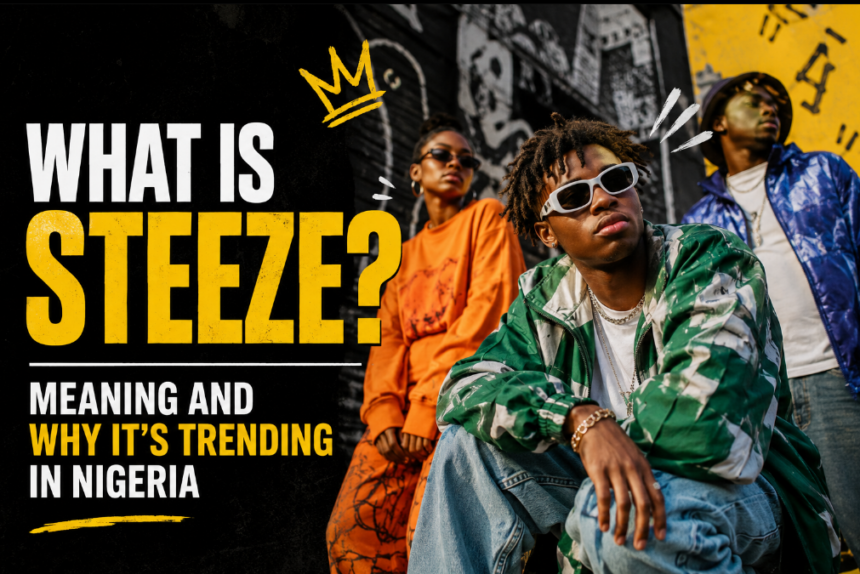
There is a particular kind of person who walks into a room and changes the temperature of it without saying a word. Their outfit might not be the most expensive in the space. They may not have the loudest laugh or the longest Instagram following. But something about them is undeniably, irritatingly sharp. In Nigerian parlance, people have started reaching for one word to describe this quality: steeze.
For most of 2024, the word was everywhere. It showed up in the comment sections of fashion reels, in Twitter threads about Nigerian celebrities, in voice notes between friends debating who had it and who was faking it. By December of that year, Google Nigeria confirmed what many had already sensed: steeze was one of the most-searched meanings of the entire year, ranking alongside terms like “demure” and “abido shaker” in the national vocabulary. Young Nigerians were not just using the word; they were actively trying to understand it.
The confusion is understandable. Steeze sounds close enough to drip, swag, and rizz that it is easy to assume they are all pointing at the same thing. They are not. Each of these words carves out a distinct territory, and the distinctions matter, especially if you are trying to figure out whether you have steeze or whether you are simply well-dressed. This piece breaks down the steeze meaning, traces where it came from, and explains what it looks like when it is actually working, in Lagos, in the fashion moment Nigeria is currently living through.
What Is Steeze?
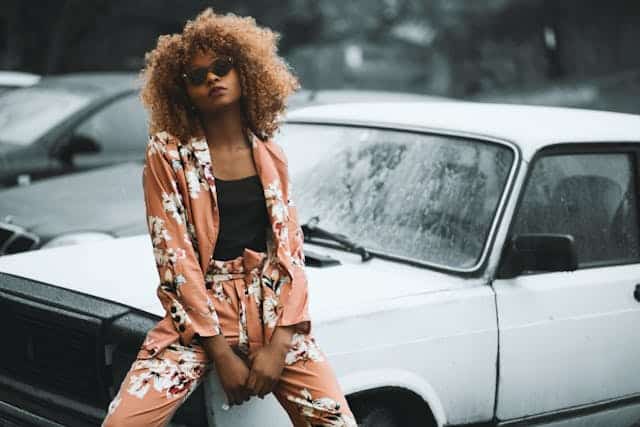
Steeze meaning is deceptively simple on paper: it is the portmanteau of “style” and “ease,” describing a person who pulls off their look, their movement, their whole presence, without appearing to try. But that compression hides a lot. The reason Nigeria latched onto the word so hard is that it names something Nigerian culture has always valued but never had a clean local shorthand for: the quiet authority of someone who looks and moves exactly like themselves, with no visible effort and no visible apology.
Steeze Meaning: Style and Ease in One Word
The earliest confirmed appearance of the word in recorded music comes from Grandmaster Flash and the Furious Five’s 1982 track “It’s Nasty (Genius of Love),” in which rapper Kidd Creole uses it casually, in the middle of a verse, as though it is already established vocabulary. The word shows up again across hip-hop through the eighties and nineties, picking up momentum as Black American slang expanded its reach through music and street culture.
The moment that truly cemented steeze in popular consciousness came in November 1997, when East Coast hip-hop duo Gang Starr released “You Know My Steez” as the lead single from their fifth studio album, Moment of Truth. The single, produced by DJ Premier and featuring rapper Guru, was not primarily about fashion. It was a statement of creative identity, a declaration that Gang Starr’s approach to music, their particular combination of skill and authenticity, was something others could recognise but not replicate. Steeze, in that context, was not a look. It was a signature.
The word is a portmanteau, and most accounts trace it to a fusion of “style” and “ease,” though some linguists note it may also borrow from the “-iz-” infix pattern common in Snoop Dogg-era hip-hop speech. Dr. Kelly Elizabeth Wright, assistant professor of language sciences at the University of Wisconsin-Madison, has described steeze as a word that “really has a lot to do with just being who you are and celebrating yourself,” which is why young people keep reaching for it. It fills a gap that words like “cool” or “stylish” have never quite managed to close. Those words are descriptive. Steeze is philosophical.
The spelling varies. You will find steez, steeze, steelo, and steezy used interchangeably across social media, and all of them are pointing at the same core idea. In Nigerian usage, steeze and steez appear most frequently, with steezy functioning as the adjectival form: “He’s so steezy” or “That fit is steezy.” The word’s flexibility is part of its appeal.
How Steeze Crossed From Hip-Hop to the Streets
Hip-hop did not carry steeze into the mainstream alone. Skateboarding and snowboarding communities adopted the word through the nineties and early 2000s, using it to describe athletes who performed technically difficult tricks while making them look absurdly relaxed. A skater with steeze was not just landing the trick; they were landing it with a particular looseness in the wrists, a particular tilt of the head, that separated performance from art. The word fit that distinction perfectly because the distinction itself is hard to put into words any other way.
As streetwear culture absorbed both hip-hop and skate aesthetics through the 2010s, steeze migrated into fashion circles. By the time TikTok became the dominant platform for style content globally, steeze was fully untethered from any single subculture. It applied to an outfit, an attitude, a way of carrying oneself in a job interview. What held the meaning steady across all these migrations was the core requirement: effortlessness. Take that away and you do not have steeze anymore. You have someone who is trying, which is, in the logic of this word, the worst thing you can be.
The Gen Z revival of the word, which gathered particular force from 2023 onwards, was not really a rediscovery. It was more like the word reaching the audience it had always been waiting for. Generation Z, a cohort deeply invested in authenticity as a cultural value, and deeply suspicious of performative effort in any form, found in steeze a word that matched their existing instincts. If you have to announce your style, it is not steeze. If people notice it without being invited to, it might be.
How Steeze Became One of Nigeria’s Most-Searched Words in 2024
In December 2024, Google Nigeria released its year-end data on search trends, and steeze appeared among the most-searched word meanings of the year. It sat alongside “demure,” the understated aesthetic that dominated early 2024 global conversation, and “abido shaker,” the term coined by controversial Anambra clergyman Prophet Chukwuemeka Ohanaemere. Three very different words, all of them pointing to the same underlying phenomenon: Nigerians, particularly young Nigerians on social media, were hungry to name things precisely.
What accelerated steeze’s adoption in Nigeria specifically was the way it fused with another word: composure. On Twitter and Instagram, the phrase “I get steeze, make I no lose my composure” circulated widely as a kind of self-affirming declaration. Steeze and composure became linked in Nigerian social media vocabulary, both of them gesturing at the same quality: the ability to remain controlled, assured, and unmoved regardless of the chaos around you. In a country where economic pressure, insecurity, and social instability are daily realities, there is something genuinely meaningful about claiming that kind of stillness.
The word also spread through Nigerian TikTok with particular speed. Content creators in Abuja, Lagos, Port Harcourt, and the diaspora used it in fit checks, reaction videos, and fashion commentary. Nigerian millennials, who initially encountered it with some confusion, joined the conversation as the term became inescapable. By mid-2024, steeze was not a niche slang term anymore. It had become common vocabulary among anyone with a smartphone and a passing interest in fashion or culture.
Steeze vs. Drip vs. Swag vs. Rizz: Where the Lines Actually Fall
The confusion between these four terms is worth taking seriously because each one points at something genuinely distinct, and mixing them up changes the meaning of a conversation. Drip is the most material of the four. It is about the clothes, the jewellery, the shoes, the overall visual impact of what someone is wearing. Davido showing up to an event in VVS diamonds and a fur coat in Lagos heat is drip. It is intentionally visible, intentionally expensive, intentionally loud. Drip announces itself.
Swag is older and broader. It covers how someone carries themselves beyond the clothes: their body language, the way they talk, the energy they project when they walk into a space. Swag can exist without expensive clothing; it is more about attitude and self-possession. Rizz, the shortest on the list, is about magnetism in interpersonal interaction. It is the ability to draw people toward you, to charm without obvious effort. Someone with rizz does not need to do much. People come to them.
Steeze contains elements of all three but is not reducible to any of them. As one Nigerian fashion commentary put it plainly, “drip is physical, but steeze is spiritual.” That framing is useful. You can drip without having steeze: a perfectly assembled outfit that still looks like it cost someone serious mental energy is drip, not steeze. You can have swag that feels performed and therefore does not qualify either. The core test is always effortlessness. Steeze is what happens when style and ease stop being separate things and start behaving like one.
In Nigerian usage, the relationship between these terms has developed its own internal logic. Drip is a prerequisite; you need some level of visual presentation to even enter the conversation. Swag is the baseline; most people with any confidence have it in varying degrees. Rizz is situational. But steeze is the one that cannot be faked. You either move through the world like you belong in every room, or you do not. There is no credible performance of steeze, which is precisely what makes it the highest compliment of the four.
What Steeze Actually Looks Like When Nigerians Talk About It
When Nigerians invoke steeze, they tend to reach for the same examples, and those examples are instructive. Rema, the Benin City-born singer and rapper born Divine Ikubor on 1 May 2000, comes up constantly. His aesthetic is not straightforward to categorise: he gravitates toward shapes, colours, and silhouettes that sit outside conventional Afrobeats presentation, and he carries all of it with the particular calm of someone who designed the whole thing from the inside and has never felt the need to explain it. The Zikoko fashion desk described him as having chaotic rave lord aesthetics that stay sharp and on-brand, which is almost a textbook definition of steeze.
Ayra Starr appears in the same conversations. Her style choices pull from a range of references and consistently land without looking assembled from a mood board, which is the critical distinction. TG Omori, the Lagos-based music video director known online as @boy_director, is frequently cited despite operating behind the camera rather than in front of it. His visual signature, the haircuts, the personal aesthetic, the self-possession, reads as steeze to anyone paying attention to how he presents himself in interviews and public appearances. Steeze, in Nigeria, is not limited to musicians and entertainers. It attaches to anyone who fits the definition.
What these examples share is the absence of visible labour. None of them appear to be working at being themselves. The outfits are personal rather than aspirational, the energy is contained rather than projected outward, and the overall effect is that of someone who arrived at their identity some time ago and has simply been living in it ever since. For Nigerian audiences, this lands hard precisely because public performance of effort is so normal in a country where success often requires constant, visible striving. Steeze represents a different posture: inward confidence expressing itself outward, without announcement.
How to Build Your Steeze, Starting From Where You Are
The first honest thing to say about developing steeze is that it is not primarily a shopping problem. Buying better clothes, getting the right haircut, upgrading your shoes, these things can contribute to the visual layer of steeze, but they do not create it. People have spent enormous sums of money looking assembled and still clearly look assembled. The gap between looking expensive and having steeze is real and is not closed by a bank transfer.
What actually builds steeze is a consistent practice of knowing your own taste and trusting it without needing external validation. This starts with self-study. Not fashion study, self-study. What colours feel natural on you, not what colours are trending? What silhouettes suit your body and your movement, rather than what silhouettes are all over Instagram right now? What version of you shows up when you are most comfortable, and can that version survive public spaces intact? These are the questions that, answered honestly and applied consistently, produce something that starts to read as steeze.
For many Nigerians, the most accessible entry point is thrift culture, what the market calls okrika. Yaba Market in Lagos remains one of the country’s most fertile grounds for building a personal aesthetic outside of fast fashion formulas. The best thrift finds are not the brand names but the pieces that nobody else will be wearing, the ones that require you to style them from scratch with your own instincts. That process, of building an outfit from components that do not come pre-packaged as a complete look, trains exactly the muscle that steeze requires.
The physical dimension matters too, but not in the way people usually mean. Steeze is partly about how you occupy space: how you stand, how you walk, whether you seem at ease in your own body. Someone who is self-conscious about how they look will show it regardless of how carefully they dressed, and self-consciousness is the enemy of steeze. The practical answer is repetition. Wear the look before the occasion. Walk in it. Sit in it. Eat jollof in it if you have to. By the time the photograph or the event arrives, your body should have stopped noticing the clothes.
Finally, and perhaps most critically: stop adjusting in public. One of the most reliable signals that someone does not yet have steeze is the constant micro-adjustments: checking the phone for the mirror app, tugging at the hem, asking people if it looks okay. The version of you that has steeze does not need that reassurance. Work on that version privately, and then let it show up when it is ready.
Steeze and the Bigger Fashion Identity Shift Happening in Nigeria
Steeze did not arrive in a cultural vacuum. It landed in Nigeria at exactly the moment a genuine generational shift in fashion identity was already underway. Gen Z Nigerian designers and consumers have spent the last several years doing something their predecessors were less comfortable with: taking traditional fabrics and treating them as raw material for personal expression rather than ceremonial obligation. Aso Oke hoodies, Ankara palazzo trousers paired with trainers, Adire pieces worn on weekdays rather than saved for funerals. These are not fashion accidents; they are deliberate choices that encode a particular self-understanding.
This movement has found its clearest expression in Lagos, where streetwear culture has absorbed Afrobeats aesthetics, Alte experimentation, and thrift creativity into something that has started drawing international attention. Lagos Fashion Week has increasingly reflected what Gen Z Nigerians are already wearing in Yaba and Surulere rather than dictating to them from above. The creative energy runs from the streets upward, not from the runways downward, and that reversal is significant.
Steeze fits this moment precisely because it rewards exactly what the movement values: individual vision, cultural confidence, and the refusal to look like you are trying to be someone else. In a fashion landscape increasingly saturated with the same global fast fashion silhouettes, the person who shows up in something genuinely theirs, assembled with intelligence and worn without apology, stands out more sharply than anyone in a trending item. That contrast, between the crowd and the individual who exists outside it without aggression, is what steeze produces when it works.
The Afrobeats dimension of this cannot be separated from it. As artists like Rema, Ayra Starr, and others have pushed the global profile of Nigerian music to positions it has never previously occupied, their personal aesthetics have become part of what the world associates with Nigerian creative identity. Rema becoming the most-streamed Nigerian artist on YouTube in 2025, with “Calm Down” accumulating over one billion views, means his particular visual signature is being absorbed by audiences far outside Nigeria. The way he looks is becoming, to some degree, part of the image of what Nigerian artistry produces. That is steeze operating at scale.
Why Steeze Hits Differently for a Nigerian Audience
The reason steeze resonated so specifically with young Nigerians in 2024 and has stayed embedded in the vocabulary since then is not simply that it is a cool-sounding word from hip-hop. It is that it describes an aspiration that feels both attainable and meaningful within the Nigerian context. In a country where hustle is constant and visible, where people are routinely required to perform competence and resilience for an external audience, the idea of someone who is so settled in themselves that they do not need to perform anything is genuinely compelling.
The pairing of steeze with composure in Nigerian social media shorthand captured this perfectly. Both words circle the same idea: a person who has organised their inner life well enough that the external presentation takes care of itself. Steeze, in that reading, is not primarily about fashion at all. It is about being resolved, being at home in your own skin, moving through the world on your own terms.
Fashion is the most visible layer of that. But it is not the source. The source is the kind of clarity about who you are that does not require anyone else to confirm it. That is why steeze, for all its simplicity as a slang term, has proven stickier than most of the words that cycle through Nigerian social media and disappear within a season. It points at something people actually want, and it turns out that what people actually want does not change much, regardless of what the trending word for it happens to be.