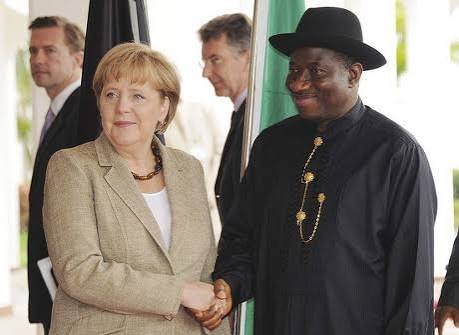
On July 14, 2011, German Chancellor Angela Merkel arrived in Abuja on July 14, 2011 for bilateral talks with President Goodluck Jonathan. She came with a high-powered business delegation focused on energy cooperation and regional security.
Merkel was received at the forecourt of the Presidential Villa, where she inspected a guard of honour mounted by the presidential guard before proceeding to the State House for closed-door discussions.
The visit was the final leg of Merkel’s three-nation tour of Africa. The trip drew close attention from European and African analysts who were watching how Germany planned to expand its footprint amid growing Asian influence on the continent.
At a joint press conference after their meeting, President Jonathan struck an optimistic tone on Nigeria-Germany ties.
“Germany is a key partner in our push to industrialize and resolve our energy deficits,” President Jonathan said.
“Our discussions today have laid a strong foundation for robust cooperation in power generation, security infrastructure, and regional stability in West Africa.”
Sudanese President, al-Bashir Attends AU HIV/AIDS Summit in Abuja Despite ICC warrant
On July 14, 2013, Sudanese President Omar al-Bashir arrived in Abuja to attend a special African Union summit on HIV/AIDS, TB and Malaria. Nigerian authorities did not execute the International Criminal Court arrest warrant issued against him.
Al-Bashir landed at Nnamdi Azikiwe International Airport at about 2:30 p.m. and was received by senior government officials.
The ICC issued two warrants for al-Bashir in 2009 and 2010 over charges of war crimes, crimes against humanity and genocide in Darfur. As a signatory to the Rome Statute, Nigeria is legally obligated to arrest individuals wanted by the ICC.
Federal officials said the decision to allow his participation was guided by AU protocol and Nigeria’s obligations as host country.
The AU maintains that member states are not obligated to arrest sitting heads of state attending AU meetings, citing immunity provisions.
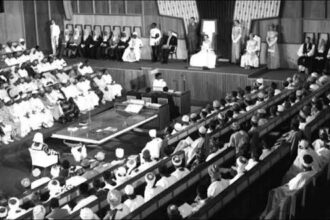
Speaking at the opening of the summit at the Banquet Hall of the Presidential Villa, President Jonathan called on African leaders to intensify efforts to eliminate mother-to-child transmission of HIV by 2015.
“The fight against HIV/AIDS, TB and Malaria remains central to our development agenda,” Jonathan said. “We must commit resources and political will to save lives across the continent.”
Al-Bashir was seated with other heads of state during the proceedings. The summit adopted the Abuja Declaration +12, reviewing progress 12 years after the first AU declaration on AIDS. It also adopted a roadmap for increased domestic funding for health in Africa.
Human rights groups criticized Nigeria’s decision. Amnesty International said, “by failing to act on the ICC warrant, Nigeria has sent the wrong signal on accountability.”