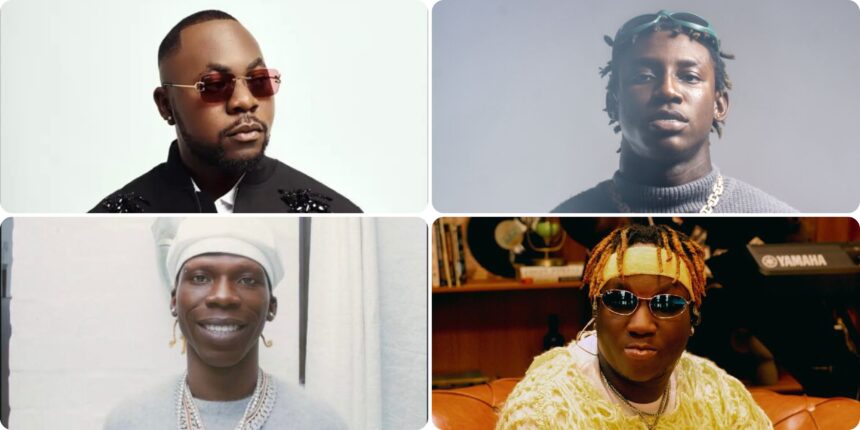
For years, Dapper Music has been one of the major forces behind the rise of some of Nigeria’s biggest street-pop acts. But the label’s relationships with several former artistes have also become a source of public controversy.
The latest round of allegations has brought old disagreements back into the spotlight, with former signees including Shallipopi, Seyi Vibez and T.I Blaze raising questions about contracts, finances, royalties and the handling of their music catalogues.
The disagreements are not entirely new.
Seyi Vibez’s separation from Dapper became public in September 2024, when he unfollowed the label on Instagram, changed his bio to “Independent artist” and began a new chapter under his own Vibez Inc. imprint.
On December 11, 2024, Shallipopi formally announced that he was ending his agreements with Dapper Music and Dvpper Digital. He accused the companies of broken trust, financial mismanagement and disregard for his rights as an artiste.
Dapper Music rejected those accusations at the time, saying Shallipopi had renegotiated his terms after the success of his first album and had done so with legal representation. The company also said it had provided financial records and was cooperating with auditors engaged by the artiste.
What Triggered Dapper’s Response?
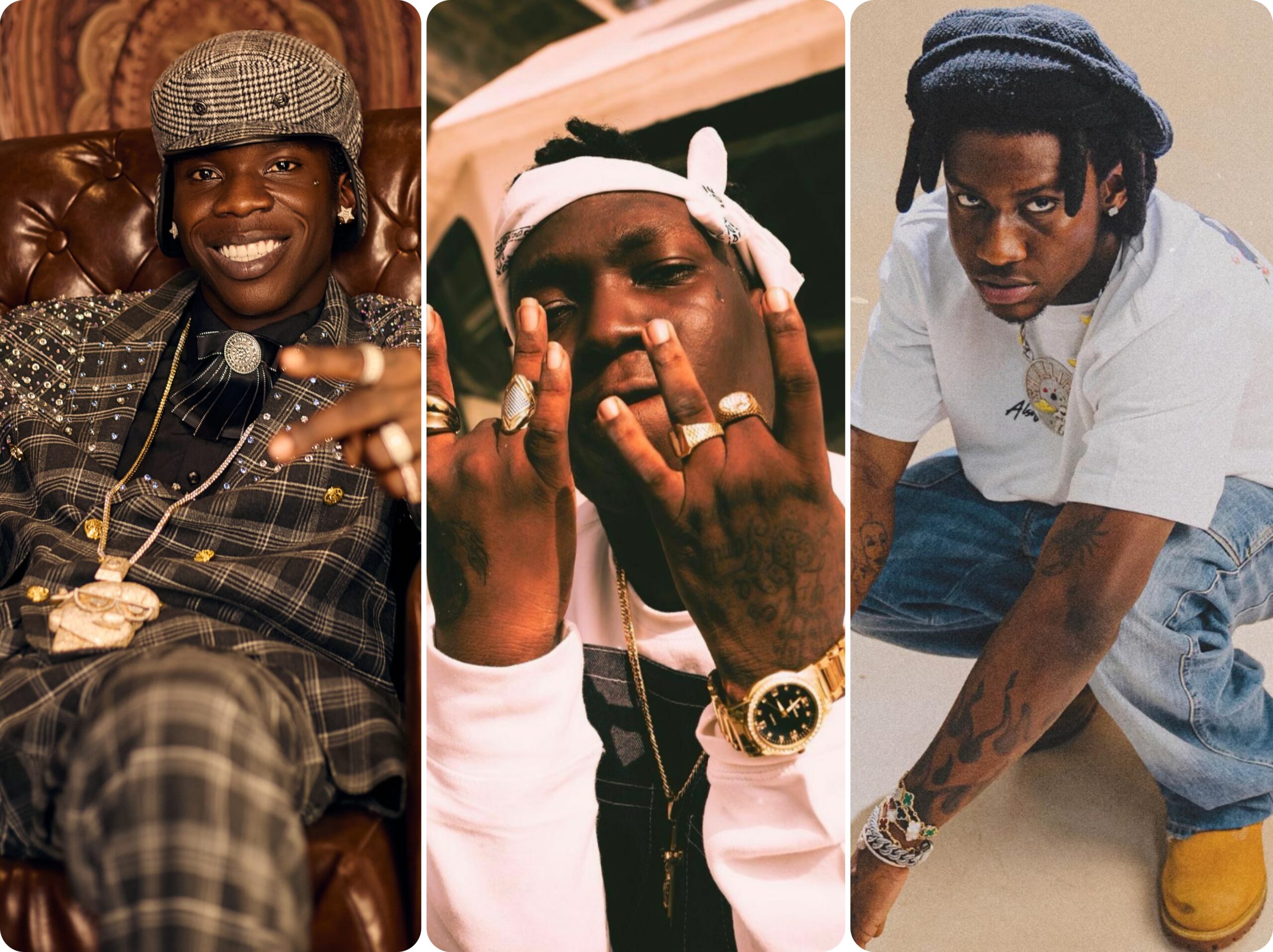
The latest clash between Dapper and his former signees began on Friday, August 14, 2026, when T.I Blaze publicly questioned how royalties and other earnings from his music had been handled during his relationship with Dapper Music. He alleged that about ₦1.2 billion remained unexplained and raised questions about the management and licensing of his music.
The following day, August 15, Shallipopi added his own accusations. The singer alleged that Dapper forged his signature on what he described as a 10-year distribution agreement, despite his claim that he had originally signed a management deal. He also alleged that his signature was used in dealings involving his catalogue and accused Dapper of withholding earnings from his music.
Seyi Vibez, meanwhile, also returned to the dispute, making fresh allegations about his former relationship with Dapper. He claimed that he played a major role in building Dapper’s business, saying “I made Dapper,” while also raising questions about money generated from artistes’ catalogues and making other serious claims about how he was treated during their time together.
Taken together, the accusations painted a picture of former signees questioning royalties, contracts, catalogue ownership, financial accountability and the way Dapper’s business relationships with artistes were handled. The fact that three prominent former associates were speaking out within the same period gave the dispute a new level of attention.
Damilola “Dapper” Akinwunmi eventually responded on social media on August 16, rejecting the narratives against him. Rather than address the accusations only through individual rebuttals, he repeatedly pointed to contracts, financial records and previous audits, and challenged the artistes to subject the disputed accounts to an independent forensic examination.
That response became the latest chapter in a dispute that has been unfolding for years and it is from that response that eight major points stand out.
Here are eight major points from his response.
1. Dapper Says He Invested Before The Success
One of Dapper’s strongest responses was about how his relationship with the artistes began. He pushed back against the idea that the artistes made Dapper what he is today, pointing instead to the investment he says he made at the beginning of their relationship. He wrote:
“For the avoidance of doubt, this relationship began in 2021, and it began with me putting money down for your first project before getting any music from you.”
He then asked:
“So who made who?!!!!”
“God made me, nigga! Dapper Damm, Son of God!”
The point behind the statement seemed to be a direct response to Seyi Vibez’ earlier claim that he made Dapper. Dapper seemingly states that he will not accept the narrative that his success came only because of the artistes who later became successful under his platform.
He wants the relationship viewed from the beginning, including the money and resources he says he committed before some of those artistes had become established names.
That argument is important because the disagreement is not only about what happened after the artistes became successful. Dapper is also asking the public to consider what happened before the success. From who invested, who took the initial risk and what each party brought to the relationship.
2. Dapper Says The Records Will Speak
Dapper’s second major point was that he believes the dispute can be settled by looking at the records. He wrote:
“I have nothing to hide. The records exist. The authorities have them. Let the process establish the truth.”
Rather than attempting to answer every allegation individually on social media, he repeatedly returned to the existence of financial and contractual records. His argument is that the disagreement should not be decided by whichever side tells the more convincing story online.
He accused his former artistes of putting forward what he described as false or misleading narratives. He continued:
“Don’t come online and spill rubbish narratives, & lies, only to mislead the public!.”
For Dapper, the records are therefore central to the dispute. His position is not simply that the allegations are untrue. He is saying that there is documentation capable of testing the competing claims.
3. Dapper Rejects The Idea That Anyone Was Forced Out
Dapper also addressed the circumstances surrounding the artistes’ departures. His position is that the artistes made their own decisions to leave.
“You chose to leave! No one forced you, and we are still fine without you! Move on! Stop acting obsessed!!!!!”
The statement comes against the background of several high-profile departures.
Seyi Vibez moved towards independence in 2024 after his relationship with Dapper became a subject of public discussion. Shallipopi followed with his formal exit in December of the same year, citing broken trust, financial concerns and issues around his rights.
Dapper’s latest response rejects the suggestion that these exits should be presented as evidence that the artistes were victims of a forced or unfair relationship.
Instead, he argues that they made their decisions and should now move forward.

4. “Twitter/Instagram Is Not A Courtroom”
If there was one idea Dapper repeated throughout his response, it was that social media should not be the place where the dispute is finally decided. He wrote:
“Twitter/Instagram is not a courtroom.”
He also appeared frustrated by the public nature of the allegations, suggesting that there are formal avenues available for settling disagreements over contracts and finances. For Dapper, the issue is therefore bigger than who has the better social-media narrative.
If there is a disagreement about money, contracts, signatures, royalties or ownership, he wants those documents examined through the appropriate legal and professional processes.
He also appeared to mock the way the dispute had unfolded online, writing:
“Mr. Elon! The jig is up!!!!!”
The reference was directed at Elon Musk, the owner of X, where much of the latest exchange has played out.
5. Dapper Raises A Court Appearance
Dapper went further when discussing a previous court proceeding. It seems to be a direct response to Shallipopi who claimed to have reported the matter to the EFCC and challenged his former label boss to court. In Dapper’s words:
“For our last Scheduled appearance, you didn’t show up nigga. I was there, but you wanna come online and say, ‘Let’s meet in court’!!!, when you’re the one running from court!!”
He did not simply reject the idea of taking the dispute to court. He challenged the suggestion that he was the person avoiding the legal process.
According to his account, there had been a scheduled appearance at which he says he was present while the other party did not attend. He followed that claim with the familiar warning:
“Those who live in glass houses shouldn’t throw stones.”
He then raised another issue involving an allegation that he had forged an artiste’s signature. WITHIN NIGERIA recalls Shallipopi and T.I Blaze had both accused him of signature forgery. Dapper pointed to what he described as an inconsistency between that allegation and an earlier public statement.
“You claim here that I forged your signature, but in your public statement in 2024, you claimed that you were pushed into a deal with Dvpper Digital. Which is it???”
The question, as Dapper presented it, is about whether the artiste’s earlier account and the latest allegation can both stand. Rather than accepting the allegation at face value, he is asking which version should be believed.
6. He Defends The Financial Arrangements
Money sits at the centre of many of the accusations against Dapper Music.
Shallipopi previously alleged that Dvpper Digital could receive advances under his name and catalogue while Dapper Music continued to use the money without his knowledge or approval. He said the resulting debt had grown to a significant amount that was still being determined.
Dapper’s latest response directly pushes back against the broader financial narrative. He also said the artistes were given more favourable percentages. He wrote:
“Everybody got healthy advances !!!!!
Even giving you more %… What more can I do?
O le te aye lorun ooo. Ah! Asake, you see that one talk!!!.”
His argument is essentially that the artistes were not left without financial support or opportunity. He says they received substantial advances and, in some cases, better percentages.
The larger point remains that Dapper believes the financial arrangements should be considered in full, rather than reduced to claims about money allegedly withheld or mishandled.
7. Dapper Calls For Forensic Audit
This is perhaps the clearest challenge in his response. Dapper says an audit has already been conducted by what he described as a reputable company.
“We already did an audit from a reputable company ! Surprise Surprise who owes who ?”
But he did not stop there. He challenged his former artistes to go further and have the accounts independently examined by major accounting and legal firms.
“If e sure for any of you, make we go KPMG, PWC, Deloitte, Templers, Aluko & Oyebode, Olaniwun Ajayi LP, Udo Udoma & Belo-Osagie.”
His proposal was for a major accounting firm and law firm to conduct what he called a forensic analysis of the financial records and contracts. He added:
“Let them run a forensic analysis and interpret both the accounts and the contract for us, and tell you I cheated you?!”
This is the heart of Dapper’s defence. Instead of asking the public to decide whether he is right or wrong, he is challenging the artistes to put the allegations to an independent examination.
He also took a swipe at the cost-conscious approach he believes some people take when it comes to auditing.
“Everyone rich enough to buy chains but never wanna pay for audits !!!”
He then added:
“No jagbajantis auditing firm, no kiri-kiri moves.”
In other words, Dapper is asking for established professional firms, not what he considers informal or questionable alternatives. The proposal also fits with his earlier insistence that the records already exist.
His argument is simple: if the numbers are disputed, examine the numbers. If the contracts are disputed, examine the contracts. Then determine who owes whom.
8. The Feud Is Hurting Afrobeats
Dapper’s final point moved beyond the individual allegations. He said he had attempted to get the artistes to work together on music and focus on something positive. He claims:
“Tried to get y’all to collaborate on some music, something positive, but see what you’re able to collaborate on, even after two years.”
For him, that is one of the saddest parts of the situation. Instead of former colleagues using their combined influence to create music, the most visible collaboration has become a public dispute. He ended with a broader message to the artistes and the industry:
“Learn guys: collaboration over competition!!!”
He also called on people within the Afrobeats industry to keep educating themselves about how the business works.
“For our colleagues and those who truly understand how these things work, let’s keep educating and sharing knowledge so we can close the knowledge gap that is costing us investment, limiting our exposure, and ultimately hurting the Afrobeats industry we all love so much.”
That is a significant shift in tone from the more combative parts of his response.
Dapper is presenting the dispute as part of a bigger problem in the Nigerian music business: a lack of understanding of contracts, investments, accounting, rights and the commercial side of music.
Conclusion
The Dapper controversy has gone through several stages.
Seyi Vibez’s departure became public in September 2024. Shallipopi formally ended his agreements with Dapper Music and Dvpper Digital in December 2024, accusing the companies of financial mismanagement, broken trust and disregard for his rights.
Since then, the careers of the artistes have continued to move forward independently. T.I Blaze, for example, was still associated with Dapper’s wider ecosystem in 2025, including his album Shakur, which was executive-produced by Dapper, before reports in June 2026 said he had parted ways with the company and launched Rhythm Vault Records.
Now the conversation has returned to the questions that have followed Dapper and his former signees: who owns what, who has been paid, what do the contracts say, and who owes whom?
Dapper’s latest answer is that social media cannot settle those questions. He says the records exist and audits have been conducted. He is now calling for independent professionals to examine the accounts and contracts and determine the truth.
Whether that challenge leads to a fresh audit, a legal ruling or simply another round of public exchanges remains to be seen.
For now, however, Dapper has made his position clear: he does not believe the allegations should be settled on X or Instagram. He wants the documents, the accounts and the contracts to speak for themselves.