Toheeb Oyebamiji, 46, sat alone in his shop, lost in thought, when this reporter approached him. The workshop was empty, not a single vehicle in sight.
“I only focused on painting houses and cars. Because of the harsh economy, I’ve had to expand to painting gas cylinders, tables, gates and anything that comes,” he said with a sigh. “Yet, things are still very hard.”
Oyebamiji, a single father of five, said he was weighed down by what he described as a “school fees problem.” His twins had just gained admission into a public secondary school, and he needs at least N80,000 to process their enrollment.
“Isn’t N80,000 a bit much for a state-owned secondary school?” this reporter asked.
He explained that the amount covers both students and includes compulsory items such as books, cutlasses, mopping sticks, brooms and hoes, among others.
“I have sold my television set. I used part of the money to get them school uniforms, bags, shoes and calculators. I am planning to sell my phone because I cannot bear to see my children stay out of school. Low patronage has ruined my plans. I can’t remember the last time I painted a car or a big house. When things get better, I will buy a new phone and television,” a frustrated Oyebamiji told WITHIN NIGERIA.
In a similar situation, Oyeleye Mariam, a single mother of three who sells garri, palm oil and pepper, lamented the ₦10,000 increase in tuition fees for each of her children who attend a private school in her community.
Mariam told WITHIN NIGERIA that she had to move her children from their former school to the new one within her community because she could no longer afford the high cost of transportation caused by the rising cost of fuel.
“The bus fare was even more than the tuition fee. I had no choice but to change their school, but it is surprising that they had barely spent a term in the new school before the fees were increased,” she said.
Lamenting the increment, Mariam disclosed that she usually pays her children’s school fees in full before resumption. However, her business is struggling due to low patronage and delayed loan repayments that have crippled her profits.
She appealed to the school authorities to consider the harsh economic realities in the country and allow parents to pay in installments, revealing that she is currently broke and will not be able to make any payment until October.
Abiodun, a farmer whose three children attend the same private school, also told WITHIN NIGERIA that he is yet to pay any part of their tuition fees.
According to him, the sudden drop in the price of cocoa hit him hard. He had taken loans, bought farms, and hired workers in anticipation of higher returns.
He explained that the fall in cocoa prices has caused logistics costs to swallow both the loans and his profits, as his projections have been cut short.
“The proprietor of my children’s school called me on Sunday evening and was worried that I had not paid their fees. She was surprised because it is not in my character to delay or owe school fees. I just told her that I would pay. It is really a difficult time for parents,” he said.
Reacting to the development, educationist and development expert, Ajetomobi Adewumi Samuel, said the rising cost of education is forcing parents to make difficult choices that threaten access to learning.
According to him, beyond tuition, parents are struggling with the cost of uniforms, textbooks, transportation, feeding and other levies, which have become overwhelming amid the rising cost of living.
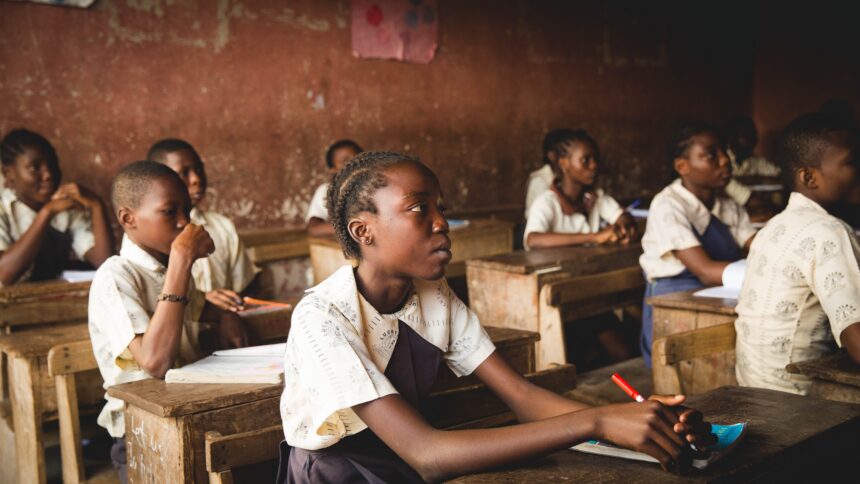
He noted that the impact is already visible, some parents are moving their children from high-fee private schools to more affordable ones, others are transferring them to public schools to ease financial pressure, while in extreme cases, some children are being withdrawn from school entirely.
Ajetomobi described the situation as a serious educational concern, warning that when a child drops out because the family can no longer afford the cost, it ceases to be a household financial problem and becomes an issue of educational access, leading to interrupted learning and permanent dropout.
He advised parents to be realistic about their financial capacity and cut their coat according to their cloth, stressing that there is nothing wrong with choosing a school the family can genuinely afford, as the priority should be keeping children consistently in school.
The educationist added that the responsibility does not rest with parents alone.
He said the government has a fundamental duty to properly fund public schools with qualified and motivated teachers, adequate classrooms, learning materials and basic facilities to make them functional and attractive to all categories of families.
He also urged private school owners to be sensitive to the economic realities of families, noting that while schools must remain sustainable amid rising operational costs, reasonable fee adjustments, adequate notice and flexible payment plans would help reduce pressure on parents.
He concluded that the goal should be simple: parents choose what they can afford, schools remain sensitive to family realities, and the government ensures that what is affordable is also of good quality, so children can stay in school and complete their education without unbearable financial strain on their families.